
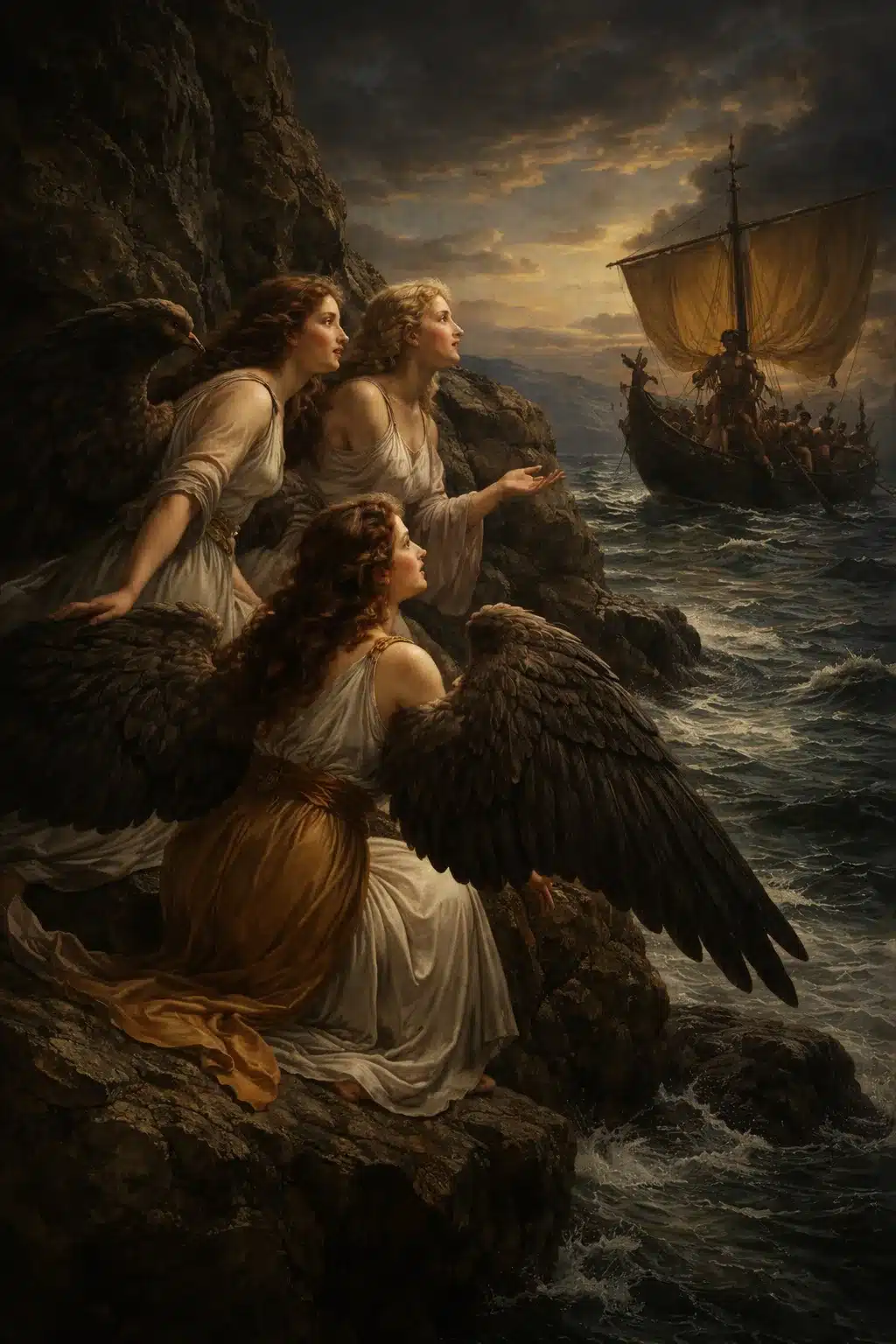
Sirens are among the most famous mythical creatures of ancient Greek mythology, associated with the danger of the sea and the temptation of voice. They are described as beings who with their magical song lured sailors into deadly wrecks.
"Come closer, famous Odysseus – Achaea’s pride and glory –
anchor your ship to our shores to hear our song!
No sailor ever crossed our shores with his black ship.
without hearing the melodic voices flowing from our lips,
And when he hears until his heart is full, he sails, wiser.
We know all the pains that Greeks and Trojans once suffered
in the vast plain of Troy, when so the gods wanted –
Everything that happens on the fertile land, we know everything!»– Homer
Their most famous reference is to Odyssey of Homer, where Odysseus He manages to overcome the risk by strategy.
Sirens are also associated with other important myths of Greek tradition, such as Persephone and Muses, while they are a timeless symbol of temptation, knowledge and destruction.
The origin of Sirens varies according to tradition. Often referred to as daughters of the river god Acheloos And a Musa, usually her Melpomene or Terpsichore.
Their names differ, but the most known are:
- Parthenope
- Leucosia
- Ligeia
Their connection to Muses explains their divine gift to music—a gift they used not for inspiration, but for destruction.
Sirens lived on rocky shores and islands, often identified with dangerous areas of the Mediterranean. According to tradition, they were near the alleys where other monsters, such as Skylla and Charybdis.
Their place was full of sailor bones—Silent testimony to the power of their song.
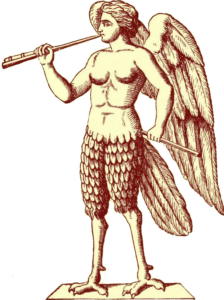
Unlike the modern image of mermaids, ancient Sirens were depicted as hybrids of woman and bird:
- bird body
- head or face of a woman
Later, especially in Roman and later art, they began to be confused with mermaids, gaining a fish tail.
Their form reflects their dual nature: heavenly beauty and mortal danger.
According to a less known myth, Sirens were once her companions Persephone. When the Hades He grabbed her, sirens failed to save her.
- Demeter, angry, he transformed them into creatures with wings, condemning them to seek eternally Persephone.
This myth adds a tragic dimension to their existence: from guardians of innocence they became bearers of death.
Sirens did not attack with force but with art. Their song was promised:
- knowledge
- pleasure
- disclosure of the secrets of the world
Whoever heard them forgot everything.—travel, purpose, even life itself.
The Sirens and Odysseus
"First you will raise the island of the Sirens,
of these creatures that enchant every living man,
Whoever they meet on their way. Anyone who gets too close,
unprepared, and hear the sirens' voices in the air –
He'll never go home, his wife won't wait for him,
They won't welcome him happy children smiling in their father's face.
Sirens' high, exciting song will pin him down,
Lying there in their meadow, around the bodies
rotting, skin rags shrinking on their bones.»– Homer
The most famous meeting is with OdysseusAs described in Odyssey.
Ulysses, knowing the danger:
- He shut the ears of his companions with wax
- He asked to be tied to the mast
So he managed to hear the song without succumbing.
This scene is one of the most powerful self-control symbols in the ancient secretariat.
Sirens and Orpheus
During the Argonaut campaign, Orpheus He faced the sirens in his own way.
With his lyre, she played music so beautiful that she covered their song, saving her crew Argo.
Here, art does not destroy—The European Union is a member of the European Union.
Sirens and the Muses
Sirens are said to have once caused Muses In a music game.
The Muses also won as punishment:
- The sirens' wings have shrunk.
- They used them as ornaments.
This myth highlights the difference between divine inspiration and dangerous seduction.
There was a prophecy: Sirens would die if someone listened to their song and survived.
When Ulysses passed without being lost, their fate was fulfilled. According to some versions:
- They fell into the sea
- turned into rocks
So their own power became their destruction.
Sources
- Homer, Odyssey
- Apollonius Rodius, Argonauts
- Hesiod, quotes and references
FAQ – Sirens (20+ Frequently Asked Questions)
1. What were the Sirens in Greek mythology?
Sirens were mythical sea creatures with a magnificent voice that lured sailors to death.
2. What did the sirens look like?
In ancient tradition they are presented as birds with female head or as hybrids of woman and bird.
3. What did the sirens do to the sailors?
They sang charming songs so that ships could approach the rocks and wreck.
4. Where did the Sirens live?
According to legends, they resided on isolated islands near dangerous sea areas.
5. How many sirens were there?
Most traditions report three Sirens.
6. What were the sirens' names?
Often referred to as Parthenopi, Nicosia and Liguria.
7. Were the sirens goddesses?
They were not goddesses, but secondary mythical creatures connected to the sea.
8. Who did the sirens come from?
In some versions they were his daughters Acheloos And a mousse.
9. Why did the sirens sing?
Their song operated as a trap for seamen.
10. How did Odysseus escape the Sirens?
He closed the crew's ears with wax and tied himself to the ship's mast.
11. Were the sirens good or bad?
In mythology they are considered dangerous creatures that led to death.
12. What do Sirens symbolize?
They symbolize the temptation, the danger of deception, and the power of music.
13. Sirens had magical powers?
Their main power was their hypnotic and enchanting voice.
14. How were the sirens defeated?
According to myths, when someone heard and survived, the sirens were lost.
15. Are there sirens in other cultures?
Similar creatures appear in many marine myths worldwide.
16. Are sirens the same as mermaids?
No, mermaids have different mythological origins.
17. Sirens were mortal?
In some traditions they were considered mortal.
18. Why are the sirens connected to the sea?
Because sailors were the main goals of their songs.
19. What happened after their defeat?
The myth says they were thrown into the sea and transformed.
20. Sirens appear in the Odyssey?
Yeah, it's one of the most famous sirens myths.
21. What was the sirens' secret weapon?
The hypnotistic harmony of their voice.
22. How are Sirens portrayed today?
Often as charming female sea figures.
23. What were the sirens afraid of?
In some versions, they feared defeating superior music power.
24. Sirens still live in mythology?
They remain a symbol of the Greek mythological tradition.
25. What is the most important feature of Sirens?
Their ability to enchant with their song.
The Journey of Odysseus – A Detailed Guide Through Each Stop
Odysseus: His Story, Adventures, and the Lessons of the Odyssey
Circe in Greek mythology explained
Scylla and Charybdis, Odysseus's deadly trap