
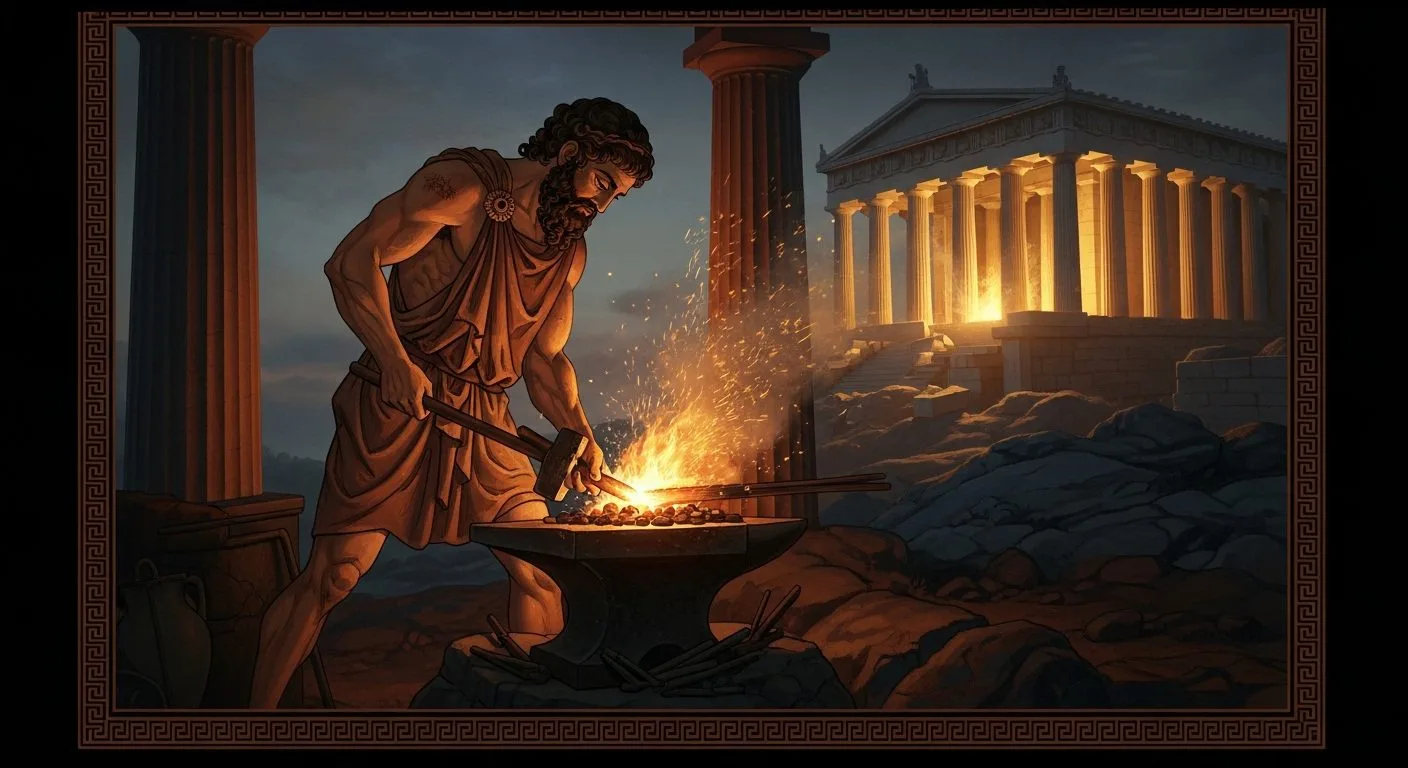
Ο Ήφαιστος αποτελεί μία από τις πιο ιδιαίτερες και πολυσύνθετες θεότητες του ελληνικού πάνθεου. Θεός της φωτιάς, της μεταλλουργίας, των ηφαιστείων, της τεχνολογίας και της χειροτεχνίας, αντιπροσωπεύει την δημιουργική δύναμη της εργασίας και της τεχνικής δεξιοτεχνίας. Σε αντίθεση με άλλους Ολύμπιους θεούς που ξεχώριζαν για την ομορφιά ή την πολεμική τους δύναμη, ο Ήφαιστος διακρινόταν για την ευφυΐα, την επινοητικότητα και την ικανότητά του να δημιουργεί θαυμαστά αντικείμενα.
Η μορφή του είναι βαθιά συνδεδεμένη με την έννοια της δημιουργίας μέσα από τη φωτιά και τη σφυρηλάτηση του μετάλλου. Στα εργαστήριά του κατασκευάστηκαν τα ισχυρότερα όπλα των θεών, τα πιο εντυπωσιακά κοσμήματα και τα πιο θαυμαστά μηχανικά δημιουργήματα της μυθολογίας. Η ιστορία του είναι επίσης γεμάτη συμβολισμούς για την υπέρβαση της αδυναμίας, καθώς παρά τη σωματική του αναπηρία έγινε ο σημαντικότερος τεχνίτης του Ολύμπου.
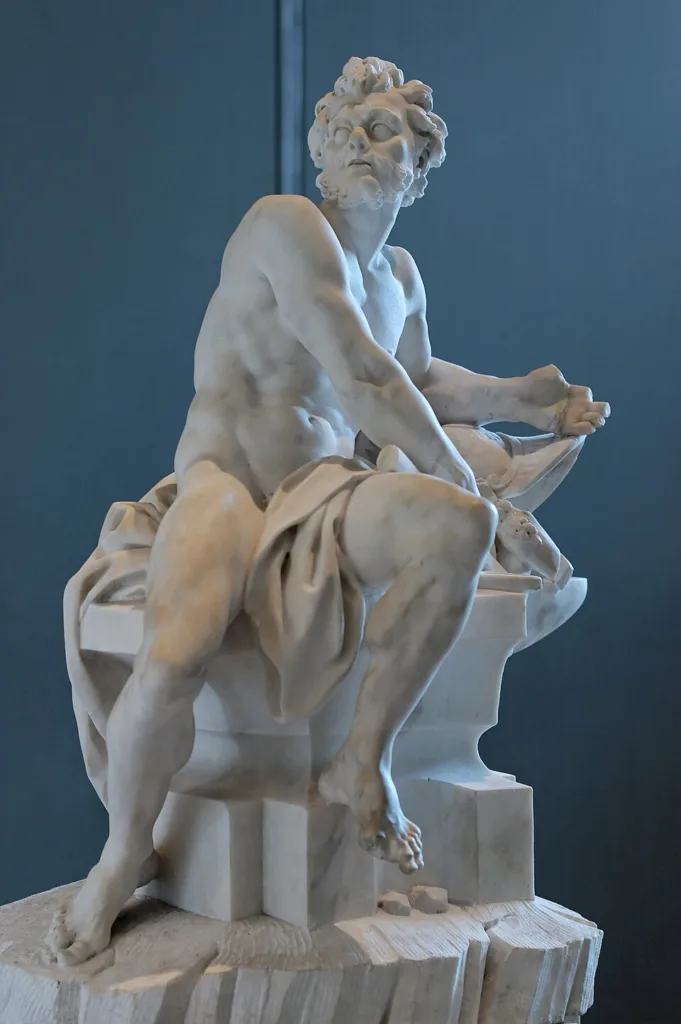
Καταγωγή και Γέννηση του Ηφαίστου
Οι αρχαίες πηγές παρουσιάζουν δύο βασικές παραδόσεις για τη γέννηση του Ηφαίστου.
Σύμφωνα με την πιο γνωστή εκδοχή, ήταν γιος του Δία και της Ήρας. Ωστόσο, υπάρχει και μια άλλη εκδοχή που αναφέρει ότι η Ήρα τον γέννησε μόνη της, χωρίς τη συμμετοχή του Δία. Αυτή η παράδοση συνδέεται με την επιθυμία της θεάς να ανταγωνιστεί τον Δία, ο οποίος είχε γεννήσει μόνος του την Αθηνά από το κεφάλι του.
Όταν γεννήθηκε ο Ήφαιστος, η εμφάνισή του προκάλεσε αποστροφή. Οι μύθοι αναφέρουν ότι ήταν χωλός ή παραμορφωμένος, γεγονός που οδήγησε τη μητέρα του να τον απορρίψει. Η Ήρα, ντροπιασμένη από την ασχήμια του παιδιού της, τον πέταξε από τον Όλυμπο.
Η Πτώση από τον Όλυμπο
Η πτώση του Ηφαίστου από τον Όλυμπο είναι ένα από τα πιο δραματικά επεισόδια της μυθολογίας.
Σε μια εκδοχή του μύθου, η Ήρα τον πέταξε από τον ουρανό αμέσως μετά τη γέννησή του. Ο θεός έπεσε για πολλές ώρες πριν καταλήξει στη θάλασσα, όπου τον βρήκαν και τον φρόντισαν δύο θαλάσσιες θεότητες: η Θέτιδα και η Ευρυνόμη. Εκεί μεγάλωσε σε ένα υποθαλάσσιο σπήλαιο για εννέα χρόνια.
Σε άλλη εκδοχή, ο Ήφαιστος είχε ήδη μεγαλώσει στον Όλυμπο όταν προσπάθησε να υπερασπιστεί τη μητέρα του σε έναν καβγά με τον Δία. Ο Δίας εξοργίστηκε και τον πέταξε από τον ουρανό. Ο Ήφαιστος έπεσε στο νησί της Λήμνου και τραυματίστηκε σοβαρά στο πόδι, γεγονός που εξηγεί την χωλότητά του.
Η Ανατροφή και η Πρώτη Δημιουργία
Κατά τη διάρκεια της ανατροφής του στη θάλασσα, ο Ήφαιστος άρχισε να αναπτύσσει τις μοναδικές του δεξιότητες στη μεταλλουργία και τη δημιουργία αντικειμένων.
Στο σπήλαιο όπου ζούσε κατασκεύασε το πρώτο του εργαστήριο. Εκεί έμαθε να λιώνει μέταλλα, να σφυρηλατεί χρυσό και ασήμι και να δημιουργεί κοσμήματα. Οι πρώτες του δημιουργίες ήταν τόσο εντυπωσιακές που προκάλεσαν τον θαυμασμό ακόμη και των θεοτήτων που τον ανέθρεψαν.
Μία από τις πιο διάσημες πρώιμες δημιουργίες του ήταν ένας χρυσός θρόνος που έστειλε ως δώρο στη μητέρα του, την Ήρα. Ωστόσο, ο θρόνος ήταν παγίδα. Όταν η Ήρα κάθισε πάνω του, παγιδεύτηκε από αόρατα δεσμά και κανείς από τους θεούς δεν μπορούσε να την ελευθερώσει.
Η Επιστροφή στον Όλυμπο
Οι θεοί προσπάθησαν να πείσουν τον Ήφαιστο να επιστρέψει στον Όλυμπο και να ελευθερώσει τη μητέρα του, αλλά εκείνος αρνιόταν.
Τελικά, ο Διόνυσος κατάφερε να τον πείσει. Σύμφωνα με τον μύθο, τον μέθυσε με κρασί και τον οδήγησε πίσω στον Όλυμπο πάνω σε ένα γαϊδούρι. Η σκηνή αυτή αποτέλεσε αγαπημένο θέμα στην αρχαία ελληνική τέχνη.
Όταν επέστρεψε, ο Ήφαιστος απελευθέρωσε την Ήρα και συμφιλιώθηκε με τους θεούς. Από τότε εγκαταστάθηκε στον Όλυμπο και έγινε ο επίσημος τεχνίτης των θεών.
Το Εργαστήριο του Ηφαίστου
Το εργαστήριο του Ηφαίστου θεωρούνταν ένα από τα πιο εντυπωσιακά μέρη της μυθολογίας.
Σύμφωνα με τους μύθους, βρισκόταν είτε στον Όλυμπο είτε κάτω από ηφαίστεια, όπως αυτά της Λήμνου, της Σικελίας ή της Αίτνας. Εκεί δούλευε με τη βοήθεια των Κυκλώπων ή μηχανικών βοηθών που είχε δημιουργήσει ο ίδιος.
Η φωτιά των καμινιών του συμβόλιζε τη δημιουργική δύναμη της φύσης. Με σφυριά, αμόνια και καμίνια κατασκεύαζε αντικείμενα απαράμιλλης ομορφιάς και δύναμης.
Τα Θαυμαστά Δημιουργήματα του Ηφαίστου
Ο Ήφαιστος ήταν ο δημιουργός πολλών από τα σημαντικότερα αντικείμενα της ελληνικής μυθολογίας.
Μεταξύ των πιο διάσημων έργων του συγκαταλέγονται:
- Η ασπίδα του Αχιλλέα
Μια από τις πιο περίτεχνες δημιουργίες του. Η ασπίδα απεικόνιζε ολόκληρο τον κόσμο με σκηνές ζωής, πολέμου και ειρήνης. - Τα όπλα του Αχιλλέα
Κατασκευάστηκαν κατόπιν παράκλησης της Θέτιδας μετά τον θάνατο του Πάτροκλου. - Το σκήπτρο και η αστραπή του Δία
Τα σύμβολα της απόλυτης εξουσίας του βασιλιά των θεών. - Η πανοπλία του Ηρακλή
Ένα πανίσχυρο σύνολο όπλων που βοήθησε τον ήρωα στους άθλους του. - Οι αλυσίδες του Προμηθέα
Με αυτές ο Δίας διέταξε να δεθεί ο Προμηθέας στον Καύκασο. - Η πρώτη γυναίκα, η Πανδώρα
Ο Ήφαιστος τη δημιούργησε από πηλό, δίνοντάς της ανθρώπινη μορφή.
Μηχανικά Θαύματα
Ο Ήφαιστος θεωρείται επίσης ο πρώτος δημιουργός μηχανικών όντων στην ελληνική μυθολογία.
Κατασκεύασε:
Χρυσές υπηρέτριες που κινούνταν και μιλούσαν σαν ζωντανά πλάσματα
Αυτοκινούμενα τρίποδα που μετακινούνταν μόνα τους στον Όλυμπο
Τον Τάλω, έναν γιγάντιο χάλκινο φύλακα της Κρήτης
Οι δημιουργίες αυτές θεωρούνται από πολλούς ως οι πρώτες μυθολογικές μορφές αυτομάτων ή ρομπότ.
Ο Γάμος με την Αφροδίτη
Παρά την ασχήμια του, ο Ήφαιστος παντρεύτηκε την Αφροδίτη, τη θεά της ομορφιάς.
Ο γάμος αυτός, σύμφωνα με κάποιους μύθους, κανονίστηκε από τον Δία για να αποτραπούν συγκρούσεις μεταξύ των θεών που επιθυμούσαν την Αφροδίτη.
Ωστόσο, η Αφροδίτη δεν ήταν πιστή. Η πιο διάσημη ιστορία αφορά τη σχέση της με τον Άρη. Όταν ο Ήφαιστος το ανακάλυψε, έστησε παγίδα: κατασκεύασε ένα αόρατο δίχτυ από ατσάλι και παγίδευσε το ζευγάρι στο κρεβάτι τους. Στη συνέχεια κάλεσε όλους τους θεούς να δουν το σκάνδαλο.
Ο μύθος αυτός συχνά ερμηνεύεται ως σύγκρουση μεταξύ ομορφιάς και τεχνικής, πάθους και δημιουργίας.
Λατρεία και Ιερά
Ο Ήφαιστος λατρευόταν ιδιαίτερα σε περιοχές με έντονη μεταλλουργική δραστηριότητα.
Σημαντικά κέντρα λατρείας ήταν:
Η Λήμνος
Η Αθήνα
Η Σικελία

Στην Αθήνα υπήρχε ο περίφημος ναός του Ηφαίστου, γνωστός σήμερα ως Θησείο, ένας από τους καλύτερα διατηρημένους αρχαίους ναούς της Ελλάδας.
Οι τεχνίτες, οι χαλκουργοί και οι μεταλλουργοί θεωρούσαν τον Ήφαιστο προστάτη τους.
Συμβολισμός του Ηφαίστου
Ο Ήφαιστος συμβολίζει πολλές βαθύτερες έννοιες:
- τη δύναμη της δημιουργίας
τη σημασία της τεχνικής γνώσης
την αξία της εργασίας
τη μεταμόρφωση της ύλης μέσω της φωτιάς
την υπέρβαση της αδυναμίας μέσω της δεξιοτεχνίας
Σε αντίθεση με άλλους θεούς που αντιπροσωπεύουν τη δύναμη ή την εξουσία, ο Ήφαιστος ενσαρκώνει την ανθρώπινη ικανότητα να δημιουργεί.
Ο Ήφαιστος στη Σύγχρονη Ερμηνεία
Στη σύγχρονη εποχή, ο Ήφαιστος θεωρείται συχνά σύμβολο της τεχνολογίας, της μηχανικής και της καινοτομίας. Η μορφή του συνδέεται με την πρόοδο της βιομηχανίας και την ανάπτυξη των τεχνικών επιστημών.
Επιπλέον, πολλοί μελετητές βλέπουν στον μύθο του μια πρώιμη αναγνώριση της αξίας των τεχνιτών και των δημιουργών, που στην αρχαία κοινωνία κατείχαν σημαντικό ρόλο.
Συμπέρασμα
Ο Ήφαιστος είναι μια από τις πιο ανθρώπινες μορφές της ελληνικής μυθολογίας. Παρά την απόρριψη και την αδυναμία του, κατάφερε να γίνει ο σημαντικότερος δημιουργός των θεών. Η ιστορία του δείχνει ότι η πραγματική δύναμη δεν βρίσκεται μόνο στην ομορφιά ή στη σωματική ισχύ, αλλά στην επιμονή, την ευφυΐα και τη δημιουργικότητα.
Μέσα από τη φωτιά των καμινιών του και το χτύπημα του σφυριού πάνω στο αμόνι, ο Ήφαιστος μεταμορφώνει την ύλη σε έργα τέχνης και δύναμης. Γι’ αυτό παραμένει μέχρι σήμερα σύμβολο της δημιουργίας, της τεχνικής και της ανθρώπινης εφευρετικότητας.
Συχνές Ερωτήσεις για τον Ήφαιστος
Ποιος ήταν ο Ήφαιστος στην ελληνική μυθολογία;
Ο Ήφαιστος ήταν ο θεός της φωτιάς, της μεταλλουργίας και της τεχνολογίας. Ήταν ο προστάτης των τεχνιτών, των σιδηρουργών και της κατασκευής όπλων και εργαλείων.
Ποιοι ήταν οι γονείς του Ηφαίστου;
Σύμφωνα με τον μύθο, ο Ήφαιστος ήταν γιος της Ήρα, ενώ σε άλλες παραδόσεις θεωρείται γιος της Ήρας και του Ζευς.
Πού γεννήθηκε ο Ήφαιστος;
Η μυθολογία αναφέρει ότι ο Ήφαιστος γεννήθηκε στον Όλυμπο, αλλά η Ήρα τον πέταξε στη θάλασσα επειδή θεωρούσε ότι ήταν άσχημος ή αδύναμος.
Ποια ήταν η σύζυγος του Ηφαίστου;
Σύζυγός του ήταν η Αφροδίτη, η θεά της ομορφιάς και του έρωτα.
Ποια ήταν τα σύμβολα του Ηφαίστου;
Σύμβολά του ήταν το αμόνι, η σφύρα και η φωτιά, που συνδέονται με τη μεταλλουργία και τη δημιουργία.
Ποιος ήταν ο ρόλος του Ηφαίστου στη μυθολογία;
Ο Ήφαιστος θεωρούνταν ο θεϊκός τεχνίτης που κατασκεύαζε πανοπλίες, όπλα και αντικείμενα για τους θεούς του Ολύμπου.
Πού λατρευόταν ο Ήφαιστος;
Η λατρεία του ήταν ιδιαίτερα ισχυρή στην Αθήνα, όπου υπήρχαν ιερά αφιερωμένα στον θεό της φωτιάς και της τεχνολογίας.
Πώς απεικονίζεται ο Ήφαιστος;
Στην τέχνη παρουσιάζεται συνήθως ως κουτσός αλλά δυνατός τεχνίτης, με εργαλεία σιδηρουργού και απλή ενδυμασία.
Ποια ήταν η σημασία του Ηφαίστου;
Ο Ήφαιστος συμβολίζει τη δύναμη της ανθρώπινης δημιουργίας, της τεχνολογίας και της χειροτεχνίας.
Γιατί ο Ήφαιστος θεωρείται σημαντικός;
Επειδή συνδέεται με την πρόοδο της μεταλλουργίας και την ανάπτυξη της τεχνικής γνώσης στην αρχαία Ελλάδα.
Αρχαίες πηγές
Ησίοδος – Θεογονία & Έργα και Ημέραι | Πρωτογενείς Πηγές
Πρωτογενείς Πηγές Ελληνικής Μυθολογίας | Ησίοδος, Όμηρος, Ορφικοί Ύμνοι
Πρωτογενείς Πηγές της Ελληνικής Μυθολογίας | Αρχαία Κείμενα
Perseus Digital Library είναι μια αξιόπιστη ακαδημαϊκή βάση δεδομένων με αρχαία ελληνικά κείμενα και ιστορικές πηγές, ιδιαίτερα χρήσιμη για τη μελέτη της ελληνικής μυθολογίας και των Ελευσίνιων Μυστηρίων.