
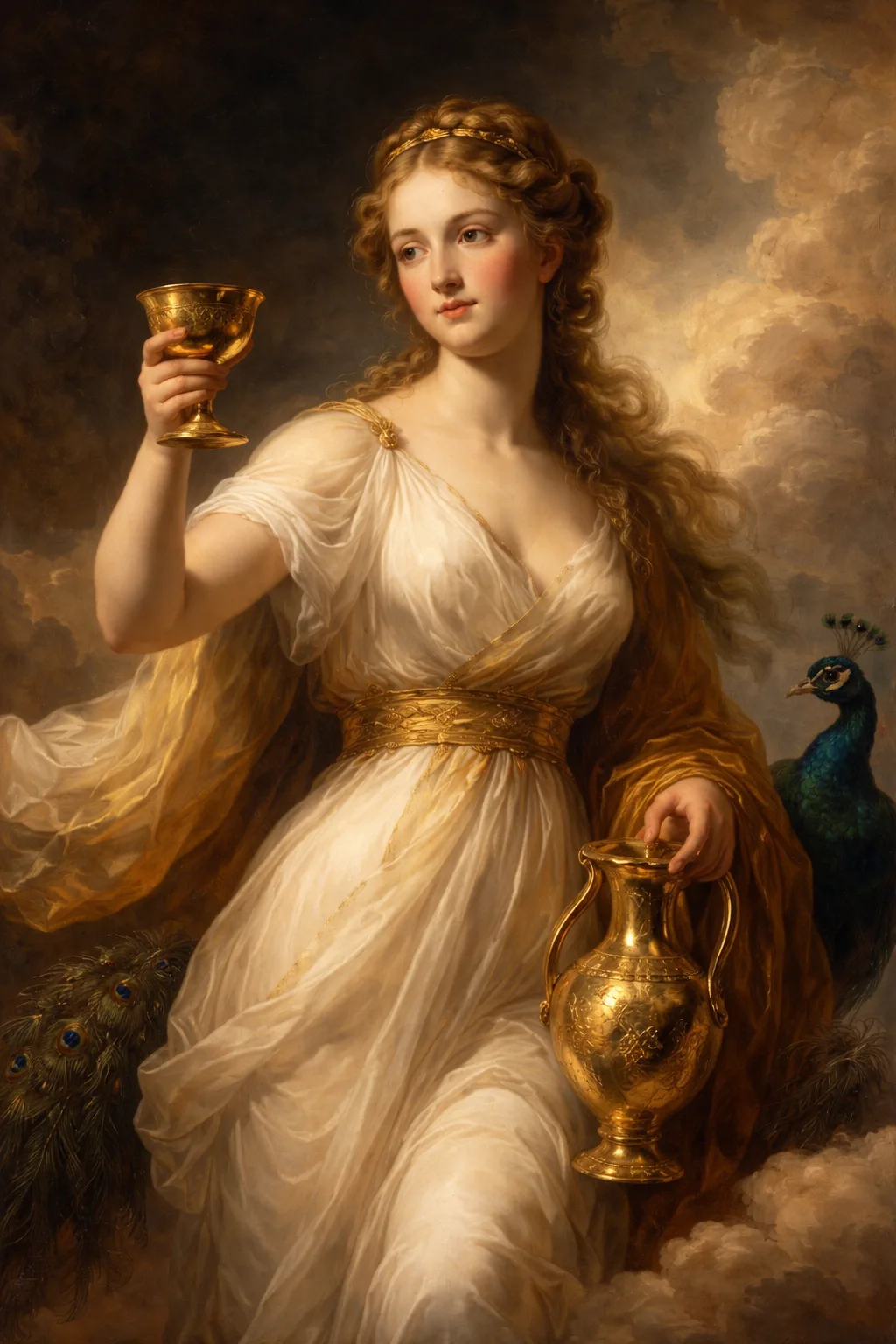
The goddess Hebe is one of the least analyzed but extremely important deities of the ancient Greek pantheon. As a personification of youth and eternal prosperity, it holds a special place in the mythological and religious thought of ancient Greeks. Its presence is linked to divine renewal, immortality and the idea of ideal age.
Origin and Family Relationships
Hebe is the daughter of Zeus and Hera, which makes her a member of the supreme divine generation of Olympus.
Key elements:
- Parents: Zeus and Hera
- Spouse: Hercules (after its disposal)
- Children: Alexis and Anikitos
The union of Hebe with Hercules has a profound symbolism: youth and immortality join the hero who conquered divinehood through feats.
Hebe Goddess of Youth: Myth, Symbolism & Role in Olympus
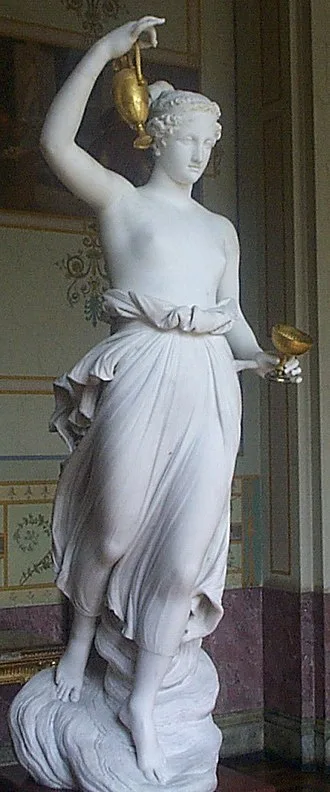
Cupbearer of the Gods
Hebe's main function was to serve as the cupbearer of the gods, that is, to serve nectar and ambrosia. This role was not simply servile but deeply symbolic:
- Ambrosia is associated with immortality
- The nectar with the divine vitality
Hebe, as the operator of these elements, acts as Mediator of eternal youth.
Replacement by Ganymede
In later traditions, its role is replaced by Ganymede, which probably reflects changes in religious perceptions or mythological developments.
Symbolism and Ideological Meaning
Hebe is not just a deity of youth. It represents:
1. The eternal renewal
Youth in ancient Greece is not only an age phase, but an ideal state of harmony of body and soul.
2. The transition
The word «Hebe» also states the stage of puberty — the passage from childhood to maturity.
3. Immortal
Through its relationship with ambrosia, it is associated with the concept of eternal life.
Worship and Archaeological Testimonies
The worship of Hebe was not as extensive as other gods, however there were important centers:
- Argos: Particularly important worship as the daughter of Hera
- Sikyon: Reported as protector of youth
He was often worshipped together with Hera, suggesting mother-daughter connection and generation transition.
In Heraion of Argos there was at Pausanias her gold-ephantine statue, a work of Naykides near the statue of Hera
Image
Hebe is usually portrayed:
- As a young woman with delicate characteristics
- To hold a cup or a cupbearer
- Often next to Hercules
In pottery and sculpture, its form exudes calm, grace and eternal freshness.
Philological Reports
Hebe refers to various ancient works:
In «Iliad», appears as a servant of the gods, while in later sources it becomes more independent.
=
Discover more Greek deities in our collection.