
What are minor deities?
When we hear about gods and goddesses, our minds usually turn to the Twelve Olympians: Zeus, Hera, Athena, and the rest. But Greek mythology doesn’t end there. Alongside the major gods were hundreds of other divine beings, lesser in power and glory, yet playing a vital role in people’s daily lives. These are the minor deities—or, as they are often called, the “lesser” gods.
They weren’t merely decorative elements in the stories. On the contrary, they were the ones that filled the world with life, movement, and mystery. A river didn’t just carry water; it had its own personality and voice. A forest was not just trees; within it lived nymphs who protected the leaves and creatures. The minor deities made the natural environment feel alive and full of presence.
Take the Nymphs, for example. They were not a single goddess, but groups. The Naiads guarded the springs and rivers, the Dryads the trees—especially the oak trees—while the Oreads roamed the mountains. The people of antiquity believed that if you respected a Nymph, the spring will continue to provide clean water and the trees will bear fruit. But if you offend it, the water may run dry, or an accident may occur in the forest. This belief was not just a myth; it influenced the way the ancients cared for their environment.
Next to Nymphs we meet the gods of rivers. Acheloos, the greatest river god, was not just a stream of water flowing from Aetolia. He was a strong son of Gaia and the Ocean, who even competed with Hercules in ancient battles. Every river had its own god—from the Alpheus in the Peloponnese to the Strymon in Macedonia. The inhabitants of these regions offered sacrifices on the riverbanks to ensure fertile land and safe journeys.
Another important category is the Satyrs and the Selenes. These half-human, half-animal creatures—with goat ears and tails—were not merely creatures of wild revelry. They represented the joy of nature, fertility, and the unpredictable side of the forest. They often accompanied Dionysus on his travels, bringing with them music, dance, and a bit of chaos. Despite their wild appearance, they helped people remember that life isn’t just about work and seriousness.
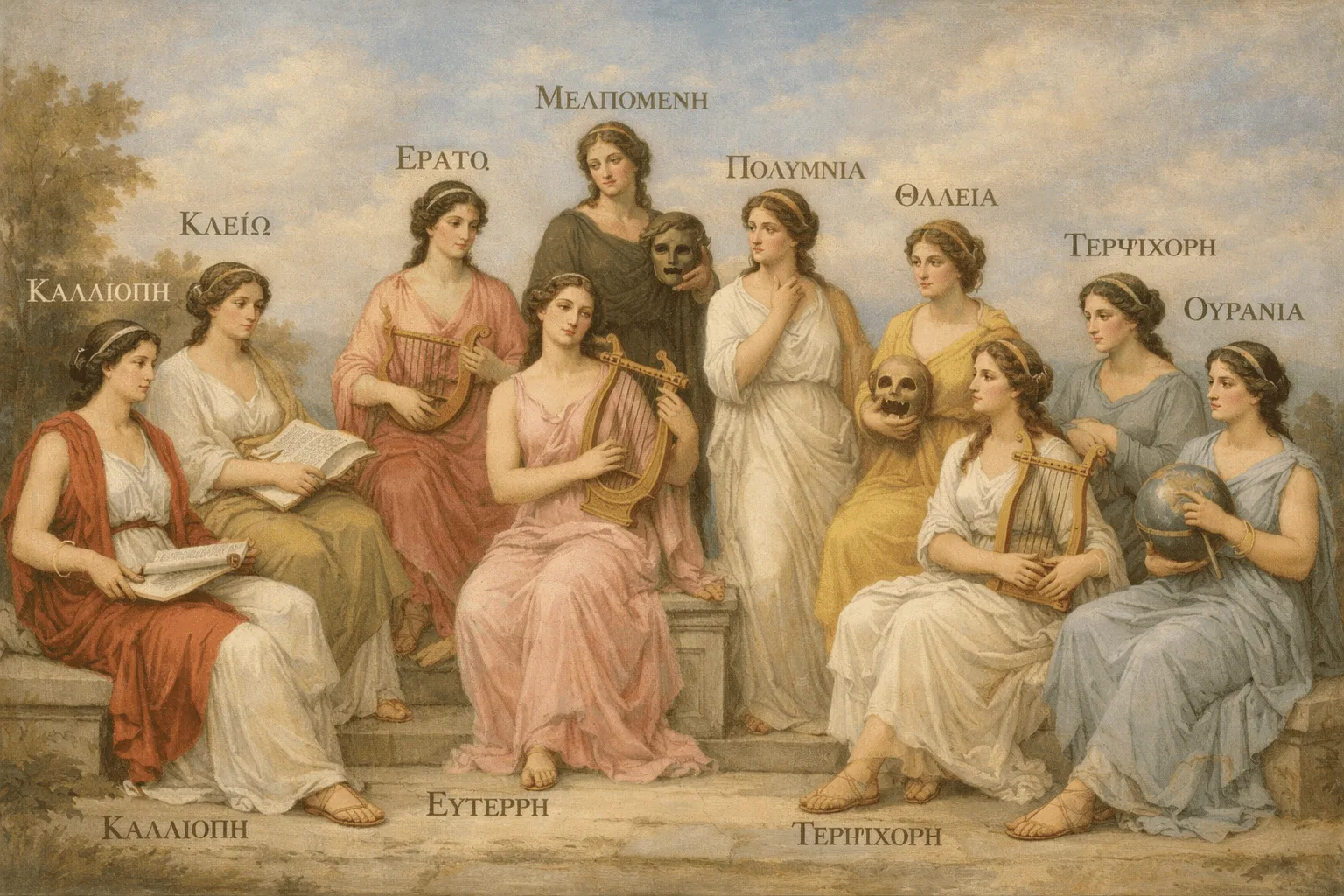
There are also the Hours, Graces, the Muses and The Moirai (Fates) – all minor deities with distinct roles. The Muses, for example, were not merely “goddesses of poetry.” Each had her own domain: Clio presided over history, Euterpe over music, Thalia over comedy. When a poet sought inspiration, he did not address Apollo. First, he would call upon the Muses, as if he were knocking on the door of a studio full of creators.
These deities were often associated with specific places. A village near a lake mainly honored the lake’s nymphs. A port offered sacrifices to the gods of the waves and winds. Thus, worship was not only for the great gods of the major cities, but also for the local forces that protected daily life.
Today, when we read these stories, we see how deep the ancient people’s connection to their natural environment was. The lesser deities were not marginal figures. They were the way people gave meaning to every river, every tree, and every breeze. They remind us that even small presences can be of great significance—as long as we pay attention to them.
Let’s get one thing straight: What does “minor deities” mean? These are the lesser-known gods and nymphs who surround the main characters. They often have specific roles—they are associated with weather phenomena, social situations, or particular features of nature.
Minor deities and personifications represent abstract concepts, natural forces, and moral principles. They do not belong to the inner circle of the Olympians, but they are essential because they maintain the mythological balance of the entire world of gods and humans.
In this category belong deities such as Nike, - Nemesis, The The Moirai (Fates), the Hours, - Illiteracy, Thanatos, Hypnos And many more forms that personify concepts such as time, justice, fortune and destiny.
Greek Deities
- The Graces in Greek Mythology
- The Goddess Hebe in Greek Mythology
- Iris: The Goddess of the Rainbow
- Nike: The Goddess of Victory
- Oceanides: The Deities of Waters
- Hecate: The Goddess of Magic
- River deities
- God Pan in Greek Mythology
- Nephele: A deity in Greek mythology
- The Fates: The Gods of Destiny
- Nereids: Deities of Greek Mythology
- Naiads – Nymphs of the Springs and Rivers
- Dryads – Forest Nymphs
- Nymphs in Greek Mythology
- Persephone: Goddess of the Underworld
- Nemesis in Greek Mythology
- The Muses in Ancient Greek Mythology
- Oniros – The God of Dreams
- Asclepius: The God of Medicine
Frequently Asked Questions About Minor Deities in Greek Mythology
What are minor deities?
Minor deities are lesser or less well-known divine figures in Greek mythology who were associated with nature, emotions, rivers, forests, the sea, and various aspects of daily life.
What is the difference between the Olympian gods and the lesser deities?
The Olympian gods were the principal deities of the Greek pantheon, while the lesser deities had more specialized roles and usually less power or influence.
Which deities are considered minor?
These include the Nymphs, the Muses, the Horae, the Nereids, the Graces, Hypnos, Nike, and many other divine figures.
What were the Nymphs?
Nymphs were nature spirits who lived in forests, rivers, mountains, and springs. They were associated with the beauty and fertility of nature.
Who were the satyrs?
The Satyrs were mythical creatures who accompanied the god Dionysus and symbolized revelry, wine, and the instincts of nature.
Who were the Muses?
The Muses were deities of art, music, poetry, and knowledge. Each Muse presided over a different form of art or science.
What role did the Graces play?
The Graces symbolized beauty, joy, and grace. They often accompanied Aphrodite and took part in the gods’ festivals.
Who were the Nereids?
The Nereids were sea nymphs, daughters of Nereus, who protected sailors and the seas
Were there deities of sleep and dreams?
Yes. Hypnos was the personification of sleep, while Morpheus was associated with dreams.
What were the Hours?
The Hours were deities associated with the seasons, the natural order, and the harmony of the world.
Were all the minor deities immortal?
Most were considered immortal or long-lived divine beings, although they did not always possess the same power as the Olympian gods.
Why were the minor deities important?
Minor deities helped the ancient Greeks explain natural phenomena, emotions, and the forces of everyday life.
Which minor deity was the most well-known?
Among the best known were the Muses, the Nymphs, and Nike, due to their prominent presence in mythology and ancient art.
Were minor deities worshipped in ancient Greece?
Yes. Many had sanctuaries, altars, and local cults, especially at springs, caves, and sacred groves.
Where does the information about these deities come from?
The information comes from ancient works by poets and writers such as Hesiod, Homer, and other ancient sources.
Sources & References
Mythical creatures of Greek mythology
Greek Mythology: Gods, Heroes, Myths and Creatures
Gods, Heroes & Myths of Ancient Greece
Mythical creatures of Greek mythology
Ancient sources
Hesiod – Theogenia & Works and Days | Primary Sources
Primary Sources of Greek Mythology | Hesiod, Homer, Orphic Hymns
Primary Sources of Greek Mythology | Ancient Texts
Perseus Digital Library is a reliable academic database with ancient Greek texts and historical sources, particularly useful for the study of Greek mythology and Elefsinian Mysteries.