
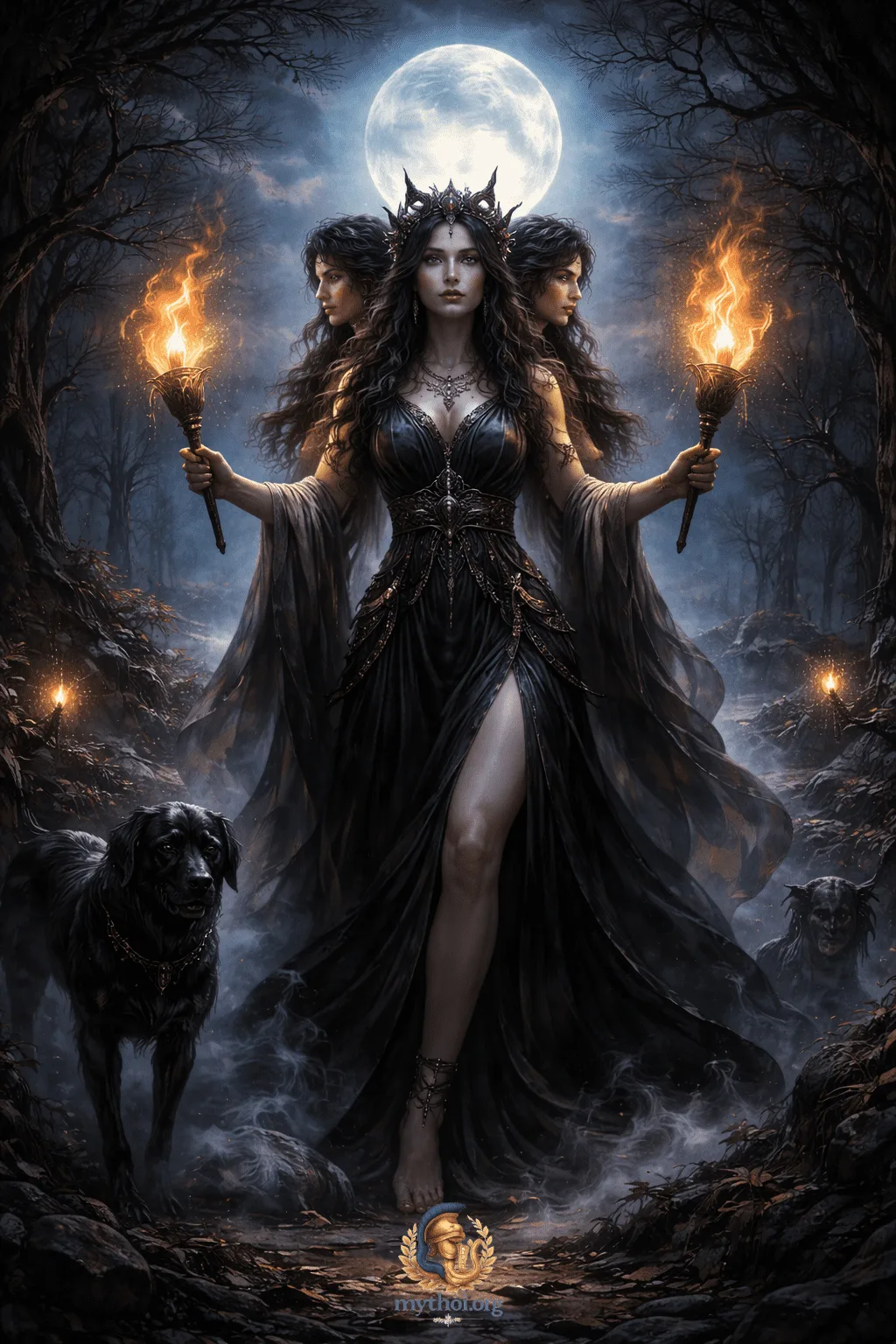
Hecate: The Mysterious Goddess of Magic, Night and Crossroads
- Hecate is one of the most enigmatic and complex deities of ancient Greek mythology. Goddess of magic, night, moon, ghosts and necromancy, is inextricably associated with the boundaries: between life and death, light and darkness, the world of gods and the world of men.
In ancient times, Hecate was dear and respected as a goddess of the dark moon. People considered her a protector against invisible dangers and spiritual enemies.
Everything was going well until the Persephone, the goddess of spring, was kidnapped by Hades And he was forced to live in the underworld for three months every year. Persephone was afraid to make her own journey to the land of the dead, so year after year Hecate led her with love through the dark passage and back. Over time Hecate became known as a Persephone attendant.
But because Persephone was also the queen of the underworld, who ruled the dead along with her husband, Hades, the role of Hecate as a goddess-protector was soon distorted and deformed, until she became known as the evil witch-god who lurked at night, seeking innocent people to enchant them and lure them into the underworld.
Today, few know the great goddess Hecate. Those who know her are blessed with her compassion for a soul lost in the kingdom of evil. Some are given a key.
“Hekate has been given numerous epithets describing her roles and qualities over the thousands of years of her worship. Some of her well known titles include:
Chthonia («Earth»),
Toad («the flamethrower»),
Subject matter («the roads»),
Locker («the locker»),
Kurotroph («child feeder»),
Phosphorus («light carrier»),
Propole («partner»),
Propylae («before the gates»),
Savior («Saver»),
Triform («triple»),
Triodis («of the three roads»).»
Unlike many other deities, Hecate is not limited to a single role. She is at the same time a patron, a guide and a punishment carrier, a force that can bless or remove, depending on the value and actions of mortals.
The Origin of Hecate
According to the prevailing tradition, Hecate was the daughter of Titans Persian and Asteria, which makes her Titanidas. From her parents she inherited power in heaven, earth and seaSomething extremely rare even among the gods.
Other sources report different genealogies, rendering it a daughter:
of Zeus and Asteria
of Zeus and Dimitra
The Nyx (Night)
or even Leto or Tartarus
This polyphony reflects the ancient and primary character of its worship.
Hecate and the Myth of Persephone
One of the most famous roles of Hecate is her participation in her myth Persephone grab. When Hades grabbed her daughter Demeter, Hecate stood by the goddess of fertility and helped her look for her daughter, lighting the road in the night with flaming torches.
After the mother and daughter reunion, Hecate became Persephone attendant and trusty in Hades, acting as a mediator between the lower and upper world.
Goddess of Magic and Necromancy
Hecate was considered her supreme deity magic and magic. Witches, priests and necromancers invoked her name at ceremonies related to:
Spirit appeals
oracles
curses and purifications
protection from malicious forces
It is no coincidence that it was later closely associated with forms such as Circe and Medea, which in certain traditions are considered its daughters or followers.
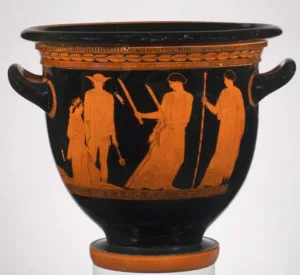
Hecate in Art and Iconography
In angiography, Hecate is usually depicted:
as a woman holding two torches
dressed in short tunics and hunting shoes, similar to Artemis
In sculpture:
commonly occurring enthroned or triple
as a dark but imposing deity
Worship and Meaning
Hecate was mainly worshiped: at crossroads
in city gates
near graves
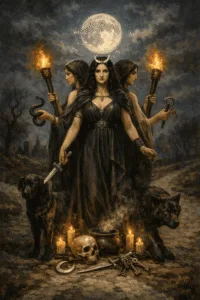
Hecate is associated with specific animals-symbols, which reflect its dark but protective nature: Black dog: keeper of boundaries and dead Kunavi: animal of magic and transformation (in later traditions: snakes and owls) According to myths of transformation, some of these animals were people who changed form through divine intervention. The Triple Form and the Crossroads One of the most characteristic features of Hecate is its triple depiction. In art and sculpture it is often presented with three forms or three faces, pointing in different directions. This image is associated with its role as: goddess of the crosses keeper of the boundaries patron of the transitions In ancient Greek houses and streets were placed Ecaia, small statues dedicated to the goddess, for protection from evil spirits. Its believers offered food and drink, especially during the new moon, seeking protection, guidance, or purification.
Despite her dark character, Hecate was not a malicious goddess. Instead, he honored justice and protected those who respected sacred laws.
The Timeless Heritage of Hecate
Hecate survived in collective memory as a symbol:
- of the secret
- the knowledge that lies in darkness
- the power of boundaries and transitions
In modern times, he remains an iconic figure in esotericism, literature and modern mythological revival
Discover more Greek deities in our collection.