
Prompt messages
God Dionysus is one of the most exciting and multidimensional forms of Greek mythology. It is not only the god of wine, but also the protector of joy, fertility, theatre, transformation and liberation from the limits of everyday life. In ancient Greece, his worship was associated with dionysian festivals, intense rituals and myths that speak of the power of nature, passion and human soul.
The form of Dionysus charms to this day, because it unites the opposite: logic with ecstatic, civilized with savage, mortal with divine. In this article we will meet Dionysus through his mythology, history, worship and influence on culture.
Who was God Dionysus?
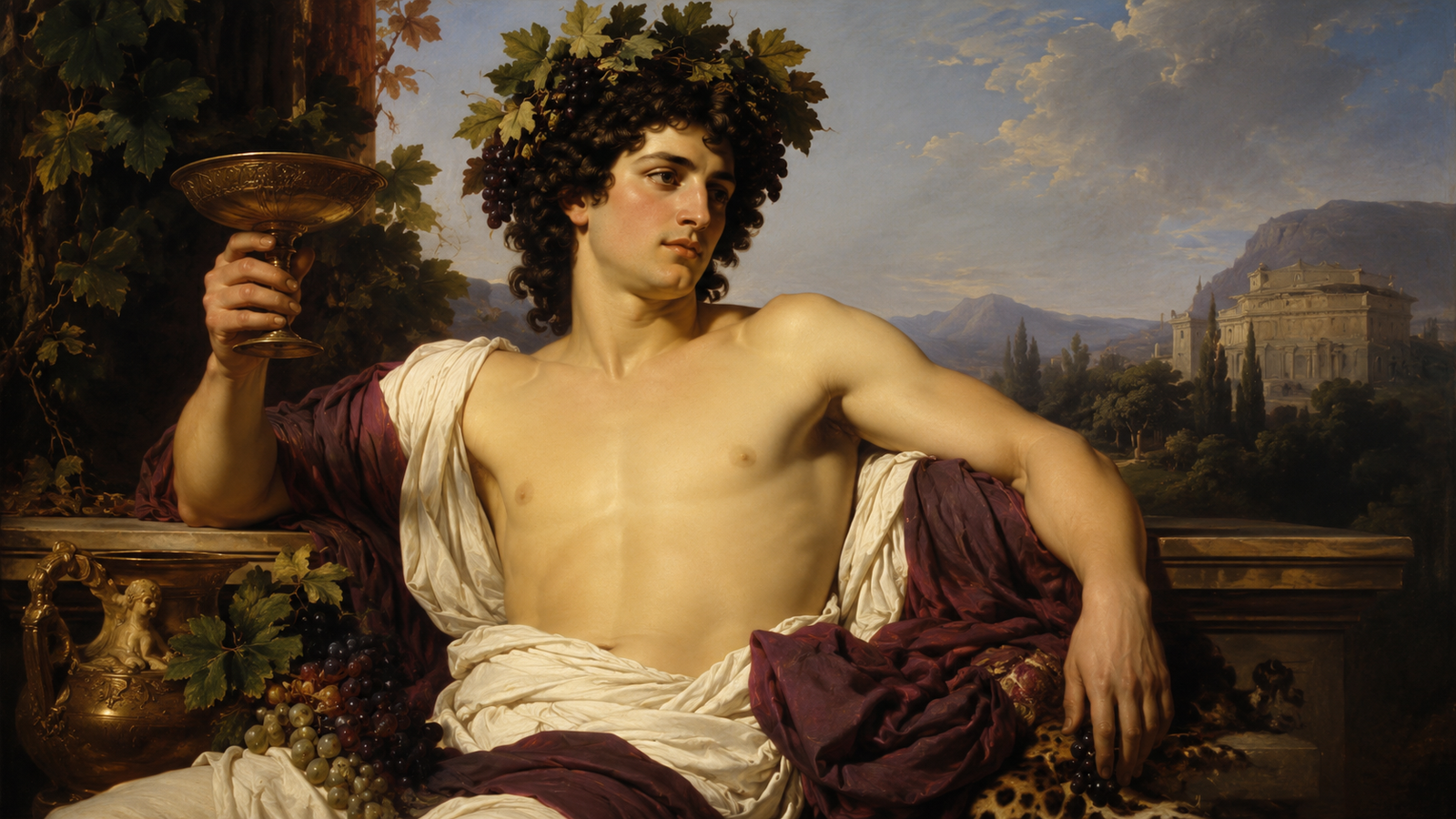
God Dionysus, also known as Bacchus in Roman tradition, was in ancient Greek religion the god of wine, vine, euphoria and ritual ecstasy. It belongs to the most important Olympian gods, although its worship has a particularly ancient and deep popular basis.
Unlike other deities of ancient Greece associated mainly with order and stability, Dionysus expresses the unforeseen. He is the God who brings joy, but also transcendence. The god who releases, but at the same time testes the limits of human behavior. That is why his presence in mythology is full of contradictions, symbolisms and strong emotions.
In short, what does Dionysus symbolize?
- Wine and winemaking
- Fertility and the regeneration of nature
- Ecstasy, joy and liberation
- Theatre and artistic expression
- The breakdown of social boundaries
- The transformation and power of myth
The origin and birth of Dionysus
The birth of Dionysus is one of the most famous episodes of Greek mythology. According to the most widespread myth, he was his son Zeus and mortal Semmel, daughter of the king of Thebes CadmusHis story begins with love, jealousy and divine intervention.
Hera, Zeus' wife, deceived and angry, tricked Semel to ask Zeus to appear before her with all his divine splendor. When Zeus appeared with thunder and lightning, mortal Semmel could not bear the sight and was burned. But Zeus saved the fetus of Dionysus and sewed it to his thigh until the pregnancy was completed.
From this strange birth comes one of the most characteristic ideas around God: Dionysus is double born. This property is not just mythological detail· symbolizes the transition from death to life, from destruction to recreation.
The importance of «dual birth»
The dual birth of Dionysus is often interpreted as a symbol:
- Regeneration after loss
- the power hidden in instability
- God's ability to transcend the limits of the common human fate
This myth helped shape the image of Dionysus as a god belonging simultaneously to the world of gods and men.
The symbols and forms of Dionysus
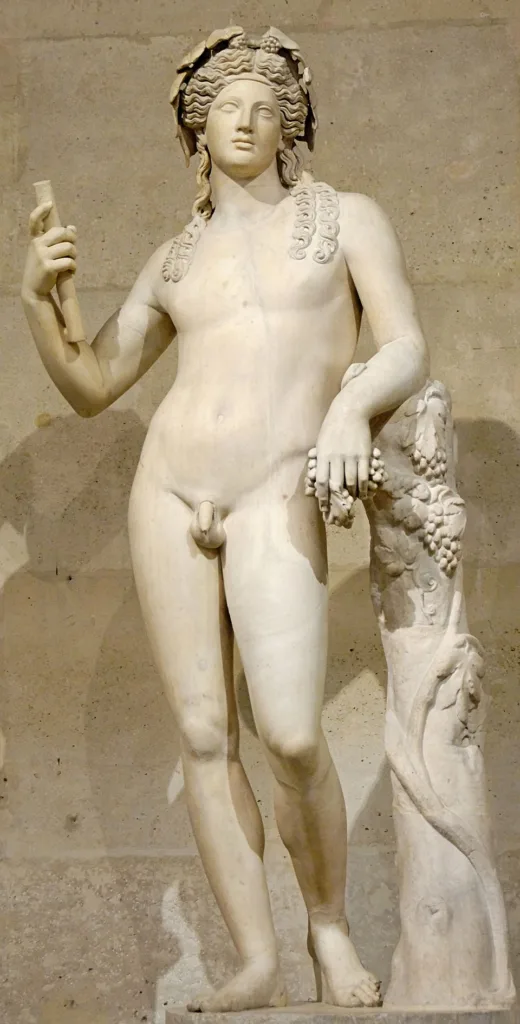
Dionysus appears in art and mythology with rich iconographic symbolism. Its symbols are directly identifiable and are associated with nature, wine and vital energy.
Main symbols of God Dionysus
- Wine and vine: Its main connection with wine and the cultivation of the vine.
- Thyrsos: Bar wrapped with ivy or vine leaves, symbol of power and ceremonial power.
- Ivy: Plant that often accompanies him in the performances.
- Wine cup: It declares drunkenness, but also sacred society.
- Panther: Sacred animal symbolizing its wild, unpredictable nature.
- Mask: Particularly important in theatre and dionysian ceremonies.
Dionysus is often portrayed young, with long hair, or with more mature and royal appearance. In some performances there is a feminine or androgynous element that enhances the symbolism of transcending binary boundaries.
The double nature of God
God Dionysus is not only the god of joy. He's also the god of overthrow. It can bring euphoria, but also fury. Bless the feast, but also reveal the chaos that lies beneath the social surface. This dual nature is essential to understand why worship caused him both enthusiasm and fear.
The most famous myths of Dionysus
The mythology around Dionysus is rich and multi-level. His stories concern not only his birth and origin, but also his travels, the punishments of his opponents and his spread around the world.
Dionysus and the Mainads
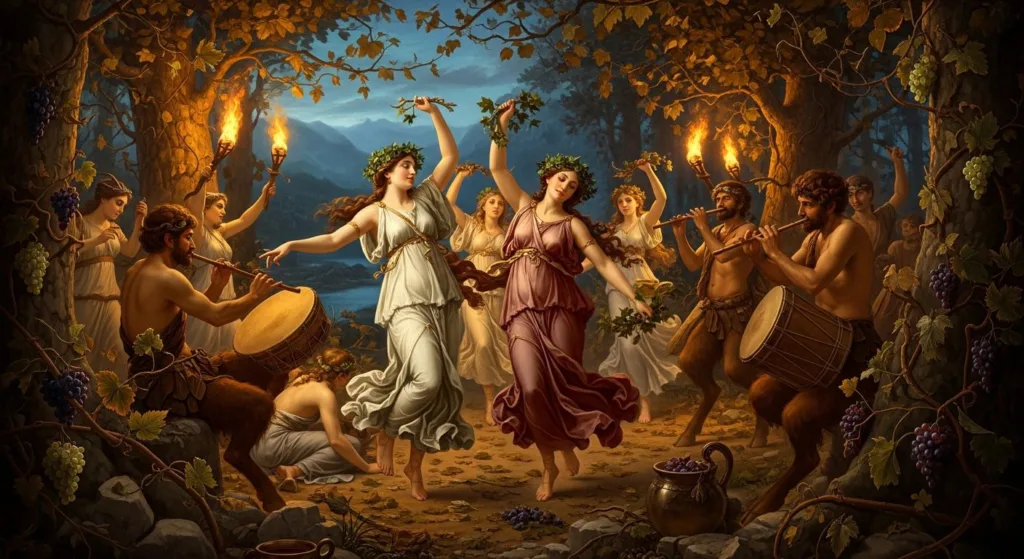
The Mainades were women who followed God into ritual fury. Dancing and screaming into nature, they entered a state of ecstasy, which was considered a means of union with divine energy. In performances and myths, the Mainades embodie liberation from city rules and contact with primary instinct.
The myth of Penthea
One of the most famous myths is that of Penthea, king of Thebes, who refused to recognize the divine nature of Dionysus. His refusal led to a tragic end: he was dismembered by his mother and the Mainades, who had come into dionysian fury.
This myth has deep symbolism. It shows that the denial of the divine and excessive attachment to control can bring destruction. In Euripides' tragedy «Buckets», this myth acquires special literary power and remains to date one of the leading works of ancient dramaturgy.
Dionysus and pirates
In this myth, pirates kidnapped Dionysus without knowing who he is. God transformed the ship into a vine, filled the air with aromas and made lions appear. The pirates, terrified, fell into the sea and transformed themselves into dolphins.
This story highlights his ability to transform the environment and punish those who do not recognize his power.
Dionysus and Ariadne
A more tender and human myth is the marriage of Dionysus to Ariadne, which Theseus abandoned in Naxos. Dionysus found her, loved her and made her his partner. In some versions, he even offers her immortality.
This myth combines love with redemption and shows that Dionysus is not only a god of drunkenness, but also the restoration of those who have been hurt.
Dionysus worship in ancient Greece
Dionysus worship has been one of the most vibrant, intense and socially important cults of ancient Greece. It was not limited to temples and formal ceremonies· It spread to fields, cities, private gatherings, and public celebrations.
Where was Dionysus worshipped?
Dionysus was worshiped in many areas of the Greek world, such as:
- correspondent in Athens
- correspondent in Theba
- correspondent in Naxos
- correspondent in Elefsina
- correspondent in Macedonia
- in colonies of the Greek world in the Mediterranean
His worship was particularly strong in rural communities, where the vine and circle of nature were of central importance. In time, he also spent at the center of urban life, gaining an official and institutional character.
Dionysian celebrations and ceremonies
Dionysian celebrations were one of the most important religious events of antiquity. Among them stand out:
- Dionysian of Athens
- The Lions
- The Agricultural Dionysia
- The Endurances
These celebrations combined worship, dance, wine, music, and often the theatrical event. It wasn't just fun. It was a way to participate in a priesthood that connected the community to the rhythm of nature and divine presence.
What happened to the dionysian ceremonies?
Dionysian ceremonies could include:
- transmitters with music and singing
- dances with rhythmic movement
- supply of wine and fruit
- use of masks
- improvised or theatrical performances
- ceremonial ecstasy and symbolic «outcome» the limits
The experience of worship aimed not only at worshiping a god, but also at mental discharge, collective joy and contact with the mystery of life.
Dionysus and theatre
Perhaps the most important cultural contribution of Dionysus is his close relationship with the ancient Greek theatre. It is no coincidence that many plays of antiquity were held in his honor.
Why is Dionysus connected to the theatre?
The theatre was born through the dionysian festivals and especially from the dithyrambus, a choral hymn dedicated to God. From these ritual forms tragedy and comedy gradually evolved.
Dionysus is connected to the theatre because:
- Incarnates the transformation
- supports the use of mask and role
- brings out the deepest emotions
- allows the public to see human nature without filters
The theatre, like Dionysus, reveals the truth through the performance.
The theatrical dimension of mythology
The myth of Dionysus himself is theatrical: it has conflicts, transformations, twists and emotion. That is why he inspired great tragic poets. The «Buckets» Euripides is perhaps the most characteristic work that reflects the power of God and his conflict with human arrogance.
Dionysus as a god of nature, fertility and regeneration
God Dionysus is not only related to wine. He is also deeply associated with vegetation, spring, cycle of seasons and the renewal of life. At the core of his worship lies the idea that nature dies and is reborn.
The symbolic relationship with the earth
The vine, which needs care, pruning and time to bear fruit, is an ideal symbol of dionysian thought. Wine is born of fruit· From apparent corruption is joy born. This cycle reminds that life is not linear, but repetitive and transformative.
Fertility and new life
In ancient Greece, fertility was not only about land but also about man, community and the continuity of the genus. Dionysus, through his connection to vegetation and vital momentum, expresses the power of creation in all its forms.
The image of Dionysus in art and literature
Dionysus was an endless source of inspiration for art. From the vases of antiquity to sculpture, painting and modern literature, its form keeps coming back.
In ancient iconography
In vase paintings and reliefs, Dionysus is often accompanied by:
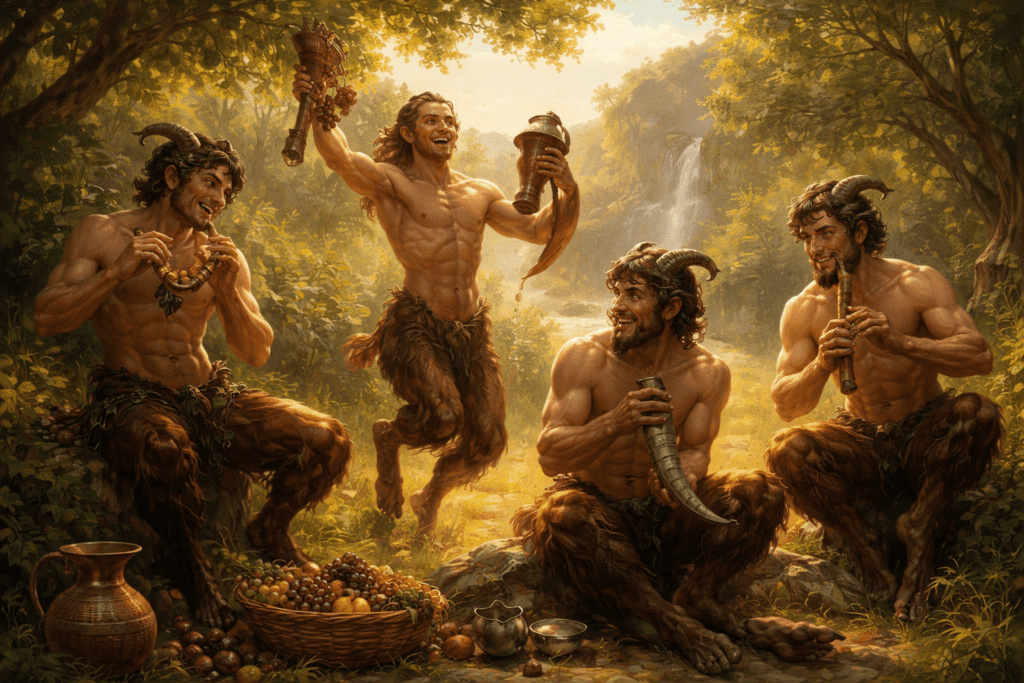
- satyr
- Pineapples
- panthers
- vines
- instruments
His illustrations are usually joyful, dynamic and full of movement. In many performances he seems to travel in a chariot or participate in a celebration, always with the characteristic of the dionysian style.
In modern thought
The form of Dionysus inspired the modern philosophy and aesthetics. Some thinkers saw in this symbol of instinct, creative outburst and artistic freedom. The contrast between Apollonio and dionysian became a classic figure to describe the two forces that shape culture: order and transcendence.
Dionysus in the everyday life of ancient Greece
Although he is a god of intense mythological and ceremonial character, Dionysus did not belong only to the holy world. He was present in the everyday life of the people of ancient Greece.
Wine as part of social life
Wine in ancient times was not just a drink. It was an element of sociality, hospitality and banquet. His modest consumption was associated with kindness and education, while exaggeration could lead to loss of control, which dionysian mythology repeatedly comments.
The symbolism of drunkenness
Drunkenness, in the worship of Dionysus, is not only a biological condition. It's also a symbolic experience. It declares the temporary release from logic and social contexts, so that man gets closer to his deeper truth.
That is why Dionysus causes so much admiration: he represents man's ability to come out of himself and touch something bigger.
Why does God Dionysus remain timely?
Dionysus' charm is not limited to antiquity. He remains timely because he talks about issues that still concern modern man: freedom, identity, creation, transcendence, emotion and relationship with nature.
In today's world of speed and control, God Dionysus reminds the value of relaxation, art, celebration and connection with uncertain and living. It is God who invites us not to fear emotion, to see transformation as part of life and to recognize that joy and mystery can coexist.
Conclusion: the timeless myth of Dionysus
God Dionysus is much more than the god of wine. It is one of the most complex and human forms of Greek mythology, a god that unites ecstasy with wisdom, nature with culture, celebration with tragedy. Dionysus worship, Dionysian celebrations and his relationship with theatre show how deeply it affected ancient Greece and, through it, the entire western culture.
Dionysus remains alive not only in books and museums, but also in the way we perceive the joy, creativity and need of man to exceed his limits. And perhaps that is why his myth continues to speak so strongly today: because within him we recognize something of our own human nature.
Frequently Asked Questions About Dionysus
Who was Dionysus?
Dionysus was the god of wine, joy, celebration, and ecstasy. He was also associated with theatre, nature, and sacred rituals.
Who were his parents?
He was the son of Zeus and the mortal Semele. Zeus saved him before birth by carrying him in his thigh.
How is Dionysus connected to wine?
He was the patron of viticulture and winemaking and taught humans how to cultivate the vine.
What are his symbols?
His symbols include the vine, grapes, the thyrsus, and the panther, representing fertility, nature, and vitality.
Who followed Dionysus?
Dionysus was accompanied by the Mainades and the Satyrs, mythical beings related to nature, dance and ecstasy.
What is his connection to theatre?
Dionysus was the patron of ancient theatre. Many dramatic performances were held during festivals in his honor.
Where was he worshipped?
His cult was especially prominent in Athens, Thebes, and Naxos, where major sanctuaries were dedicated to him.
What did Dionysus represent?
He symbolized joy, freedom from social constraints, and the powerful forces of nature.
How is he depicted in art?
He is often shown as a youthful figure crowned with vine leaves, holding a thyrsus.
Why is Dionysus important?
He represents fertility, celebration, and creative ecstasy—key elements that shaped ancient Greek culture.
OLYMPIAN GODS
ZEUS | HERA | ATHENA | ARES | ARTEMIS | DIONYSUS | HERMES | HADES | Apollo | POSEIDON | HEPHAESTUS | APHRODITE
Ancient sources
Hesiod – Theogenia & Works and Days | Primary Sources
Primary Sources of Greek Mythology | Hesiod, Homer, Orphic Hymns
Primary Sources of Greek Mythology | Ancient Texts
Perseus Digital Library is a reliable academic database with ancient Greek texts and historical sources, particularly useful for the study of Greek mythology and Elefsinian Mysteries.