
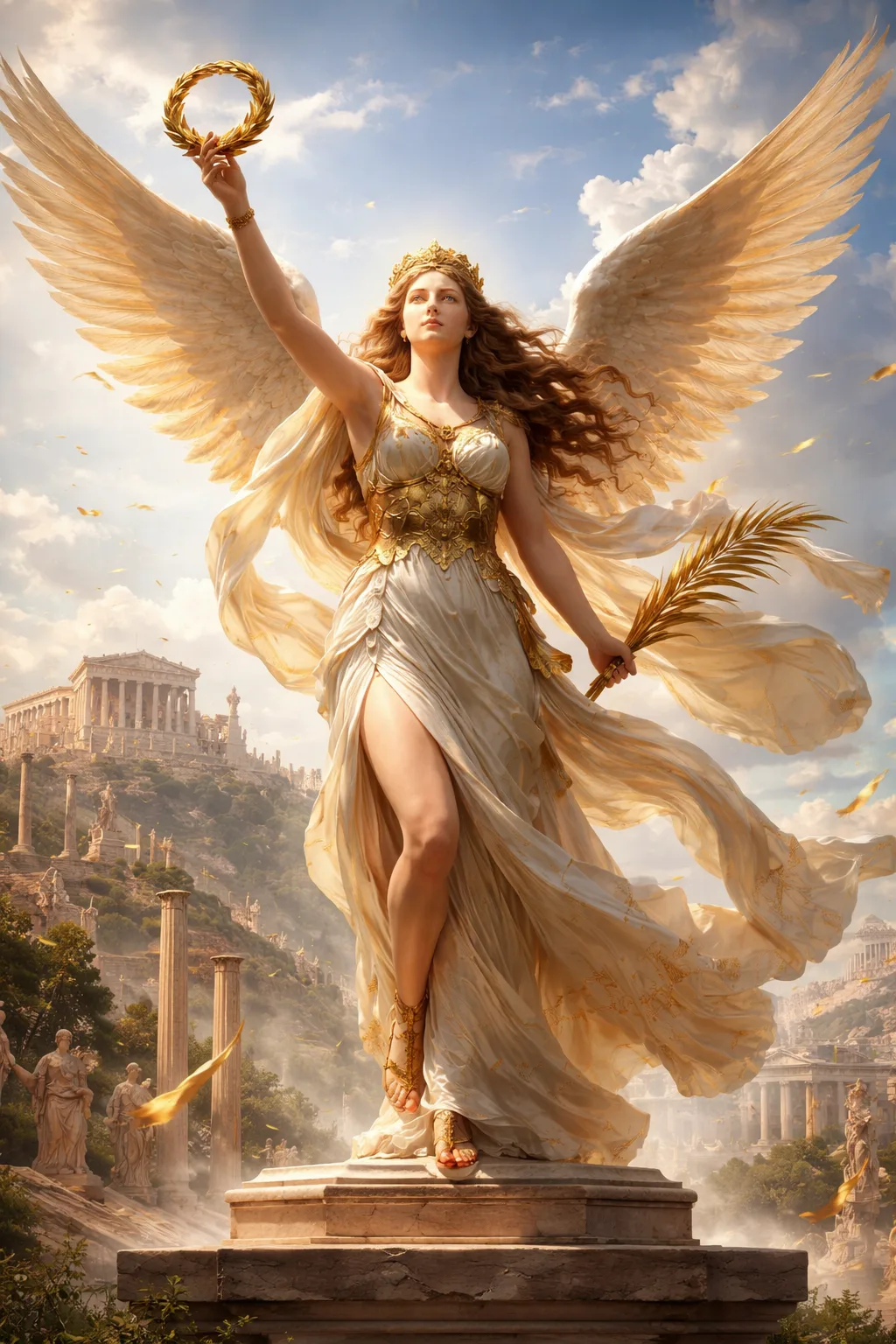
- Nike is one of the most iconic deities of Greek mythology, the personification of victory in all its forms: military, athletic, or intellectual. Since ancient times, her figure has inspired respect, admiration, and awe, as she is associated with strength, honor, and the reward of virtue.
The Origin of Nike
According to Greek mythology, Nike is the daughter of the Titan Perseus (or, in other versions, the Titaness Protogeneia) and sister of Zephyrus and other sky spirits. She is closely associated with Zeus and Olympian gods, as he often appears alongside them to reward them for their victories in battles and conflicts.
Nike is not only a goddess of military success. Its presence suggests the overall success, the reward of effort and the recognition of triumph in every area of life.
Her Appearance and Symbols
In art, Niki is often portrayed as a young woman with wings, who
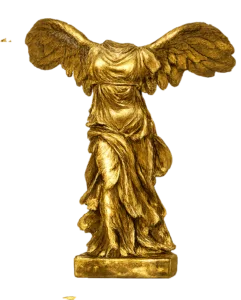
flies with grace and strength. She holds laurel wreaths or olive branches in her hands, symbols of victory and peace. Her most famous depiction appears in the renowned statue of Nike of Samothrace, where the goddess appears to be landing with determination, while the wind ruffles her clothes and wings, conveying a sense of movement and freedom.
The symbols of victory became classic emblems of triumph in ancient Greece and were often featured on trophies, coins, and public sculptures.
The Role of Nike in Mythology
Nike played an active role in many significant moments in mythology, supporting the Olympian gods in their battles. Her presence was a sign that justice and virtue would prevail.
A defining characteristic of the goddess is her constant association with honor and recognition. Nike did not merely grant victories to generals and heroes; her presence affirmed their worth and glory. In essence, Nike embodied the idea that effort and virtue do not go unpunished, but are recognized and rewarded.
Nike in Ancient Art and Ritual
The goddess Nike was depicted in all forms of ancient Greek art: statues, reliefs, vases, and coins. The Olympian gods and heroes who won a battle or an athletic contest were often depicted with Nike crowning them, reinforcing the idea that divine vindication accompanies triumph.
In everyday life, the ancient Greeks honored Nike with rituals and sacrifices before military campaigns or important competitions. The most famous example remains the Winged Victory of Samothrace, which served as a symbol of victory in military conflicts and the bravery of soldiers.
Nike and the Modern Perspective
Today, Nike remains a symbol of triumph and success. Her name is used in competitive contexts, sporting events, and businesses, demonstrating that the desire for success and the recognition of effort are timeless values.
Victory reminds us that victory is not just a result of luck, but a result of courage, effort and loyalty. Her presence, even today, inspires respect and admiration, as did ancient Greeks.
Conclusion
The Goddess Nike She is more than just a mythical figure; she is the embodiment of humanity’s desire for recognition and triumph. Through traditions, art, and mythology, Nike remains a symbol of courage, perseverance, and justice. Just as in ancient Greece, so too today, Nike reminds us that effort and virtue are ultimately rewarded.

Discover more Greek deities in our collection.
Frequently Asked Questions About Goddess Nike
Who's Nike in mythology?
Nike is a goddess of victory and honor in Greek mythology, symbolizing triumph in battles, sports games and every form of success.
What are the main symbols of Nike?
Nike is often portrayed with wings, laurels or olive branches, symbols of victory, peace and triumph.
How did ancient Greeks honor Nike?
Ancient Greeks honored Nike with ceremonies, sacrifices and its depiction of statues, reliefs and coins, especially before war campaigns or important struggles.
What is the most famous statue of Nike?
The most famous statue is the Nike of Samothrace, featuring the goddess landing with power and grace, with wings and moving clothes.