
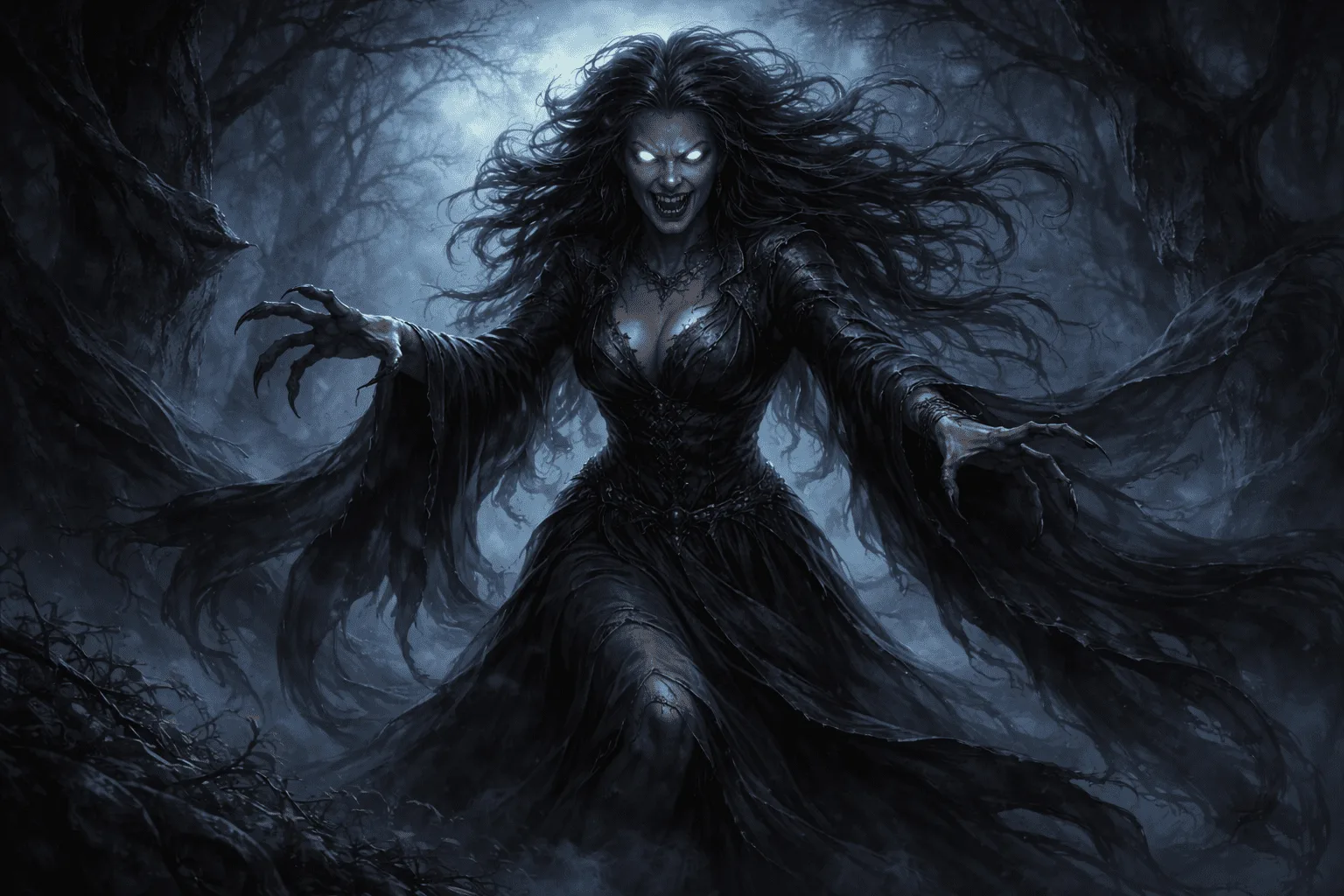
The Keres are chthonic formations of Greek mythology, known for their role as Death spirits who hunt the dead or cause destruction to the living. The Kings appear mainly in mythological texts, epic poems and folklore sources, and join the group of demonic feminine beings connected to the death and norms of human fate.
The Landers are linked to the Ethnic demon beings, such as The Moirai (Fates), the Erinyes and Mormo, while they often appear as invisible forces that punish and intimidate.
Cheres are among the darkest and mysterious forms of Greek mythology. Unlike Death, which represented the inevitable and often peaceful end of life, the Keers personified the violent death, bloodshed, epidemics and horrors of war. They were demonic deities wandering the battlefields of battles seeking the souls of men at the threshold of death.
Although they are not as well known as other forms of Greek mythology, the Cheres held an important place in ancient world perception. They represented the inevitable fate that awaits every mortal and embodied fears that accompanied war, disease, and violent destruction.
The Origins of the Cherries
According to mythology, the Cheres were daughters of the Night, the primitive deity who personified darkness. Night gave birth to many dark and mysterious powers of the world without the participation of another deity.
Among the brothers of the Cheries were Death, Sleep, Moros (the fate of death), Discord and other forces associated with destiny and human calamities. This kinship reveals the position of the Keres in the mythological world as personifications of the darkest sides of existence.
The form of the Cherries
Ancient Greeks described the Cheres as terrifying winged spirits. They were often portrayed in dark garments, sharp claws, and bloody hands. In some performances they are presented as black winged women flying over the battlefields.
Their appearance reflected their role as messengers of violent death. They did not necessarily cause death themselves, but waited for the moment that a warrior or a mortal would come to an end, so that they would seize his soul.
The Kings and the War
The Cheries were mostly associated with the war. According to the Homeric epics, they roamed over the battles in search of the wounded and dying warriors. Their presence symbolized the inevitable fate that waited for those involved in the conflicts.
In ancient thought, each man had his own «skin»The fate of death that followed him all his life. When the appointed moment arrived, his Kira appeared to complete his destiny.
The Kings in the Iliad
The most important references to Keres are in Iliad. There they are shown watching the battles of the Trojan War and claiming the souls of fallen warriors.
In one of the most characteristic episodes, Jupiter weighs the fates of Achilles and Hector. When Hector's fate leans toward death, his Kira approaches and his defeat becomes inevitable. This episode shows that even the greatest heroes cannot escape their destiny.
The relationship of the Cherries with the Fates
The Cheries were closely associated with the Fates, the deities that determined the thread of every man's life. While the Fates defined the duration and end of life, the Cheres represented the way death came, especially when he was violent or bloody.
This relationship reflects the complex Greek concept of destiny, according to which life and death were parts of a divinely defined order.
The Cheries in ancient art
Although they do not appear as often as other deities, the Cheres are depicted in certain vases and reliefs of the Archaic and Classical period. They are usually presented as winged female figures carrying dead warriors or participating in battle scenes.
The artists distinguished them from other winged deities thanks to their dark and threatening appearance, emphasising their connection to death.
The Symbolism of the Cherries
The Kings symbolize the violent side of death and man's inability to escape his destiny. They represent the fears of war, epidemics, and sudden calamities.
At the same time, they express the ancient Greek belief that death is not a random event but part of a secular order that governs the life of all mortals.
The Heritage of the Cherries
Although less known than Fates or Death, the Cheres are an important part of Greek mythology. Their image as winged spirits wandering in the fields of fighting influenced later perceptions of the angels of death and other supernatural forms associated with the end of life.
Their presence in ancient myths reminds the Greeks how deeply the issues of fate, war and mortality were concerned. As dark deities of death, the Cheres remain among the most enigmatic and imposing forms of the mythological world.
Name and Etymology
The term Keres (Cēres / Kēres) comes from the Greek word related to destruction, death and extortion. The widows are considered as the souls of prematurely dead or tragically lost people, and often appear as air creatures or death spirits.
Relevant terms:
Cher.
Winter spirit
Deadly demon form
Form and Iconography
Keres appear in ancient texts and in later iconography as:
Women's figures with scary features
Winged or hovering over battlefields
Sharp nails, teeth or cranial elements
Dark, threatening appearance, that enhances fear sense
The popular imagination, Cherries often appear as invisible entities that lurk human fate.
Role in Mythology
Keres have diverse roles:
1. Death spirits
They monitor the battlefields, removing the souls of dead or wounded warriors.
2. Punishment and intimidation
They are used in myths to teach:
respect for life and death
recognition of the limits of human power
3. Connection with Furies
In some traditions, Cherries are considered Research assistants, performing the punishment of offenders.
Relationship with Other Living Beings
The Keres are associated with:
The Moirai (Fates) – intend the fate of man
Mormo – intimidating pedagogical form
Erinyes – perform revenge punishments
They represent the compulsory execution of death and fate, mainly in tragedies and epic texts.
Ancient Sources
The Cheries refer to:
Songs of Aeschylus and Euripides
Hesiod and other novelists
Descriptions of epic battles (Iliad)
Folklore traditions of ancient Greece
Symbolism
They shall symbolize:
Terrible power of death
The inevitable fate
Thorough fear and uncertainty of life
They act as a teaching tool for humans to understand the death and limits of human existence.
Educational Value
The study of the Keres is particularly useful for:
students and students of classical studies
teachers teaching Greek mythology
researchers on folklore and religious practices
Their knowledge promotes understanding dynamonic forces, ancient fear psychology and dramatic use of demonic beings.
Modern Bibliography
- The Greek Myths.
- Early Greek Myth.
- The Complete World of Greek Mythology.
- The Routledge Handbook of Greek Mythology.
- Dictionary of Classical Mythology.