
Prompt messages
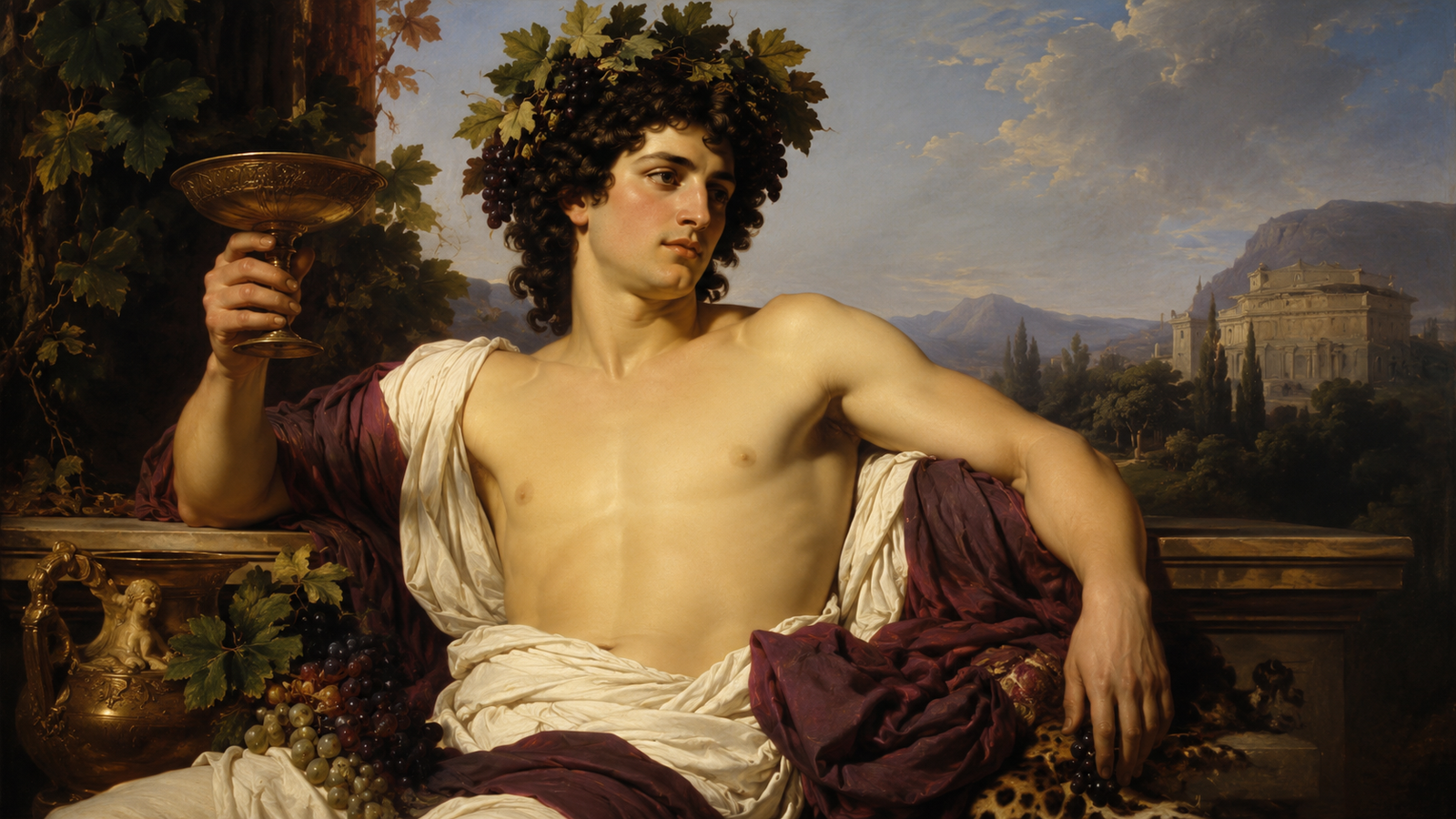
Ο Θεός Διόνυσος είναι από τις πιο συναρπαστικές και πολυδιάστατες μορφές της ελληνικής μυθολογίας. Δεν είναι μόνο ο θεός του κρασιού, αλλά και ο προστάτης της χαράς, της γονιμότητας, του θεάτρου, της μεταμόρφωσης και της απελευθέρωσης από τα όρια της καθημερινότητας. Στην αρχαία Ελλάδα, η λατρεία του συνδέθηκε με διονυσιακές γιορτές, έντονες τελετουργίες και μύθους που μιλούν για τη δύναμη της φύσης, του πάθους και της ανθρώπινης ψυχής.
Η μορφή του Διονύσου γοητεύει μέχρι σήμερα, γιατί ενώνει το αντίθετο: το λογικό με το εκστατικό, το πολιτισμένο με το άγριο, το θνητό με το θεϊκό. Σε αυτό το άρθρο θα γνωρίσουμε τον Διόνυσο μέσα από τη μυθολογία, την ιστορία, τη λατρεία και την επίδρασή του στον πολιτισμό.
Ποιος ήταν ο Θεός Διόνυσος;
Ο Θεός Διόνυσος, γνωστός και ως Βάκχος στη ρωμαϊκή παράδοση, ήταν στην αρχαία ελληνική θρησκεία ο θεός του κρασιού, της αμπέλου, της ευφορίας και της τελετουργικής έκστασης. Ανήκει στους σημαντικότερους Ολύμπιους θεούς, αν και η λατρεία του έχει ιδιαίτερα αρχαία και βαθιά λαϊκή βάση.
Σε αντίθεση με άλλες θεότητες της αρχαίας Ελλάδας που συνδέονται κυρίως με την τάξη και τη σταθερότητα, ο Διόνυσος εκφράζει το απρόβλεπτο. Είναι ο θεός που φέρνει τη χαρά, αλλά και την υπέρβαση. Ο θεός που απελευθερώνει, αλλά ταυτόχρονα δοκιμάζει τα όρια της ανθρώπινης συμπεριφοράς. Γι’ αυτό και η παρουσία του στη μυθολογία είναι γεμάτη αντιφάσεις, συμβολισμούς και δυνατά συναισθήματα.
Με λίγα λόγια: τι συμβολίζει ο Διόνυσος;
- Το κρασί και την αμπελουργία
- Τη γονιμότητα και την αναγέννηση της φύσης
- Την έκσταση, τη χαρά και την απελευθέρωση
- Το θέατρο και την καλλιτεχνική έκφραση
- Τη διάσπαση των κοινωνικών ορίων
- Τη μεταμόρφωση και τη δύναμη του μύθου
Η καταγωγή και η γέννηση του Διονύσου
Η γέννηση του Διονύσου είναι από τα πιο γνωστά επεισόδια της ελληνικής μυθολογίας. Σύμφωνα με τον πιο διαδεδομένο μύθο, ήταν γιος του Δία και της θνητής Σεμέλης, κόρης του βασιλιά της Θήβας Κάδμου. Η ιστορία του ξεκινά με έρωτα, ζηλοτυπία και θεϊκή παρέμβαση.
Η Ήρα, σύζυγος του Δία, απατημένη και οργισμένη, ξεγέλασε τη Σεμέλη ώστε να ζητήσει από τον Δία να εμφανιστεί μπροστά της με όλη τη θεϊκή του μεγαλοπρέπεια. Όταν ο Δίας φανερώθηκε με κεραυνούς και αστραπές, η θνητή Σεμέλη δεν άντεξε το θέαμα και κάηκε. Ο Δίας όμως έσωσε το έμβρυο του Διονύσου και το έραψε στον μηρό του μέχρι να ολοκληρωθεί η κύηση.
Από αυτή την παράδοξη γέννηση προέρχεται και μία από τις πιο χαρακτηριστικές ιδέες γύρω από τον θεό: ο Διόνυσος είναι διπλά γεννημένος. Αυτή η ιδιότητα δεν είναι απλώς μυθολογική λεπτομέρεια· συμβολίζει τη μετάβαση από τον θάνατο στη ζωή, από την καταστροφή στην αναδημιουργία.
Η σημασία της «διπλής γέννησης»
Η διπλή γέννηση του Διονύσου ερμηνεύεται συχνά ως σύμβολο:
- της αναγέννησης μετά την απώλεια
- της δύναμης που κρύβεται μέσα στην αστάθεια
- της ικανότητας του θεού να ξεπερνά τα όρια της κοινής ανθρώπινης μοίρας
Αυτός ο μύθος βοήθησε να διαμορφωθεί η εικόνα του Διονύσου ως θεού που ανήκει ταυτόχρονα στον κόσμο των θεών και των ανθρώπων.
Τα σύμβολα και οι μορφές του Διονύσου
Ο Διόνυσος εμφανίζεται στην τέχνη και τη μυθολογία με πλούσιο εικονογραφικό συμβολισμό. Τα σύμβολά του είναι άμεσα αναγνωρίσιμα και συνδέονται με τη φύση, τον οίνο και τη ζωτική ενέργεια.
Κύρια σύμβολα του Θεού Διονύσου
- Άμπελος και κλήμα: Η κατεξοχήν σύνδεσή του με το κρασί και την καλλιέργεια του αμπελιού.
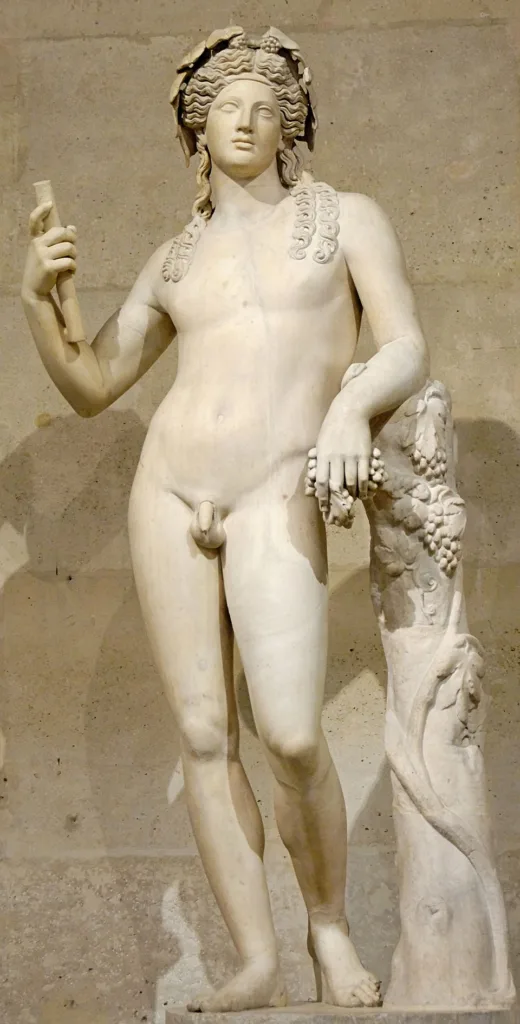
- Θύρσος: Ράβδος τυλιγμένη με κισσό ή αμπελόφυλλα, σύμβολο δύναμης και τελετουργικής εξουσίας.
- Κισσός: Φυτό που τον συνοδεύει συχνά στις παραστάσεις.
- Κύπελλο κρασιού: Δηλώνει τη μέθη, αλλά και την ιερή κοινωνία.
- Πάνθηρας: Ιερό ζώο που συμβολίζει την άγρια, απρόβλεπτη φύση του.
- Μάσκα: Ιδιαίτερα σημαντική στο θέατρο και στις διονυσιακές τελετές.
Ο Διόνυσος απεικονίζεται συχνά νέος, με μακριά μαλλιά, ή με πιο ώριμη και βασιλική όψη. Σε ορισμένες παραστάσεις εμφανίζεται θηλυπρεπής ή και ανδρογύναιος, στοιχείο που ενισχύει τον συμβολισμό της υπέρβασης των δυαδικών ορίων.
Η διπλή φύση του θεού
Ο Θεός Διόνυσος δεν είναι μόνο ο θεός της χαράς. Είναι και ο θεός της ανατροπής. Μπορεί να φέρει ευφορία, αλλά και μανία. Να ευλογήσει τη γιορτή, αλλά και να αποκαλύψει το χάος που κρύβεται κάτω από την κοινωνική επιφάνεια. Αυτή η διπλή φύση είναι βασική για να καταλάβουμε γιατί η λατρεία του προκαλούσε τόσο ενθουσιασμό όσο και φόβο.
Οι πιο γνωστοί μύθοι του Διονύσου
Η μυθολογία γύρω από τον Διόνυσο είναι πλούσια και πολυεπίπεδη. Οι ιστορίες του δεν αφορούν μόνο τη γέννηση και την καταγωγή του, αλλά και τα ταξίδια του, τις τιμωρίες των αντιπάλων του και τη διάδοσή του σε ολόκληρο τον κόσμο.
Ο Διόνυσος και οι Μαινάδες
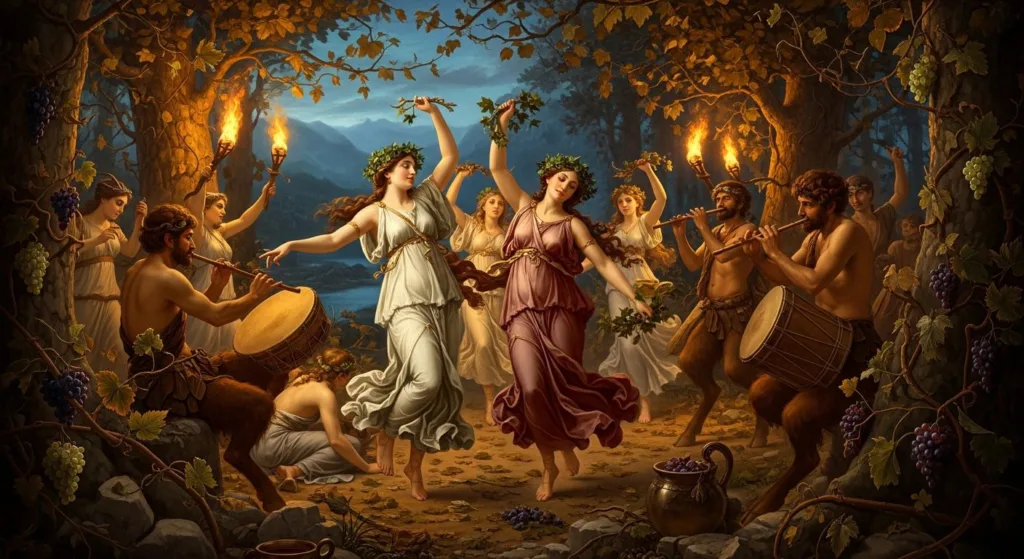
Οι Μαινάδες ήταν γυναίκες που ακολουθούσαν τον θεό σε τελετουργική μανία. Χορεύοντας και κραυγάζοντας μέσα στη φύση, έμπαιναν σε κατάσταση έκστασης, κάτι που θεωρούνταν μέσο ένωσης με τη θεϊκή ενέργεια. Στις παραστάσεις και στους μύθους, οι Μαινάδες ενσαρκώνουν την απελευθέρωση από τους κανόνες της πόλης και την επαφή με το πρωταρχικό ένστικτο.
Ο μύθος του Πενθέα
Ένας από τους πιο διάσημους μύθους είναι εκείνος του Πενθέα, βασιλιά της Θήβας, που αρνήθηκε να αναγνωρίσει τη θεϊκή φύση του Διονύσου. Η άρνησή του οδήγησε σε τραγικό τέλος: ο ίδιος διαμελίστηκε από τη μητέρα του και τις Μαινάδες, που είχαν περιέλθει σε διονυσιακή μανία.
Ο μύθος αυτός έχει βαθύ συμβολισμό. Δείχνει ότι η άρνηση του θεϊκού και η υπερβολική προσκόλληση στον έλεγχο μπορεί να φέρουν καταστροφή. Στην τραγωδία του Ευριπίδη «Βάκχες», ο μύθος αυτός αποκτά ιδιαίτερη λογοτεχνική δύναμη και παραμένει μέχρι σήμερα ένα από τα κορυφαία έργα της αρχαίας δραματουργίας.
Ο Διόνυσος και οι πειρατές
Στον μύθο αυτό, πειρατές απήγαγαν τον Διόνυσο χωρίς να γνωρίζουν ποιος είναι. Ο θεός μεταμόρφωσε το πλοίο σε αμπέλι, γέμισε τον αέρα με αρώματα και έκανε να εμφανιστούν λιοντάρια. Οι πειρατές, τρομοκρατημένοι, έπεσαν στη θάλασσα και μεταμορφώθηκαν σε δελφίνια.
Η ιστορία αυτή αναδεικνύει την ικανότητά του να μεταμορφώνει το περιβάλλον και να τιμωρεί όσους δεν αναγνωρίζουν τη δύναμή του.
Ο Διόνυσος και η Αριάδνη
Ένας πιο τρυφερός και ανθρώπινος μύθος είναι ο γάμος του Διονύσου με την Αριάδνη, την οποία εγκατέλειψε ο Θησέας στη Νάξο. Ο Διόνυσος την βρήκε, την αγάπησε και την έκανε σύντροφό του. Σε ορισμένες εκδοχές, μάλιστα, της προσφέρει αθανασία.
Ο μύθος αυτός συνδυάζει τον έρωτα με τη λύτρωση και δείχνει πως ο Διόνυσος δεν είναι μόνο θεός της μέθης, αλλά και της αποκατάστασης όσων έχουν πληγωθεί.
Η λατρεία Διονύσου στην αρχαία Ελλάδα
Η λατρεία Διονύσου υπήρξε μία από τις πιο ζωντανές, έντονες και κοινωνικά σημαντικές λατρείες της αρχαίας Ελλάδας. Δεν περιοριζόταν σε ναούς και επίσημες τελετές· απλωνόταν σε αγρούς, πόλεις, ιδιωτικές συγκεντρώσεις και δημόσιες γιορτές.
Πού λατρευόταν ο Διόνυσος;
Ο Διόνυσος λατρευόταν σε πολλές περιοχές του ελληνικού κόσμου, όπως:
- στην Αθήνα
- στη Θήβα
- στη Νάξο
- στην Ελευσίνα
- στη Μακεδονία
- σε αποικίες του ελληνικού κόσμου στη Μεσόγειο
Η λατρεία του ήταν ιδιαίτερα ισχυρή στις αγροτικές κοινότητες, όπου το αμπέλι και ο κύκλος της φύσης είχαν κεντρική σημασία. Με τον καιρό, πέρασε και στο κέντρο της αστικής ζωής, αποκτώντας επίσημο και θεσμικό χαρακτήρα.
Διονυσιακές γιορτές και τελετές
Οι διονυσιακές γιορτές ήταν από τα σημαντικότερα θρησκευτικά γεγονότα της αρχαιότητας. Ανάμεσά τους ξεχωρίζουν:
- Τα Διονύσια της Αθήνας
- Τα Λήναια
- Τα Αγροτικά Διονύσια
- Τα Ανθεστήρια
Αυτές οι γιορτές συνδύαζαν τη λατρεία, τον χορό, το κρασί, τη μουσική και συχνά το θεατρικό δρώμενο. Δεν ήταν απλώς διασκέδαση. Ήταν τρόπος συμμετοχής σε μια ιερουργία που συνέδεε την κοινότητα με τον ρυθμό της φύσης και τη θεϊκή παρουσία.
Τι συνέβαινε στις διονυσιακές τελετές;
Οι διονυσιακές τελετές μπορούσαν να περιλαμβάνουν:
- πομπές με μουσική και τραγούδι
- χορούς με ρυθμική κίνηση
- προσφορά κρασιού και καρπών
- χρήση μασκών
- αυτοσχέδιες ή θεατρικές παραστάσεις
- τελετουργική έκσταση και συμβολικό «ξεπέρασμα» των ορίων
Η εμπειρία της λατρείας δεν στόχευε μόνο στη λατρεία ενός θεού, αλλά και στην ψυχική αποφόρτιση, στη συλλογική χαρά και στην επαφή με το μυστήριο της ζωής.
Ο Διόνυσος και το θέατρο
Ίσως η σημαντικότερη πολιτισμική προσφορά του Διονύσου είναι η στενή σχέση του με το αρχαίο ελληνικό θέατρο. Δεν είναι τυχαίο ότι πολλά θεατρικά δρώμενα της αρχαιότητας τελούνταν προς τιμήν του.
Γιατί συνδέεται ο Διόνυσος με το θέατρο;
Το θέατρο γεννήθηκε μέσα από τις διονυσιακές γιορτές και ειδικά από τον διθύραμβο, έναν χορικό ύμνο αφιερωμένο στον θεό. Από αυτές τις τελετουργικές μορφές εξελίχθηκαν σταδιακά η τραγωδία και η κωμωδία.
Ο Διόνυσος συνδέεται με το θέατρο γιατί:
- ενσαρκώνει τη μεταμόρφωση
- στηρίζει τη χρήση της μάσκας και του ρόλου
- φέρνει στην επιφάνεια τα βαθύτερα συναισθήματα
- επιτρέπει στο κοινό να δει την ανθρώπινη φύση χωρίς φίλτρα
Το θέατρο, όπως και ο Διόνυσος, αποκαλύπτει την αλήθεια μέσα από την παράσταση.
Η θεατρική διάσταση της μυθολογίας
Ο ίδιος ο μύθος του Διονύσου είναι θεατρικός: έχει συγκρούσεις, μεταμορφώσεις, ανατροπές και συγκίνηση. Γι’ αυτό και ενέπνευσε σπουδαίους τραγικούς ποιητές. Οι «Βάκχες» του Ευριπίδη είναι ίσως το πιο χαρακτηριστικό έργο που αποτυπώνει τη δύναμη του θεού και τη σύγκρουσή του με την ανθρώπινη αλαζονεία.
Ο Διόνυσος ως θεός της φύσης, της γονιμότητας και της αναγέννησης
Ο Θεός Διόνυσος δεν σχετίζεται μόνο με το κρασί. Είναι και βαθιά συνδεδεμένος με τη βλάστηση, την άνοιξη, τον κύκλο των εποχών και την ανανέωση της ζωής. Στον πυρήνα της λατρείας του βρίσκεται η ιδέα ότι η φύση πεθαίνει και ξαναγεννιέται.
Η συμβολική σχέση με τη γη
Το αμπέλι, που χρειάζεται φροντίδα, κλάδεμα και χρόνο για να καρποφορήσει, είναι ιδανικό σύμβολο της διονυσιακής σκέψης. Από τον καρπό γεννιέται ο οίνος· από τη φαινομενική φθορά γεννιέται η χαρά. Αυτός ο κύκλος υπενθυμίζει ότι η ζωή δεν είναι γραμμική, αλλά επαναλαμβανόμενη και μεταμορφωτική.
Γονιμότητα και νέα ζωή
Στην αρχαία Ελλάδα, η γονιμότητα δεν αφορούσε μόνο τη γη αλλά και τον άνθρωπο, την κοινότητα και τη συνέχεια του γένους. Ο Διόνυσος, μέσα από τη σύνδεσή του με τη βλάστηση και τη ζωτική ορμή, εκφράζει τη δύναμη της δημιουργίας σε όλες τις μορφές της.
Η εικόνα του Διονύσου στην τέχνη και τη λογοτεχνία
Ο Διόνυσος υπήρξε αστείρευτη πηγή έμπνευσης για την τέχνη. Από τα αγγεία της αρχαιότητας μέχρι τη γλυπτική, τη ζωγραφική και τη νεότερη λογοτεχνία, η μορφή του επανέρχεται διαρκώς.
Στην αρχαία εικονογραφία
Σε αγγειογραφίες και ανάγλυφα, ο Διόνυσος συνοδεύεται συχνά από:
- σατύρους
- Μαινάδες
- πάνθηρες
- αμπέλια
- μουσικά όργανα
Οι απεικονίσεις του είναι συνήθως χαρούμενες, δυναμικές και γεμάτες κίνηση. Σε πολλές παραστάσεις φαίνεται να ταξιδεύει σε άρμα ή να συμμετέχει σε γιορτή, πάντα με το χαρακτηριστικό του διονυσιακό ύφος.
Στη νεότερη σκέψη
Η μορφή του Διονύσου ενέπνευσε και τη νεότερη φιλοσοφία και αισθητική. Ορισμένοι στοχαστές είδαν σε αυτόν το σύμβολο του ενστίκτου, της δημιουργικής έξαρσης και της καλλιτεχνικής ελευθερίας. Η αντίθεση ανάμεσα στο απολλώνιο και το διονυσιακό έγινε κλασικό σχήμα για να περιγράψει τις δύο δυνάμεις που διαμορφώνουν τον πολιτισμό: την τάξη και την υπέρβαση.
Ο Διόνυσος στην καθημερινή ζωή της αρχαίας Ελλάδας
Παρότι είναι θεός με έντονο μυθολογικό και τελετουργικό χαρακτήρα, ο Διόνυσος δεν ανήκε μόνο στον κόσμο των ιερών. Ήταν παρών και στην καθημερινότητα των ανθρώπων της αρχαίας Ελλάδας.
Το κρασί ως μέρος της κοινωνικής ζωής
Το κρασί στην αρχαιότητα δεν ήταν απλώς ποτό. Ήταν στοιχείο της κοινωνικότητας, της φιλοξενίας και του συμποσίου. Η μέτρια κατανάλωσή του συνδεόταν με την ευγένεια και την παιδεία, ενώ η υπερβολή μπορούσε να οδηγήσει σε απώλεια ελέγχου, κάτι που η διονυσιακή μυθολογία σχολιάζει επανειλημμένα.
Ο συμβολισμός της μέθης
Η μέθη, στη λατρεία του Διονύσου, δεν είναι μόνο βιολογική κατάσταση. Είναι και συμβολική εμπειρία. Δηλώνει την προσωρινή αποδέσμευση από τη λογική και τα κοινωνικά πλαίσια, ώστε ο άνθρωπος να έρθει πιο κοντά στη βαθύτερη αλήθεια του.
Αυτός είναι και ο λόγος που ο Διόνυσος προκαλεί τόσο θαυμασμό: αντιπροσωπεύει τη δυνατότητα του ανθρώπου να βγει από τον εαυτό του και να αγγίξει κάτι μεγαλύτερο.
Γιατί ο Θεός Διόνυσος παραμένει επίκαιρος;
Η γοητεία του Διονύσου δεν περιορίζεται στην αρχαιότητα. Παραμένει επίκαιρος γιατί μιλά για ζητήματα που εξακολουθούν να απασχολούν τον σύγχρονο άνθρωπο: ελευθερία, ταυτότητα, δημιουργία, υπέρβαση, συγκίνηση και σχέση με τη φύση.
Στον σημερινό κόσμο της ταχύτητας και του ελέγχου, ο Θεός Διόνυσος θυμίζει την αξία της χαλάρωσης, της τέχνης, της γιορτής και της σύνδεσης με το αβέβαιο και το ζωντανό. Είναι ο θεός που μας καλεί να μη φοβηθούμε το συναίσθημα, να δούμε τη μεταμόρφωση ως μέρος της ζωής και να αναγνωρίσουμε ότι η χαρά και το μυστήριο μπορούν να συνυπάρχουν.
Συμπέρασμα: ο διαχρονικός μύθος του Διονύσου
Ο Θεός Διόνυσος είναι πολύ περισσότερος από τον θεό του κρασιού. Είναι μια από τις πιο σύνθετες και ανθρώπινες μορφές της ελληνικής μυθολογίας, ένας θεός που ενώνει την έκσταση με τη σοφία, τη φύση με τον πολιτισμό, τη γιορτή με την τραγωδία. Η λατρεία Διονύσου, οι διονυσιακές γιορτές και η σχέση του με το θέατρο δείχνουν πόσο βαθιά επηρέασε την αρχαία Ελλάδα και, μέσα από αυτήν, ολόκληρο τον δυτικό πολιτισμό.
Ο Διόνυσος παραμένει ζωντανός όχι μόνο στα βιβλία και στα μουσεία, αλλά και στον τρόπο που αντιλαμβανόμαστε τη χαρά, τη δημιουργικότητα και την ανάγκη του ανθρώπου να ξεπερνά τα όριά του. Και ίσως αυτός να είναι ο λόγος που ο μύθος του συνεχίζει να μιλά τόσο έντονα και σήμερα: γιατί μέσα του αναγνωρίζουμε κάτι από τη δική μας ανθρώπινη φύση.
Συχνές Ερωτήσεις για τον Διόνυσο
Ποιος ήταν ο Διόνυσος στην ελληνική μυθολογία;
Ο Διόνυσος ήταν ο θεός του κρασιού, της χαράς, της γιορτής και της έκστασης. Συνδεόταν επίσης με το θέατρο, τη φύση και τις διονυσιακές τελετές που είχαν μεγάλη σημασία στην αρχαία Ελλάδα.
Ποιοι ήταν οι γονείς του Διόνυσου;
Ο Διόνυσος ήταν γιος του Δία και της Σεμέλης. Σύμφωνα με τον μύθο, ο Δίας έσωσε το αγέννητο παιδί και το έραψε στον μηρό του μέχρι να ολοκληρωθεί η κύηση.
Πώς σχετίζεται ο Διόνυσος με το κρασί;
Ο Διόνυσος θεωρούνταν ο προστάτης της αμπελουργίας και της παραγωγής κρασιού. Οι αρχαίοι Έλληνες πίστευαν ότι δίδαξε στους ανθρώπους την καλλιέργεια του αμπελιού.
Ποια ήταν τα σύμβολα του Διόνυσου;
Σύμβολά του ήταν το κλήμα, το σταφύλι, ο θύρσος και ο πάνθηρας. Αυτά αντιπροσώπευαν τη φύση, τη γονιμότητα και τη δύναμη της ζωής.
Ποιοι ακολουθούσαν τον Διόνυσο;
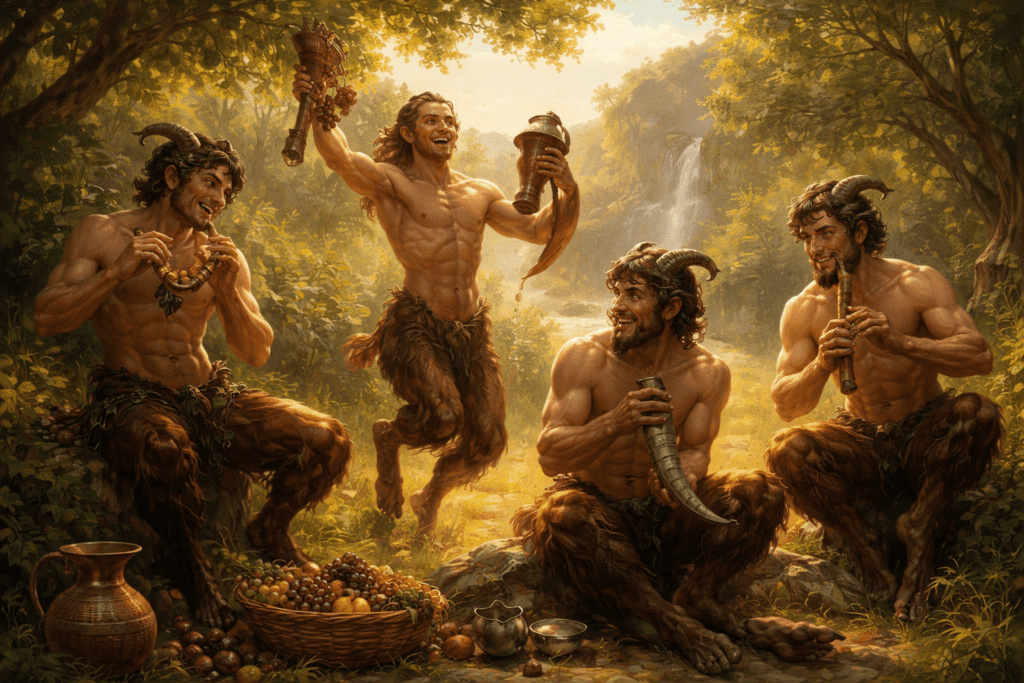
Ο Διόνυσος συνοδευόταν από τις Μαινάδες και τους Σάτυρους, μυθικά όντα που σχετίζονταν με τη φύση, τον χορό και την έκσταση.
Ποια ήταν η σχέση του Διόνυσου με το θέατρο;
Ο Διόνυσος θεωρείται προστάτης του αρχαίου θεάτρου. Πολλά θεατρικά έργα παρουσιάζονταν κατά τη διάρκεια των διονυσιακών εορτών.
Πού λατρευόταν κυρίως ο Διόνυσος;
Η λατρεία του ήταν ιδιαίτερα διαδεδομένη στην Αθήνα, τη Θήβα και τη Νάξο, όπου υπήρχαν σημαντικά ιερά αφιερωμένα στον θεό.
Ποια ήταν η σημασία του Διόνυσου στην αρχαία Ελλάδα;
Ο Διόνυσος συμβόλιζε τη χαρά της ζωής, την απελευθέρωση από τους κοινωνικούς περιορισμούς και τη δύναμη της φύσης.
Πώς απεικονίζεται ο Διόνυσος στην τέχνη;
Στην αρχαία τέχνη παρουσιάζεται συνήθως ως νεαρός άνδρας με στεφάνι από κλήμα ή φύλλα αμπελιού, κρατώντας θύρσο.
Γιατί ο Διόνυσος είναι σημαντικός στη μυθολογία;
Ο Διόνυσος συνδέεται με τη γονιμότητα, τη γιορτή και τη δημιουργική έκσταση, στοιχεία που επηρέασαν βαθιά τον αρχαίο ελληνικό πολιτισμό.
ΘΕΟΙ ΤΟΥ ΟΛΥΜΠΟΥ
ΔΙΑΣ | ΗΡΑ | ΑΘΗΝΑ | ΑΡΗΣ | ΑΡΤΕΜΙΣ | ΔΙΟΝΥΣΟΣ | ΕΡΜΗΣ | ΑΔΗΣ | ΑΠΟΛΛΩΝΑΣ | ΠΟΣΕΙΔΩΝΑΣ | ΗΦΑΙΣΤΟΣ | ΑΦΡΟΔΙΤΗ
Αρχαίες πηγές
Ησίοδος – Θεογονία & Έργα και Ημέραι | Πρωτογενείς Πηγές
Πρωτογενείς Πηγές Ελληνικής Μυθολογίας | Ησίοδος, Όμηρος, Ορφικοί Ύμνοι
Πρωτογενείς Πηγές της Ελληνικής Μυθολογίας | Αρχαία Κείμενα
Perseus Digital Library είναι μια αξιόπιστη ακαδημαϊκή βάση δεδομένων με αρχαία ελληνικά κείμενα και ιστορικές πηγές, ιδιαίτερα χρήσιμη για τη μελέτη της ελληνικής μυθολογίας και των Ελευσίνιων Μυστηρίων.