
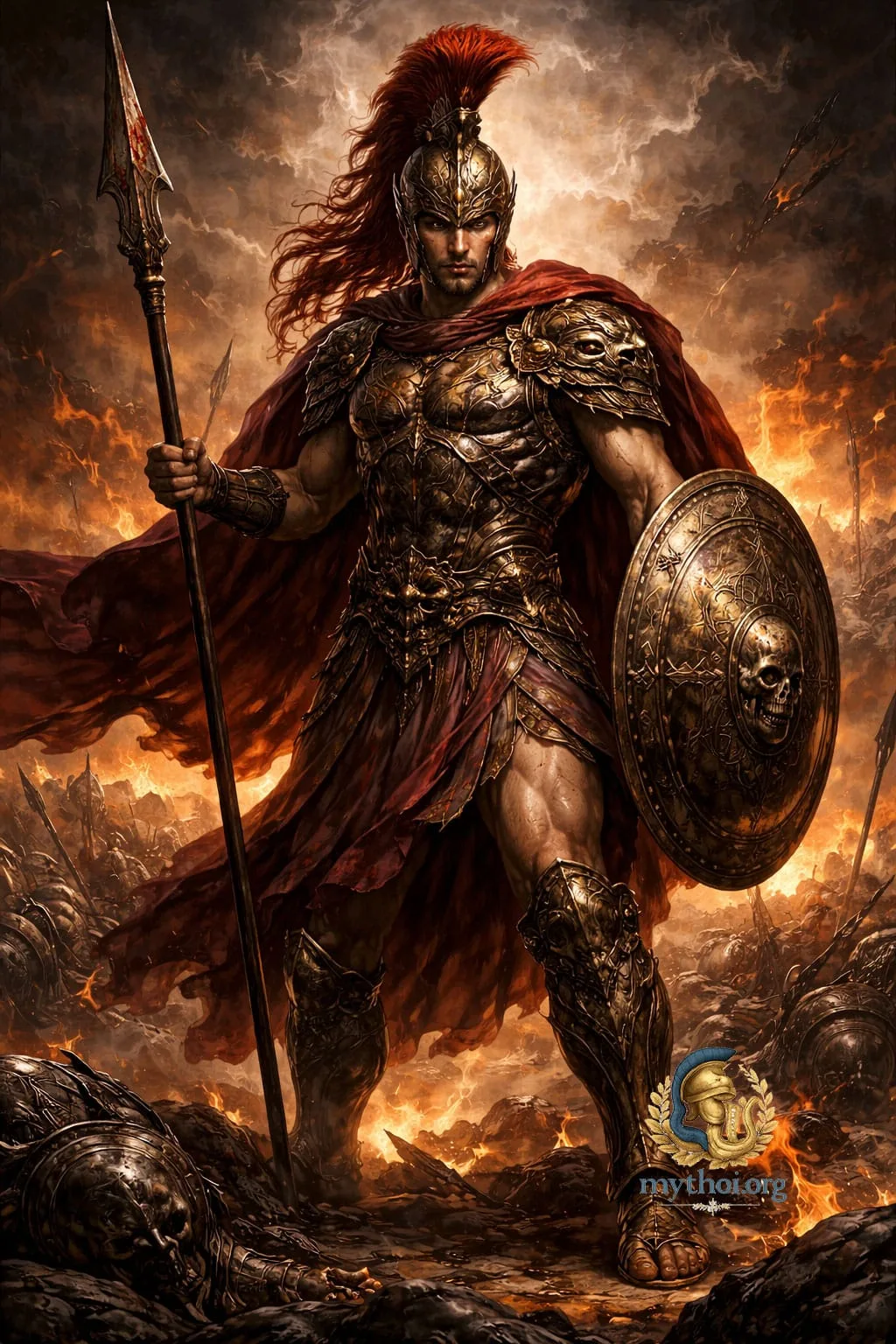
- Ares is the god who personifies her violent and uncontrolled side of the war in Greek mythology. Unlike Athena, who represents strategy and wisdom, Ares embodies passion, rage, and brutal conflict. Although all-powerful, he is often portrayed as volatile and reckless, acting as warning of the consequences of violence.
Introduction
- Ares is one of the most famous deities of Greek mythology, representing war, conflict and military power. Although it was not as popular in ancient Greeks as the Athena, which symbolized strategy in war, Ares held a prominent place in pantheon as the god of violence and combat.
The worship of Ares was particularly intense in cities such as Sparta, where military education and heroism were of primary importance. Ares is associated with the aggressive nature of the human soul, the desire for victory, but also the destructive side of conflict.
Origin and Family
Ares is the son of Zeus and Hera, making him one of them Olympian gods. His relationship with Hera's mother was often tense, with the myths presenting him as aggressive and undisciplined, features that enhance his nature as a god of war.
Ares had several relationships with mortals and deities. The most famous is his love affair with Aphrodite, goddess of beauty and love, with whom he had many offspring, known as Areids. These divine heroes are associated with violence, destruction, and battle.
Symbolism and Properties
Ares represents the raw power of war and aggression. Unlike Athena, who symbolizes strategy and intelligence, Ares is a symbol of the brute force and destruction that accompanies battle. His main symbols include:
The spear and shield
The dog and the wolf
The red color, symbolizing the blood and fire of battle
His personality is often impulsive and aggressive, features that make him a God that causes fear and respect.
The Role of Ares in Mythology
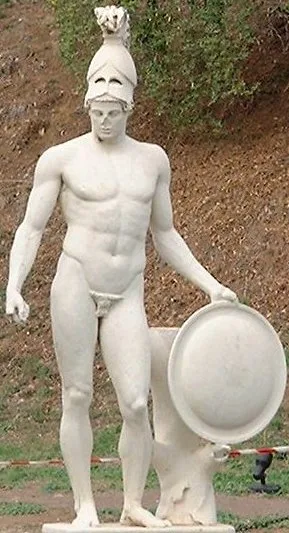
Ares appears in many myths and epic accounts. In Homer’s Iliad, Ares actively participates in the battles of Troy, playing the role of the god who brings chaos and destruction to the armies. Despite his power, his presence often causes damage to his allies, underscoring his uncontrollable character.
According to other myths, Ares participated in many disputes with deities and heroes, such as when trapped by Hephaestus and AphroditeOr when he collided with gods like Apollo. These stories show its intense and often destructive nature.
Worship and Social Meaning
The worship of Ares was mainly military and warlike. In SpartaYoung people were trained for the war and considered Mars their protector. His temples and altars existed in many cities, where soldiers sought his help before fighting.
Unlike deities such as Athena, the worship of Ares was not as widespread in the daily lives of citizens, but was focused on soldiers and heroes.
Ares in Art
Ares is often depicted as a young, strong man with armor and weapons of war. In ancient Greek art, such as on vases and reliefs, he is usually shown ready for battle, with an aggressive stance. His presence in art highlights the fear and admiration he inspired in people,
Modern Concept
In modern culture, Ares continues to represent war and violence, appearing in literature, films, and video games as a god or archetype of the warrior. His mythological image provides inspiration for stories of heroism, passion, and destruction.
Conclusion
- Ares is one of the most contradictory forms of Greek mythology. While symbolizing war and violence, it is also a sign of strength and courage. His history, myths and worship reveal the Greek understanding of human nature, where aggression, violence and heroism coexist.
The study of Ares offers us a window into the world of the Olympian gods and the complexity of human emotions and actions.
Frequently Asked Questions about God Ares
Who was Ares in Greek mythology?
Ares was the god of war in Greek mythology. He symbolized violence, conflict, and the brute force of battle. He was the son of Zeus and Hera and was one of the twelve Olympian gods.
What did the god Ares represent?
Ares represented the aggressive side of war, the fury of battle, and the destructive power of conflict. Unlike the goddess Athena, who symbolized strategy and wisdom in war, Ares was associated with brute force.
Who were Ares' parents?
According to Greek mythology, Ares was the son of Zeus, king of the gods, and Hera, goddess of marriage and family.
What was Ares' relationship with Aphrodite?
Ares had a love affair with the goddess Aphrodite, even though she was married to Hephaestus. Their relationship produced several children, including Eros, Phobos, and Deimos.
Where was the god Ares worshipped?
The cult of Ares was not as widespread in ancient Greece as other gods. However, there were shrines dedicated to him, while one of the most famous places associated with his name is the Areios Pagos in Athens.
Why did ancient Greeks not particularly like Ares?
Many ancient Greeks considered Ares an unpredictable and dangerous god, symbolizing the destruction and bloodshed of war. For this reason, he was often depicted in myths as a god who caused chaos in battle.
What were Ares symbols?
Ares' most famous symbols were the spear, shield, helmet, and weapons of the warrior. Also, animals such as the wolf and the dog were often associated with the God.
Who were the children of the god Ares?
Mars had many children in mythology. Some of the most famous were Fear and Deimos, who personified the fear and terror of battle, as well as Harmony.
OLYMPIAN GODS
ZEUS | HERA | ATHENA | ARES | ARTEMIS | DIONYSUS | HERMES | HADES | Apollo | POSEIDON | HEPHAESTUS | APHRODITE

- QUIALITY PRODUCTION: Made with high quality designer resin and cold cast bronze technique
- COLD CASTING: Cold casting is the technique that mixes resin and bronze to create detailed culture with metallic feat...
- MEASUREMENT: L 3 * W 2 3/8 * H 6 1/4 Inches
Ancient sources
Hesiod – Theogenia & Works and Days | Primary Sources
Primary Sources of Greek Mythology | Hesiod, Homer, Orphic Hymns
Primary Sources of Greek Mythology | Ancient Texts
Perseus Digital Library is a reliable academic database with ancient Greek texts and historical sources, particularly useful for the study of Greek mythology and Elefsinian Mysteries.