
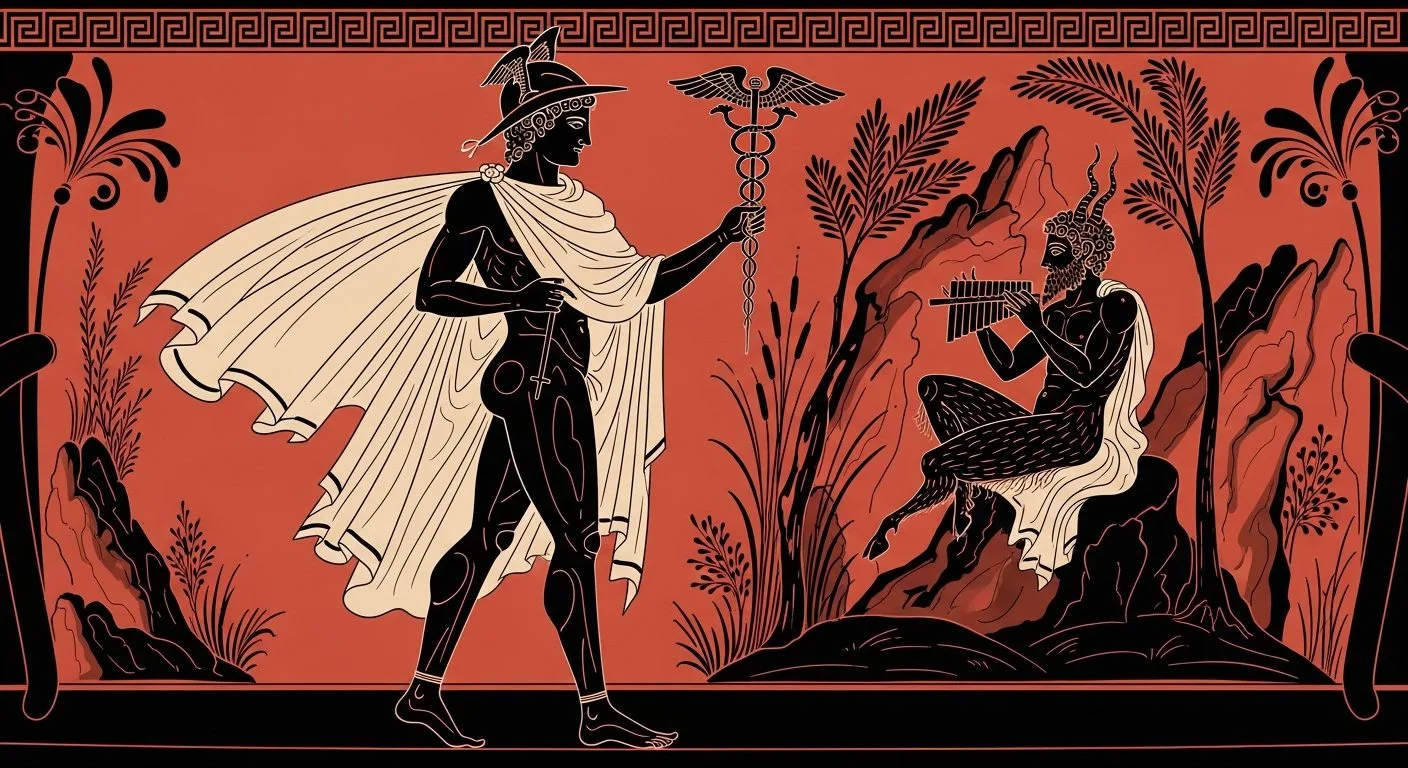
- Hermes is the god of commerce, travel, communication and messengers in Greek mythology. Son of Zeus and MaiaHe stands out for his intelligence, speed and cunning.
He is the messenger of the gods and guide of souls to the underworld, accompanying souls to him Hades. It is recognized by its feathered sandals, preacher's and hat.
In myths he appears as inventive and playful, and is also associated with the protection of merchants and travelers.
- Hermes is one of the most flexible and multidimensional forms of Greek mythology. As messenger of the gods, protector of Travellers, Trade, Communication and Intelligence, acts as a link between the gods and people.
Hermes – The God of Messengers and Trade
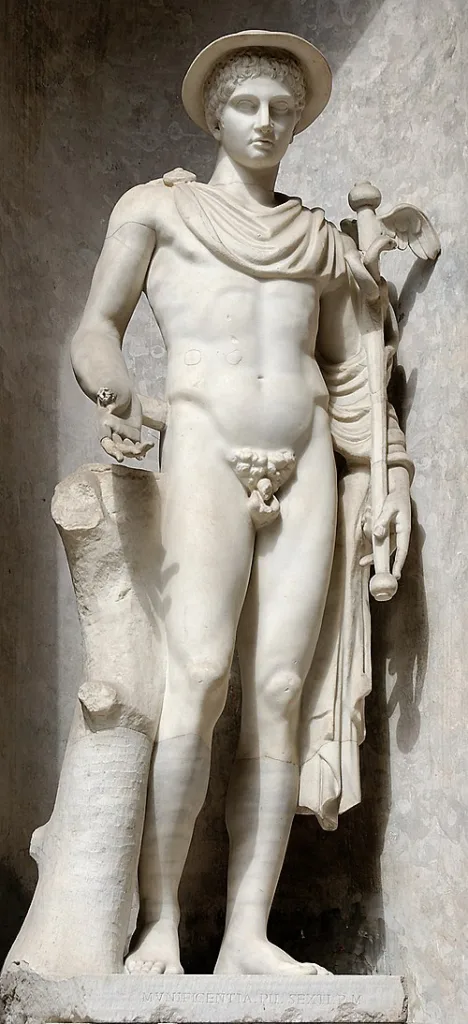
- Hermes is one of the most multifaceted and interesting deities of ancient Greek mythology. He is considered the messenger of the gods, protector of travelers, thieves, merchants, and communication in general. His image is characterized by agility, speed and spiritual perceptiveness.
General Info
Hermes belongs to the second generation of the Olympian gods. He's the son of. Zeus and MaiaOne of the Pleiades, daughters of Atlas and Pleiadone. His birth is described in an impressive way in mythology: he was born in a cave in Kythera and from a very early age his cunning and intelligence appeared.
Hermes was known for his ability to move quickly between the worlds of gods and men, but also between the world of the living and the dead. This also makes him a messenger of the Underworld, helping souls to go after death.
Characteristics and Symbols
Hermes is associated with many symbols reflecting its functions and properties:
Caduceus: The stick with two snakes that are intertwined, symbol of peace and balance, but also of his role as messenger
Wings on the soles and hat (Petasos): They represent his speed and ability to move quickly.
Role and Functions
Mercury has numerous roles in mythology:
1. Messenger of the Gods
Hermes was the god who conveyed messages from the Olympian gods to humans and other gods. His speed and intelligence made him the ideal for this function.
2. Traveler Protector
Ancient Greeks invoked him for protection during travel, especially when traveling to dangerous areas or seas. Hermes was the guardian driver who ensured safe transition.
3. God of Trade and Thieves
His connection to trade and trade made him an important deity for traders. At the same time, his cunning and speed made him a protector of thieves and crooks.
4. Psychotransmitter
Hermes had the ability to lead the souls of the dead to Hades, making it a bridge between life and death. In this sacred liturgy he is often referred to as "Hermes Psychopompire".
Myths and Stories
Mercury appears in many ancient myths:
The birth of Mercury and the theft of Apollo's cattle: According to legend, the newborn Mercury stole his cattle Apollo, showing off his cunning and intelligence. Later, he interceded among the gods and was accepted to Olympus.
Mercury and Ulysses: Mercury helped him Odysseus By providing him with the magic potion "mantic" to resist witches, such as Circe.
Mercury and Panas: In various stories, he cooperates with or competes with Pan, the god of forests and shepherds, reflecting the spirit of resourcefulness and endless energy.
Worship and Sacred Places
Hermes was honored throughout ancient Greece, with shrines and statues in cities, markets and crossroads. He was also important in commercial cities, such as Athens, where he was invoked by traders for success in their transactions. His festive rituals included offerings and sacrifices, usually white animals or objects symbolizing speed and intelligence.
Modern Interpretation
Today, Hermes is considered a symbol of communication, intelligence and speed. In psychology and philosophy, his figure is associated with the ability to bridge different worlds, whether it is natural and spiritual, or the world of ideas and practical life.
Hermes – FAQ
1. Who was Hermes in Greek mythology?
Hermes was the messenger of the gods, a god of commerce, travel, intelligence and communication.
2. What were Hermes symbols?
His most famous symbols were winged sandal, preacher's and feather hat.
3. What was Hermes main mission?
He carried messages between gods and people and drove souls into the underworld.
4. Was Hermes a god of merchants?
Yes, he was considered a protector of trade, trade, and economic prosperity.
5. How is Hermes connected to travel?
He protected travelers and was considered a guide to every move.
6. Who were Hermes parents?
He was the son of Zeus and the nymph Maya.
7. What character did Mercury have?
He seemed smart, quick, resourceful and often cunning.
8. How was Hermes depicted in art?
Usually as a young man with feathered sandals and preachers.
9. Why is Hermes considered an important god?
Because it connected the world of gods to the world of men.
10. Are there any myths about Hermes?
Yes, he appears in many myths as a messenger and assistant to other gods.
OLYMPIAN GODS
ZEUS | HERA | ATHENA | ARES | ARTEMIS | DIONYSUS | HERMES | HADES | Apollo | POSEIDON | HEPHAESTUS | APHRODITE
Ancient sources
Hesiod – Theogenia & Works and Days | Primary Sources
Primary Sources of Greek Mythology | Hesiod, Homer, Orphic Hymns
Primary Sources of Greek Mythology | Ancient Texts
Perseus Digital Library is a reliable academic database with ancient Greek texts and historical sources, particularly useful for the study of Greek mythology and Elefsinian Mysteries.