
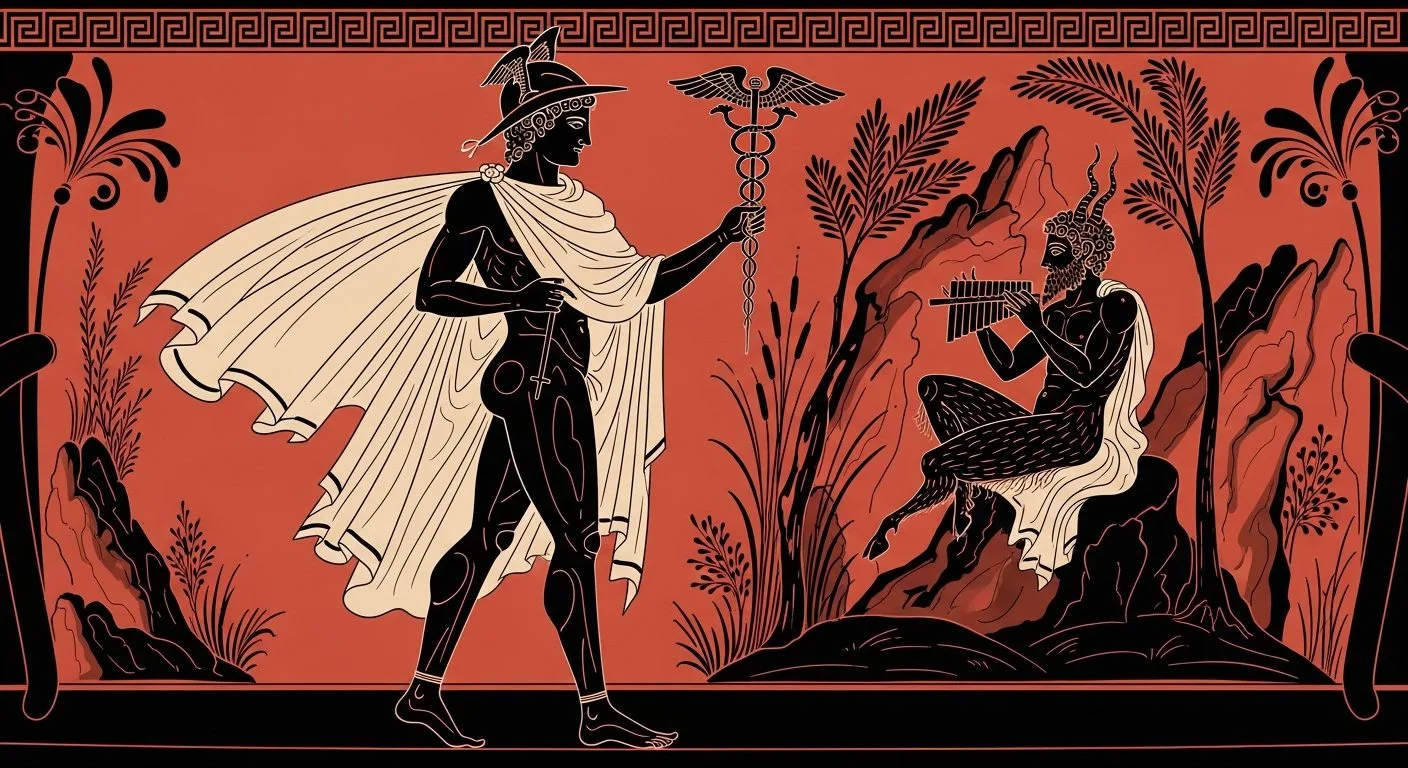
Ο Ερμής είναι ο θεός του εμπορίου, των ταξιδιών, της επικοινωνίας και των αγγελιοφόρων στην ελληνική μυθολογία. Γιος του Δία και της Μαίας, ξεχωρίζει για την ευφυΐα, την ταχύτητα και την πονηριά του.
Αποτελεί τον αγγελιοφόρο των θεών και οδηγό των ψυχών στον κάτω κόσμο, συνοδεύοντας τις ψυχές προς τον Άδη. Αναγνωρίζεται από τα φτερωτά σανδάλια, το κηρύκειο και το καπέλο του.
Στους μύθους εμφανίζεται ως εφευρετικός και παιχνιδιάρης, ενώ συνδέεται και με την προστασία των εμπόρων και των ταξιδιωτών.
Ο Ερμής είναι μία από τις πιο ευέλικτες και πολυδιάστατες μορφές της ελληνικής μυθολογίας. Ως αγγελιοφόρος των θεών, προστάτης των ταξιδιωτών, του εμπορίου, της επικοινωνίας και της ευφυΐας, λειτουργεί ως σύνδεσμος ανάμεσα στους θεούς και τους ανθρώπους.
Ερμής – Ο Θεός των Αγγελιοφόρων και των Εμπορικών Συναλλαγών
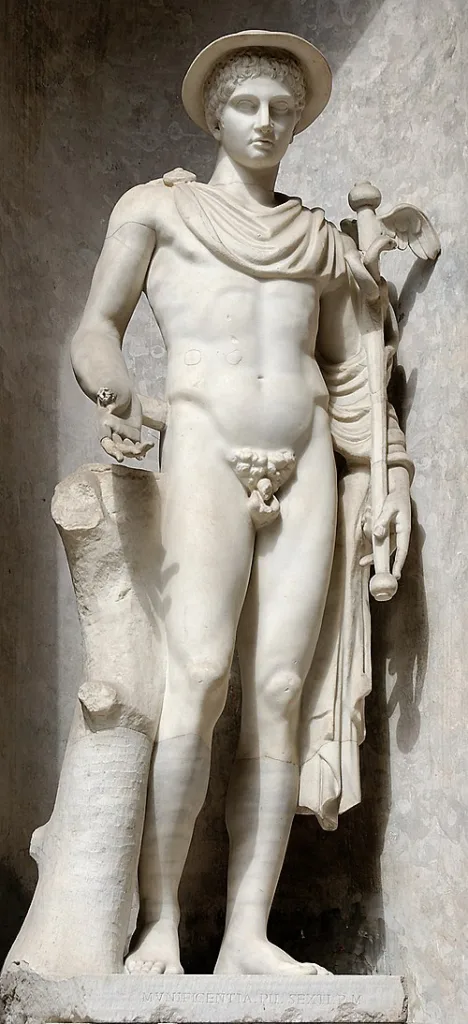
Ο Ερμής είναι μια από τις πιο πολύπλευρες και ενδιαφέρουσες θεότητες της αρχαίας ελληνικής μυθολογίας. Θεωρείται ο αγγελιοφόρος των θεών, προστάτης των ταξιδιωτών, των κλεφτών, των εμπόρων, και της επικοινωνίας γενικότερα. Η εικόνα του χαρακτηρίζεται από ευκινησία, ταχύτητα και πνευματική οξυδέρκεια.
Γενικές Πληροφορίες
Ο Ερμής ανήκει στην δεύτερη γενιά των Ολύμπιων θεών. Είναι γιος του Δία και της Μαίας, μίας από τις Πλειάδες, θυγατέρες του Άτλαντα και της Πλειόνης. Η γέννησή του περιγράφεται με εντυπωσιακό τρόπο στη μυθολογία: γεννήθηκε μέσα σε ένα σπήλαιο στον Κύθηρα και από πολύ μικρή ηλικία φάνηκε η πονηριά και η εξυπνάδα του.
Ο Ερμής ήταν γνωστός για την ικανότητά του να κινείται γρήγορα ανάμεσα στους κόσμους των θεών και των ανθρώπων, αλλά και ανάμεσα στον κόσμο των ζωντανών και των νεκρών. Αυτό τον καθιστά επίσης αγγελιοφόρο του Κάτω Κόσμου, βοηθώντας ψυχές να μεταβούν μετά θάνατον.
Χαρακτηριστικά και Σύμβολα
Ο Ερμής συνδέεται με πολλά σύμβολα που αντικατοπτρίζουν τις λειτουργίες και τις ιδιότητές του:
Κηρύκειο (Κάδου): Το ραβδί με δύο φίδια που περιπλέκονται, σύμβολο ειρήνης και ισορροπίας, αλλά και του ρόλου του ως αγγελιοφόρος
Πτέρυγες στα πέλματα και στο καπέλο (Petasos): Αντιπροσωπεύουν την ταχύτητα και την ικανότητά του να μετακινείται γρήγορα.
Ρόλος και Λειτουργίες
Ο Ερμής έχει πολυάριθμους ρόλους στη μυθολογία:
1. Αγγελιοφόρος των Θεών
Ο Ερμής ήταν ο θεός που μετέφερε μηνύματα των Ολύμπιων θεών στους ανθρώπους και στους άλλους θεούς. Η ταχύτητα και η ευστροφία του τον καθιστούσαν τον ιδανικό για αυτή τη λειτουργία.
2. Προστάτης των Ταξιδιωτών
Οι αρχαίοι Έλληνες τον επικαλούνταν για την προστασία κατά τα ταξίδια, κυρίως όταν ταξίδευαν σε επικίνδυνες περιοχές ή θάλασσες. Ο Ερμής ήταν ο φύλακας οδηγός που διασφάλιζε ασφαλή μετάβαση.
3. Θεός του Εμπορίου και των Κλεφτών
Η σύνδεσή του με το εμπόριο και τις συναλλαγές τον έκανε σημαντική θεότητα για τους εμπόρους. Παράλληλα, η πονηριά και η ταχύτητά του τον έκαναν προστάτη των κλεφτών και των απατεώνων.
4. Ψυχοπομπός
Ο Ερμής είχε την ιδιότητα να οδηγεί τις ψυχές των νεκρών στον Άδη, καθιστώντας τον γέφυρα μεταξύ ζωής και θανάτου. Στην ιερή αυτή λειτουργία αναφέρεται συχνά ως “Ερμής Ψυχοπομπός”.
Μύθοι και Ιστορίες
Ο Ερμής εμφανίζεται σε πολλούς αρχαίους μύθους:
Η γέννηση του Ερμή και η κλοπή των βοδιών του Απόλλωνα: Σύμφωνα με τον μύθο, ο νεογέννητος Ερμής έκλεψε τα βόδια του Απόλλωνα, επιδεικνύοντας την πονηριά και την εξυπνάδα του. Αργότερα, μεσολάβησε μεταξύ των θεών και έγινε αποδεκτός στον Όλυμπο.
Ο Ερμής και ο Οδυσσέας: Ο Ερμής βοήθησε τον Οδυσσέα παρέχοντάς του το μαγικό φίλτρο “μάντυκα” για να αντισταθεί στις μάγισσες, όπως η Κίρκη.
Ο Ερμής και ο Πάνας: Σε διάφορες ιστορίες, συνεργάζεται με ή ανταγωνίζεται τον Πάνα, τον θεό των δασών και των ποιμένων, αντανακλώντας το πνεύμα της επινοητικότητας και της αστείρευτης ενέργειας.
Λατρεία και Ιερά
Ο Ερμής τιμήθηκε σε όλη την αρχαία Ελλάδα, με ιερά και αγάλματα σε πόλεις, αγορές και διασταυρώσεις δρόμων. Ήταν επίσης σημαντικός στις εμπορικές πόλεις, όπως η Αθήνα, όπου τον επικαλούνταν οι έμποροι για επιτυχία στις συναλλαγές τους. Τα εορταστικά του τελετουργικά περιλάμβαναν προσφορές και θυσίες, συνήθως λευκά ζώα ή αντικείμενα που συμβόλιζαν την ταχύτητα και την ευφυΐα.
Σύγχρονη Ερμηνεία
Σήμερα, ο Ερμής θεωρείται σύμβολο επικοινωνίας, ευφυΐας και ταχύτητας. Στην ψυχολογία και την φιλοσοφία, η φιγούρα του συνδέεται με την ικανότητα να γεφυρώνουμε διαφορετικούς κόσμους, είτε πρόκειται για το φυσικό και το πνευματικό, είτε για τον κόσμο των ιδεών και την πρακτική ζωή.
Ερμής – Συχνές Ερωτήσεις (FAQ)
1. Ποιος ήταν ο Ερμής στην ελληνική μυθολογία;
Ο Ερμής ήταν ο αγγελιοφόρος των θεών, θεός του εμπορίου, των ταξιδιών, της ευφυΐας και της επικοινωνίας.
2. Ποια ήταν τα σύμβολα του Ερμή;
Τα πιο γνωστά σύμβολα του ήταν το φτερωτό σανδάλι, το κηρύκειο και το φτερωτό καπέλο.
3. Ποια ήταν η κύρια αποστολή του Ερμή;
Μετέφερε μηνύματα μεταξύ θεών και ανθρώπων και οδηγούσε τις ψυχές στον κάτω κόσμο.
4. Ήταν ο Ερμής θεός των εμπόρων;
Ναι, θεωρούνταν προστάτης του εμπορίου, των συναλλαγών και της οικονομικής ευημερίας.
5. Πώς συνδέεται ο Ερμής με τα ταξίδια;
Προστάτευε τους ταξιδιώτες και θεωρούνταν οδηγός σε κάθε μετακίνηση.
6. Ποιοι ήταν οι γονείς του Ερμή;
Ήταν γιος του Δία και της νύμφης Μαίας.
7. Τι χαρακτήρα είχε ο Ερμής;
Παρουσιαζόταν έξυπνος, γρήγορος, ευρηματικός και συχνά πονηρός.
8. Πώς απεικονιζόταν ο Ερμής στην τέχνη;
Συνήθως ως νέος άνδρας με φτερωτά σανδάλια και κηρύκειο.
9. Γιατί ο Ερμής θεωρείται σημαντικός θεός;
Επειδή συνέδεε τον κόσμο των θεών με τον κόσμο των ανθρώπων.
10. Υπάρχουν μύθοι με τον Ερμή;
Ναι, εμφανίζεται σε πολλούς μύθους ως αγγελιοφόρος και βοηθός άλλων θεών.
ΘΕΟΙ ΤΟΥ ΟΛΥΜΠΟΥ
ΔΙΑΣ | ΗΡΑ | ΑΘΗΝΑ | ΑΡΗΣ | ΑΡΤΕΜΙΣ | ΔΙΟΝΥΣΟΣ | ΕΡΜΗΣ | ΑΔΗΣ | ΑΠΟΛΛΩΝΑΣ | ΠΟΣΕΙΔΩΝΑΣ | ΗΦΑΙΣΤΟΣ | ΑΦΡΟΔΙΤΗ
Αρχαίες πηγές
Ησίοδος – Θεογονία & Έργα και Ημέραι | Πρωτογενείς Πηγές
Πρωτογενείς Πηγές Ελληνικής Μυθολογίας | Ησίοδος, Όμηρος, Ορφικοί Ύμνοι
Πρωτογενείς Πηγές της Ελληνικής Μυθολογίας | Αρχαία Κείμενα
Perseus Digital Library είναι μια αξιόπιστη ακαδημαϊκή βάση δεδομένων με αρχαία ελληνικά κείμενα και ιστορικές πηγές, ιδιαίτερα χρήσιμη για τη μελέτη της ελληνικής μυθολογίας και των Ελευσίνιων Μυστηρίων.
Ολύμπιοι Θεοί: Οι 12 Θεοί του Ολύμπου στην Ελληνική Μυθολογία