
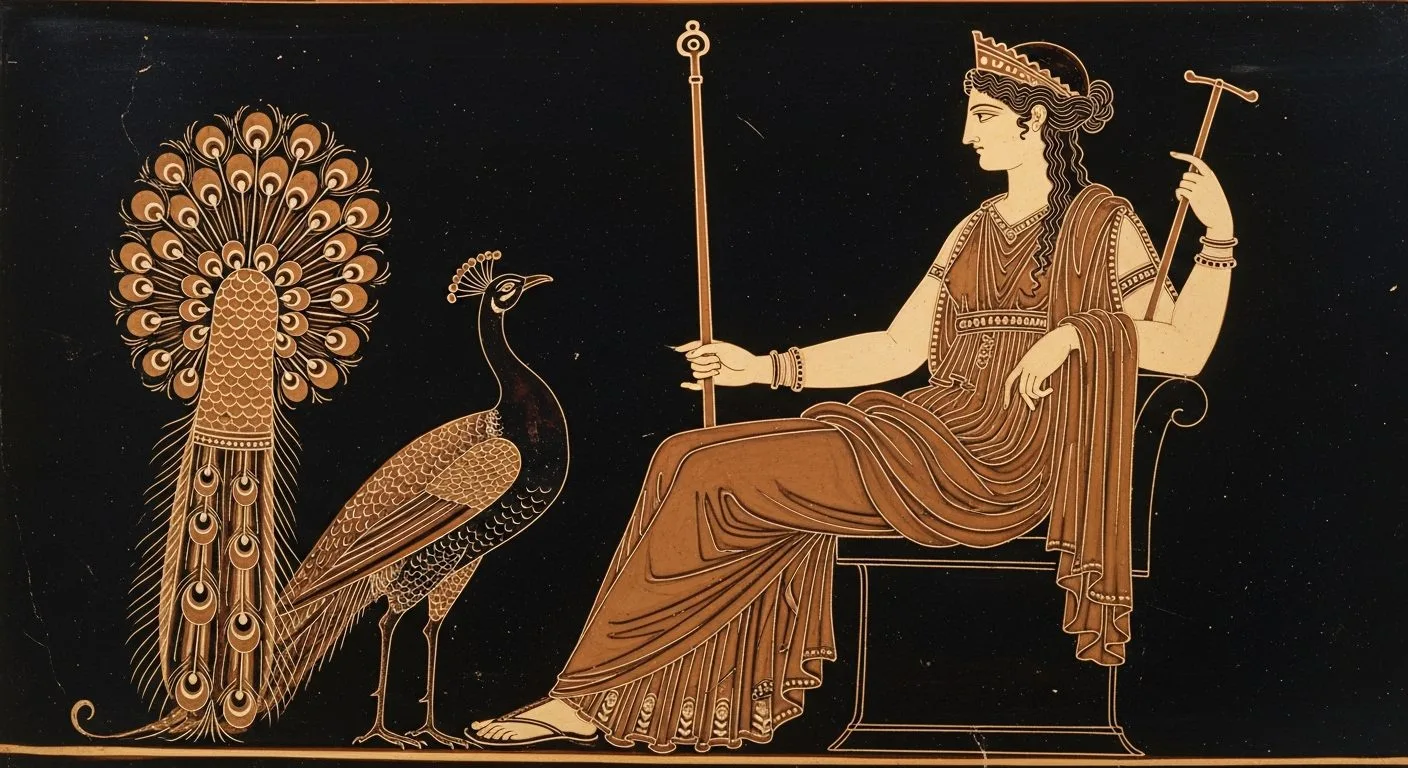
Η Ήρα είναι μία από τις σημαντικότερες θεότητες της ελληνικής μυθολογίας. Στη συλλογική μνήμη των αρχαίων Ελλήνων υπήρξε η βασίλισσα του Ολύμπου, προστάτιδα του γάμου, της νόμιμης ένωσης και της οικογενειακής τάξης. Το όνομά της συνδέθηκε με την εξουσία, τη βασιλική αξιοπρέπεια και τη διατήρηση της κοινωνικής συνοχής.
Παρότι συχνά παρουσιάζεται μέσα από τις γνωστές ιστορίες ζήλιας απέναντι στις ερωτικές περιπέτειες του Δίας, η μορφή της είναι πολύ πιο σύνθετη. Η Ήρα δεν ήταν απλώς η σύζυγος του ανώτατου θεού· υπήρξε αυτόνομη θεότητα με ισχυρή λατρεία, αρχαιότατη παρουσία στον ελληνικό κόσμο και ιδιαίτερο κύρος στις θρησκευτικές πρακτικές της αρχαιότητας.
Βασικά στοιχεία Ηρα
Όνομα και Ετυμολογία
Η ετυμολογία του ονόματος «Ήρα» δεν έχει αποσαφηνιστεί πλήρως. Οι μελετητές έχουν προτείνει διάφορες ερμηνείες. Μία από τις πιο διαδεδομένες συνδέει το όνομα με την έννοια της «κυρίας», της «αρχόντισσας» ή της γυναίκας υψηλού κύρους. Αυτή η ερμηνεία ταιριάζει με τον ρόλο της ως βασίλισσας των θεών.
Άλλες προσεγγίσεις υποστηρίζουν ότι πρόκειται για ιδιαίτερα αρχαίο, προελληνικό θεωνύμιο. Αυτό σημαίνει ότι η λατρεία της πιθανόν να προϋπήρχε του κλασικού ελληνικού πάνθεου και αργότερα να ενσωματώθηκε στην ολυμπιακή θρησκεία.
Η ίδια η αρχαιότητα αντιλαμβανόταν την Ήρα ως μορφή παλαιά, σεβαστή και στενά δεμένη με τη θεσμική τάξη της κοινωνίας.
Η καταγωγή και η οικογένεια
Η Ήρα ήταν κόρη του Κρόνου και της Ρέας, ανήκοντας στη γενιά των Τιτάνων. Όπως και τα αδέλφια της, καταβροχθίστηκε από τον πατέρα της αμέσως μετά τη γέννησή της. Ο Κρόνος φοβόταν ότι κάποιο από τα παιδιά του θα τον εκθρόνιζε.
Όταν ο Δίας ενηλικιώθηκε, ανάγκασε τον Κρόνο να ελευθερώσει τα παιδιά του. Έτσι η Ήρα επανήλθε στον κόσμο των θεών και συμμετείχε στη νέα θεϊκή τάξη που διαμορφώθηκε μετά την Τιτανομαχία.
Η θέση της μέσα στην οικογένεια των Ολυμπίων ήταν ιδιαίτερα υψηλή. Δεν θεωρούνταν απλώς αδελφή του Δία, αλλά η θεότητα που στεκόταν δίπλα του ως νόμιμη βασιλική σύντροφος. Στην ελληνική σκέψη αυτό είχε βαθύ συμβολισμό: η ανώτατη εξουσία δεν ήταν μόνο δύναμη, αλλά και θεσμός.
Οι εραστές
Σε αντίθεση με πολλές άλλες θεότητες, η Ήρα δεν παρουσιάζεται συνήθως ως θεά με πολλούς εραστές. Η βασική και σχεδόν αποκλειστική της σχέση είναι με τον Δία.
Σε ορισμένες τοπικές παραδόσεις συναντώνται παλαιότεροι μύθοι που τη συνδέουν με προελληνικές μορφές λατρείας ή με τελετουργικές ενώσεις, όμως στον κλασικό κόσμο η εικόνα της είναι σαφής: η Ήρα αποτελεί τη θεϊκή έκφραση της νόμιμης συζυγικής σχέσης.
Η μυθολογική ένταση δεν προέρχεται από τις δικές της ερωτικές περιπέτειες, αλλά από τις αμέτρητες σχέσεις του Δία. Αυτές οι ιστορίες αποτελούν βασικό πυρήνα πολλών μύθων.
Οι απόγονοι
Η παράδοση αποδίδει στην Ήρα αρκετά θεϊκά παιδιά.
- Άρης — θεός του πολέμου.
- Ήβη — θεά της νεότητας.
- Ειλείθυια — θεά του τοκετού.
- Ήφαιστος — θεός της φωτιάς και της μεταλλουργίας.
Ιδιαίτερο ενδιαφέρον έχει ο μύθος του Ηφαίστου. Σε ορισμένες παραδόσεις η Ήρα τον γέννησε χωρίς τη συμβολή του Δία, θέλοντας να αποδείξει ότι και η ίδια μπορούσε να δημιουργήσει ζωή αυτόνομα. Ο μύθος αυτός φανερώνει μια πλευρά ανεξαρτησίας και δημιουργικής δύναμης.
Η εμφάνιση
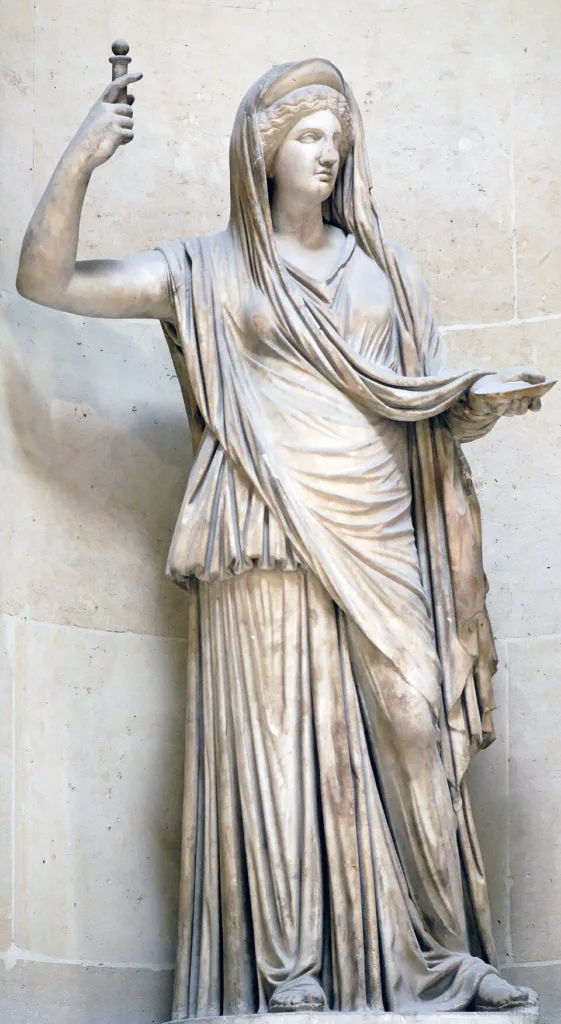
Η Ήρα απεικονίζεται ως επιβλητική, ώριμη και εξαιρετικά μεγαλοπρεπής μορφή. Οι αρχαίοι καλλιτέχνες τη δείχνουν συνήθως με ευθύ βλέμμα, ήρεμη έκφραση και βασιλική στάση σώματος.
Συχνά φορά μακρύ χιτώνα και ιμάτιο. Στο κεφάλι φέρει διάδημα ή στέμμα. Πολλές φορές κρατά σκήπτρο, ένδειξη εξουσίας. Η εικονογραφία της αποφεύγει την υπερβολική δραματικότητα· προτιμά τη σταθερότητα, την τάξη και την αξιοπρέπεια.
Η προσωπικότητα
Η προσωπικότητα της Ήρας είναι πολυδιάστατη.
Από τη μία πλευρά είναι θεά επιβλητική, αυστηρή, περήφανη και βαθιά συνδεδεμένη με την τιμή. Από την άλλη, στους μύθους εμφανίζεται ευαίσθητη απέναντι στην προσβολή, ιδιαίτερα όταν παραβιάζεται ο γάμος ή αμφισβητείται η θέση της.
Η περίφημη ζήλια της δεν πρέπει να διαβάζεται μόνο ως προσωπικό συναίσθημα. Για τους αρχαίους συχνά εξέφραζε την αντίδραση μιας θεότητας που υπερασπίζεται την κανονικότητα, τη νομιμότητα και την κοινωνική τάξη.
Γι’ αυτό πολλές ιστορίες την παρουσιάζουν αυστηρή, αλλά όχι τυχαία σκληρή. Οι πράξεις της συνδέονται συνήθως με την αποκατάσταση ισορροπιών που έχουν διαταραχθεί.
Οι δυνάμεις
Η Ήρα είχε εξουσία πάνω στον γάμο, τη συζυγική νομιμότητα, τη βασιλική κυριαρχία και τη γυναικεία αξιοπρέπεια.
Στους μύθους μπορούσε:
- να ευλογεί ή να εμποδίζει γάμους,
- να επηρεάζει γεννήσεις και τοκετούς,
- να προστατεύει τις νόμιμες οικογένειες,
- να παρεμβαίνει στις τύχες ηρώων και βασιλικών οίκων,
- να ενεργεί ως δύναμη θεσμικής τάξης μέσα στον κόσμο των θεών.
Η ισχύς της δεν είναι κυρίως πολεμική όπως του Άρη ούτε κεραυνοβόλα όπως του Δία. Είναι θεσμική, κοινωνική και συμβολική.
Ιερά σύμβολα
Σκήπτρο
Το σκήπτρο δηλώνει βασιλική εξουσία και κυριαρχία.
Διάδημα
Το διάδημα συνδέεται με την ιδιότητά της ως βασίλισσας του Ολύμπου.
Ρόδι
Το ρόδι σχετίζεται με τη γονιμότητα, τη συζυγική ένωση και τη συνέχεια της ζωής.
Ιερά ζώα και φυτά
Παγώνι
Το παγώνι είναι το πιο γνωστό ιερό ζώο της Ήρας. Σύμφωνα με μεταγενέστερο μύθο, τα μάτια της ουράς του συνδέθηκαν με τον Άργο Πανόπτη, τον εκατόμματο φύλακα της θεάς.
Αγελάδα
Η αγελάδα εμφανίζεται συχνά ως αρχαίο ιερό ζώο, σύμβολο μεγαλοπρέπειας, γονιμότητας και μητρικής δύναμης.
Κρίνος και ρόδι
Ανάμεσα στα φυτά που σχετίζονται με τη λατρεία της ξεχωρίζουν ο κρίνος και το ρόδι, σύμβολα καθαρότητας, γονιμότητας και ιερότητας.
Ρόλοι και ευθύνες
Η Ήρα είχε σημαντικό ρόλο στην οργάνωση του θεϊκού και ανθρώπινου κόσμου.
Ήταν προστάτιδα:
- του γάμου,
- της νόμιμης συζυγικής ένωσης,
- της οικογενειακής σταθερότητας,
- της γυναικείας τιμής,
- της βασιλικής νομιμότητας.
Σε πολλές πόλεις η παρουσία της συνδεόταν με τη δημόσια ζωή και με τις πολιτικές κοινότητες. Η λατρεία της δεν περιοριζόταν στον ιδιωτικό χώρο του σπιτιού, αλλά είχε και έντονη πολιτειακή διάσταση.
Θρησκευτική λατρεία
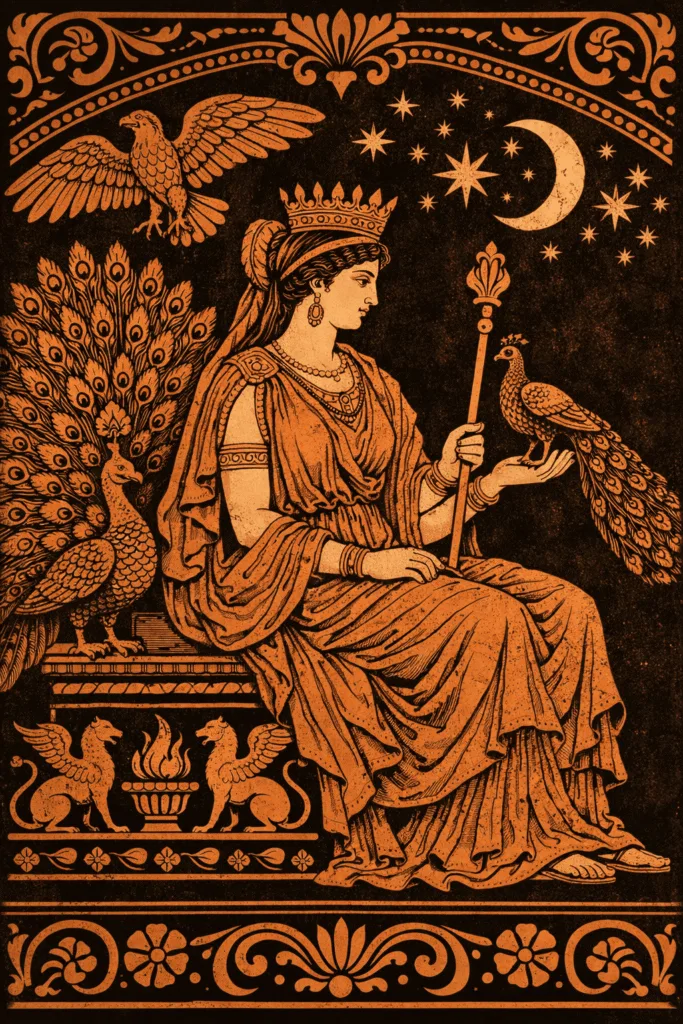
Η λατρεία της Ήρας ήταν ιδιαίτερα ισχυρή και πολύ παλαιά.
Το σημαντικότερο λατρευτικό κέντρο της ήταν το Ηραίο Άργους. Εκεί η θεά τιμούνταν ως πολιούχος και προστάτιδα της κοινότητας.
Εξίσου σημαντικό υπήρξε το Ηραίο Σάμου, ένα από τα αρχαιότερα και σημαντικότερα ιερά του ελληνικού κόσμου.
Στις γιορτές προς τιμήν της περιλαμβάνονταν πομπές, θυσίες, μουσικοί αγώνες και τελετές που σχετίζονταν με τη γαμήλια μετάβαση. Η λατρεία της είχε κοινωνική σημασία, επειδή συνέδεε τη θρησκεία με τους θεσμούς της πόλης.
Αναπαραστάσεις στην τέχνη
Η Ήρα εμφανίζεται συχνά στην αρχαία αγγειογραφία, στη γλυπτική και στην αρχιτεκτονική διακόσμηση.
Οι καλλιτέχνες προτιμούσαν να τονίζουν τη μεγαλοπρέπεια και την ηρεμία της μορφής της. Σε αντίθεση με άλλες θεότητες που απεικονίζονται μέσα σε έντονη δράση, η Ήρα αποδίδεται με σταθερότητα, επιβλητικότητα και τελετουργική σοβαρότητα.
Στην κλασική τέχνη η εικόνα της διαμόρφωσε ένα πρότυπο θεϊκής βασιλικής παρουσίας που επηρέασε και μεταγενέστερες εποχές.
Χαρακτηριστικά αποσπάσματα
Η Ήρα για τον Δία
«Άμυαλοι, που αγανακτούμε ανόητα με τον Δία, και πασχίζουμε να τον υποτάξουμε με την πειθώ! Καθισμένος παράμερα δεν μας καταδέχεται, μας περιφρονεί, περηφανεύεται πως είναι ο πιο δυνατός και πιο κραταιός από όλους τους θεούς. Υπομείνετε, λοιπόν, τις πίκρες που στέλνει στον καθένα σας »
Όμηρος
Συχνές ερωτήσεις
Ποια ήταν η Ήρα;
Η Ήρα ήταν η βασίλισσα των θεών στην ελληνική μυθολογία και θεά του γάμου, της νόμιμης ένωσης και της οικογενειακής σταθερότητας.
Ποιος ήταν ο σύζυγός της;
Ο σύζυγός της ήταν ο Δίας.
Γιατί η Ήρα εμφανίζεται συχνά ζηλότυπη;
Επειδή πολλοί μύθοι σχετίζονται με τις ερωτικές σχέσεις του Δία. Η αντίδρασή της συνδέεται με την υπεράσπιση της συζυγικής νομιμότητας.
Ποια είναι τα ιερά ζώα της;
Το παγώνι και η αγελάδα.
Πού λατρευόταν ιδιαίτερα;
Στο Άργος και στη Σάμο.
Ποια παιδιά απέκτησε;
Σύμφωνα με την πιο διαδεδομένη παράδοση, τον Άρη, την Ήβη, την Ειλείθυια και τον Ήφαιστο.
Πηγές
- Θεογονία
- Ιλιάδα
- Οδύσσεια
- Βιβλιοθήκη
- Σύγχρονες μελέτες για την αρχαία ελληνική θρησκεία και την ολυμπιακή μυθολογία
ΘΕΟΙ ΤΟΥ ΟΛΥΜΠΟΥ
ΔΙΑΣ | ΗΡΑ | ΑΘΗΝΑ | ΑΡΗΣ | ΑΡΤΕΜΙΣ | ΔΙΟΝΥΣΟΣ | ΕΡΜΗΣ | ΑΔΗΣ | ΑΠΟΛΛΩΝΑΣ | ΠΟΣΕΙΔΩΝΑΣ | ΗΦΑΙΣΤΟΣ | ΑΦΡΟΔΙΤΗ