
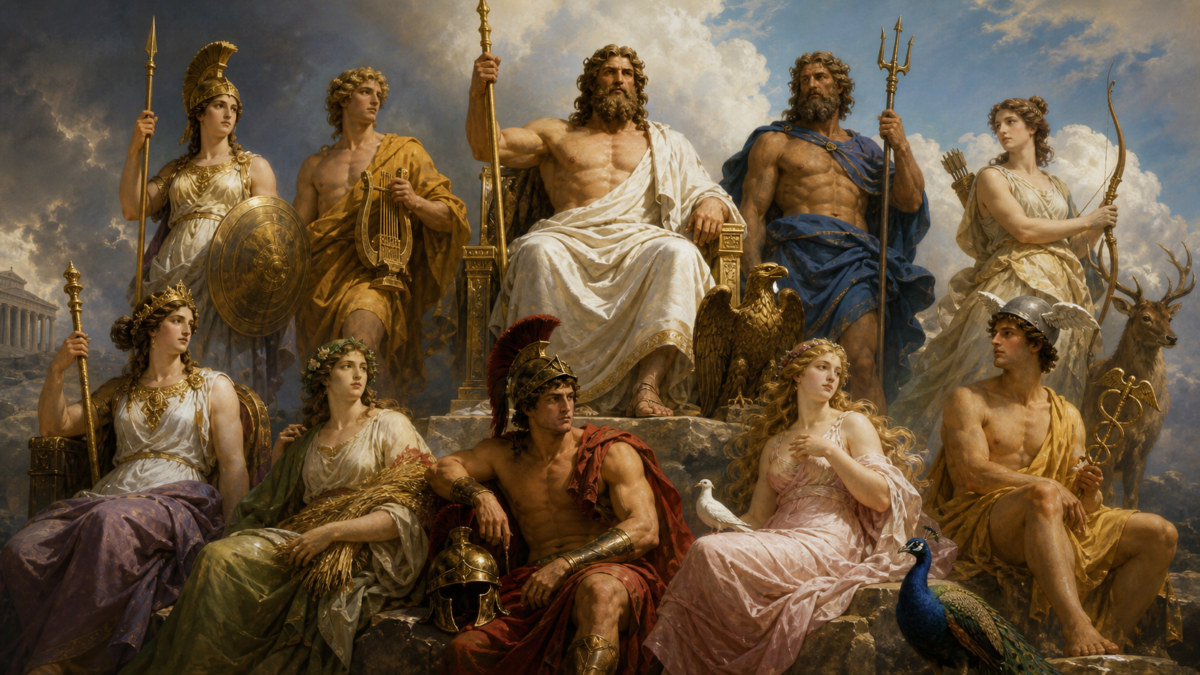
Who were the Olympian gods?
In Greek mythology, the Olympian gods form the core of the ancient Greek world. They were the deities most worshiped by Greeks and believed they lived on top of Olympus, Greece’s highest mountain. The twelve gods of Olympus were not distant or abstract figures. They had human emotions, passions, weaknesses, and conflicts, which brought them to life in people’s imaginations.
The ancient Greeks saw the gods as a mirror of human nature itself. The Olympians could love, get angry, feel jealous, punish, or protect. Despite their divine power, they remained deeply connected to the world of humans.
The Olympian Gods were the most important deities in ancient Greek religion and mythology. According to tradition, they resided on the summit of Mount Olympus, the highest mountain in Greece, from where they watched over the world of mortals and influenced the fates of gods and mortals alike. The ancient Greeks believed that these gods were not merely supernatural beings, but personifications of the forces of nature, human emotions, and the fundamental principles of life.
The dominance of the Olympians began after Titanomachy, the great war between the younger gods and the mighty TitansZeus, along with his brothers, overturned him Cronus and established a new divine order. From that moment on, Mount Olympus became the center of divine power, and the twelve gods ruled the world, each with his own role and responsibilities.
Zeus was the ruler of the sky and thunder; Poseidon ruled the seas; and Athena represented wisdom and strategic thinking. Apollo was associated with light, music, and divination, while Artemis was associated with hunting and the wild. Each god had their own symbols, sacred animals, and myths, which were passed down from generation to generation through poems, tragedies, and religious rituals.
Although the Olympians were considered immortal, the myths portray them with distinctly human characteristics. They felt jealousy, love, anger, and conflicted with one another, which made their stories more relatable to the people of that era. Through these myths, the ancient Greeks sought to explain the world around them, natural phenomena, and human frailties themselves.
The influence of the Olympian gods crossed its limits ancient Greece and continues to this day to inspire literature, art, cinema, and contemporary pop culture. Their figures remain timeless symbols of strength, wisdom, passion, and creativity, proving that Greek mythology continues to exert a tremendous fascination throughout the world.
Mount Olympus and the abode of the gods
Mount Olympus was not merely considered a mountain. For the ancient Greeks, it was the sacred place where the gods dwelt, far removed from the hardships and decay of the human world. There, according to the myths, the gods lived on ambrosia and nectar, gathered for feasts, and decided the fates of gods and mortals.
On Mount Olympus, Zeus reigned as the supreme ruler. Hephaestus worked in his divine workshops, Hera protected marriage, Poseidon protected the sea, and Athena wisely counseled gods and heroes. The world of the Olympians was portrayed as an ideal yet deeply human society.
Who were the Twelve Olympians?
| God / Goddess | Parents | Role – Description |
|---|---|---|
| Zeus | Saturn & Rhea | King of the gods, god of heaven and thunder |
| Hera | Saturn & Rhea | Goddess of marriage and family |
| Poseidon | Saturn & Rhea | God of the sea and earthquakes |
| Demeter | Saturn & Rhea | Goddess of agriculture and fertility |
| Athena | Zeus (no mother in myth) | Goddess of wisdom and war |
| Apollo | Zeus & Leto | God of light, music and divination |
| Artemis | Zeus & Leto | Goddess of hunting and nature |
| Ares | Zeus & Hera | God of war |
| Aphrodite | From sea foam | Goddess of beauty and love |
| Hermes | Zeus & Midwife | Messenger of the gods, god of commerce |
| Hephaestus | Hera (hera & Zeus) | God of fire and metallurgy |
| Hestia | Saturn & Rhea | Goddess of hearth and family warmth |
| Dionysus | Zeus & Semeli | God of wine, joy and theatre |
The composition of the Olympian gods was not always exactly the same in all the times and cities of ancient Greece. However, the most famous gods of Olympus were:
- Zeus
- Hera
- Poseidon
- Athena
- Apollo
- Artemis
- Ares
- Aphrodite
- Hermes
- Demeter
- Hephaestus
- The Fossil or Dionysus
In some traditions, Hestia gave way to Dionysus, while Hades was usually not included because he resided in the Underworld rather than on Mount Olympus.
Zeus: The Ruler of the Heavens
Zeus was the father of gods and men and the most important figure in the Olympian pantheon. He was the son of Cronus and Rhea. According to the myth, his mother hid him in Crete to save him from Cronus, who swallowed his children for fear of losing his power.
When he came of age, Zeus rebelled against his father, freed his siblings, and defeated the Titans. He then divided the world among his brothers: he took the sky, Poseidon took the sea, and Hades took the Underworld.
Zeus was considered the protector of order, justice, and hospitality. Nevertheless, in the myths he often appears impulsive and swayed by his passions, particularly by his many love affairs.
Articles about Jupiter
- Article: Zeus and Leto
- Article: Zeus and Dioni
- Article: Jupiter and Europe
- Article: The statue of Zeus in Olympia
- Article: Temple of Olympian Zeus
Hera: The goddess of marriage and royal power
Hera was the wife of Zeus and queen of the gods. She was primarily associated with marriage, family, and marital fidelity. In mythology, she is often portrayed as jealous because of Zeus’s constant infidelities, but her role was much more significant.
Hera represented the power of the institution of marriage and the stability of the family. Her conflicts with Zeus’s mistresses and their children reflect the social attitudes and tensions of the ancient world.
Article: Hera Greek mythology
Poseidon: The Lord of the Sea
«Για τους αρχαίους Έλληνες, ο Ποσειδώνας συμβόλιζε την απρόβλεπτη δύναμη της φύσης και τον φόβο της θάλασσας, από την οποία εξαρτιόταν ολόκληρος ο ελληνικός κόσμος.»
The ancient Greeks, as a seafaring people, both feared and held Poseidon in high esteem. Sailors would pray to him before every voyage, asking for safe seas and favorable winds.
In mythology, he is often portrayed as hot-tempered and vengeful, as in the case of Odysseus, whom he pursued for years after Odysseus had blinded Polyphemus.
Article: Myths About Poseidon
Athena: The Goddess of Wisdom
Athena was the goddess of wisdom, strategy, and the arts. According to myth, she was born from Zeus’s head, fully armed.
Unlike Ares, who symbolized the violence of war, Athena represented reason, strategic thinking, and just conflict. She was also the patron goddess of Athens, which was named in her honor.
Athena often helped heroes such as Odysseus and Perseus, offering them guidance and wisdom.
Article: Some lesser-known facts about the goddess Athena
Apollo and Artemis: The divine twins
Apollo and Artemis were the children of Zeus and Leto and were among the most important siblings in mythology.
Apollo was the god of light, music, divination, and harmony. He was associated with the Oracle of Delphi, where the Pythia conveyed his oracles to the people.
Artemis was the goddess of hunting, the wild, and independence. She protected animals and young women and preferred to live in the woods, far from the cities.
Both gods could show protection but also severity when someone violated their laws or dishonored them.
Article: The Myth of Apollo and Daphne
Ares, Venus and Hephaestus
Ares represented the violent and destructive side of war. Although he was a powerful god, he was not particularly beloved by the Greeks, as he symbolized the chaos of battle.
Aphrodite was the goddess of beauty, love, and desire. According to the myth, she was married to Hephaestus but fell in love with Ares.
Hephaestus, the god of fire and metallurgy, was famous for his craftsmanship and creations. When he discovered Aphrodite’s affair with Ares, he trapped them in an invisible golden net and exposed them before the other gods.
This story is one of the most human in Greek mythology, full of jealousy, irony, and revenge.
Article: Adonis and Aphrodite – A myth of love, jealousy and death
Article: Fountain of Salmacis
The worship of the gods in Greek cities
Every city in ancient Greece had its own patron god. Athens was dedicated to Athena, while other cities honored very different deities depending on their history and needs.
The major festivals held in honor of the gods were of immense importance. The Panathenaic Festival for Athena, the Olympic Games for Zeus, and the Pythian Games for Apollo combined religious rituals, athletic competitions, music, and political events.
The worship of the gods was not only a religious practice but also a fundamental aspect of social and political life.
Article: Worship ceremonies in ancient Greece
Article: Worship Ceremonies in Ancient Greece | Sacrifices, Mysteries
Article: Religion and Sacred Places of Ancient Greece
The relationship between gods and people
In Greek mythology, the relationship between gods and humans was based on reciprocity. Humans offered sacrifices, honors, and votive offerings, while the gods could grant protection, favor, or success.
However, the gods were not always predictable. They could easily favor or destroy a hero depending on his actions and behavior. That is why people constantly tried to maintain their favor.
The great heroes of mythology often had the help of a god, but they never completely escaped their fate and their hardships.
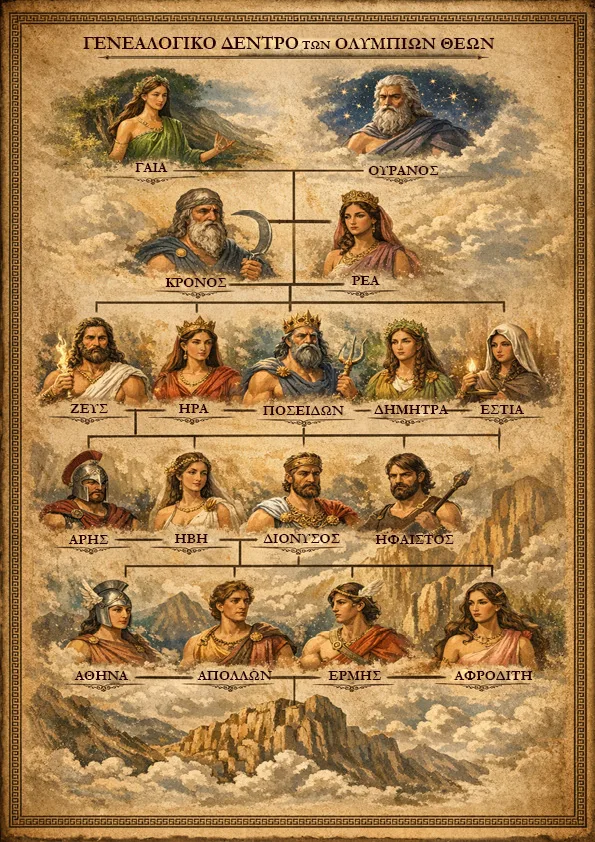

The Twelve — Who are they?
 Gods of Olympus
 Gods of Olympus
 Gods of Olympus
 Gods of Olympus
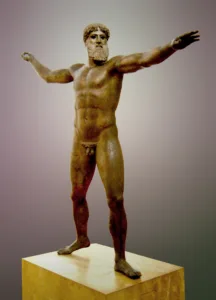 Gods of Olympus
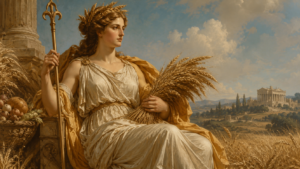 Gods of Olympus
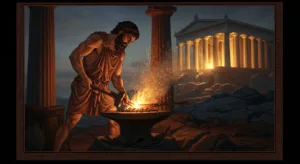 Gods of Olympus
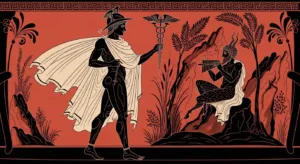 Gods of Olympus
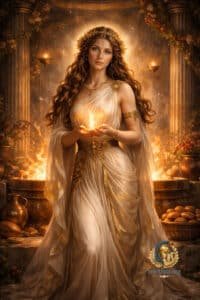 Gods of Olympus
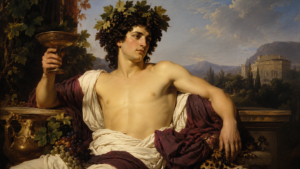 Gods of Olympus
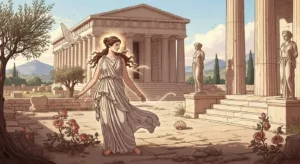 Gods of Olympus
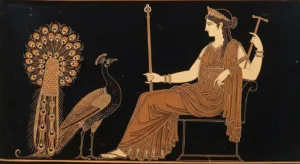 Gods of Olympus
Frequently Asked Questions about the Olympian Gods
Who were the Olympian gods?
The Olympian gods were the principal deities of ancient Greek mythology who resided on Mount Olympus. They were considered the supreme deities and ruled the world, influencing nature, humans, and their destinies.
How many were the Olympian gods?
There were twelve Olympian gods. Although the number usually remained constant, in some traditions certain gods replaced others, such as Dionysus, who replaced Hestia.
Who were the 12 Olympian gods?
The twelve Olympian gods were Zeus, Hera, Poseidon, Demeter, Athena, Apollo, Artemis, Ares, Aphrodite, Hermes, Hephaestus, and Hestia; in some traditions, Dionysus replaces Hestia.
Where did the Olympian gods dwell?
The Olympian gods lived on the summit of Mount Olympus, the highest mountain in Greece, which was considered a sacred place and the divine palace of the gods.
Who was the leader of the Olympian gods?
The leader of the Olympian gods was Zeus, the god of the sky and thunder. He was considered the king of the gods and the protector of order and justice.
Who was the queen of the Olympian gods?
The queen of the Olympian gods was Hera, wife of Zeus and goddess of marriage and family.
How did the Olympian gods become sovereign?
The Olympian gods became rulers after the Titanomachy, a great war between the Olympian gods and the Titans. The Olympians were victorious and took control of the world.
Who was the god of the sea among the Olympians?
Poseidon was the god of the sea, earthquakes and horses. He was one of the most powerful Olympian gods.
What goddess was a protector of wisdom?
Athena was the goddess of wisdom, strategy, and art of war. She was also a patron of the city of Athens.
What god was a messenger of the gods?
Hermes was the messenger of the gods and protector of travelers, merchants and thieves.
Who was the goddess of beauty and love?
Aphrodite was the goddess of beauty, love, and fertility. According to mythology, she was born from the sea foam.
What god was the god of war?
Ares was the god of war and symbolized violence, strength, and conflict.
Who was the god of fire and metallurgy?
Hephaestus was the god of fire, metallurgy, and arts. He was the artisan of the gods and creator of many divine weapons.
Who was the goddess of agriculture?
Demeter was the goddess of agriculture, land and fertility of crops.
Why did the Olympian Gods have human characteristics?
Olympian Gods were often portrayed with human characteristics, feelings and weaknesses, because Greek mythology tried to explain the world through human experiences and behaviors.
Ancient sources
Hesiod – Theogenia & Works and Days | Primary Sources
Primary Sources of Greek Mythology | Hesiod, Homer, Orphic Hymns
Primary Sources of Greek Mythology | Ancient Texts
Perseus Digital Library is a reliable academic database with ancient Greek texts and historical sources, particularly useful for the study of Greek mythology and Elefsinian Mysteries.
Mythical creatures of Greek mythology
Greek Mythology: Gods, Heroes, Myths, Creatures
A Guide to Greek Mythology – Gods, Heroes, Myths, and Hidden Meanings