
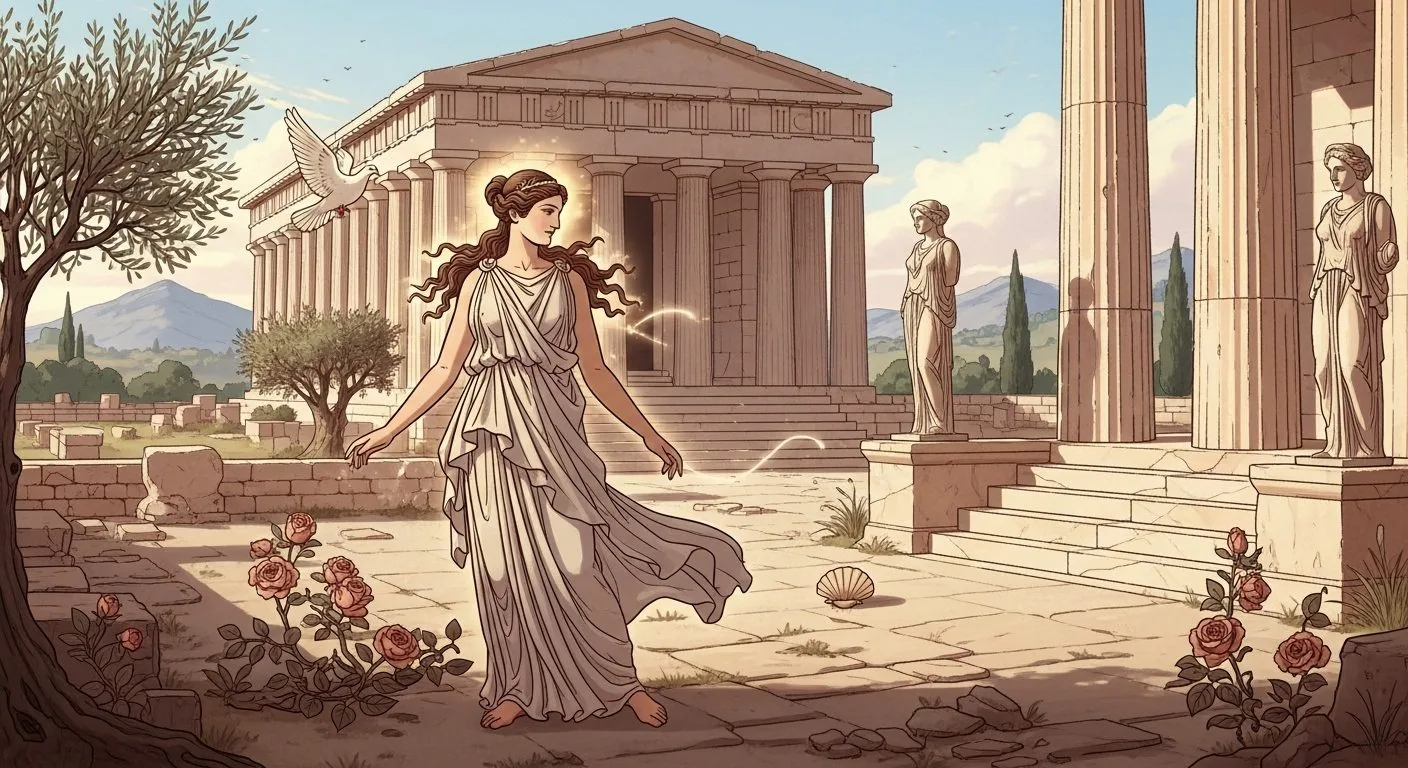
Η Αφροδίτη αποτελεί μία από τις πιο γνωστές και γοητευτικές θεότητες της ελληνικής μυθολογίας. Θεά της ομορφιάς, του έρωτα, της γονιμότητας και της αισθησιακής έλξης, κατείχε ξεχωριστή θέση ανάμεσα στους Ολύμπιους θεούς. Η παρουσία της συνδέεται με τη δύναμη της αγάπης που επηρεάζει θεούς και ανθρώπους, καθώς και με την ιδέα ότι η ομορφιά και η επιθυμία αποτελούν θεμελιώδεις δυνάμεις της φύσης.
- Στον Τρωικό Πόλεμο:
- Προκαλεί σύγκρουση μέσω επιθυμίας και ανταγωνισμού
Η Αφροδίτη εκφράζει επιθυμία που αποσταθεροποιεί, όχι απλά ρομαντική αγάπη.
«Ρώτησα τον εαυτό μου:
Τι, Σαπφώ, μπορείς
να δώσεις σε κάποιον που
έχει τα πάντα,
όπως η Αφροδίτη;»
― Σαπφώ
Η λατρεία της Αφροδίτης υπήρξε ιδιαίτερα διαδεδομένη στον αρχαίο ελληνικό κόσμο, ενώ ο μύθος της γέννησής της, οι ερωτικές της ιστορίες και ο ρόλος της σε σημαντικά μυθολογικά γεγονότα την καθιστούν μία από τις πιο πολυσύνθετες και συμβολικές μορφές του ελληνικού πάνθεου.
Η Γέννηση της Αφροδίτης
Υπάρχουν δύο βασικές παραδόσεις για την καταγωγή της Αφροδίτης.
Σύμφωνα με την αρχαιότερη εκδοχή που παραδίδει ο Ησίοδος στη Θεογονία, η θεά γεννήθηκε από τον αφρό της θάλασσας. Όταν ο Κρόνος ευνούχισε τον πατέρα του Ουρανό και έριξε τα γεννητικά του όργανα στον ωκεανό, δημιουργήθηκε λευκός αφρός από τον οποίο αναδύθηκε η Αφροδίτη. Το όνομά της συνδέεται ακριβώς με αυτή την προέλευση, καθώς προέρχεται από τη λέξη «αφρός».
Η θεά εμφανίστηκε μέσα σε ένα κοχύλι και παρασύρθηκε από τα κύματα μέχρι την Κύπρο. Εκεί βγήκε στην ακτή, και σύμφωνα με τον μύθο, όπου πατούσε φύτρωναν λουλούδια. Από την Κύπρο εξαπλώθηκε η λατρεία της σε ολόκληρο τον ελληνικό κόσμο.
Μια δεύτερη παράδοση, που συναντάται κυρίως στον Όμηρο, παρουσιάζει την Αφροδίτη ως κόρη του Δία και της Τιτανίδας Διώνης. Αυτή η εκδοχή την εντάσσει πιο καθαρά στο σύστημα των Ολύμπιων θεών.
Και οι δύο παραδόσεις συνυπήρχαν στην αρχαιότητα, προσδίδοντας στη θεά έναν χαρακτήρα τόσο κοσμικό όσο και ουράνιο.
Η Θέση της Αφροδίτης στον Όλυμπο
Η Αφροδίτη συγκαταλέγεται στους δώδεκα Ολύμπιους θεούς και αντιπροσωπεύει τη δύναμη της έλξης που ενώνει όλα τα όντα. Η επιρροή της εκτείνεται πέρα από τον απλό ρομαντικό έρωτα· σχετίζεται με τη δημιουργία, τη γονιμότητα και την αναπαραγωγή της ζωής.
Η παρουσία της στον Όλυμπο δεν περιοριζόταν μόνο στη σφαίρα των ανθρώπινων συναισθημάτων. Πολλοί μύθοι δείχνουν ότι ακόμη και οι ισχυρότεροι θεοί μπορούσαν να επηρεαστούν από τη δύναμη της Αφροδίτης.
Η ίδια χρησιμοποιούσε συχνά τη γοητεία της για να επηρεάζει γεγονότα και αποφάσεις, αποδεικνύοντας ότι η δύναμη της ομορφιάς και του πόθου μπορεί να είναι εξίσου ισχυρή με τη δύναμη του πολέμου ή της εξουσίας.
Ο Γάμος με τον Ήφαιστο
Παρά την εξαιρετική της ομορφιά, η Αφροδίτη παντρεύτηκε τον θεό Ήφαιστο, τον θεϊκό τεχνίτη και θεό της φωτιάς και της μεταλλουργίας.
Ο μύθος αναφέρει ότι ο Δίας αποφάσισε αυτόν τον γάμο ώστε να αποφευχθούν συγκρούσεις μεταξύ των θεών που επιθυμούσαν την Αφροδίτη. Ο Ήφαιστος, αν και λιγότερο όμορφος από τους άλλους θεούς, ήταν εξαιρετικά ικανός και δημιουργικός.
Ωστόσο, η σχέση αυτή δεν υπήρξε ιδιαίτερα ευτυχισμένη. Η Αφροδίτη συνδέθηκε ερωτικά με πολλούς θεούς και θνητούς, γεγονός που προκάλεσε αρκετές συγκρούσεις και μυθολογικές ιστορίες.
Ο Έρωτας της Αφροδίτης και του Άρη
Η πιο γνωστή εξωσυζυγική σχέση της Αφροδίτης ήταν με τον θεό Άρη. Ο έρωτάς τους αντιπροσωπεύει την ένωση δύο αντίθετων δυνάμεων: της αγάπης και του πολέμου.
Σύμφωνα με έναν διάσημο μύθο, ο Ήφαιστος ανακάλυψε την απιστία της συζύγου του και κατασκεύασε ένα αόρατο δίχτυ από λεπτό μέταλλο. Όταν οι δύο εραστές συναντήθηκαν, το δίχτυ τους παγίδευσε και ο Ήφαιστος κάλεσε τους θεούς να δουν τη σκηνή.
Παρά την ταπείνωση αυτή, η σχέση της Αφροδίτης και του Άρη συνεχίστηκε, και από την ένωση τους γεννήθηκαν αρκετά παιδιά, όπως ο Έρως και ο Φόβος.
Τα Παιδιά της Αφροδίτης
Η Αφροδίτη συνδέεται με πολλές γενεαλογικές γραμμές της μυθολογίας.
Με τον Άρη απέκτησε:
Έρωτα, θεότητα της επιθυμίας και της ερωτικής έλξης
Φόβο και Δείμο, προσωποποιήσεις του τρόμου και της φρίκης στον πόλεμο
Αρμονία, που συμβολίζει την ένωση αντίθετων στοιχείων
Με τον Ερμή απέκτησε τον Ερμαφρόδιτο, μορφή που συνδυάζει αρσενικά και θηλυκά χαρακτηριστικά.
Με τον θνητό Αγχίση απέκτησε τον Αινεία, τον ήρωα που αργότερα συνδέθηκε με την ίδρυση της ρωμαϊκής γενεαλογίας.
Η Αφροδίτη και ο Τρωικός Πόλεμος
Ένα από τα σημαντικότερα επεισόδια όπου η Αφροδίτη έπαιξε καθοριστικό ρόλο ήταν η αρχή του Τρωικού Πολέμου.
Στον γάμο του Πηλέα και της Θέτιδας, η θεά Έριδα πέταξε ένα χρυσό μήλο με την επιγραφή «τη καλλίστη». Η Αφροδίτη, η Ήρα και η Αθηνά διεκδίκησαν τον τίτλο της ομορφότερης θεάς.
Ο Δίας ανέθεσε την κρίση στον Πάρη, πρίγκιπα της Τροίας. Κάθε θεά προσπάθησε να τον δωροδοκήσει. Η Αφροδίτη του υποσχέθηκε την πιο όμορφη γυναίκα του κόσμου, την Ελένη της Σπάρτης.
Ο Πάρης επέλεξε την Αφροδίτη και πήρε την Ελένη μαζί του στην Τροία, γεγονός που οδήγησε στον δεκαετή πόλεμο.
Κατά τη διάρκεια του πολέμου η Αφροδίτη υποστήριξε τους Τρώες και ιδιαίτερα τον γιο της Αινεία.
Σύμβολα και Ιερά Ζώα της Αφροδίτης
Η θεά συνδέεται με πολλά σύμβολα που αντιπροσωπεύουν την ομορφιά και τη γονιμότητα.
Τα πιο γνωστά είναι:
το περιστέρι
ο κύκνος
το δελφίνι
το κοχύλι
το τριαντάφυλλο
η μυρτιά
Αυτά τα στοιχεία εμφανίζονται συχνά σε αρχαία έργα τέχνης και απεικονίσεις της θεάς.
Ιερά και Λατρεία
Η λατρεία της Αφροδίτης ήταν ιδιαίτερα ισχυρή σε πολλά μέρη του ελληνικού κόσμου.
Τα σημαντικότερα κέντρα λατρείας της ήταν:
Κύπρος (ιδιαίτερα στην Πάφο)
Κύθηρα
Κόρινθος
Σπάρτη
Αθήνα
Στην Κόρινθο υπήρχε ένα από τα πιο γνωστά ιερά της θεάς, ενώ στην Κύπρο θεωρούταν η κύρια προστάτιδα του νησιού.
Οι τελετές προς τιμήν της περιλάμβαναν γιορτές, αφιερώματα λουλουδιών και προσφορές που συμβόλιζαν τη γονιμότητα και την αγάπη.
Η Αφροδίτη στην Τέχνη
Η Αφροδίτη αποτέλεσε ένα από τα πιο αγαπημένα θέματα της αρχαίας ελληνικής τέχνης.
Απεικονίζεται συχνά ως εξαιρετικά όμορφη γυναίκα με αρμονικές αναλογίες. Μερικά από τα πιο γνωστά γλυπτά που απεικονίζουν τη θεά περιλαμβάνουν μορφές όπου παρουσιάζεται να αναδύεται από τη θάλασσα ή να ετοιμάζεται για το λουτρό της.
Η εικόνα της Αφροδίτης επηρέασε βαθιά την έννοια της ιδανικής ομορφιάς στην δυτική τέχνη.
Η Ρωμαϊκή Αντίστοιχη Θεότητα
Στη ρωμαϊκή μυθολογία η Αφροδίτη ταυτίστηκε με τη θεά Venus.
Οι Ρωμαίοι υιοθέτησαν πολλούς από τους ελληνικούς μύθους της, αλλά της έδωσαν και πολιτική σημασία, καθώς θεωρούσαν ότι η γενιά του Αινεία ήταν πρόγονος των Ρωμαίων.
Έτσι η Αφροδίτη–Venus απέκτησε και ρόλο συμβολικής μητέρας του ρωμαϊκού λαού.
Συμβολισμός της Αφροδίτης
Η Αφροδίτη δεν είναι απλώς θεά της φυσικής ομορφιάς. Συμβολίζει τη δύναμη που φέρνει κοντά τα όντα και δημιουργεί ζωή.
Στην ελληνική σκέψη ο έρωτας θεωρούνταν μια από τις πιο θεμελιώδεις κοσμικές δυνάμεις. Μέσω της Αφροδίτης εκφράζεται η ιδέα ότι η αρμονία, η δημιουργία και η επιθυμία αποτελούν κινητήριες δυνάμεις του κόσμου.
Η μορφή της παραμένει μέχρι σήμερα ένα από τα πιο ισχυρά σύμβολα της αγάπης, της ομορφιάς και της δημιουργικής δύναμης της φύσης.
Μύθοι για την Θεά Αφροδίτη
Η πιο διαδεδομένη εκδοχή για τη γέννηση της Αφροδίτης περιγράφει ότι αναδύθηκε από τον αφρό της θάλασσας, ο οποίος δημιουργήθηκε από τα ακρωτηριασμένα γεννητικά όργανα του ουράνιου θεού Ουρανού.
Ησίοδος, Θεογονία 176 κ.ε. (μετάφραση βασισμένη στον Evelyn-White):
«Ο Ουρανός (ο Ουρανός) ήρθε, φέρνοντας τη νύχτα και πόθο για έρωτα, και απλώθηκε πάνω στη Γαία (τη Γη), σκεπάζοντάς την ολόκληρη. Τότε ο γιος του, ο Κρόνος, από την κρυψώνα του, άπλωσε το αριστερό του χέρι και με το δεξί άρπαξε το μεγάλο, μακρύ δρεπάνι με τα κοφτερά δόντια, και με μια απότομη κίνηση έκοψε τα γεννητικά μέλη του ίδιου του πατέρα του και τα πέταξε πίσω του να πέσουν μακριά.
Και μόλις τα είχε αποκόψει με την πέτρινη λεπίδα και τα έριξε από τη στεριά μέσα στη φουρτουνιασμένη θάλασσα, αυτά παρασύρθηκαν για πολύ καιρό στο απέραντο πέλαγος· και γύρω τους απλώθηκε λευκός αφρός από την αθάνατη σάρκα, και μέσα σε αυτόν σχηματίστηκε μια κόρη.
Πρώτα πλησίασε τα ιερά Κύθηρα, και από εκεί, αργότερα, έφτασε στην θαλασσόζωστη Κύπρο· και εκεί αναδύθηκε μια φοβερή και πανέμορφη θεά, και χορτάρι φύτρωσε κάτω από τα καλοσχηματισμένα της πόδια.
Θεοί και άνθρωποι την ονομάζουν Αφροδίτη και Αφρογένεια, επειδή γεννήθηκε μέσα στον αφρό, και Κυθέρεια, στεφανωμένη με ωραίο στέμμα, επειδή έφτασε στα Κύθηρα, και Κυπρογενή, επειδή γεννήθηκε στην κυματώδη Κύπρο, και Φιλομμηδής, επειδή προήλθε από τα γεννητικά μέλη.
Μαζί της πορεύτηκε ο Έρως (Αγάπη), και ο ωραίος Ίμερος (Πόθος) την ακολούθησε από τη στιγμή της γέννησής της και όταν εισήλθε στη σύναξη των θεών. Αυτή είναι η τιμή που της αποδόθηκε από την αρχή, και αυτός είναι ο κλήρος που της έλαχε ανάμεσα σε θνητούς και αθάνατους θεούς: οι ψίθυροι των παρθένων, τα χαμόγελα και οι απατηλές γλυκές ηδονές, ο έρωτας και η χάρη.»
Η Αφροδίτη χάρισε τα δώρα της στην Πανδώρα, την πρώτη γυναίκα, η οποία δημιουργήθηκε κατ’ εντολή του Δία ως τιμωρία για την ανθρωπότητα, εξαιτίας της κλοπής της φωτιάς από τον Προμηθέα.
Ησίοδος, Έργα και Ημέραι 60 κ.ε. (μετάφραση βασισμένη στον Evelyn-White):
«Εκείνος [ο Δίας] πρόσταξε τον ένδοξο Ήφαιστο να βιαστεί και να αναμείξει γη με νερό, και να βάλει μέσα τους φωνή και δύναμη ανθρώπινη, και να πλάσει μορφή γλυκιάς και όμορφης κόρης, όμοια στο πρόσωπο με τις αθάνατες θεές.
Και στην Αθηνά ανέθεσε να της διδάξει την τέχνη της βελόνας και την ύφανση του ποικιλόχρωμου ιστού.
Και στη χρυσή Αφροδίτη να σκορπίσει επάνω στο κεφάλι της χάρη, καθώς και σκληρό πόθο και μέριμνες που καταβάλλουν τα μέλη.
Και στον Ερμή, τον Οδηγό, τον Αργειφόντη, ανέθεσε να εμφυσήσει μέσα της νου αναιδή και απατηλή φύση.
Έτσι διέταξε, και εκείνοι υπάκουσαν στον άρχοντα Δία, τον γιο του Κρόνου.
… Και αφού ολοκληρώθηκε η δημιουργία της, την ονόμασαν Πανδώρα (Δωρημένη με όλα), επειδή όλοι όσοι κατοικούσαν στον Όλυμπο της χάρισαν από ένα δώρο – μια μάστιγα για τους ανθρώπους που τρέφονται με ψωμί.»
Συχνές Ερωτήσεις για τη Θεά Αφροδίτη
Ποια ήταν η Αφροδίτη στην ελληνική μυθολογία;
Η Αφροδίτη ήταν η θεά του έρωτα, της ομορφιάς, της γονιμότητας και της επιθυμίας. Θεωρούνταν μία από τις πιο ισχυρές και γοητευτικές θεότητες του Ολύμπου, καθώς είχε τη δύναμη να εμπνέει έρωτα τόσο στους θεούς όσο και στους ανθρώπους.
Πώς γεννήθηκε η Αφροδίτη σύμφωνα με τη μυθολογία;
Σύμφωνα με μία από τις πιο γνωστές εκδοχές, η Αφροδίτη γεννήθηκε από τον αφρό της θάλασσας όταν τα κομμένα γεννητικά όργανα του Ουρανού έπεσαν στο πέλαγος. Από αυτόν τον αφρό αναδύθηκε η θεά κοντά στο νησί της Κύπρου.
Ποιοι ήταν οι γονείς της Αφροδίτης;
Σε μια άλλη παράδοση, η Αφροδίτη θεωρείται κόρη του Δία και της Διώνης. Αυτή η εκδοχή αναφέρεται κυρίως στα ομηρικά έπη.
Ποιος ήταν ο σύζυγος της Αφροδίτης;
Σύζυγός της ήταν ο Ήφαιστος, ο θεός της φωτιάς και της μεταλλουργίας. Ωστόσο, η Αφροδίτη είχε πολλές ερωτικές σχέσεις, με πιο γνωστή εκείνη με τον Άρη, τον θεό του πολέμου.
Ποια ήταν τα παιδιά της Αφροδίτης;
Η Αφροδίτη απέκτησε αρκετά παιδιά, μεταξύ των οποίων ο Έρωτας, ο Αινείας, ο Φόβος και ο Δείμος. Πολλά από αυτά συνδέονται με την έννοια του έρωτα και της επιθυμίας.
Ποια ήταν τα σύμβολα της Αφροδίτης;
Σύμβολα της θεάς ήταν το περιστέρι, το τριαντάφυλλο, το μήλο, ο καθρέφτης και το κοχύλι. Όλα αυτά συνδέονται με την ομορφιά, την αγάπη και τη γοητεία.
Πού λατρευόταν ιδιαίτερα η Αφροδίτη στην αρχαία Ελλάδα;
Η λατρεία της Αφροδίτης ήταν ιδιαίτερα ισχυρή στην Κύπρο, στα Κύθηρα και στην Κόρινθο. Εκεί υπήρχαν σημαντικά ιερά αφιερωμένα στη θεά.
Ποιος ήταν ο ρόλος της Αφροδίτης στον Τρωικό Πόλεμο;
Η Αφροδίτη έπαιξε σημαντικό ρόλο στον Τρωικό Πόλεμο. Υποσχέθηκε στον Πάρη ότι θα του χαρίσει την ωραιότερη γυναίκα του κόσμου, την Ελένη, αν της δώσει το χρυσό μήλο της ομορφιάς.
Τι ήταν η Κρίση του Πάρη;
Η Κρίση του Πάρη ήταν ένας μύθος στον οποίο ο Πάρης έπρεπε να αποφασίσει ποια θεά ήταν η ομορφότερη: η Ήρα, η Αθηνά ή η Αφροδίτη. Εκείνος επέλεξε την Αφροδίτη, γεγονός που οδήγησε τελικά στον Τρωικό Πόλεμο.
Γιατί η Αφροδίτη θεωρείται τόσο σημαντική στη μυθολογία;
Η Αφροδίτη συμβολίζει τη δύναμη του έρωτα και της ομορφιάς, δυνάμεις που σύμφωνα με τη μυθολογία μπορούν να επηρεάσουν τόσο τους ανθρώπους όσο και τους θεούς.
ΘΕΟΙ ΤΟΥ ΟΛΥΜΠΟΥ
ΔΙΑΣ | ΗΡΑ | ΑΘΗΝΑ | ΑΡΗΣ | ΑΡΤΕΜΙΣ | ΔΙΟΝΥΣΟΣ | ΕΡΜΗΣ | ΑΔΗΣ | ΑΠΟΛΛΩΝΑΣ | ΠΟΣΕΙΔΩΝΑΣ | ΗΦΑΙΣΤΟΣ | ΑΦΡΟΔΙΤΗ
Αρχαίες πηγές
Ησίοδος – Θεογονία & Έργα και Ημέραι | Πρωτογενείς Πηγές
Πρωτογενείς Πηγές Ελληνικής Μυθολογίας | Ησίοδος, Όμηρος, Ορφικοί Ύμνοι
Πρωτογενείς Πηγές της Ελληνικής Μυθολογίας | Αρχαία Κείμενα
Perseus Digital Library είναι μια αξιόπιστη ακαδημαϊκή βάση δεδομένων με αρχαία ελληνικά κείμενα και ιστορικές πηγές, ιδιαίτερα χρήσιμη για τη μελέτη της ελληνικής μυθολογίας και των Ελευσίνιων Μυστηρίων.