
Odyssey, attributed to the ancient Greek poet Homer, is one of the most important works of Western literature. Composed in the 8th century BC, this epic tells of its adventurous journey OdysseusKing of Ithaca, as he tries to return home after Trojan War. This article explores the themes, characters, historical context and timeless heritage of Odyssey, highlighting its importance in both literature and culture.
I will quote the Messrs translation here. Butcher and Lang for her about sixty lyrics «Odyssey»Their translation is as follows:
"Tell me, Musa, about that man, so ready for need, that he wandered in distant places, after plundering the sacred citadel of Troy, and many were the men of whom he saw the cities and knew the mentality, yes, and many the tribulations he suffered in his heart upon the sea, struggling to save his life and bring back his companions. No, however, he did not save his mates, though he eagerly desired it. For from the blindness of their hearts they perished, the fools, who devoured the oxen of the Sun Hyperion· But God took away the day of their return. Of these things, goddess, daughter of Zeus, wherever you've heard them, tell them to us.
Now all the others, who escaped from total destruction, were in their homes and had escaped both the war and the sea, but only Ulysses, who yearned for his wife and the way back, was held by the bride Calypso, that beautiful goddess, in her hollow caves, longing to have him as her master. But when the time came, during the flow of times, when the gods had set to return to Ithaca, neither there was he relieved of trials, nor among his own.· but all the gods felt sorry for him except Poseidon, who was constantly angry at the divine Ulysses, until he reached his country. However, Neptune had now departed for the distant Ethiopians, the Ethiopians who are divided into two, the most distant of the people, who dwell somewhere where Hyperion sets and somewhere where he rises. "
Background Framework
The Trojan War
- Background: Odyssey unfolds after Trojan War, a legendary conflict between the city of Troy and the Greek states, mainly due to its grab Helen of Troy.
- Literary Priority: The events of the Odyssey follow the Iliad, describing the very events of the war.
- Cultural Meaning: War and its aftermath were key narrative elements of ancient Greek culture, highlighting themes of heroism, honor and divine intervention.
The Poet: Homer
- Life and Influence: Little is known about Homer—whether he was an existing person or symbolizes a poetic tradition. His work is a foundation of the western secretariat.
- Oral Tradition: Odyssey was probably composed orally before being recorded, reflecting the narrative traditions of ancient Greece.
Plot Summary
The Odyssey consists of 24 rhapsodies and recounts Odysseus’s long and perilous journey home to Ithaca.
The Journey of Odysseus
- Kicones: After the war, Odysseus and his men plundered the land of the Cicones, but were defeated.
- Lotteries: They meet the Lotaphagus, whose fruit causes oblivion.
- Cyclops: Odysseus blinds the Polyphemous, causing the rage of Poseidon.
- Aeolus: - Aeolus He gives him a bottle of winds, but his comrades open it.
- Circe: The witch. Circe transforms men into pigs.
- Underworld: Odysseus consults the seer There's nothing wrong with that. Hades.
- Sirens: He deals with the Sirens, avoiding their song.
- Scylla and Charybdis: It passes between the two Monsters, losing comrades.
- Sun oxen: His men eat his holy oxen Helios and are punished by Zeus.
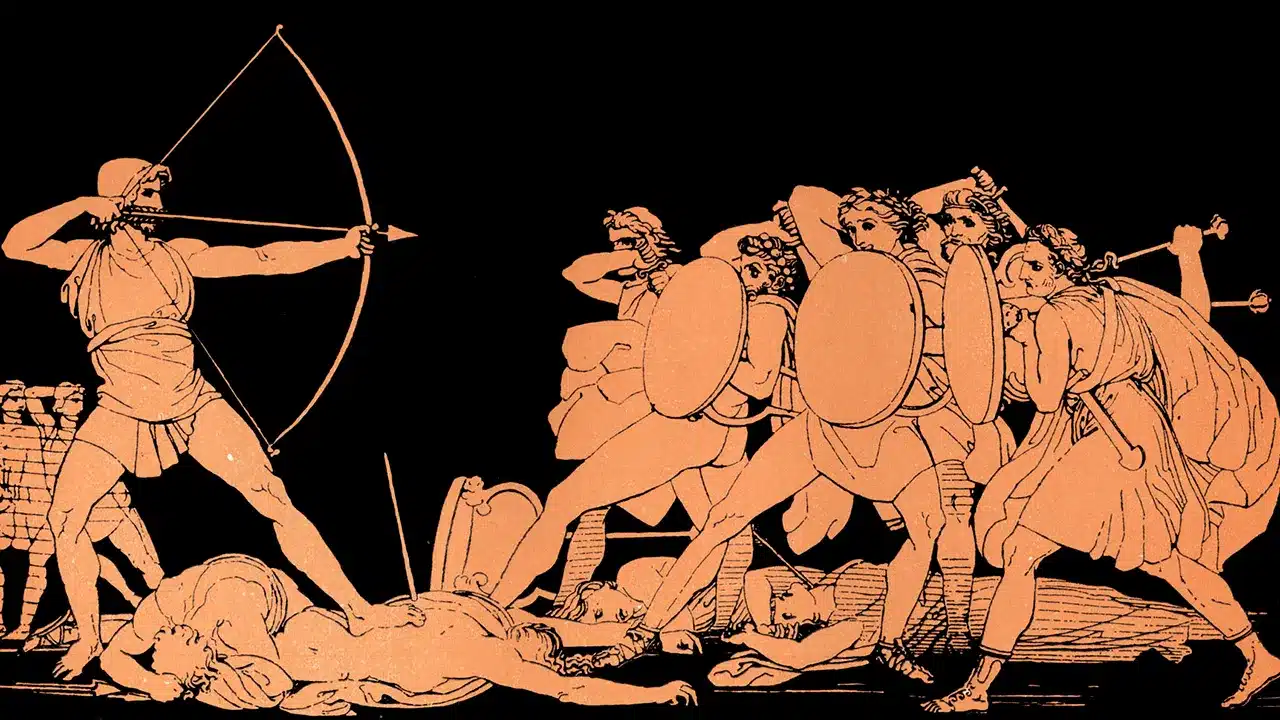
- Return to Ithaca: In disguise, Odysseus returns and takes revenge on his wife's suitors.
Penelope’s Role
- Faith and Intelligence: - Penelope She remains loyal, delaying her marriage with a trick.
- Virtues: It represents patience, intelligence and endurance.
Frequently Asked Questions About Odyssey
1. What is Odyssey?
- Odyssey is one of two great epic poems attributed to Homer and tells the hero's journey back Odysseus In his country.
2. Who's the main protagonist?
The main hero is Ulysses, the king of Ithaca, who tries to return after Trojan War.
3. What's the matter with Odyssey?
The project deals with taste (return home), perseverance, intelligence and the relationship of human-gods.
4. When was the Odyssey written?
The composition of the work is placed around the 8th century BC, in the archaic period of Greece.
5. How many books does Odyssey have?
Odyssey is divided into 24 rhapsodes, describing different stages of Ulysses' journey.
6. What monsters does Ulysses meet?
Among other things, it meets the Skylla and Charybdis.
7. What were the sirens in the Odyssey?
The Sirens They were creatures who charmed the sailors with their song.
8. Who helped Ulysses?
- Athena He protected and guided Ulysses throughout the journey.
9. Who's Penelope?
- Penelope It's a symbol of loyal marital devotion.
10. What's a menstruation?
It is the extermination of suitors who had overrun the palace of Ithaca, because they believed that Ulysses had been lost.
11. What is the difference between Iliad and Odyssey?
- Iliad It is about the war of Troy, while Odyssey is returning Ulysses.
12. Is it historical or mythological?
Odyssey is considered Epico-mythological work with historical and cultural elements.
13. What's the message of the project?
It highlights values such as patience, wisdom, faith, and power of human will.
14. Why is Odyssey important?
It is a foundation of western literature and deeply influenced the narrative of epic stories.
15. How does the Odyssey end?
Ulysses reunites with his family in Ithaca after his victory over the suitors.
Read more
The Journey of Odysseus – A Detailed Guide Through Each Stop
Odysseus: His Story, Adventures, and the Lessons of the Odyssey