
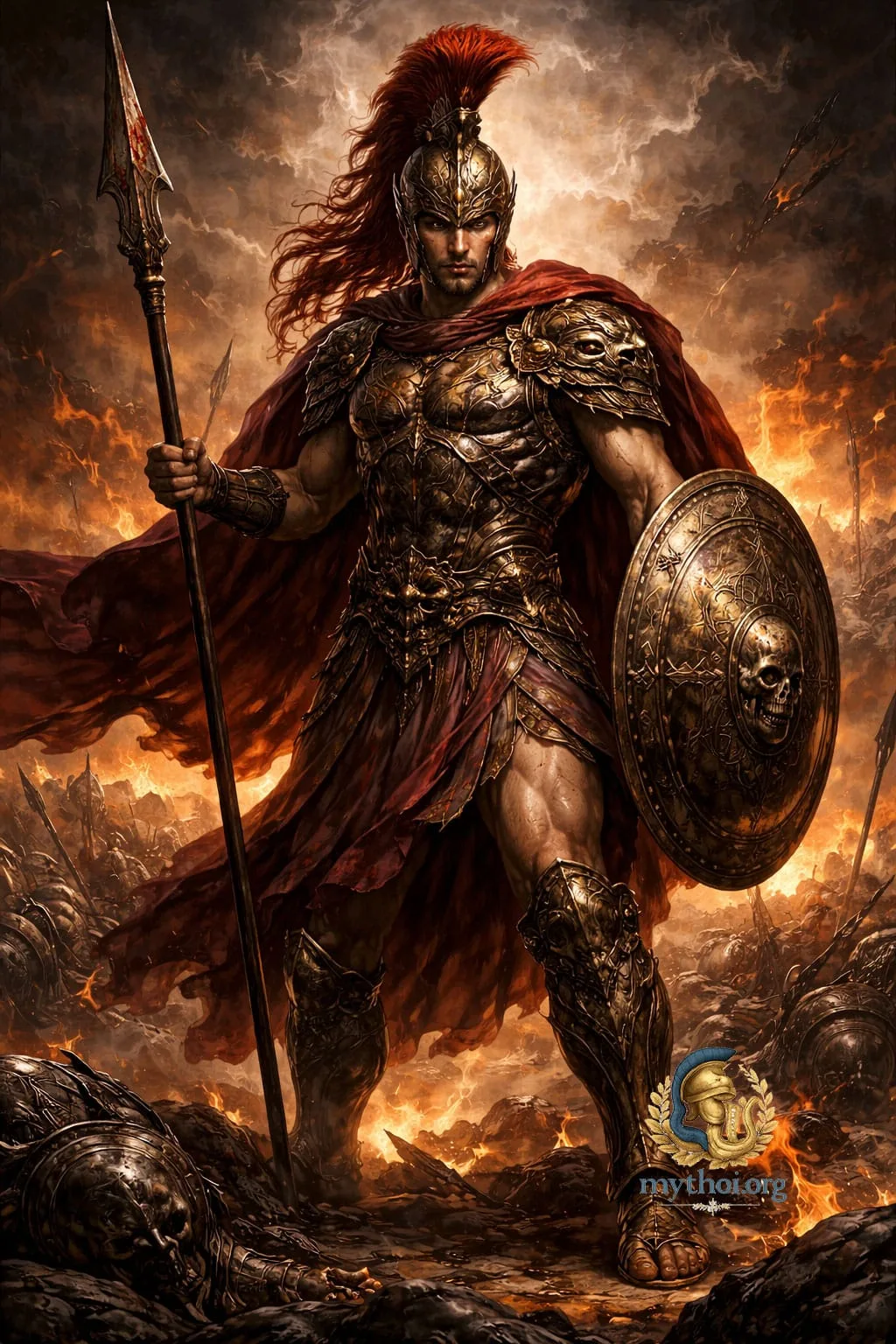
Ο Άρης είναι ο θεός που προσωποποιεί τη βίαιη και ανεξέλεγκτη πλευρά του πολέμου στην ελληνική μυθολογία. Σε αντίθεση με την Αθηνά, που εκπροσωπεί τη στρατηγική και τη σοφία, ο Άρης εκφράζει το πάθος, την οργή και την ωμή σύγκρουση. Παρότι πανίσχυρος, συχνά παρουσιάζεται ως ασταθής και απερίσκεπτος, λειτουργώντας ως προειδοποίηση για τις συνέπειες της βίας.
Εισαγωγή
Ο Άρης αποτελεί μία από τις πιο γνωστές θεότητες της ελληνικής μυθολογίας, αντιπροσωπεύοντας τον πόλεμο, τη σύγκρουση και τη στρατιωτική δύναμη. Αν και δεν ήταν τόσο δημοφιλής στους αρχαίους Έλληνες όσο η Αθηνά, η οποία συμβόλιζε τη στρατηγική στον πόλεμο, ο Άρης κατείχε εξέχουσα θέση στο πάνθεον ως ο θεός της βίας και της μάχης.
Η λατρεία του Άρη ήταν ιδιαίτερα έντονη σε πόλεις όπως η Σπάρτη, όπου η στρατιωτική εκπαίδευση και ο ηρωισμός είχαν πρωταρχική σημασία. Ο Άρης συνδέεται με την επιθετική φύση της ανθρώπινης ψυχής, τον πόθο για νίκη, αλλά και την καταστροφική πλευρά των συγκρούσεων.
Καταγωγή και Οικογένεια
Ο Άρης είναι γιος του Δία και της Ήρας, καθιστώντας τον έναν από τους Ολύμπιους θεούς. Η σχέση του με τη μητέρα του Ήρα ήταν συχνά τεταμένη, με τους μύθους να τον παρουσιάζουν ως επιθετικό και απείθαρχο, χαρακτηριστικά που ενισχύουν τη φύση του ως θεού του πολέμου.
Ο Άρης είχε αρκετές σχέσεις με θνητές και θεότητες. Η πιο γνωστή είναι η ερωτική του σχέση με την Αφροδίτη, θεά της ομορφιάς και του έρωτα, με την οποία απέκτησε πολλούς απογόνους, γνωστούς ως Αρηίδες. Αυτοί οι θεϊκοί ήρωες συνδέονται με τη βία, την καταστροφή και τη μάχη.
Συμβολισμός και Ιδιότητες
Ο Άρης αντιπροσωπεύει την ακατέργαστη δύναμη του πολέμου και την επιθετικότητα. Σε αντίθεση με την Αθηνά, που συμβολίζει τη στρατηγική και την εξυπνάδα, ο Άρης είναι σύμβολο της ωμής βίας και της καταστροφής που συνοδεύει τη μάχη. Τα βασικά σύμβολά του περιλαμβάνουν:
Τον δόρυ και την ασπίδα
Το σκύλο και τη λύκαινα
Τον κόκκινο χρώμα, που συμβολίζει το αίμα και τη φωτιά της μάχης
Η προσωπικότητά του είναι συχνά παρορμητική και επιθετική, χαρακτηριστικά που τον καθιστούν έναν θεό που προκαλεί φόβο αλλά και σεβασμό.
Ο Ρόλος του Άρη στη Μυθολογία
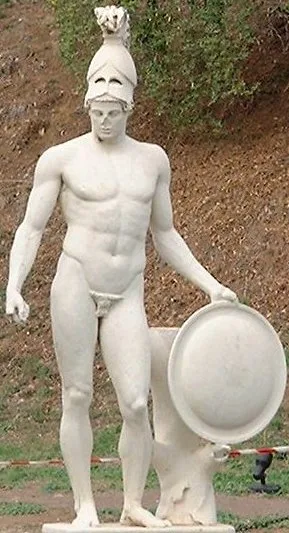
Ο Άρης εμφανίζεται σε πολλούς μύθους και επικές αφηγήσεις. Στην Ιλιάδα του Ομήρου, ο Άρης συμμετέχει ενεργά στις μάχες της Τροίας, παίζοντας τον ρόλο του θεού που φέρνει χάος και καταστροφή στους στρατούς. Παρά την ισχύ του, η παρουσία του συχνά προκαλεί ζημιά και στους συμμάχους του, υπογραμμίζοντας τον ανεξέλεγκτο χαρακτήρα του.
Σύμφωνα με άλλους μύθους, ο Άρης συμμετείχε σε πολλούς διαμάχες με θεότητες και ήρωες, όπως όταν παγιδεύτηκε από την Ήφαιστο και την Αφροδίτη, ή όταν συγκρούστηκε με θεούς όπως ο Απόλλωνας. Αυτές οι ιστορίες δείχνουν την έντονη και συχνά καταστροφική φύση του.
Λατρεία και Κοινωνική Σημασία
Η λατρεία του Άρη ήταν κυρίως στρατιωτική και πολεμική. Στην Σπάρτη, οι νέοι εκπαιδεύονταν για τον πόλεμο και θεωρούσαν τον Άρη προστάτη τους. Ναοί και βωμοί του υπήρχαν σε πολλές πόλεις, όπου οι στρατιώτες ζητούσαν τη βοήθειά του πριν από μάχες.
Σε αντίθεση με θεότητες όπως η Αθηνά, η λατρεία του Άρη δεν ήταν τόσο διαδεδομένη στην καθημερινή ζωή των πολιτών, αλλά επικεντρωνόταν στους στρατιωτικούς και τους ήρωες.
Ο Άρης στην Τέχνη
Ο Άρης συχνά απεικονίζεται ως νεαρός, δυνατός άνδρας με θωράκιση και όπλα μάχης. Στην αρχαία ελληνική τέχνη, όπως σε αγγεία και ανάγλυφα, παρουσιάζεται συνήθως έτοιμος για μάχη, με επιθετική στάση. Η παρουσία του στην τέχνη υπογραμμίζει τον φόβο και τον θαυμασμό που προκαλούσε στους ανθρώπους.
Σύγχρονη Αντίληψη
Στη σύγχρονη κουλτούρα, ο Άρης εξακολουθεί να αντιπροσωπεύει τον πόλεμο και τη βία, εμφανιζόμενος σε λογοτεχνία, ταινίες, και βιντεοπαιχνίδια ως θεός ή αρχέτυπο του πολεμιστή. Η μυθολογική του εικόνα παρέχει έμπνευση για ιστορίες ηρωισμού, πάθους και καταστροφής.
Συμπέρασμα
Ο Άρης αποτελεί μια από τις πιο αντιφατικές μορφές της ελληνικής μυθολογίας. Ενώ συμβολίζει τον πόλεμο και τη βία, είναι επίσης δείγμα δύναμης και θάρρους. Η ιστορία του, οι μύθοι και η λατρεία του αποκαλύπτουν την ελληνική κατανόηση της ανθρώπινης φύσης, όπου η επιθετικότητα, η βία και ο ηρωισμός συνυπάρχουν.
Η μελέτη του Άρη μας προσφέρει ένα παράθυρο στον κόσμο των Ολύμπιων θεών και την πολυπλοκότητα των ανθρώπινων συναισθημάτων και πράξεων.
Συχνές Ερωτήσεις για τον Θεό Άρη
Ποιος ήταν ο Άρης στην ελληνική μυθολογία;
Ο Άρης ήταν ο θεός του πολέμου στην ελληνική μυθολογία. Συμβόλιζε τη βία, τη σύγκρουση και την ωμή δύναμη της μάχης. Ήταν γιος του Δία και της Ήρας και ανήκε στους δώδεκα Ολύμπιους θεούς.
Τι αντιπροσώπευε ο θεός Άρης;
Ο Άρης αντιπροσώπευε την επιθετική πλευρά του πολέμου, τη μανία της μάχης και την καταστροφική δύναμη της σύγκρουσης. Σε αντίθεση με τη θεά Αθηνά, που συμβόλιζε τη στρατηγική και τη σοφία στον πόλεμο, ο Άρης συνδεόταν με την ωμή βία.
Ποιοι ήταν οι γονείς του Άρη;
Σύμφωνα με την ελληνική μυθολογία, ο Άρης ήταν γιος του Δία, βασιλιά των θεών, και της Ήρας, θεάς του γάμου και της οικογένειας.
Ποια ήταν η σχέση του Άρη με την Αφροδίτη;
Ο Άρης είχε ερωτική σχέση με τη θεά Αφροδίτη, παρόλο που εκείνη ήταν παντρεμένη με τον Ήφαιστο. Από τη σχέση τους γεννήθηκαν αρκετά παιδιά, όπως ο Έρως, ο Φόβος και ο Δείμος.
Πού λατρευόταν ο θεός Άρης;
Η λατρεία του Άρη δεν ήταν τόσο διαδεδομένη στην αρχαία Ελλάδα όσο άλλων θεών. Ωστόσο, υπήρχαν ιερά αφιερωμένα σε αυτόν, ενώ ένας από τους πιο γνωστούς τόπους που συνδέονται με το όνομά του είναι ο Άρειος Πάγος στην Αθήνα.
Γιατί οι αρχαίοι Έλληνες δεν συμπαθούσαν ιδιαίτερα τον Άρη;
Πολλοί αρχαίοι Έλληνες θεωρούσαν τον Άρη απρόβλεπτο και επικίνδυνο θεό, επειδή συμβόλιζε την καταστροφή και την αιματοχυσία του πολέμου. Για αυτόν τον λόγο, συχνά παρουσιαζόταν στους μύθους ως θεός που προκαλούσε χάος στη μάχη.
Ποια ήταν τα σύμβολα του Άρη;
Τα πιο γνωστά σύμβολα του Άρη ήταν το δόρυ, η ασπίδα, το κράνος και τα όπλα του πολεμιστή. Επίσης, ζώα όπως ο λύκος και ο σκύλος συνδέονταν συχνά με τον θεό.
Ποια ήταν τα παιδιά του θεού Άρη;
Ο Άρης απέκτησε πολλά παιδιά στη μυθολογία. Μερικά από τα πιο γνωστά ήταν ο Φόβος και ο Δείμος, που προσωποποιούσαν τον φόβο και τον τρόμο της μάχης, καθώς και η Αρμονία.
ΘΕΟΙ ΤΟΥ ΟΛΥΜΠΟΥ
ΔΙΑΣ | ΗΡΑ | ΑΘΗΝΑ | ΑΡΗΣ | ΑΡΤΕΜΙΣ | ΔΙΟΝΥΣΟΣ | ΕΡΜΗΣ | ΑΔΗΣ | ΑΠΟΛΛΩΝΑΣ | ΠΟΣΕΙΔΩΝΑΣ | ΗΦΑΙΣΤΟΣ | ΑΦΡΟΔΙΤΗ
Αρχαίες πηγές
Ησίοδος – Θεογονία & Έργα και Ημέραι | Πρωτογενείς Πηγές
Πρωτογενείς Πηγές Ελληνικής Μυθολογίας | Ησίοδος, Όμηρος, Ορφικοί Ύμνοι
Πρωτογενείς Πηγές της Ελληνικής Μυθολογίας | Αρχαία Κείμενα
Perseus Digital Library είναι μια αξιόπιστη ακαδημαϊκή βάση δεδομένων με αρχαία ελληνικά κείμενα και ιστορικές πηγές, ιδιαίτερα χρήσιμη για τη μελέτη της ελληνικής μυθολογίας και των Ελευσίνιων Μυστηρίων.