
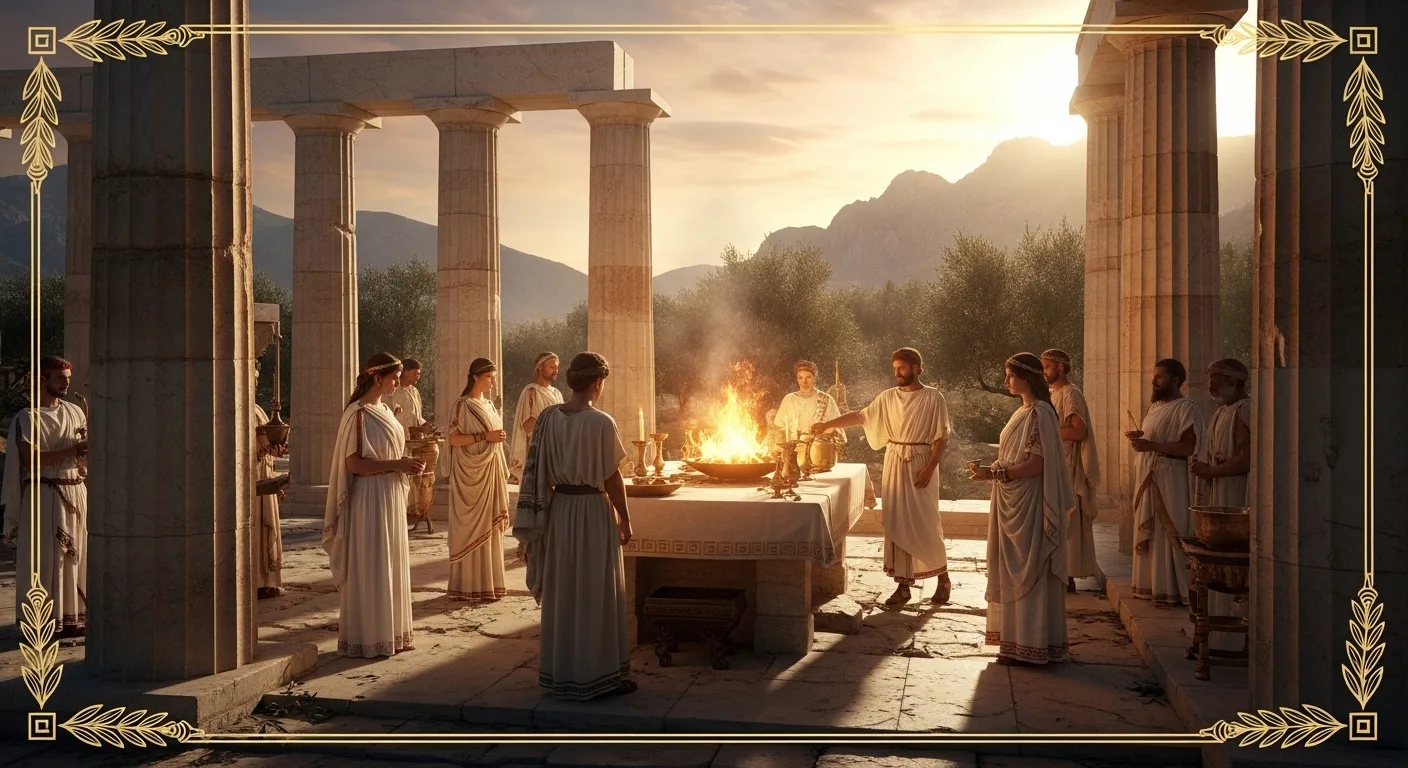
The rites of worship in ancient Greece They were a basic communication mechanism between people and gods. Through standardised instruments —sacrifices, libations, mysteries and celebrations— Greeks sought the favor of the divine, the cleansing and the preservation of the secular order.
Religion in ancient Greece was not just a system of faith. It was a living lifestyle that penetrated every aspect of everyday life. From the great public holidays to the small family offerings at home, the ancient Greeks lived in a world full of gods, half-gods, nymphs and holy symbols.
Worship ceremonies were the basic way of communicating with the divine. Through sacrifices, prayers, processions and secret rites, believers sought protection, prosperity, and guidance.
On this page you will discover the most important forms of worship of ancient Greece and their deepest symbolism.
The Importance of Worship in the Ancient Greek World
For the ancient Greeks, the gods were not distant deities but active presences affecting everyday life. Worship served as a way of maintaining the balance between the world of men and the world of gods.
The ceremonies were often public and were an important part of the city's social life.
Through them:
Honoring the gods
seeking favor and protection
celebrating important events
strengthening social cohesion
Religious ceremonies were closely linked to the times, agriculture, war and birth.
Sacred places of worship
The ceremonies were held in specially dedicated venues.
The most important were:
Temples
The temples were the house of God and contained the cult statue.
Aloes
The sacrifices were mainly made on altars in front of the temple.
Sacred grove
Many sanctuaries were within nature, forests or near springs.
Oracle
In such places as Delphi, believers sought oracles from the gods.
The priests and ministers of worship
The ceremonies were organized by priests and priests who were responsible for the proper conduct of the rituals.
The priests:
They took care of the shrines.
making sacrifices
interpret signs and omens
They guided religious festivals
In many cases this position was honorable and associated with specific families.
The largest religious festivals
Worship ceremonies were often associated with large festivals that gathered crowds.
Some of the most important were:
Panathinaia in Athens
Olympia in honor of Zeus
Dionysia in honor of Dionysus
Foundations in honor of Demeter
These celebrations combined religion, art, music, and sports games.
Frequently Asked Questions about Worship Ceremonies in Ancient Greece
What were worship ceremonies in ancient Greece?
The rituals of worship were religious practices and rituals performed by ancient Greeks in honor of gods and heroes.
What was the purpose of worship ceremonies?
Their purpose was to honor the gods, to ensure favor, protection and good luck, but also to maintain harmony between humans and divine.
Where were the worship ceremonies?
The ceremonies were held in temples, sanctuaries, altars, groves and public places dedicated to certain deities.
What were the most common ceremonies?
The most common ceremonies included animal sacrifices, libations, prayers, hymns, processions, and festivals in honor of the gods.
What were the vertebrae?
The vertebrates were offerings of liquids, such as wine, milk, honey, or oil, poured on the earth or on the altar as an act of worship.
What kind of sacrifices did ancient Greeks make?
The most common were animal sacrifices, especially cattle, goats, and sheep, accompanied by prayers and ritual meals.
Who participated in the ceremonies?
Citizens, priests, priests, rulers and many times the entire community participated in the ceremonies.
What role did priests and priests have?
Priests and priests cared for the proper execution of rituals and the preservation of the sanctity of temples and priests.
What were the transmitters?
The processions were ritual parades to the sanctuaries, often with music, hymns, offerings and statues of gods.
What festivals were associated with worship?
Large festivals such as Panathena, Dionysia, and Eleusinian Mysteries were closely associated with religious ceremonies.
What were Eleusinian Mysteries?
Eleusinian Mysteries were secret ceremonies dedicated to the goddess Demeter and Persephone, associated with life, death and rebirth.
Were there ceremonies only for certain gods?
Yeah. Each god had his own cult practices, festivals and sacred places dedicated to his power and qualities.
How did ceremonies affect everyday life?
Religion and ceremonies were part of everyday life, affecting politics, celebrations, war, agriculture and social relations.
What were divinations?
The divinations were sacred places where people sought oracles and divine guidance, as in the Oracle of Delphi.
What was the importance of music and dancing at ceremonies?
Music, hymns and ritual dances were considered ways of honoring the gods and key elements of many festivals.
Were there private and public ceremonies?
Yeah. Some ceremonies were organized by the state or city, while others were held at family level in the home.
Why were worship ceremonies so important?
Ancient Greeks believed that right worship retained the favor of the gods and the welfare of society.
How do we know today about these ceremonies?
The information comes from ancient texts, inscriptions, vases, temples and archaeological findings.