
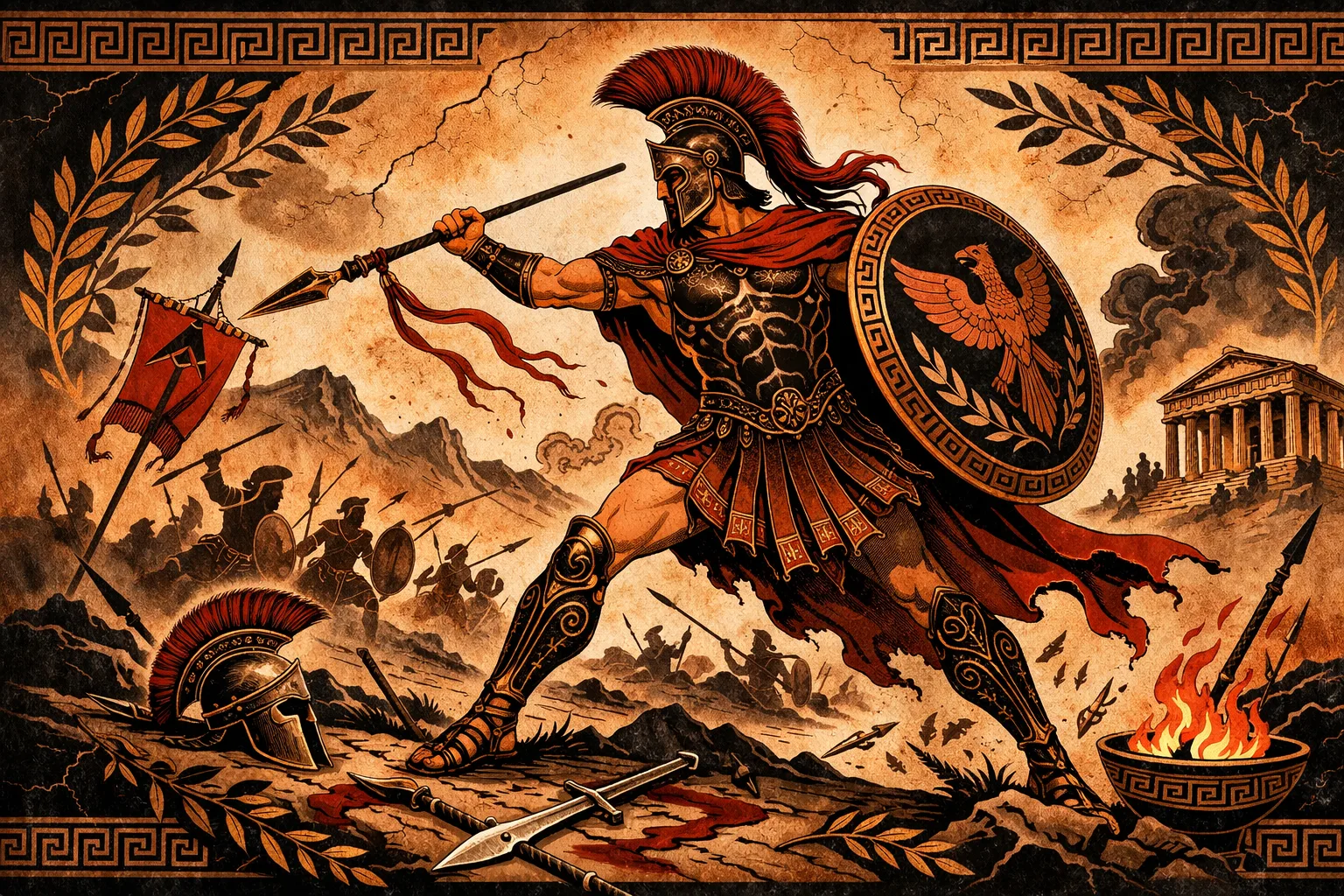
The Her heroes Greek mythology They exist between the worlds of the gods and humans. These are figures with extraordinary abilities, often born of both divine and human lineage, who stood out for their achievements, trials, and tragic fates. The stories of these heroes reflect human values such as courage, honor, hubris, and punishment. Many heroes were deified after their deaths, taking on a special place in the religious life of the cities. Through ancient literature, epics, and dramas, the heroes became role models as well as warnings about the limits of human power.
“They sent men into battle, but none of them returned; and home, to welcome them, come ashes in an urn.”
— Aid, «Agamemnon»
Heroes of Greek Mythology: People Who became Legends
In Greek mythology heroes are not just powerful people with accomplishments. It is something between gods and mortals – creatures born of divine origin, but lived within the weaknesses, desires and difficulties that characterize all people. This involvement made them particularly dear to ancient Greeks, because through their stories they saw a version of themselves, but more grand and dangerous.
The hero usually starts with a special birth. THE Hercules, the most famous of all, was the son of Zeus and mortal Alcmene. THE Theseus He was the son of Poseidon or of King Aegeus. Perseus’s father was Zeus. This semi-divine lineage gave them supernatural powers, but it did not protect them from mistakes and tragedies. On the contrary, their divine heritage often became their greatest source of trouble.
Hercules is the most typical example. The The Twelve Labors His trials were not merely tests of strength. They were a journey of atonement for the horrific crime he had committed when he killed his children in a fit of madness in the name of Hera. Behind every monster he slew—the Nemean Lion, the Lernaean Hydra, the Erymanthian Boar—lay a story of human punishment and the quest for atonement. Hercules was not perfect. He was angry, impulsive, and often lonely. But that made him more real in the eyes of the people.
Theseus, on the other hand, represents the city’s hero-protector. His journey from Troezen to Athens, where he cleared the road of bandits and monsters, reveals a hero who also has the common good in mind. His battle with the Minotaur was not only a personal victory but also the liberation of Athens from the heavy toll of blood it paid to Knossos. However, even Theseus could not escape a tragic end: his failure to remember to change the ship’s black sails led his father to commit suicide.
Next to them stands Jason with the Argonauts, Perseus who killed Medusa, Achilles with his pride and anger, and Odysseus, the most human of them all. Odysseus was distinguished not only by his strength or his lineage, but by his wit, his endurance, and his desire to return home. The Odyssey is not just an adventure; it is a story about man’s need to return home, even if it costs him twenty years of his life.
The heroes of Greek mythology always shared one common trait: they pushed the boundaries, but paid a heavy price. They were not invincible. Their pride, anger, or desire for glory often led them to ruin. Achilles chose glory over a long life and paid with his life. Icarus flew too high and fell. Even Hercules died in excruciating pain from Deianeira’s poisoned tunic.
Today, their stories continue to speak to us, because through them we see ourselves: strong yet vulnerable, brave yet imperfect. The heroes of Greek mythology are not distant figures in ancient books. They are the way the ancient Greeks explained what it means to strive to surpass yourself, even when you know you’ll pay the price in the end.
Sources & References
Greek Mythology Stories: The Greatest Myths of Ancient Greece