
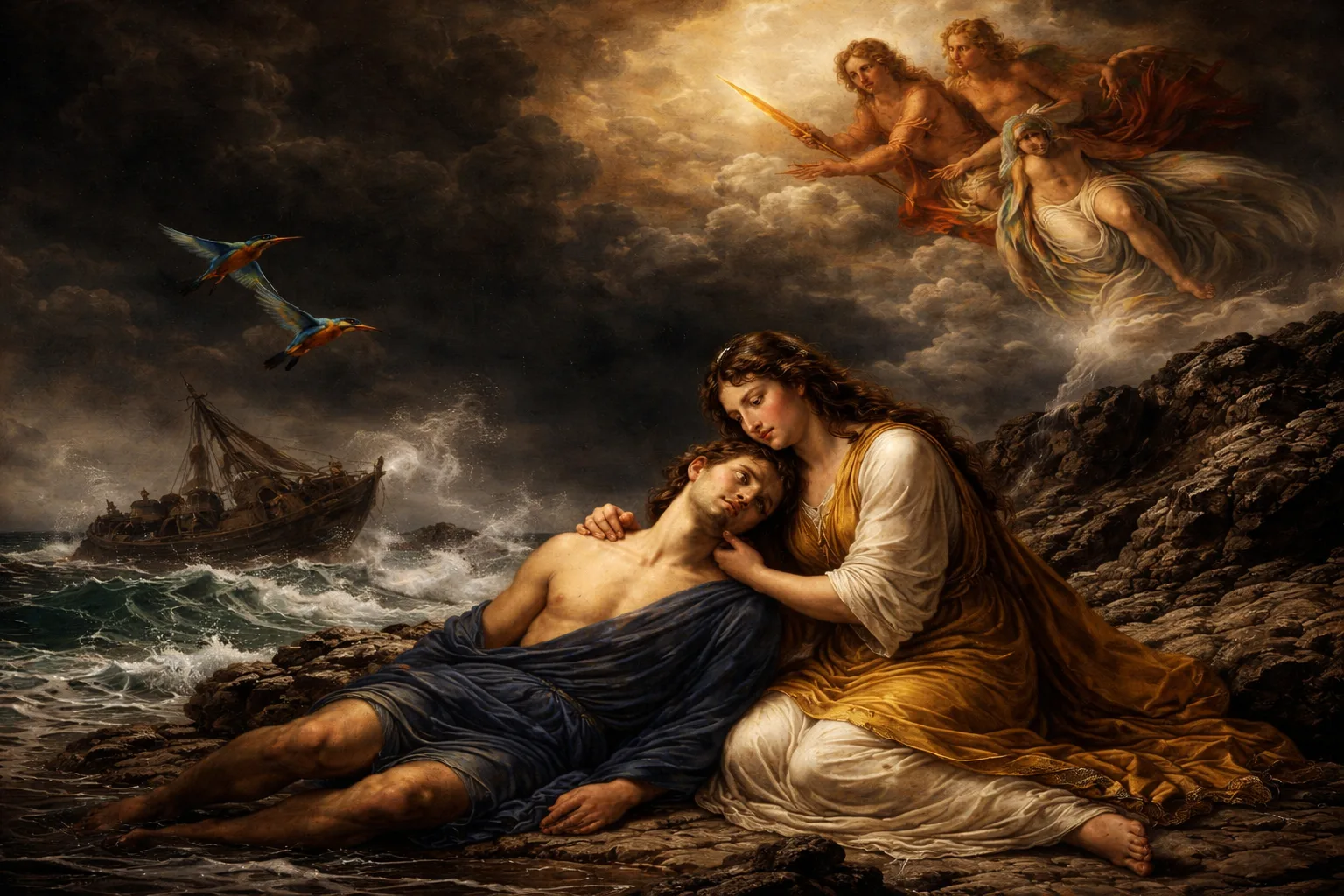
Mythology Stories: When Gods and People Meet
Her stories Greek mythology They are not simple adventures with monsters and gods. It is the way ancient Greeks tried to explain the world around them, people's relations with each other and their position toward the unknown. Through these accounts, everyday life gained meaning: why rain, why pain, why people make mistakes and what happens when you exceed your limits.
Every mythological story works like a mirror. Take, for example, the myth of Prometheus. The Titan stole fire from the gods and gave it to humankind. This act was not merely theft. It symbolized humanity’s desire to learn, to progress, and not to remain eternally defenseless. But Prometheus paid dearly. Chained to a rock, an eagle would devour his liver every day. This story shows us both the courage and the price of knowledge.
Another characteristic story is that of Pandora. When the first woman opened the box the gods had entrusted to her, she unleashed all the evils of the world: pain, disease, and death. Only hope remained locked inside. This story does not simply blame the woman. On the contrary, it speaks to the curiosity we all harbor within us and to how, even in the most difficult moments, hope remains our last refuge.
His stories Trojan War It is perhaps the best-known and most complex of all. It is not merely a conflict between the Greeks and the Trojans. It is a story of pride, love, betrayal, and the consequences of human decisions. Achilles’ wrath, the sacrifice of Iphigenia, the deception of the Trojan Horse—all of these show how even the heroes They can be swept away by passions and mistakes. Homer does not present us with perfect people, but people who struggle with their weaknesses.
The gods play an important role in mythological stories. They do not appear as remote entities. They constantly interfere in human affairs: they envy, fall in love, punish, help. THE Zeus It changes form to approach mortal women, Hera pursues its enemies with stubbornness, Hermes He secretly helps those he likes. Through these interventions, the ancients showed that life is not just a matter of human will. There are powers greater that affect the course of things.
The stories of mythology also have a special quality: they never end happily the way we know them today. Most have a bittersweet ending. THE Hercules Dies with horrible pains, Odysseus goes home but loses almost everything, Theseus He forgets and his father falls overboard. This realistic aspect makes them sound more real and closer to us today.
Today, more than two thousand years later, these stories continue to move us. We no longer read them just to learn about the ancient world. We read them because even now, in a world full of technology and certainties, we feel that some truths remain the same: pride brings down, curiosity can change everything, and even the strongest people need help and support.
The stories of mythology are not just fairy tales. It's humanity's old way of talking about itself.
The mythology stories Ancient Greece is an invaluable treasure of knowledge and imagination. From gods of Olympus up to the big ones heroes and mythical creatures, Greek myths tell stories that influenced culture for thousands of years.
The mythology stories The Ancient Greece They are one of the most important treasures of global cultural heritage. Through accounts for gods, heroes and mythical creatures, the ancient Greeks tried to explain the world around them, nature, life and death.
Famous Greek myths
Greek myths are not just fictional stories. They are symbols, teachings and timeless narratives that influenced philosophy, literature and art for thousands of years. On this page you will find the most famous and important mythology stories, organized in a way that allows you to easily explore the world of ancient myths.
The myths and the epics and stories of Greek mythology They are the main carrier of transmission of mythical traditions. Through accounts of the creation of the world, the conflicts of gods and men and the exploits of heroes, the myths shaped the world's perception of ancient Greeks. The epics, such as Iliad and OdysseyThey recorded these stories and carried them from oral to written tradition.
The mythology stories include some of the most exciting accounts of human history. From tragic love to epic adventures, these myths retain their power to this day.
Among the most famous stories stand out:
- the myth of Persephone and the cycle of seasons
- The history of Sisyphus And eternal punishment
- The Pandora box and the sufferings of humanity
- the myth of Atlantis and lost culture
These accounts are basic examples of Greek myths that combine imagination and deep symbolism.
«Because Greek myths encode certain fundamental biological and social confrontations as well as ways of self-perception in man's history, they remain as a living heritage in collective memory and consciousness.
We return to them like our psychic roots.»
— George Steiner, «Antigone»
The best stories of Greek mythology
- Apollonius of Tyana: The Greek Philosopher and Sage
- Family Tree of the Titans: The Complete Genealogy of the First Gods of Greek Mythology (Free Interactive PDF)
- Greek Mythology Reading Order for Beginners | The Best Books to Start
- The Myth of Phaethon – The Tragic Journey of the Son of the Sun
- Did the Twelve Gods actually exist in Ancient Greece, or is it a modern term?
Sources & References
Greek Mythology: Gods, Heroes, Myths, Creatures