
Landers: The Marine Nymphs of Greek Mythology
Niriides are one of the most beautiful and charming groups of deities of ancient Greek mythology. These are sea nymphs that resided in the depths of the sea and were directly associated with the beauty, beneficial power of water and the protection of sailors. The ancient Greeks imagined them as young, beautiful women living in their father's palace, Nerea, on the seabed of the Aegean, and accompanied him Poseidon in his sea processions.
According to tradition, the Nireides were fifty daughters of Nerea, «Sea Elder», and the Doris Ocean. Nereus was considered a calm and wise sea deity, unlike the most violent and rushing Neptune. From this union were born the Nireides, who inherited the peace, wisdom and beneficial nature of their father, making them patrons of the seas and sea travel.
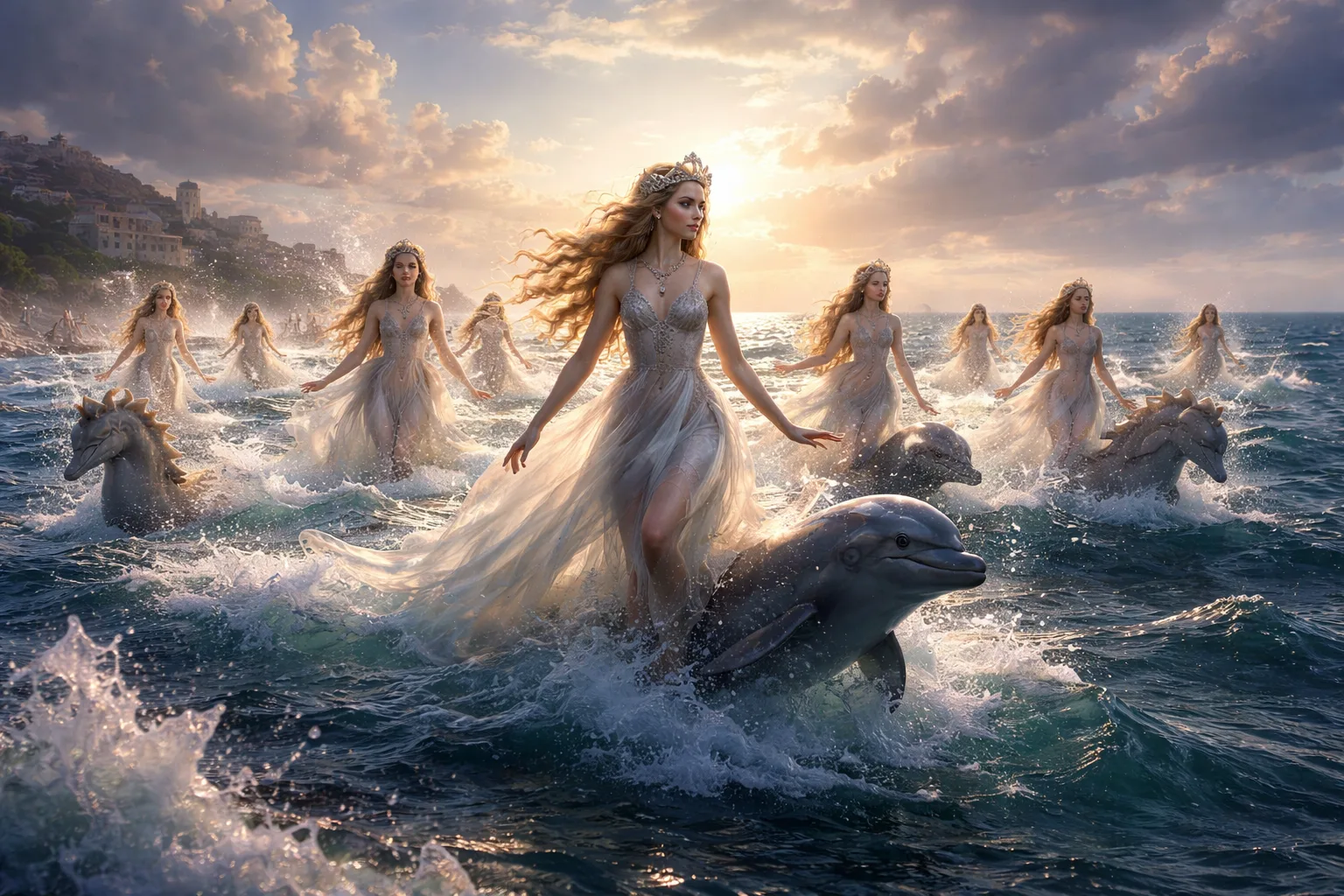
Ancient Greeks, as a seaman's people, attached great importance to sea deities. The Nireides were considered protectors of sailors, who could appease the waves and drive ships safely to their destination. Sailors often prayed to them before long trips, calling for favorable winds and calm seas. In many performances they are depicted accompanying Poseidon, playing with dolphins, or emerging from waves on sea creatures.
Among the most famous Nireides include Thetis, Amphitriti, Galatia and Dorid. Thetis became particularly known as his mother Achilles, while Amphitrite became the wife of Poseidon and queen of the sea. Galatia is associated with its well-known myth Polyphemus Cyclops And her love for Aki. Through these stories, Nireides acquire human dimensions and are associated with fundamental themes of Greek mythology, such as love, tragedy and divine intervention.
The Nireides often appear in myths related to heroes and sea travel. In the history of Pelea and Thetis, for example, Nireida Thetis tries to avoid her marriage to a mortal, but eventually joins Peleus, which leads to Achilles' birth. This story highlights the conflict between the divine and the human world, a recurring pattern in Greek mythology.
Beyond their mythological dimension, the Nireides symbolized the serene and beneficial side of the sea. Unlike other sea deities that could cause destruction, the Nireides were associated with beauty, harmony, and protection. Ancient Greeks viewed them as incarnation of the sea when it is calm and friendly to man.
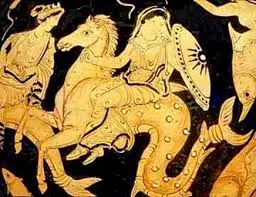
Their presence in the art of antiquity is particularly intense. They are depicted in vases, sculptures and murals as young women who move gracefully within the water element. They are often accompanied by marine animals, such as dolphins, hippocampus, and fish, strengthening their connection to the sea world.
Nireides are also an important part of the ecological and symbolic thinking of ancient Greeks. They represent harmony between man and nature, as well as respect for the sea as a source of life and strength that must be treated with care.
Today, the Nireides still inspire literature, art and modern imagination, keeping alive the image of the calm and enchanting sea that protects and at the same time enchants man.
In Greek mythology, Nereids were sea nymphs who personified the beauty, peace and life - giving power of the sea. They lived in the depths of the Aegean Sea and were considered protectors of sailors and sea travel.
They were daughters of the wise sea elder Nireus and the Ocean Doris. According to tradition, the Nireides were 50 in numberAnd they lived in a shining palace on the seabed.
Ancient Greeks imagined them as beautiful young women with bright hair, often crowned with shells or algae. They were often depicted traveling on dolphins, hippocampus or waves.
The role of the Nireides at sea
Unlike other sea deities that could be dangerous, the Islanders were considered to be beneficial and human-friendly.
The sailors believed that the Nireides:
They calmed the storms.
They guided the ships through the waves
They protected those in danger of drowning.
So they were often offered small sacrifices or tributes before long sea trips.
Famous Islanders
Although there were many, some Nireides stood out especially in mythology.
Thetis
The most famous Islander was Thetis. He married the mortal king Clay and became the mother of the great hero Achilles.
Thetis tried to make her son immortal by sinking him into his waters Styx, holding him from the heel — event that gave birth to her well-known myth heel Achilles.
Amphitre
Amphitrite became the wife of the sea god Poseidon And queen of the seas. It is often depicted next to it in a sea chariot dragged by hippocampus.
Milk
Island Galatia became known for her love story with the shepherd AkishTheir story ended tragically when the jealous Cyclops Polyphemous He killed Aki, eventually turning him into a river.
The Nireides in the art of antiquity
Nireides were a favorite subject in ancient Greek art. They often occur:
in vessels
in reliefs
in temples and sculptures
One of their most well known performances is in Monument of the Islands in Nereid Monument, an imposing burial monument of Lycia where the Nireides are depicted flying over the waves.
The artists presented them in light transparent garments that wave like water, creating a sense of motion and marine grace.
Symbolization of the Nitrides
The Nireides were not just mythological figures. They symbolized:
the peace of the sea
the female force of nature
the human and ocean connection
For ancient Greeks, the sea was a source of life but also a danger. The Nireides represented well-meaning sea side, that helps and protects.
The Nireides and the other sea nymphs
In mythology there were other categories of water brides:
These figures reflected the belief of the ancients that Every element of nature had its own spirit.
Why the Islanders remain popular today
The Nerides continue to inspire artists, writers and creators. The image of the beautiful sea nymph emerging from the waves has passed into modern imagination and is often confused with the forms of mermaids.
Despite their difference from mermaids, the Nireides remain symbols of beauty, freedom and mystery of the sea.
Etymology
From the verb nao («flow»), stating continuous movement and regeneration.
Action Field
Sources
Rivers
Lakes
Thermal waters
Properties
Therapeutic strength
Magical ability
Protection of life
Worship Practice
Naiads near springs
Springs of clay, honey, flowers
Connection with medicine and divination
Mythological Narrators
Love with mortals
Transformations
Founding city myths
Symbolism
The Nereids express the vital flow, clearance and birth.
Sources
Homer, Pindar, Apollodor
=
Discover more Greek deities in our collection.
Sources and Bibliography for the Islands
Ancient Sources
- Theogony
- It describes the birth of the Nireides as daughters of Nerea and Doris and lists many of them.
- Iliad
- It includes references to Thetida and other Nireides related to Achilles and the Trojan War.
- Argonauts
- It refers to sea nymphs and their interventions on sea travel.
- Library
- It gathers myths about Thetis, Amphitriti and other Nireides.
- Transformations
- It contains myths about Galatia and other sea nymphs.
- Hymn in Apollo
- References to marine deities and nymphs of the water world.
Modern Bibliography
- Greek Religion
- The Greek Myths
- Early Greek Myth
- The Routledge Handbook of Greek Mythology
- Greek Mythology
- Mythology: Timeless Tales of Gods and Heroes
- Theoi Project: Nereids