
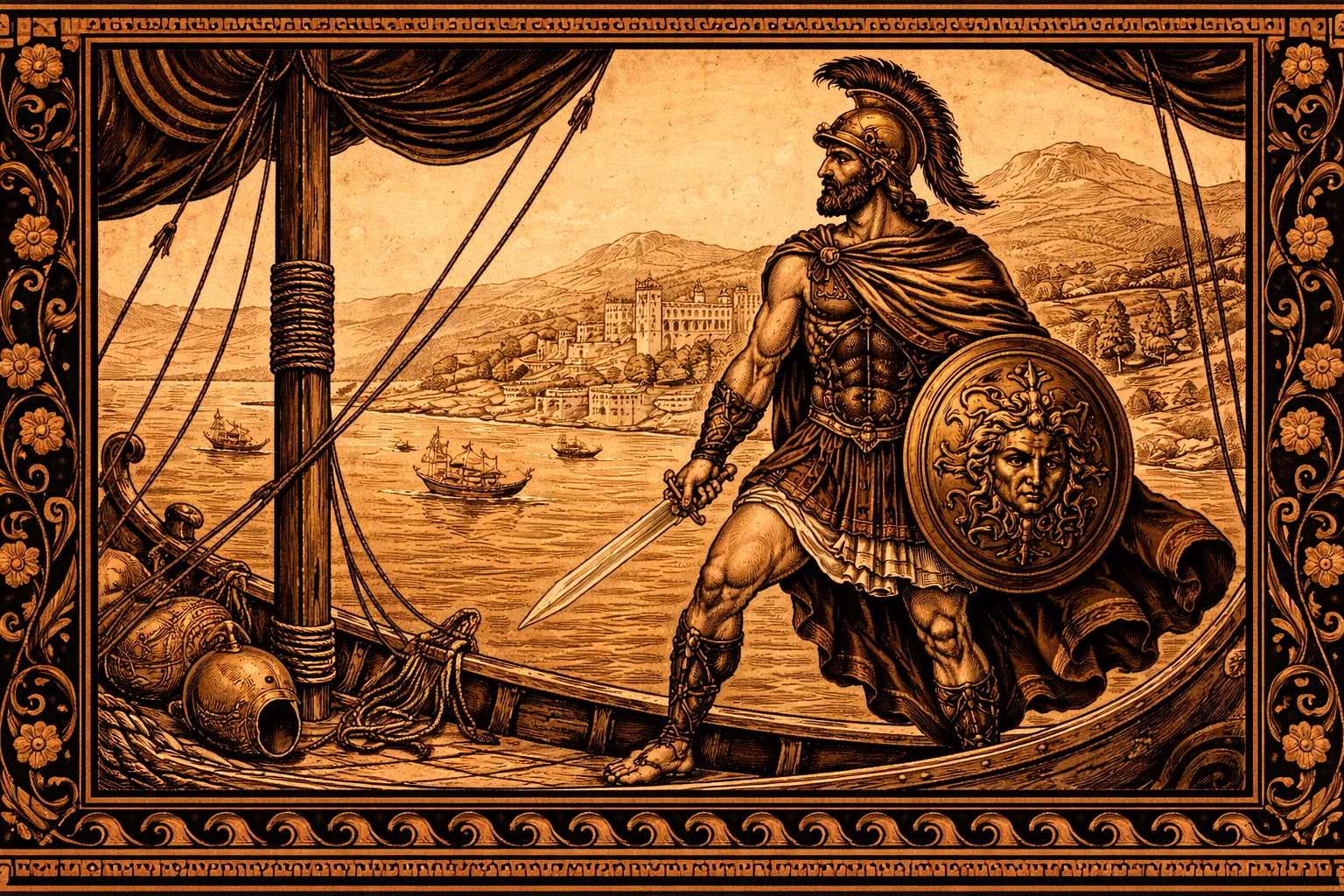
Homer’s *Odyssey* is regarded as a foundational epic of Western literature, set against the backdrop of Odysseus’s return to Ithaca after the Trojan War. The text summarizes the plot, the main characters, and the historical context, while highlighting the roles of Penelope and the gods.
The main themes of the work are highlighted, such as heroism as intelligence and resilience, nostalgia for one’s homeland, and the formation of identity through trials. It also discusses the epic’s literary characteristics, its enduring influence, and its contemporary adaptations.
Introduction
- Odyssey, attributed to the ancient Greek poet Homer, is one of the most important works of Western literature. Composed in the 8th century BC, this epic tells of its adventurous journey OdysseusKing of Ithaca, as he tries to return home after Trojan War. This article explores the themes, characters, historical context and timeless heritage of Odyssey, highlighting its importance in both literature and culture.
«When night falls and the world sinks into sleep,
I sit in my bed, with my heart beating hard, ready to break,
with worries overwhelming me, consuming me—perhaps I'll go mad with grief.”
— Homer, Odyssey
Background Framework
The Trojan War
- Background: Odyssey unfolds after the Trojan War, a legendary conflict between the city of Troy and the Greek states, mainly due to its grab Helen of Troy.
- Literary Priority: The events of the Odyssey follow the Iliad, describing the very events of the war.
- Cultural Meaning: War and its aftermath were key narrative elements of ancient Greek culture, highlighting themes of heroism, honor and divine intervention.
The Poet: Homer
- Life and Influence: Little is known about Homer—whether he was an existing person or symbolizes a poetic tradition. His work is a foundation of the western secretariat.
- Oral Tradition: Odyssey was probably composed orally before being recorded, reflecting the narrative traditions of ancient Greece.
Plot Summary
The Odyssey consists of 24 rhapsodies and recounts Odysseus’s long and perilous journey home to Ithaca.
The Journey of Odysseus
- Kicones: After the war, Odysseus and his men plundered the land of the Cicones, but were defeated.
- Lotteries: They meet the Lotaphagus, whose fruit causes oblivion.
- Cyclops: Odysseus blinds the Polyphemous, causing the rage of Poseidon.
- Aeolus: - Aeolus He gives him a bottle of winds, but his comrades open it.
- Circe: The witch. Circe transforms men into pigs.
- Underworld: Odysseus consults the seer Teiresias.
- Sirens: He deals with the Sirens, avoiding their song.
- Scylla and Charybdis: He passes between the two monsters, losing his companions.
- Sun oxen: His men eat his holy oxen Helios and are punished by Zeus.
- Return to Ithaca: In disguise, Odysseus returns and takes revenge on his wife's suitors.
Penelope’s Role
- Faith and Intelligence: - Penelope She remains loyal, delaying her marriage with a trick.
- Virtues: It represents patience, intelligence and endurance.
Issues and Symbols
Heroism
Odysseus embodies the ideal of a hero through his intelligence and resilience, not just his strength.
The Meaning of Home
Nostalgia (nostos) is a key motivator and is linked to identity.
The Role of the Gods
- Athena And Poseidon has a decisive influence on the course of the hero.
Gender Roles
Women's figures such as Athena, Circe and Penelope present dynamic and multidimensional.
Literary Characteristics
- Dactylic Hexameter: Rhythmic structure suitable for oral narration.
- In medias res: The narrative begins in the middle of the story.
- Symbols:
- The sea symbolizes trials.
- Odysseus's bow symbolizes his legitimate authority.
Influence and Legacy
Timeless Influence
Odyssey has deeply influenced literature and continues to inspire works worldwide.
Modern Adjustments
From cinema to theatre, the work is constantly reinterpreted, maintaining its importance.
What subjects are explored in the Odyssey regarding heroism and personal identity?
In Odyssey of Homer, the themes of heroism and personal identity are elaborately woven throughout the narrative, reflecting the complexity of human experience. Here are some of the key issues that emerge:
1. Redefining Heroism
- Genius instead of Power:
- Odysseus It embodies the idea that true heroism is not only based on physical strength, but also on intelligence and strategic thinking. His ability to fool opponents, such as Polyphemous and Sirens, highlights the importance of wit. - Moral Dimensions of Heroism:
Odysseus is a hero with weaknesses. Moments of hubris, such as when he boasts to Polyphemus, show that the hero must face moral challenges and the consequences of his actions.
2. The Journey of Self - Knowledge
- Transformation Through Trials:
The long journey home symbolizes a path to self-discovery. Each trial leads Odysseus to personal growth and greater wisdom. - Identity in Transition:
As he encounters different peoples and characters, he rediscovers himself as a hero, a husband, a father, and a king, learning the value of humility and responsibility.
3. Nostalgia and the Concept of Home
- The Desire for Return (Host):
Nostalgia is a central theme, not only as a return to a place, but as a reconnection with one’s identity. Odysseus’s longing for Ithaca expresses his need to reaffirm his role. - Home as an Identity:
His return marks the culmination of his personal journey and his understanding of what it means to be a king and a husband.
4. The Role of Women in Shaping Identity
- The Faith of Penelope:
- Penelope symbolizes devotion and resilience. Her intelligence influences Odysseus’s perception of heroism and reinforces the importance of relationships in identity. - Divine Female Figures:
- Athena guides Odysseus, demonstrating that identity is also shaped by relationships and external influences.
5. Struggle Against External Forces
- Fate and Gods:
Conflict with divine forces, especially with Poseidon, shows that heroism is linked to the ability to deal with fate. - Options and Consequences:
Odysseus's decisions, such as his encounters with the Circe and Sirens, reveal that identity is shaped through choices and their consequences.
Conclusion
The Odyssey remains a monumental work that offers a profound understanding of the human experience. Through themes such as heroism, faith, and identity, Homer’s work continues to move and inspire. Odysseus’s journey reflects humanity’s timeless quest for meaning, return, and hope.
Read more
The Nymph Calypso and Odysseus
The Journey of Odysseus – A Detailed Guide Through Each Stop
Scylla and Charybdis, Odysseus's deadly trap
Cyclops and Polyphemus: The One-eyed Giants of the Gods and Odyssey