
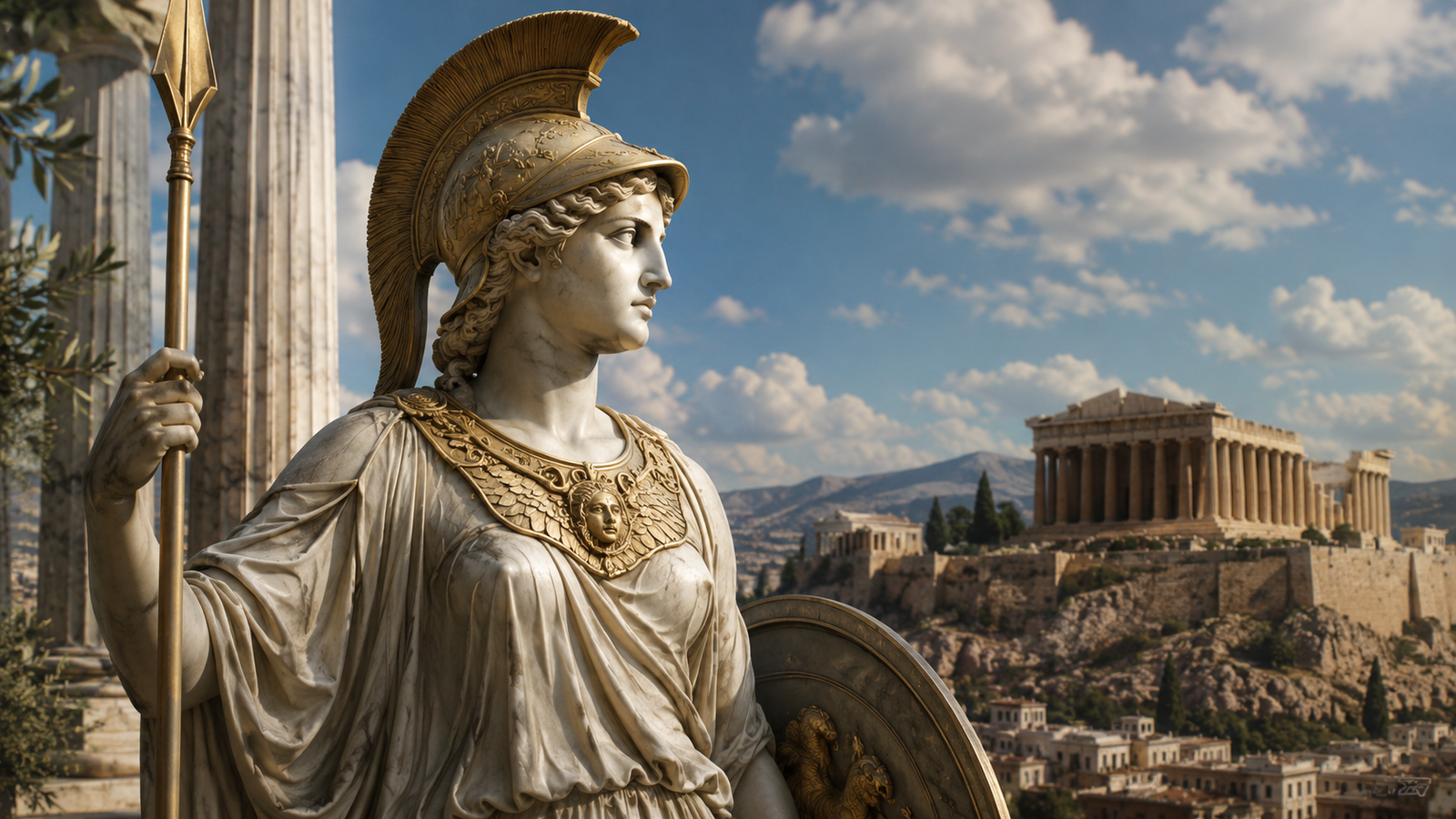
Athena, wisdom and gods who enlightened ancient Greece
If you're wondering who is the Greek god of knowledgeThe most correct and comprehensive answer is: Greek mythology There is not just one deity that completely covers all aspects of knowledge, but The Athena is considered primarily the goddess of wisdom, strategic thinking, prudence, and intellectual acuity.
But the answer doesn't stop there. Ancient Greece saw knowledge as a grid of different powers: wisdom, memory, inspiration, ingenuity, logic, divination and art. Therefore, next to Athena, we find forms such as Hermes, Apollo, - Mnemosyne and MusesEach of which illuminates a different aspect of human understanding.
Greek mythology offers not only stories. It offers a whole way to think about what it means to know, learn, remember and understand the world.
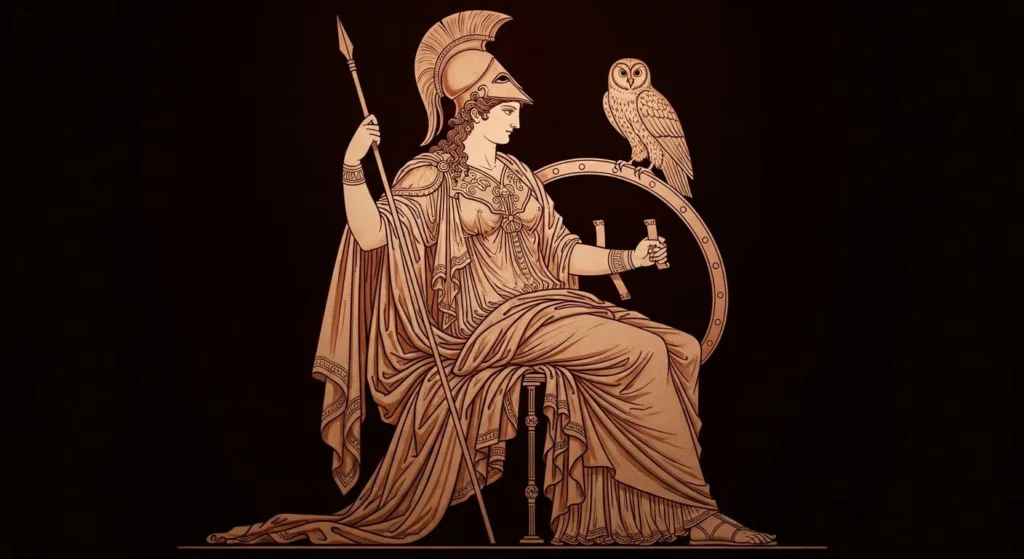
The short answer: the Greek god of knowledge is Athena
If anyone asks for a brief and clear answer to the question «who is the Greek god of knowledge?», the answer is Athena.
More precisely, Athena is:
- goddess of wisdom
- Strategy protector
- symbol of logical thinking
- patron of arts and crafts
- associated with soundness and insight
Athena is not a goddess of knowledge in the sense of memorization or raw information. It's her deity. substantive understanding. It represents knowledge that turns into judgment, decision and act.
So when we talk about gods and knowledge in ancient GreeceAthena is always at the center of the debate.
What did it mean? «knowledge» for the ancient Greeks?
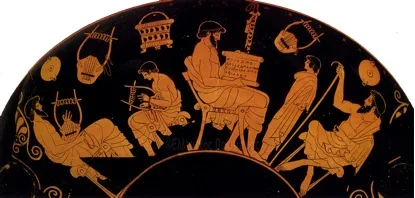
To understand correctly who the Greek god of knowledge is, we must first see how ancient Greeks understood knowledge itself. The concept was not one-dimensional. There wasn't just one word, there wasn't just one idea.
Ancient Greek thought stood out:
- The wisdom, i.e. deep and mature understanding,
- The prudence, i.e. the prudent judgment in practice,
- The learning, i.e. concentration of knowledge,
- The memory, i.e. maintaining knowledge,
- and art, that is, skill born of knowledge and experience.
This means that the «knowledge» for Greeks it was not just theoretical. It was something that had to be It serves life, lead to right decisions and be associated with virtue.
That explains why Athena, goddess of wise action, fit so perfectly in this role. It is no coincidence that in ancient Greek thought wisdom was not identified with showy polymath, but with the correct use of mind.
Some less known elements about the goddess Athena >
Athena and wisdom: the foremost goddess of knowledge
Athena is the most famous form when talking about Athena and wisdom. In Greek mythology, this goddess embodies spiritual purity, shrewdness and reasonable power that defeats impulse.
She's not a goddess of chaos or spontaneous violence. On the contrary, it represents the Innovation, strategic thinking and foresight. So in her myths she often stands next to heroes who need guidance, not just power.
The birth of Zeus' head
One of the most famous myths of ancient Greece is the birth of Athena. According to tradition, the goddess came out full of Zeus' head. This myth is not just impressive. He's deeply symbolic.
The birth from the head connects Athena to:
- The Consent
- The mind
- The logic
- The clarity of thought
In other words, Athena is born from the point of the body associated with thought. This symbolism makes her the goddess from the very center of intellect.
Protector of Athens and culture
Athena is not only a goddess of individual wisdom. She's also a goddess of civilization. The city of Athens bears its name, which shows how closely it was associated with the intellectual and political identity of the Greeks.
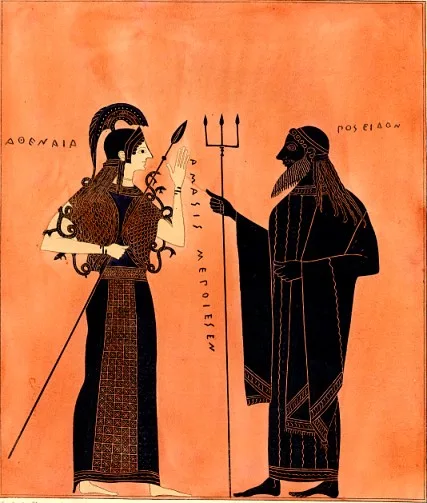
In the famous myth of claiming Attica, Athena and Poseidon offered gifts to the inhabitants. Poseidon gave water or horse, while Athena offered olive. Her gift was less spectacular, but more valuable to life, peace, and prosperity.
This in itself tells a lot: knowledge is not always impressive. It is often the one that builds, protects, and ensures lasting.
Athena as a goddess of strategy
Athena's relationship with knowledge is not limited to philosophical thought. She's also a goddess of Strategy. In Greek myths it does not support uncritical attack, but intelligent design, method and calm.
This is very important because it shows that ancient Greeks considered knowledge a tool of survival and success. The right thought could defeat the power. Intelligence could win where raw violence failed.
Other gods related to knowledge, wisdom and learning
Though Athena is the most right and recognized Greek god of knowledge, ancient Greek mythology includes other deities associated with different forms of spiritual culture.
Mercury and Ingenuity
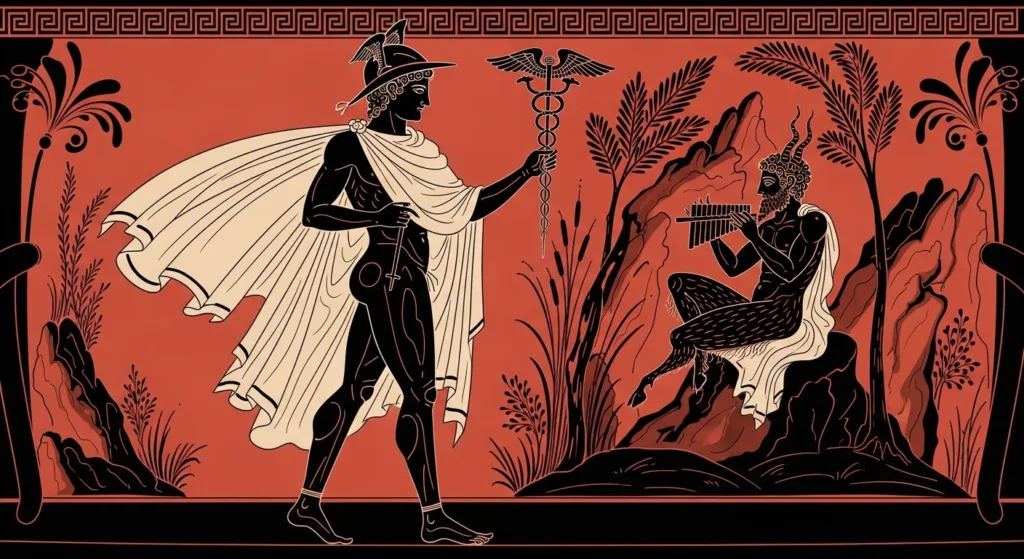
- Mercury and Ingenuity They are a very interesting relationship. Hermes is not a god of wisdom in the same way that Athena is, but is a god of:
- Communication
- fastness
- Inventability
- transition
- message exchange
- intelligence and practical ingenuity
In myths he appears as fast, agile and multifaceted. He is the messenger of the gods, but also the one who knows how to find solutions, escape from dead ends and move among different worlds.
Mercury represents another form of knowledge: not the thoughtful wisdom of Athena, but the smart adaptation and functional intelligence. He is the god of movement of ideas, language and exchange.
Apollo: light, divination and harmony
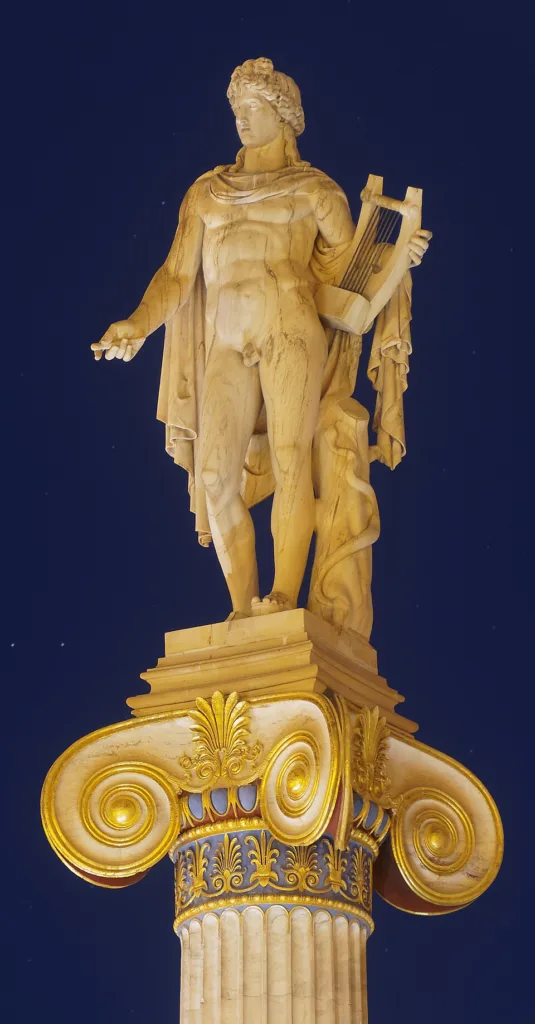
- Apollo It is also associated with knowledge, mainly through light, clarity and divination ability. The Oracle of Delphi, the most famous magic center of the ancient Greek world, was dedicated to him.
Apollo is related to:
- the light of truth
- the prophecy
- music
- the harmony
- order and purity
If Athena expresses the logical understanding, Apollo expresses the disclosure and clarity. It is knowledge that comes as light through the darkness of uncertainty.
Memory and Muses: memory as the basis of learning
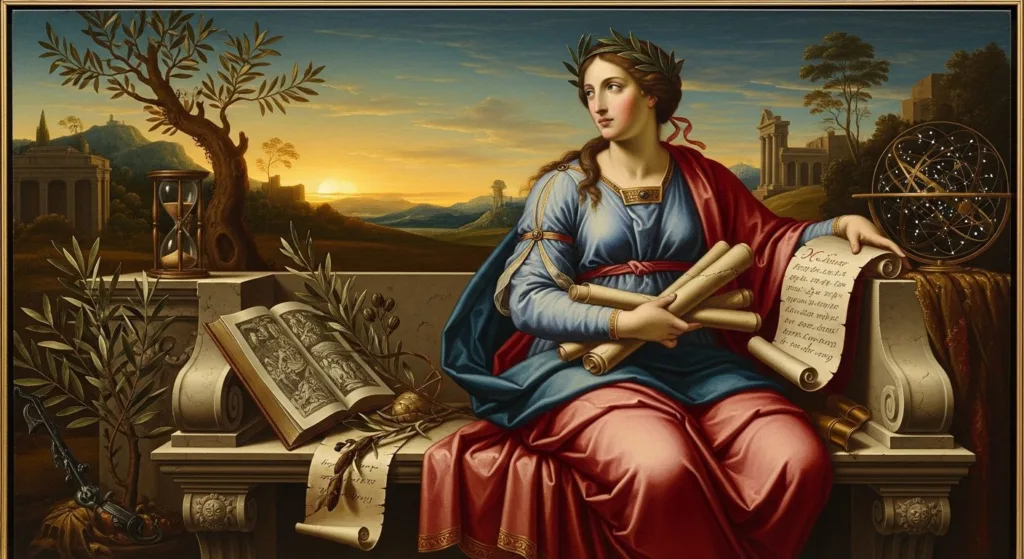
- Mnemosyne, goddess of memory, is of particular importance for understanding knowledge in ancient Greece. Without memory there is no learning, no tradition, no historical continuity.
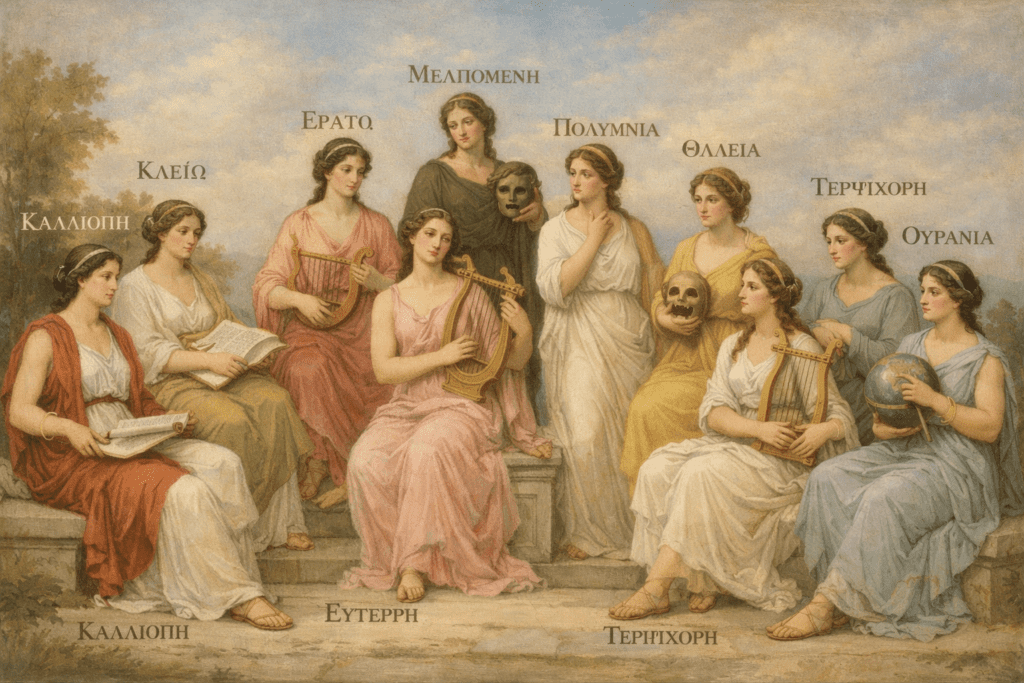
From the Memorial were born the Muses, the deities that inspire:
- the poetry
- music
- the story
- Astronomy
- the rhetoric
- arts and science
The Muses show that knowledge was not just an individual case. It was also a cultural heritage. A people learns, remembers and creates through their common tradition.
Myths revealing what Greeks believed about wisdom
The Greek myths They're not just stories. They act as examples of how we should think of the world. Through them, the ancient Greeks expressed their ideas for their intelligence, knowledge and boundaries.
Athena and Perseus
In his myth PerseusAthena offers guidance and help to the hero who must face Medusa. It gives him not only courage, but also the correct strategy. This shows that wisdom is not an abstract concept· is a practical force that helps man overcome fear.
Athena and Ulysses
Ulysses is perhaps the most characteristic hero of Greek literature associated with intelligence. Athena often protects him, for she recognizes in him the power of mind. THE Odysseus It doesn't just win with physical strength. He wins by:
- invention
- cool
- fastness
- adaptiveity
Here it seems clear that ancient Greeks appreciated the knowledge that leads to effective action.
Prometheus and human progress
Although he is not a god of knowledge in the strict sense, Prometheus is a critical form for human progress. He stole the fire to give it to people, giving them technology, evolution, and culture.
Prometheus symbolizes the willingness to overcome the boundaries of ignorance. Along with Athena, it forms a wider mythological context where human evolution is associated with thought, art and invention.
Athena as a model of civilization in ancient Greece
Athena's presence in the Greek world was not decorative. It was deeply cultural. This goddess was associated with what the Greeks considered most precious to the city and man.
Olive, peace and prosperity
The olive gift symbolizes the fruitful relationship between knowledge and life. The olive tree is the fruit of long-term, stable, fruitful. Like wisdom, it offers no momentary sight, but lasting benefit.
The Acropolis and Cultural Memory
The worship of Athena in the Acropolis of Athens is linked to the identity of the city as a center of political thought, art and philosophy. This relationship was not accidental. Athens became a symbol of spiritual search, discussion and education.
Knowledge as a virtue
For ancient Greeks, knowledge was not cut off from morality. True wisdom was to be accompanied by:
- measure
- self-knowledge
- respect
- responsibility
That is why Athena remains such a powerful symbol: not only does she represent «I know.», but the «I know how to do right.».
Gods and knowledge in ancient Greece: a more complex picture
The question «who is the Greek god of knowledge?» often leads to a simple answer, but reality is richer. In ancient Greek religion and mythology, knowledge was scattered in different divine forms.
Knowledge as wisdom
This is where the Athena. It expresses judgment, reason, consistency and strategy.
Knowledge as communication and ingenuity
This is where he stands. Hermes. Brings the message, opens roads, connects worlds.
Knowledge as light and revelation
This is where he belongs. Apollo. His light symbolizes the truth shown.
Knowledge as memory and inspiration
This is where the Mnemosyne and MusesWithout memory and inspiration, learning cannot flourish.
This polyphony is extremely characteristic of Greek thought. Ancient Greeks did not limit knowledge to one dimension. She was seen as a set of forces working together.
How Greek culture affected modern knowledge perception
The imprint of Athena and the other deities of knowledge did not remain in mythology. It deeply influenced the way the Western world perceives education, thought, and science.
Wisdom as a higher value
From ancient Greece to this day, wisdom remains one of the most respected human virtues. Athena's image survives in:
- statues
- emblems
- educational institutions
- Philosophical and literary works
This goddess continues to symbolize spiritual superiority without arrogance.
The Legacy of Reasonable Thought
Greek tradition laid the foundations for analytical thought, philosophy and truth research. From Socrates and Plato to modern science, the search for knowledge is accompanied by the need to document, control and apply.
Education as a cultural basis
Ancient Greeks paid particular attention to education. Cultivating mind, speech and character was not a luxury· was the foundation of the citizen. Athena, as a goddess of wisdom, thus becomes a symbol of complete education.
Read about
Why Athena remains timely today
Athena continues to concern us because she represents something timeless: the power of the mind that serves the common good. At a time of information, where we have access to countless data, the point is not simply to know more. It's about knowing better.
Athena reminds us that true knowledge includes:
- crisis
- balance
- responsibility
- Insight
- respect of boundaries
That's why her symbol doesn't fade. Wisdom is never outdated. Rather, it becomes even more necessary as the world becomes more complex.
Conclusion: who is finally the Greek god of knowledge?
- Greek god of knowledge is, in the broadest and most acceptable sense, the Athena. She is the goddess of wisdom, strategy, reason, and spiritual clarity.
However, ancient Greece did not see knowledge as a monolithic concept. He shared it in different divine forms: Hermes It has brought ingenuity and communication, Apollo the light and the divination truth, Mnemosyne the memory and the Muses inspiration and cultivation.
So when we talk about gods and knowledge in ancient GreeceAthena is the most correct answer, but also the most open door in an entire world of ideas. Greek mythology teaches us that knowledge is not only information. It is wisdom, character, memory, inspiration and, above all, a way to live with wisdom and purpose.