
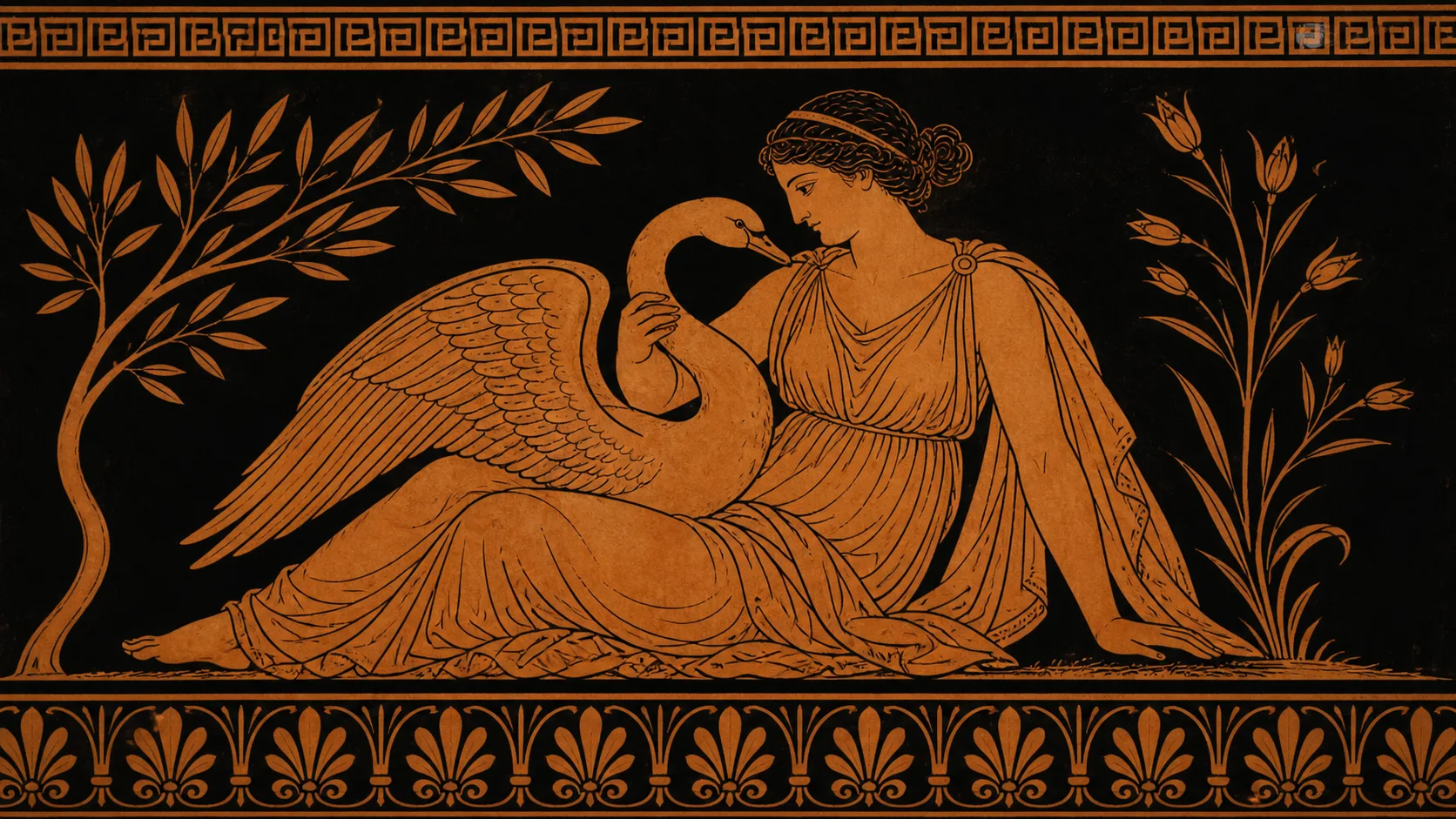
A woman between two worlds — human and divine — Leda holds on her arms some of the biggest names in Greek mythology.
Who was Leda?
Leda was the daughter of Thestius, king of Aetolia, and sister of Althea. Her beauty was such that she became the object of zeal and admiration by gods and men. She married Tyndareus, her king SpartaAnd so she became queen of one of the most powerful cities in the Greek world. However, her fate was not to stay quiet in the palace — The Zeus He had already elected her for something much bigger.
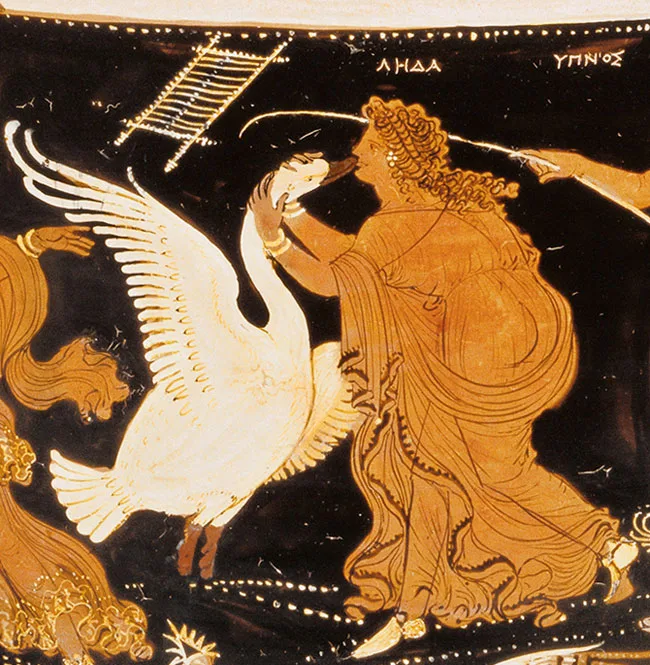
In mythology, Leda is not presented as an active heroine who moves events herself. It is rather a central axis around which consequences of a huge scale are rotated. From it will be born children who will change the course of history — or at least the rus of Greek mythological history.
Zeus and Swan: the most famous episode
The story that made the Leda Immortal is the one with the Zeus. According to legend, God fell in love with Leda and decided to approach her transformed into a swan — one of the many transformations that mythology attributes to him when he watches mortal women. That night, Leda joined both Swan-Dia and her husband Tyndareus.
The result of this double union was extremely unusual: Leda gave birth to eggs — usually two, according to most versions of the myth. Of these eggs came four children: Helen, Klytemnestra, Beaver and Polydeuk.
It is worth noting that the various versions of the myth do not fully agree on which child was of divine origin and which was of human origin. In one of the most widespread interpretations, Helen and Polydeuces were children of Zeus, while Clytemnestra and Castor were children of Tyndareus. Other versions differ, while some mention a single egg or a different number of children.
The children of Leda
The four children of Leda are among the most famous figures of Greek mythology, and their shadow spreads to literature, theatre and philosophy.
Helen She became the most beautiful woman in the world — and the cause, according to legend, of the Trojan War. Her abduction by Paris of Ilius began a ten-year conflict that emerged in one of mankind's greatest narrative epics.
The Clytemnestra married Agamemnon, leader of the Greeks in Troy. When he returned triumphant from the war, he murdered him along with her lover Aegisthos. Revenge followed by her son Orestes was the subject of a whole trilogy — The «Orestea» Aeschylus.
Castor and the Polydeuces, known as Pears (sons of Zeus), they were brothers deeply bound together. Beaver was an expert in horseback riding, while Polydecakis distinguished himself in boxing. When Beaver was killed in battle, Polydecius — immortal as the son of Zeus — He asked to share his immortality with his brother. So they alternate eternally: one day on Olympus, the next on Hades. They were eventually converted into constellation The Twins.
Leda in art and literature
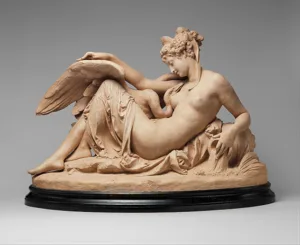
Few episodes of mythology inspired artists as strongly as the association of Leda with the swan. From ancient times to modern times, this scene has been attributed to frescoes, sculptures, paintings and poems.
In painting, the «Lida and Swan» It was a favorite subject of the Renaissance and Baroque. THE Leonardo da Vinci, Michelangelo and Corregio created works inspired by the myth, although many have not survived except in copies.
In literature, Irish poet William Butler Yates wrote the famous sonnet «Leda and the Swan» (1923), which has been extensively analyzed as philosophical meditation on violence, history, and divine intervention in human things. Yates treats myth not as a romantic episode but as a change of world — This association symbolizes for it the start of a new history cycle.
What does Leda symbolize?
On a deeper level, the myth of Leda acts as a place of association between the divine and the human world. Zeus often chooses mortal women to give birth to heroes or divine creatures — heroes who will bridge the two worlds. In the case of Leda, this logic reaches its extremes, as its children fundamentally influence the world of people.
Also, the form of swan is associated with ideas of beauty, grace and at the same time with something worrying. — Swan is not a harmless creature. This ambivalence runs through the myth in all its versions.
In some feminist readings, the history of Leda opens questions about power and choice — How much of what happens to her reflects the position of woman in a world where even the gods treat her as an object rather than as a subject.
Conclusion
Leda is one of those forms of Greek mythology that, although they do not have a leading role, are integral to the entire mythological fabric. Without her there is no Helen, there is no Trojan War, not applicable Disgusted. Her story reminds her that in mythology, even the quietest palaces can become a scene of universal change — and that the greatest events often begin at a time when no one can control.