
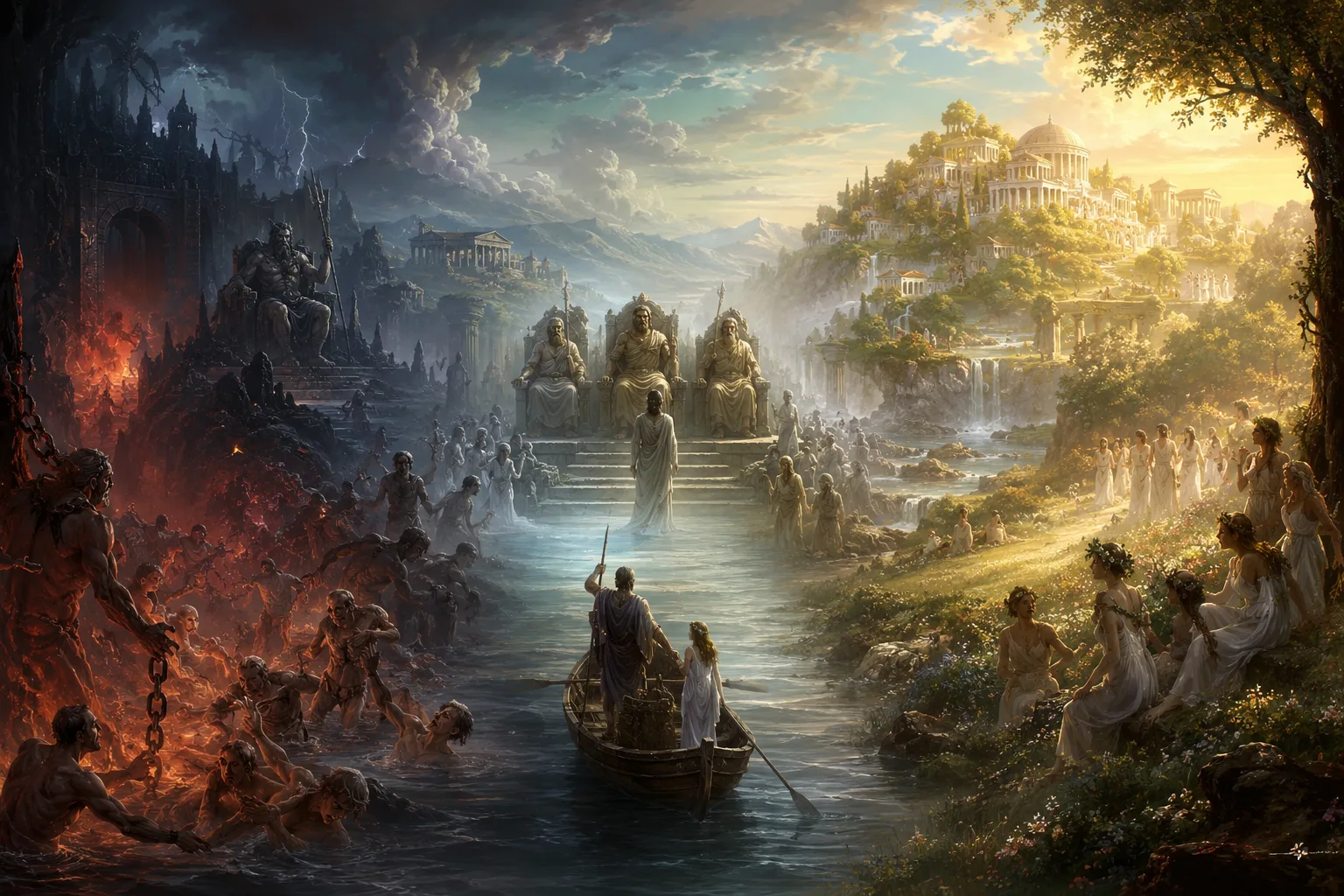
The issue of death deeply concerned the ancient Greeks, not only because it was the inevitable end of all human life, but also because it touched the core of the relationship between man, gods, community and the order of the world itself. The burial, funeral honours, the memory of the ancestors, the heroes worshiped in their graves, purification ceremonies and mysterious promises show that afterlife was not an abstract philosophical problem, but a daily religious and social reality. The agony of what happens to the soul after death was associated with the honor of the dead, the piety of the living and the hope that human existence is not completely lost.
However, the Greek religion never formed a single, doctrinal system for After death. There was no sacred book equivalent to monotheistic traditions, nor central church principle that imposed an Orthodox teaching. The Greek cities had common deities and myths, but also local cults, special ceremonies and different theological phenomena. Thus, the Hades, the Field, Macaroni Islands, Tartarus, the judgment of the dead, reincarnation and mysterious hopes are not part of a single system, but different answers to the same big question: what is the fate of man after death?
In the Homeric epics, the image is generally dark. The dead live as shadows in the underworld, weakened, away from sunlight, the joy of action and the social honor of the living. His soul Achilles, in her famous Nekyia *Odyssey*, states that he would rather be a slave to a poor man on earth than a king among the dead. This homeric perception does not deny the survival of the soul, but presents it as a faint continuation, not as a full life.
But already from Hesiod and subsequent traditions, variations appear. Some heroes do not share the common fate of the dead, but are transferred to the Macarone Islands or places of bliss. At the same time, Tartaros acts as a place of divine imprisonment and exemplary punishment, while later the moral dimension becomes stronger. In classical times, especially Plato, the crisis of the soul becomes central: the righteous are rewarded, the unjust are punished and the soul is part of wider cycles of cleansing and correction.
This development is linked to deeper changes in Greek thinking. The archaic aristocratic honor, the memory of the hero and the relationship with the gods are gradually supplemented by questions of moral responsibility, individual salvation and immortality of the soul. THE Orphism and Pythagoreans introduce or develop notions of divine origin of the soul, its imprisonment in the body, reincarnation and liberation from the birth cycle. The Eleusinia Mysteries and other mysterious cults promise the initiated better luck in the underworld, not necessarily through theoretical teaching, but through experience, ceremony and sacred participation.
So the afterlife in Greek mythology and religion remains a central theme: it reveals how Greeks understood man, justice, guilt, hope and relationship with the divine. From Homer's dark Hades to their salvationist expectations Mysteries and Plato's philosophical theories, Greek tradition does not offer a simple answer, but a rich set of images and ideas that deeply influenced later Mediterranean and European thinking.
—
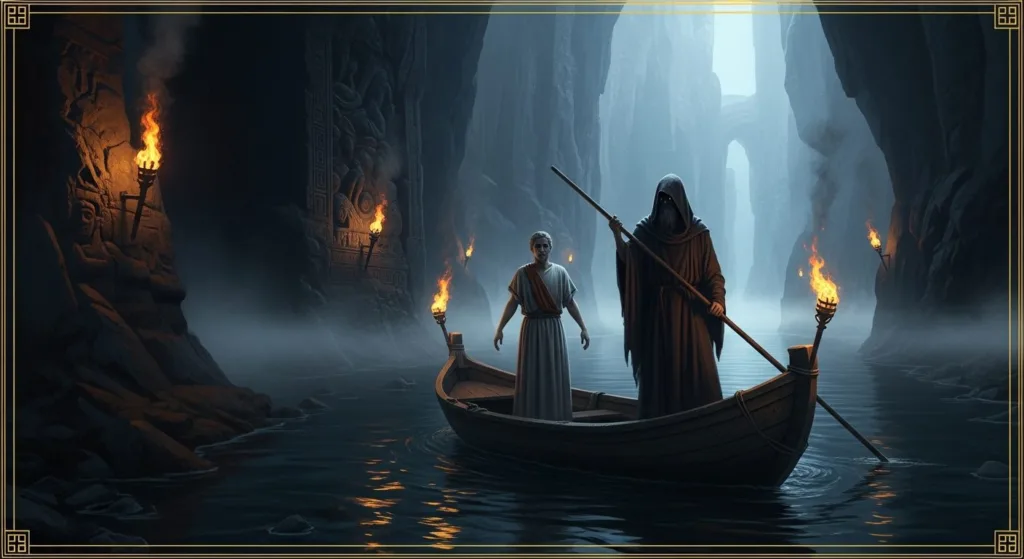
2. Hades as the common destination of the dead
- Hades, in ancient Greek imagination, is primarily the common destination of the dead. The word states both God who rules the underworld and the very space where souls end. Hades is not originally a place of absolute punishment, as hell will later be perceived in other traditions, but the underground or remote world of the dead, a place of shadow, oblivion and weakening.
In Homer, the soul, when leaving the body, descends to Hades as an idol, shadow or immaterial form of the man that existed. The soul does not cease to exist, but lacks vitality. She has no full consciousness except under special circumstances, such as when the dead drink blood in her Nekya. *Odyssey*. His meeting Odysseus with the souls of the dead is one of the most important ancient testimonies to the underworld. There are heroes, women of the past, comrades of Ulysses and figures that suffer special punishments.
The Homeric image is deeply anti-heroic in terms of posthumous fate. Achilles, her brightest warrior *Iliad*, he does not enjoy in Hades any triumphant reward corresponding to his earthly glory. Rather, it expresses bitterness for the weakness of the dead. Glory, honor, Cleos and social recognition have meaning mainly in the world of the living. Death is a loss of light, power, relationship with the community.
The importance of burial is decisive. The poor dead cannot smoothly join the world of the dead. The soul of Patrocle appears in Achilles seeking burial, so that he passes the gates of Hades. The need for funeral ceremonies shows that afterlife is directly linked to the obligations of the living. The dead needs honor, memory and ceremonial care.
In later traditions, Hades becomes more complex. The topography of the underworld is enriched with rivers such as Aheron, Kokytos, Pyriflethon, the Styx And oblivion. Haron, the boatman of the dead, carries souls, while Cerberus He's guarding the entrance. The Persephone, his wife Hades, takes particular importance, especially in secret and mysterious traditions, as queen of the dead but also as a form linking death to rebirth.
Gradually, the underworld is not just an undifferentiated place of shadows. Areas of bliss, neutral existence and punishment are distinguished. The Field and Macaroni Islands offer an alternative positive posthumous fate, while Tartarus airs as a deep place of condemnation. Thus, Hades remains the general horizon of afterlife, but a variety of beliefs that reflect the change of Greek religious thinking develops around it.
—
3. The judgment of the soul
The judgment of the dead is not equally evident in all Greek traditions. In early Homer, posthumous fate does not systematically depend on the moral quality of life. Most dead end up in the same dark Hades, regardless of whether they were good or bad. There are, of course, exceptions, such as the highly punished wicked or privileged heroes, but there is still no developed doctrine of general crisis.
Over time, however, the idea that the soul is judged after death becomes increasingly important. The main forms of this tradition are Minos, Radamanthis and Aiacus. All three are associated with justice, royal authority and the ability to judge properly. THE Minos, mythical king of Crete and son of Zeus, appears already in *Odyssey* to hold a gold scepter and grant justice among the dead. THE Radamanthys, also the son of Zeus, is considered a model of justice and is often associated with the Elysian Field. THE AiakosKing of Aegina, famous for his piety and justice.
To Plato, mostly Plato *Gorgia*, *Pistachios* and *State*, the crisis acquires a clear moral and philosophical character. Souls, naked from social ornaments, power, wealth and fame, are judged for their true state. Justice is no longer only about observing divine bans or avoiding abuse, but about the inner quality of the soul. The unjust, even if he seemed successful in life, is revealed as injured and corrupt after death.
- Minos, Radamanthys and Aiakos operate in these traditions as judges who classify souls. Radamanthis often judges souls from Asia, the Aiacus from Europe, while Minos has a role of supreme judge or referee. This geographical distinction should not be taken as a solid doctrine, but shows the effort of later writers to systematically organize the image of the underworld.
The criteria of the crisis vary. Mythic accounts bear disrespect to the gods, the hybrid, the violation of sacred bonds, the betrayal of hospitality or kinship. In philosophy, especially Plato, emphasis is transferred to injustice, debauchery, tyrannical soul and the soul's inability to turn toward the good. Reward and punishment are not merely external penalties, but educational means that restore, as far as possible, moral order.
The crisis of the dead marks a crucial change in Greek thought. The afterlife is no longer just a continuation of a biological fate, but a field where the justice of the world is shown. The soul acquires individual responsibility and life on earth is meant as preparation for the assessment to follow.
—
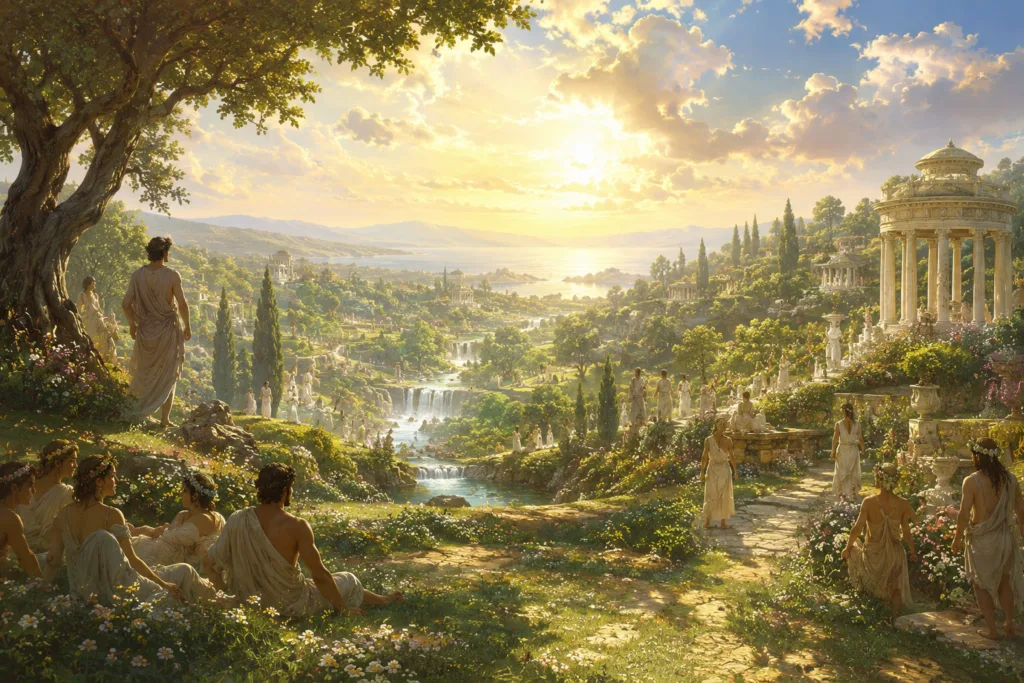
4. Field
Elysios Field is one of the most charming images of Greek posthumous imagination. The first important testimony is in *Odyssey*Where Menelaus is informed that he will not die in Argos, but will be transferred from the gods to the Elysian field, to the ends of the earth. There life is easy, without snow, winter or heavy rain, and ocean winds offer dew. This privileged fate is not attributed to Menelaus because of moral perfection, but because he is the wife of Helen and his son-in-law Zeus. In its early form, then, the Elysian Field is more a place of divine privilege than a moral reward.
This image is associated with the archaic notion that some people, especially relatives of the gods or outstanding heroes, can avoid the common fate of Hades. It is not necessarily a resurrection or immortality in a philosophical sense, but a metaphor to a happy place where existence continues without pain and effort. The Elysian Field lies on the limits of the world, often to the west, near the Ocean, i.e. in a geography of the admirer and the inaccessible.
In Hesiod, the positive posthumous fate is more associated with the generation of heroes. The *Works and Days*, after the generation of heroes who fought in Thebes And in Troy, Zeus gives some of them residence at the ends of the earth, in the Macarone Islands. Although Hesiod does not fully identify this image with the Homeric Elysium, the two traditions converge: there is a happy place, separate from the common Hades, for chosen mortals.
In the classical and later period, Elysian Field acquires a more moral character. It is not only intended for relatives of gods or heroic figures, but also for righteous souls, initiated or people who lived virtuous. In Pindar, the life of the macaroons is presented with brilliant images of light, music, sports exercises and effort-free. In Plato, although terminology and topography vary, the idea of a place of reward for the righteous is part of a broader theory of judgment and clearance.
The Elysium Field symbolizes the hope that death does not necessarily lead to undifferentiated shadow. It is the answer of Greek imagination to the need for happy continuity, divine favor and, gradually, justice. His evolution from hero privilege to a place of reward shows the wider shift of Greek religion from the aristocratic exception to individual hope.
—
5. Macaroni Islands
The Makara Islands are a related but not always identical tradition with the Elysian Field. Their basic image is that of a remote place of bliss, to the ends of the earth, where heroes and favored dead in a state of bliss live. In Hesiodo, the Macarone Islands are near the deep Ocean and are governed by Cronus. There the earth gives fruit three times a year and the inhabitants live free of labor and suffering.
The geography of the Macarone Islands is characteristicly mythical. They are usually placed on the western edge of the world, where the sun sets, near the ocean surrounding the earth. This western geography is associated with other mythical sites, such as the garden of Esperides or the areas where gods hide marvelous goods. Distance states not only a physical inaccessible position, but also an ontological difference: the Macarone Islands do not belong to the everyday world of people.
Their relationship with the Elysium Field is complex. In some sources it seems to be different traditions: Elysium is a field, the islands are an island place. In others, the two images are merged or used almost alternatively as posthumous bliss symbols. The differentiation may reflect different poetic and local traditions later consolidated into the authors’ imagination.
The inhabitants of the Macarone Islands are mainly heroes. The generation of heroes in Hesiod differs from the metal generations of humans, because it has semi-divine prestige and is associated with the great wars of the mythical era. Some of them die, others are transferred to happy places. This squadron is not available to everyone· is an exception that recognizes the particular position of heroes between gods and humans.
In later traditions, the Macarone Islands acquire more intense moral and philosophical content. Pindar describes a posthumous bliss for those who have kept their souls clean from injustice in successive lives. Here the image is associated with notions of reincarnation and moral progress. The Islands are not just a place of heroes, but a final destination of souls who have passed successfully through trials.
Thus, the Macaroons Islands express the Greek possibility of a happy posthumous existence, sometimes aristocratic, sometimes heroic, sometimes moral and salvationological. Their image deeply influenced later literature, from Roman poetry to the Utopian and paradise geographys of the West.
—
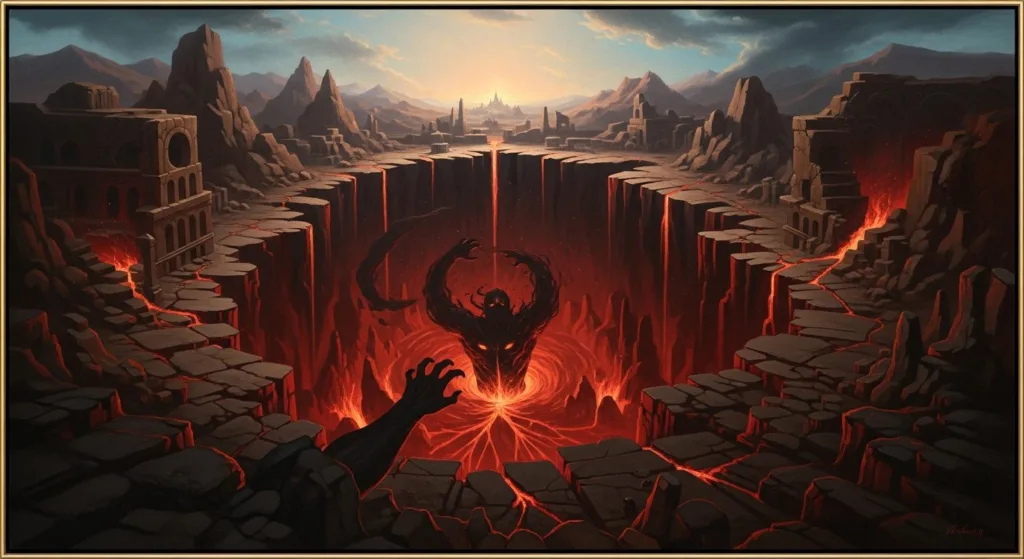
6. Tartar
- Tartarus is one of the oldest and most terrifying places in Greek cosmology. In Hesiod, it is not just part of Hades, but cosmic depth, as far from the earth as heaven is from the earth. It is a dark, wet area, awesome, surrounded by bronze walls and night. His position in the universe declares absolute removal from light, order and divine surface.
The basic difference between Hades and Tartarus is functional and symbolic. Hades is the general lower world of the dead, the place where souls end. Tartarus is a deeper prison, a place of punishment of supernatural or extremely wicked beings. It is not the common destination of all people, but the ultimate point of condemnation and restraint.
In the theogenic tradition, Tartarus is mainly associated with the imprisonment of the Titans. After his victory Zeus and Olympian in Titan fighting, the defeated Titans are thrown into Tartarus, where they are kept by the Hundred-Handed. This imprisonment is of cosmological importance: Jupiter's new order is based on the subordination of older, violent forces. Tartarus is therefore the place where the chaos that threatens secular balance is limited.
In mythological fiction, Tartarus was also associated with punishments of people or semi-theistic figures who committed extreme hubris. THE Sisyphus He is condemned to forever push a rock to the top of a hill, only to see him roll down again. His punishment symbolizes the cunning directed against divine order and ends in fruitless, repeated labor.
Tantalus, who insulted the gods with various versions of disrespect, stands in water that withdraws when trying to drink, while fruits are removed when attempting to eat. His sentence expresses eternal deprivation within the proximity of pleasure. Ixion, who attempted to join Hera or betrayed sacred rules of hospitality and kinship, is bound to a burning wheel that revolves continuously. Titus, a giant who attacked Leto, is punished by vultures or snakes eating his liver. The Danes, the daughters of Danaus who killed their husbands, are condemned to fill a hollow pit with water.
These punishments have an intense symbolic character. They are not random physical penalties, but poetic images of guilt. Desire becomes deprivation, cunning becomes vanity, violence becomes eternal passion, violation of sacred bonds becomes endless work without result. Tartarus thus expresses the idea that hybridism does not disappear with death· It is incorporated into a form of existence that reveals the truth of the act.
—
7. The concept of divine justice
Divine justice in the Greek religion does not appear from the beginning as a complete system of posthumous reward and punishment. In the Homeric epics, the gods punish the hubris mainly within the world of the living: through calamities, wars, shipwrecks, disease or destruction of houses. Trial and Nemesis are not always personified in the same way, but express the feeling that there is a limit to human transcendence.
In Hesiod, the Trial takes particular importance. The *Works and Days*, justice is presented as a fundamental principle of social and secular order. The unjust kings, false judgments, and violence cause divine reaction. The prosperity of the city is associated with fair behavior, while injustice infects the community. Although emphasis remains often earthly, the moral dimension deepens.
The connection of moral and posthumous fate is gradually enhanced by philosophical, mysterious and poetic traditions. The more the soul is meant as a carrier of personal responsibility, the more posthumous life becomes a place for justice. Death does not invalidate actions, but allows their real weight to be revealed. The judgment of the dead and the punishments of Tartar work in response to a timeless problem: why do the unrighteous often prosper in life, while the righteous suffer?
The philosophers played a decisive role in this shift. Plato developed with special force the idea that the soul bears in it the signs of its actions. In *Gorgia*Socrates claims that it is worse to wrong than to be wronged, for injustice harms the soul. Postmortem judgment makes this invisible damage visible. In *State*, Herod's myth presents souls to be rewarded or punished according to their lives and then choose new life, showing that justice is linked to knowledge and responsibility.
Nemesis, as a force that restores balance when human happiness becomes excessive or arrogant, complements the Trial. Divine justice is not merely legal punishment, but restoration of the measure. In Greek thought, hybridism leads to straightness, blindness, and eventually nemesis. When this sequence is transferred to the underworld, the afterlife becomes a mirror of secular morality.
—
8. Orphism and the immortality of the soul
- Orphism is one of the most important currents for understanding the afterlife in Greek mythology and religion. Although the term «Orphism» covers various practices, poems, rituals and beliefs, associated with the authority of the mythical Orpheus, poet, musician and knowledgeer of the mysteries of the underworld. Orpheus' form, which descended to Hades to seek out Eurydice, offered a strong symbolic model for the knowledge of posthumous roads.
In Orphic cosmogonia, the myth of Dionysus Zagreas is of particular importance. According to later testimonies, the Titans dismembered the divine DionysusAnd Zeus struck them. From their ashes mankind was created. Thus, man carries within him dual nature: Titanic, associated with guilt, violence and body, but also dionysian, divine and immortal. Although the details and dating of this myth have been heavily discussed in modern research, the basic idea of the soul as a divine element to be liberated is central to many orphic traditions.
The relationship between soul and body is often expressed in shape «body-signal», that body as a grave or prison of the soul. The soul is not just a shadow that survives weakly, but an immortal entity that has fallen into the world of birth and death. Human life is a stage of testing, cleansing, and memory of divine origin.
The gold orphic signs found in graves in Great Greece, Thessaly, Crete and elsewhere are a valuable witness. These are small sheets with short texts of instructions to the soul of the dead. The soul is called upon to avoid the source of Oblivion and drink from the source of Memory. On some plates it states: «I am a child of Earth and starry Heaven, but my genus is heavenly». This phrase reveals a radically different anthropology from homeric shadow: the soul has a heavenly affinity and can claim a better fate.
The birth cycle is also basic. The soul wanders from life to life, existing consequences of old acts and seeking liberation. Salvation is not just a metaphor to a pleasant place, but an exit from the forced repetition of birth. Purification, ceremonies, knowledge, memory, and right life contribute to liberation.
Orphism introduces into Greek religion a more intensely sotirological dimension. The soul is not merely the subject of burial values, but a carrier of divine ability. Afterlife acquires a dramatic character: there are roads, options, risks, secret knowledge and possibility of final redemption.
—
9. Pythagorean and reincarnation
Pythagoreans contributed decisively to the dissemination and philosophical processing of reincarnation, or reincarnation, in the Greek world. THE Pythagoras, form historical but also legendary, is presented by later sources as a wise man who remembered his previous lives and taught that the Psyche goes from body to body, human or animal. This idea is radically differentiated from the homeric perception of the soul as a shadow that remains in Hades.
According to Pythagorean teaching, the soul is immortal and life in the body is part of a wider cycle. Acts, desires and purity of life affect the future fate of the soul. Reincarnation is not just a mechanical change of form, but a moral process. The soul needs clearance to be freed from the birth cycle or to approach a higher state of existence.
Pythagorean life included rules of discipline, silence, mathematical and musical order, as well as dietary abstinence. Abstinence from the consumption of certain animals, and in many traditions of meat in general, is associated with the belief that souls can inhabit animals. Violence toward animals could therefore have a metaphysical and moral meaning. It is known that the Pythagoras He recognized the voice of a dead friend in a dog's scream, showing the faith then of the soul beyond the species.
The cleansing of the Pythagoreans was not only ceremonial but also intellectual. The study of the world’s numbers, harmony, and music order was of spiritual importance. The soul, living in harmony, is removed from the disorder of passions. Afterlife, therefore, does not depend solely on external ceremonies, but on the whole way of life.
The effects of Pythagorean thought have been extensive. Plato was deeply influenced by the idea of immortality of the soul, pre-existence, reincarnation and philosophy as cleansing. Although not identified with pethagoism, Platonic psychology cannot be fully understood without this background. Some orphic and pythagorean notions also overlap, in particular as to the need for redemption from the birth cycle.
Pythagorean reincarnation offered a dynamic image of the posthumous fate. The soul does not remain static in the underworld, but moves within a cosmic cycle of learning, punishment, cleansing and possible liberation. This idea deeply changed the Greek concept of what it means to live and die.
—
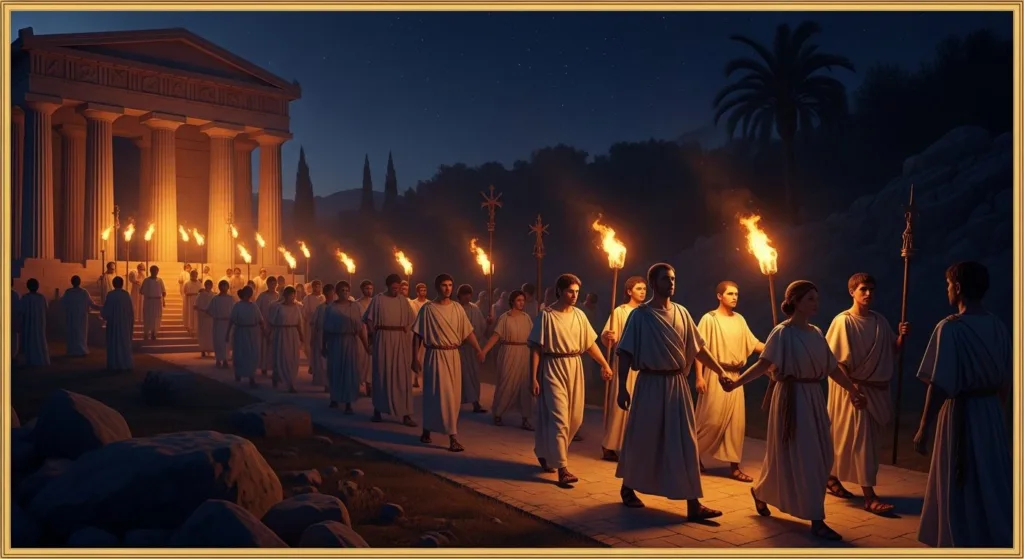
10. Eleusinia Mysteries
The Eleusinia Mysteries were among the most important and most popular mysterious cults of the ancient Greek world. They were held in Elefsina in her honour Demeter and Persephone and attracted initiates from many areas and social classes. The central mythological account was the abduction of Persephone by Hades, the grief of Demeter, the cessation of the fertility of the earth and the final agreement that allowed the Persephone returning magazines to the upper world.
The relationship of the Elefsinian Mysteries with the afterlife is clear in ancient testimonies, although the exact content of the ceremonies remained a secret. The Homeric Hymn in Demeter declares that happy is any of the people who have seen these mysteries, while whoever is undefeated will not have the same fate after death. The promise is not presented as abstract doctrine, but as a fruit of initiation, participation and sacred sighting.
The Persephone It's a decisive form. As a daughter who descends to the underworld and returns, she unites life with death, sowing with vegetation, loss with re-founding. Demeter, goddess of agriculture, turns the cycle of nature into a symbol of human hope. As the seed is buried on earth and reblown, so is the human Psyche He may hope for better luck than death.
Eleusinian Mysteries do not seem to have necessarily taught systematic reincarnation, such as Orphics or Pythagoreans. Their power was in the ritual experience. The initiates saw, heard and experienced something that gave them confidence in death. The secrecy of the ceremony strengthened its prestige, but also makes modern reconstruction difficult.
The popularity of the Mysteries is explained precisely by the combination of universality and hope. Unlike the Elysian Field of early traditions, intended for heroes or divine relatives, elysian initiation was available to a wide range of people, since they met basic requirements of purity and participation. Men, women, citizens, foreigners and, in some cases, slaves could be initiated.
The importance of the Elefsinian Mysteries to Greek religion is enormous. They offered a form of hope that did not negate the traditional worship of cities, but filled it out. The afterlife was not here the subject of philosophical proof, but a promise born of secret contact with goddesses.
—
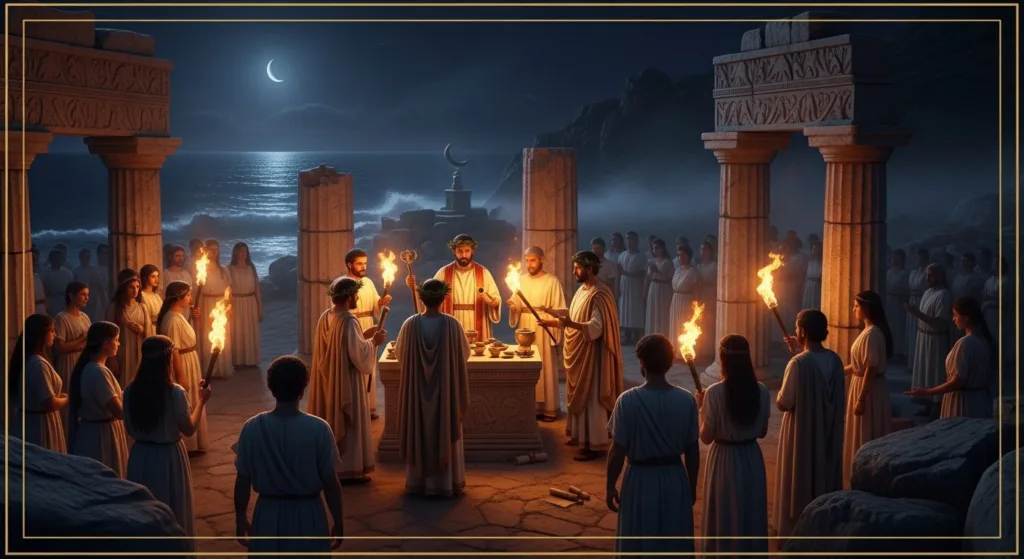
11. Other mysterious cults
Beyond Elefsina, the Greek world experienced many mysterious and ceremonial traditions related, directly or indirectly, to the fate of the soul. These cults were not all the same nor did they always have a clear doctrine of the afterlife, but often offered protection, cleansing, salvation, or more favorable relationship with deities of the underworld.
The Cabeirian Mysteries, especially in Samothrace and Thebes, were associated with mysterious deities that provided protection to the initiated. In Samothrace, initiation to the Great Gods was famous in the Greek and Roman world. Ancient testimonies emphasize the protection from dangers, especially marines, but the mysterious nature of worship also suggests deeper hopes of the gods' welfare.
Dionysian ceremonies were strongly associated with overcoming the boundaries of ordinary life. THE Dionysus is a god of ecstasy, metamorphosis, vital power and the dissolution of individual identity. In orphicdiosysmic traditions, God is directly associated with the immortality of the soul and salvation. Dionysian initiation could offer a sense of participation in a divine life that transcends death.
Orphic rituals, as shown by literary and epigraphical testimonies, included clean, sacred narratives and instructions for the posthumous course. Wandering operators, whom Plato faces with critical irony in *State*, they promised discharge from offences through rituals and sacrifices. The existence of such practices shows that the agony of the Psyche was socially widespread and could take various forms.
Overall, mysterious cults offered something that the city’s public worship did not always provide with clarity: personal hope. They did not replace Hades, nor did they abolish traditional funeral practices, but opened roads through which the believer could expect protection, cleansing and a better posthumous fate.
—
12. The philosophical view of posthumous life
Philosophy deeply altered the way the Greeks contemplated the afterlife. If poets and myths provided images, philosophers asked questions about the nature of the soul, immortality, justice and the meaning of death.
Plato is the central figure. In *Pistachios*, Socrates, just before drinking the hemlock, argues that philosophy is a death study. The Psyche It is related to invisible, intelligent and invariable, while the body is associated with desires, senses and wear. Death, for the philosopher, can be a release of the soul from the bounds of the body, since the Psyche has been cleansed through philosophical life.
In *Gorgia*Plato presents a myth of judgment of the dead. Souls are judged naked by the judges of the underworld to show their truth. Incorrigible wrongdoers are punished exemplaryly, while others are cured through penalties. Here the posthumous punishment has a pedagogical character. In *State*The myth of Herod combines judgment, reward, punishment and reincarnation. Souls choose new lives, and philosophical knowledge is necessary to choose correctly.
Aristotle treats the matter differently. In his work there is no developed mythology of posthumous crisis. The Psyche is defined as an integral part of the body, the form of a living organism. This makes personal survival after death problematic. The mind, especially the poetic mind, is presented in certain passages as separate and immortal, but the aristocratic position remains the subject of major interpretive discussions. In any case, Aristotle does not support his morality in posthumous reward, but in bliss as virtuous activity within life.
Epicureans rejected the fear of death as a basic source of human misery. For the Assistant, the Psyche consists of thin individuals and dissolves with the death of the body. Therefore, «Death is nothing to us»For when we exist there is no death, and when there is death we do not exist. Epicurean position is not mere zeroism, but therapeutic philosophy: it absolves man from the terror of Hades and punishments.
The Stoics, on the other hand, saw her Psyche as a spiritual, fiery or spiritual principle associated with worldly speech. Their views on the survival of the soul vary. Some accepted temporary survival of souls, especially the wise ones, until secular detonation, while others stressed more the return to the world as a whole. Their morality is not based on fear of posthumous punishment, but on life according to nature and reason.
The philosophical comparison shows the breadth of Greek thought: from Platonic immortality and crisis to epicurian dissolution of the soul, from Pythagorean reincarnation to aristocratic reticence. The afterlife thus became a field where poetry, religion, morality and metaphysics collided.
—
13. Comparison of Greek concepts
14. Influence on subsequent thinking
Greek conceptions of the afterlife deeply influenced Roman religion, philosophy, literature, and later Christian and western imagination. The Romans adopted and remodeled many Greek images of the underworld. In *Famine* of Virgil, the descent of Aeneas in Hades combines Homer, Platonic and Roman elements. There Tartarus appears as a place of punishment, the Elysian fields as a place of godly souls and the idea of the future return of souls to life.
Neoplatonicism further developed the Platonic and Pythagorean heritage. The Psyche It was considered to descend into the world of matter and must return to the mental and uncle. The cleansing, ascent and union with One replaced or philosophically replaced earlier mythical images. Platinus, Porphyrios, Iamblichos, and Proclus inherited a rich vocabulary of mental rise, divination, and posthumous fate.
The relationship with Christianity is complex and should not be simplified. Christianity developed within a Greco-Roman environment where concepts such as immortality of the soul, judgment, paradise, hell and resurrection were intensely discussed. Christian teaching has Jewish roots and its own theological identity, but Greek Fathers often used Greek philosophical language to express issues of soul, judgment and eternity. Platonic emphasis on the immortality of the soul had a special influence on Christian intellect, although the Christian faith in the resurrection of the body differs from purely Platonic liberation from the body.
In western literature, Greek images of the underworld became an endless source of inspiration. Dante, although a Christian poet, inherited through Virgil and classical tradition the pattern of descent into the other world, hierarchical punishment and poetic topography of posthumous justice. THE Sisyphus, Tantalus, Orpheus and Persephone They remained living symbols in poetry, philosophy, psychoanalysis and modern art.
Even today, when we talk about «solar fields», «tantalum torment» or «sissy effort», we use Greek postmortem images to describe human situations. The Greek religion did not leave a single teaching on the subject, but created a symbolic vocabulary that still shapes the way the West imagines justice, punishment, hope and immortality.
—
15. Conclusion
The afterlife in Greek mythology It cannot be limited to a simple picture of Hades. Hades was indeed the main and common destination of the dead, especially in the Homeric tradition, where souls live as shadows, distant from the light and joy of life. But this image did not change. From archaic By the Hellenistic era, the Greeks developed an impressively rich set of ideas about the posthumous fate of the soul.
The Elysium Field and the Macarone Islands expressed the hope of a happy existence beyond the common underworld. Initially they were associated with heroes, divine relatives and chosen figures, but gradually they also acquired moral or salvational content. Tartarus, instead, highlighted the idea of last punishment, not only as a punishment, but as a symbolic revelation of hubris and injustice. The figures of Sisyphus, Tantalus, Ixiona, Danaides and Titus show how Greek imagination turned guilt into an eternal image.
The judgment of the dead, with judges such as Minos, Radamanthys and Aiakos, marks the strengthening of the moral dimension. The Psyche It is no longer just driven to a place, but is judged for the quality of its life. The Court and the Nemesis, principles of secular balance, find in the underworld a new scope. The Theia justice is not always direct in life, but can be revealed after death.
- Orphism and the Pythagoreans added an even deeper dimension: Psyche is immortal, may be reincarnated and needs clearance to be released from the birth cycle. The golden signs, the memory of heavenly origin, and Pythagorean discipline show that afterlife was not only fear but also a way of salvation. Eleusinian Mysteries, on the other hand, offered the initiated hope of better luck through participation in the mystery of Demeter and Persephone.
Philosophy, especially Plato, turned these traditions into meditation on immortality, justice, and good. Other philosophers, such as the Epicureans, questioned Hades' fear, while Stoics and Aristotle offered different interpretations of the soul. This polyphony is typical of Greek religion: there is not a doctrine, but a dialogue of myths, ceremonies, poetic images and philosophical arguments.
Finally, Greek thought of the afterlife is valuable precisely because it remains shapeless. He talks about fear of death, but also about hope.· for the shadow of Hades, but also for the light of the Macaroons· for the punishment of the hubris, but also for the redemption of the soul. Through this variety, the ancient Greeks formulated one of the most timeless questions of man: whether life ends with death or if death opens another, deeper path of understanding of existence.
16. FAQ
1. What is the basic picture of the afterlife in Greek mythology?
The basic and oldest image is Hades, the lower world where the souls of the dead end. In Homer, souls live there as shadows, without the full power and joy of life. Hades is not originally a place of general punishment, but a common destination for almost all people. In time, however, Greek imagination added variations: places of bliss such as the Elysian Field and the Macarone Islands, places of punishment such as Tartarus and beliefs of crisis, cleansing and reincarnation.
2. Was Hades the same as Tartarus?
Nope. Hades is the general underworld of the dead, while Tartarus is a deeper and scarier space, mainly a place of imprisonment and punishment. In Hesiod, Tartarus is at the bottom of the world and is used for the imprisonment of Titans after his victory Zeus. Later it was also associated with exemplary punishments of forms such as Sisyphus, Tantalus and Ixion. We can say Tartarus is a special area of conviction, not just a synonym for Hades.
3. What was the Elysium Field?
The Elysium Field was a place of happiness beyond the common Hades. In *Odyssey*, is presented as a place to the ends of the earth, where there is no heavy winter, snow or trouble. It was originally intended for chosen people who had a special relationship with the gods, such as Menelaus. In later traditions, however, he was more associated with righteous souls, initiated and people who deserved a better posthumous fate. So it evolved into a Greek symbol of happy life after death.
4. What is the difference between the Elysium Field and the Macaroons Islands?
The two traditions are related, but not always identify. The Elysium Field appears in Homer as a happy place at the ends of the earth, while the Macarone Islands appear clearly in Hesiod as a home of heroes favored by Zeus The islands have more pronounced island and western geography, near the Ocean. In later sources, the two images are often merged and function as symbols of the same thing: a happy posthumous existence for chosen or righteous.
5. Was there a crisis of the dead in ancient Greek religion?
There was, but it was not as important in all periods. In Homer there is no complete system of general judgment of all souls. Later, however, the idea developed and was associated with figures such as Minos, Radamandhis, and Aikos. In Plato, the judgment of the dead becomes a central philosophical theme: souls are judged for their actions and led to reward, punishment or new birth. This development shows the growing connection of morality and afterlife.
6. What did Orphics think about the soul?
Orphics considered Psyche immortal and divine. The body is often meant as a prison or grave of the soul, while human life is part of a birth cycle. The Psyche She must be cleansed and remembered her heavenly origins, so that she may be freed. Gold orphic signs give instructions to Psyche about her posthumous course, stressing the importance of Memorialism and secret knowledge. THE Orphism offered a sautériological version of Greek religion.
7. Did ancient Greeks believe in reincarnation?
Not everyone. Reincarnation was not a general belief of Greek religion, but it occurs strongly in orphic, pythagorean, and platonic traditions. The Pythagoreans taught that the Psyche goes from body to body and that the way of life affects future incarnations. Plato used reincarnation in myths like that of Herod in *State*. For the traditional Homeric concept, however, Psyche He descends to Hades and remains there as a shadow.
8. What did Eleusinian Mysteries promise for the afterlife?
Eleusinian Mysteries promised the initiated better luck after death. The Homeric Hymn in Demeter emphasizes that anyone who has seen mysteries is happy, while the undefeated will not have the same fate in the underworld. We don't know exactly the contents of the ceremonies because they were secret. However, the connection of Demeter and Persephone to fertility, descent and return from Hades made the Mysteries a powerful source of hope for Psyche.
9. How did philosophers face the fear of death?
Answers vary. Plato argued that Psyche is immortal and that philosophy prepares man for death through cleansing. The Epicureans, on the other hand, rejected the fear of death arguing that the Psyche It dissolves with the body, so there is no subject suffering after death. Aristotle did not develop a complete system of posthumous life, while the Stoics emphasized life according to reason and nature. So philosophy did not have a single answer, but many.
10. Why did Greek conceptions of the afterlife affect the West so much?
Because they combined powerful images, moral questions, and philosophical depths. Hades, Tartarus, Elysium Field, the Macarone Islands, Orpheus, the Sisyphus and Tandalus became timeless symbols. The Romans adopted them, the Neoplatonics philosophicalized them, and the Christian writers often talked with the Greek language of the soul and judgment. In literature, from Virgil to Dante and modern art, the Greek images of the edict continued to express fear, hope and the search for justice.
—
17. Bibliography
Ancient Sources
- Homer, *Iliad*.
- Homer, *Odyssey*, in particular rhypsodia l (*Kenya*) and d for the Elysion field.
– Hesiod, *Theogenia*.
– Hesiod, *Works and Days*.
– *Homeric Hymn in Demeter*.
– Pindar, *Olympians* and excerpts on the Macaroni Islands.
- Aesthelus, *Suppliers of Bond* and other surviving works for the concept of divine order.
– Sophocles, *Antigone*, about the importance of burial laws.
– Euripides, *Alkiss*, *Hercules*, *Buckets*.
- Aristophanes, *Frogs*For a comic but valuable picture of the underworld and the Mysteries.
- Plato, *Fats*.
- Plato, *Gorgia*.
- Plato, *State*, book I, legend of Herod.
- Plato, *Phaedron*.
- Plato, *Laws*.
– Aristotle, *About Soul*.
– Assistant, *Letter to Menocea*.
– Lucretius, *De rerum natura*.
– Virgil, *Famine*, book 6.
– Plutarch, *Moral*, various texts on soul and superstition.
– Pausanias, *Greece Tour*.
– Diodoros Siciliotis, *Library Historical*.
– Orphic extracts and gold orphic plates.
Modern Bibliography
– Burkert, Walter. *Greek Religion: Archaic and Classical*Harvard University Press, 1985.
– Burkert, Walter. *Ancient Mystery Cults*Harvard University Press, 1987.
– Burkert, Walter. *Lore and Science in Ancient Pythagoreanism*Harvard University Press, 1972.
– Parker, Robert. *Miasma: Evolution and Purification in Early Greek Religion*Oxford University Press, 1983.
– Parker, Robert. *On Greek Religion*. Cornell University Press, 2011.
– Johnston, Sarah Iles. *Restless Dead: Encounters between the Living and the Dead in Ancient Greece*. University of California Press, 1999.
– Johnston, Sarah Iles. *Ancient Greek Divination*. Wiley-Blackwell, 2008.
– Edmonds, Radcliffe G. III. *Myths of the Underworld Journey: Plato, Aristophanes, and the "Orpic" Gold Tablets*. Cambridge University Press, 2004.
– Edmonds, Radcliffe G. III. *Redefining Ancient Orphism: A Study in Greek Religion*. Cambridge University Press, 2013.
– Graf, Fritz, and Sarah Iles Johnston. *Ritual Texts for the Afterlife: Orpheus and the Bacchic Gold Tablets*. Routledge, 2007.
– Graf, Fritz. *Eleusis und die orphische Dichtung Athens*De Gruyter, 1974.
– Bremmer, Jan N. *The Early Greek Concept of the Soul*Princeton University Press, 1983.
– Bremmer, Jan N. *The Rise and Fall of the Afterlife*Routledge, 2002.
– Sourvinou-Inwood, Christiane. *Reading Greek Death: To the End of the Classical Period*Oxford University Press, 1995.
– Garland, Robert. *The Greek Way of Death*Cornell University Press, 1985.
– Rohde, Erwin. *Psyche: The Cult of Souls and Belief in Immortality between the Greeks*Routledge, 1925.
– Mikalson, Jon D. *Ancient Greek Religion*Wiley-