
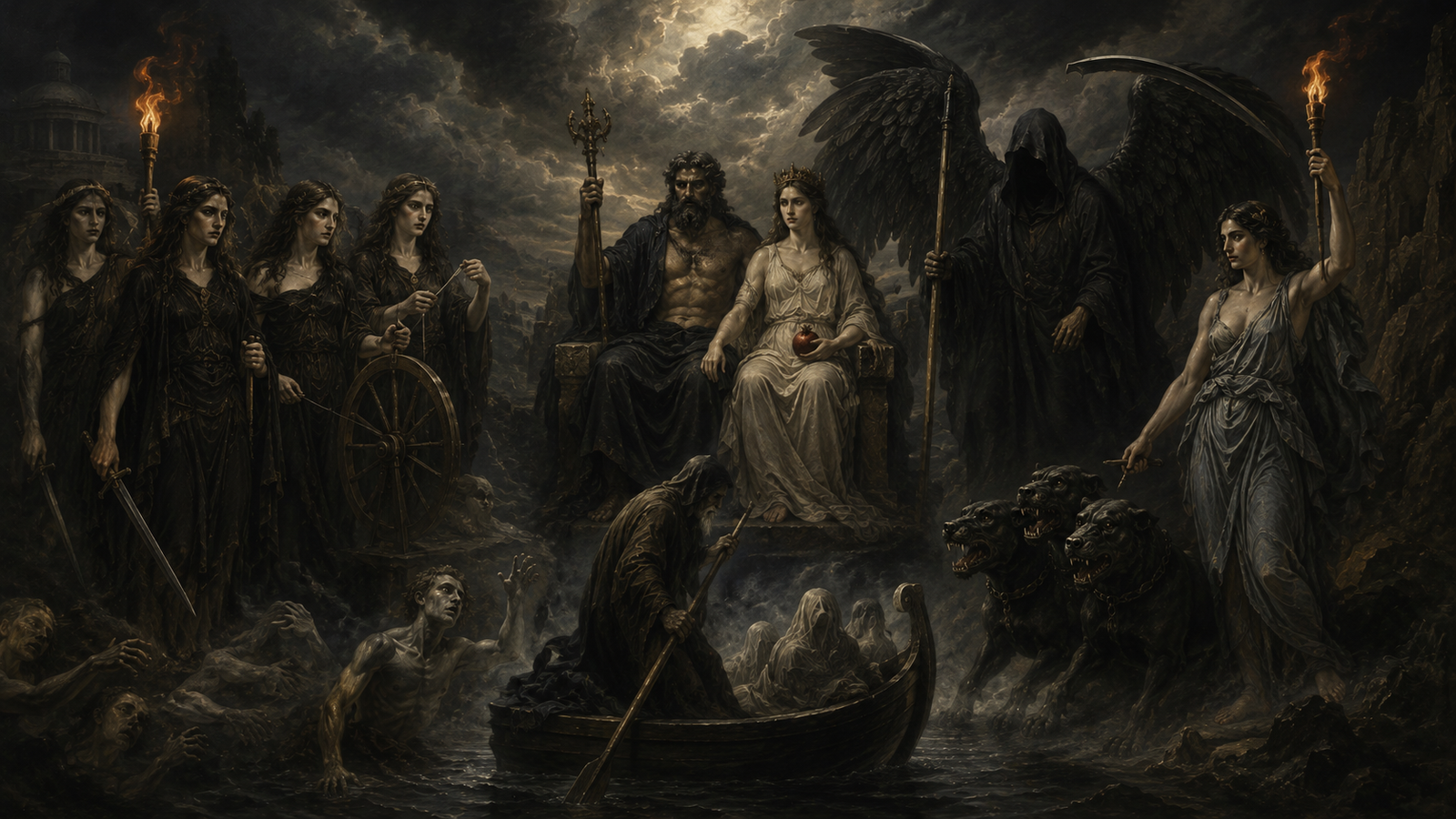
Underworld Dark Forces
The ancient Greek conception of death, the role of the Underworld, because the deities of death hold an important place.
The world of ancient Greeks was a world of classified forces where life and death coexisted in a sacred balance. In Greek mythology, death is not just a biological end· is a cosmic reality governed by gods, demons, and chthonic deities. The deities of death are the axis around which the meaning of fate, justice and continuity between the earthly and underground world is structured.
- Underworld (Hades), with its rivers, gates, guards and judges, was no place of blind darkness, but an organized kingdom. There, the rulers of the dead, the spirits of death, and the chthonic deities regulated the flow of souls and the awarding of secular order. In this context, the deities of death hold an important position: they personify what man fears and at the same time recognizes as inevitable.
The following article examines, based on ancient sources, Death as a god, Hades and Persephone as a dominating couple of the Underworld, the Cheres as carriers of the violent end, the Fates as regulators of life and death, the Furies as perpetrators of blood, as well as other forces and spirits that frame the whole of the ethnonian order. The goal is a clean, encyclopedic but friendly presentation for students, students, lovers of mythology and the general public.
Who was Thanatos in Greek mythology?
Origin of Thanatos (Son of Nyx, brother of Hypnos)
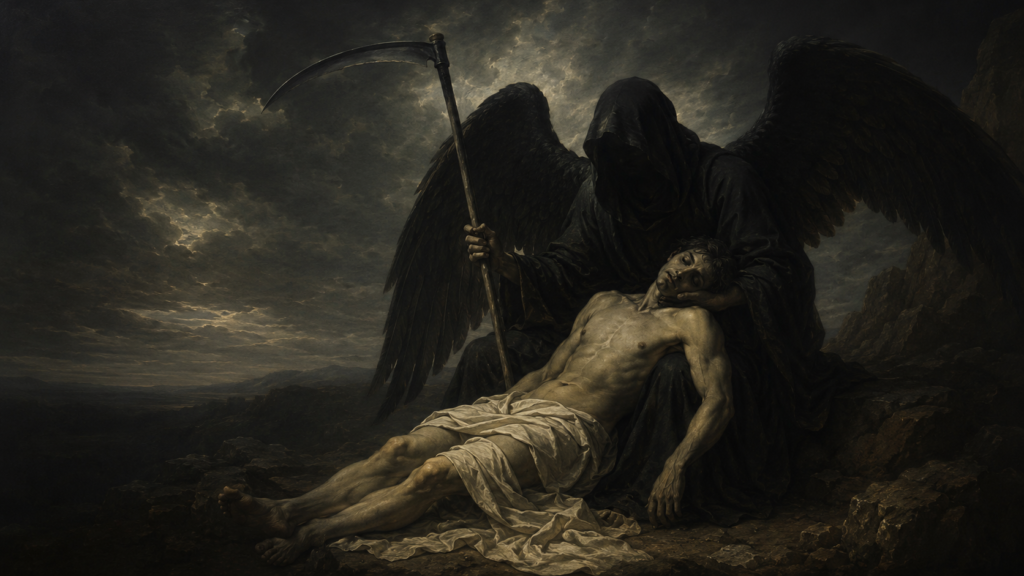
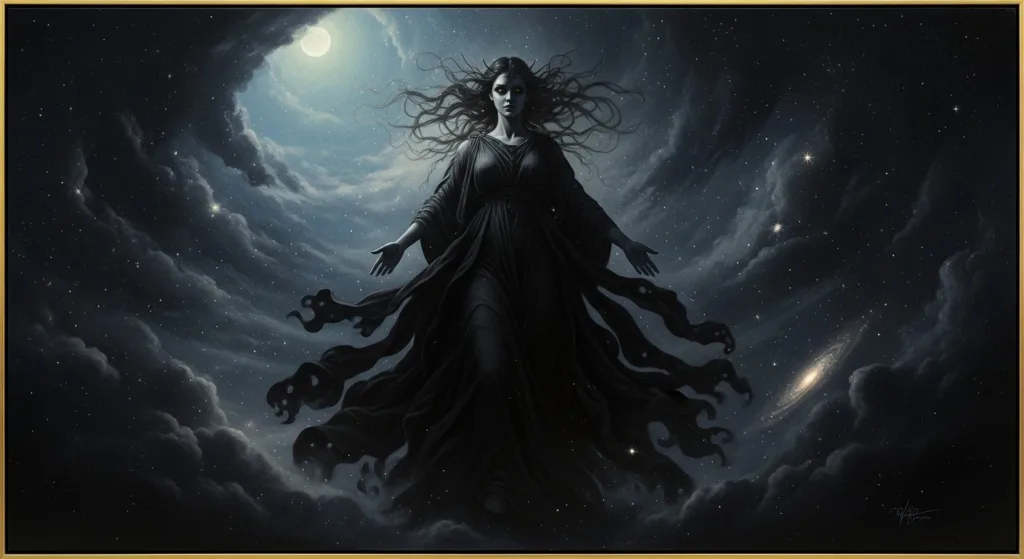
In ancient Greek cosmogonia, as recorded mainly by Hesiod, Death is born from Night (Nyx). He is often presented as a twin or brother of Sleep (Sleep), highlighting the proximity of the two situations. In the same lineage, the Night brings to the world a number of forces and situations related to the boundaries and limits of human existence: Moro (Morus – fate/heavily condemned), Keres (violent deaths), Erinyes and other forces that mark critical turns of life.
Traditions vary in terms of «Father» of Death (some refer to Erevo), but the trunk of mythology talks about a primary birth by Night, without the need for a fatherly contribution, which highlights the archetypal and autonomous character of death.
Form/characters (Flow young, calm and inevitable death)
Death is often portrayed as a winged young man, with a mild and simple look. In vase paintings he resembles Cupid in cormostia, but his silent, grim dignity differentiates him. He's not a brute vigilante or a terrible monster.· is the calm and inevitable god who closes I drank people's eyes when their time comes.
- It embodies natural death, not necessarily violent or punitive.
- He acts everywhere, where there is life that declines.
- She accompanies, in some episodes, Sleep, by attacking her symbolism «quiet transition».
It is particularly important that he be present in Iliad, where, after receiving it Zeus, Sleep and Death receive the body of heroic Sarpina to lead it with honors to the fatherland. The scene shows a Death operated by divine command, respecting the heroic code and burial practices.
The Myth of Thanatos & Sisyphus
- myth of Sisyphus, known from ancient accounts, describes the cunning with which the king of Corinth outwitted Thanatos himself. According to one version, Sisyphus chained Thanatos, preventing any death on earth. People stopped dying, battles dragged on endlessly, and the natural order was thrown into chaos. Then Ares, enraged by the stalemate in the war, freed Death, restoring the necessary balance.
History highlights two basic ideas of Greek thought: no mortal can chain for long the necessity, and the intervention of the gods always restores secular order.
Hades as Sovereign of the Dead
King of the Underworld
- Hades, his brother Zeus and Poseidon, shares with them secular sovereignty: heaven, sea and underworld. As king of Underworld, He oversees the kingdom of the dead. It rarely rises to the upper world and rarely appears with anthropomorphic warmth· its form is negligent, impervious, sometimes covered by the cyne (the helmet of invisibility).
Attractor and as Pluto (the Rich), he is not a blind destroyer, but the possessor of the underground treasures: metals, seeds, wealth flowing from the depths of the earth. The dual identity (Hades/Plutos) connects him to the idea of the cycles of vegetation and deterioration.
Functions
Hades rules and regulates, does not take life. Its main responsibilities include:
- Saving order in the underworld.
- Reception of souls after death and stay in his kingdom.
- Congregation with Persephone.
- Cooperation with forms such as Death (ports), Cerberus (guard) and the judges of the dead (Minos, Radamandhis, Aiacus) for the distribution of souls.
For Hades is not considered a god of death but a lord of the dead.
It is crucial to distinguish: Hades does not «Transport» the end· simply the «Command». It is not the cause of death, but the master of the place where the dead reside. That is why the ancients feared him, but did not hate him as an unjust god. His rigidity is consistent with the cruel law of necessity, not with malice.
Persephone and Her Relationship with Death
The Abduction of Persephone
The central episode is recorded in the Homeric Hymn in DemeterHades, with the permission of Zeus, kidnaps the daughter of Demeter, Persephone, and leads her to the Underworld. Demeter’s sorrow stops the fruitage on earth, until, after negotiations, Persephone returns periodically to her mother, but having tasted pomegranate seeds that bind her to return to Hades.
History bases the cycle of seasons: the descent of Persephone corresponds to wear and winter· its rise in vegetation and spring.
Queen of the Underworld
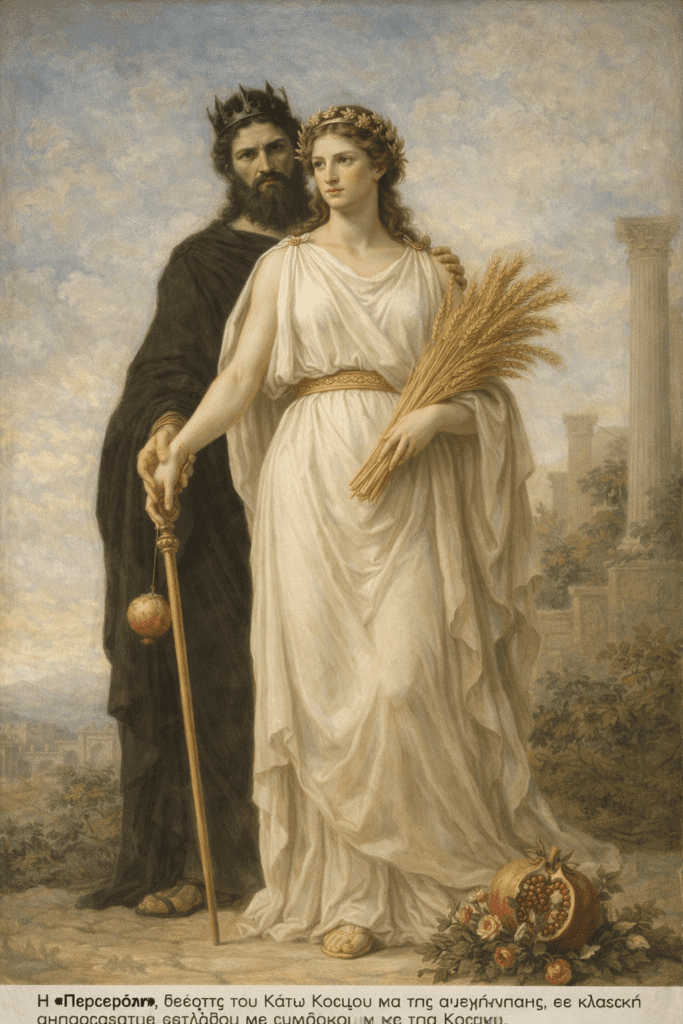
As queen, Persephone stands beside Hades, sharing power. In many performances he sits on a throne, receives offerings and rules with modest but drastic presence. He's not a passive person.· We find it as a judge and source of blessing (or commitment) for the dead.
Life/death symbolism
- Persephone unites two areas: life and death. Her dual role reflects the thought that death is not final zero but part of a cycle. Her relationship with Demeter inspired the Eleusinian Mysteries, where the earth, sowing, death and hope of a transformation after the end were honored.
The Keres – The True Deities of Violent Death
Origin
The Keres presented by Hesiod as daughters of the Night, sisters of Death and Moru. If Death marks the inevitable end, the Cheries incarnate the violent, sudden death, especially that of war. They are, in many respects, the original «deities of violent death» in Greek mythology.
Appearance
In poetic descriptions and in «Shield of Hercules» are attributed as terrible, black-dressed, with sharp claws, blood droplets in the mouth, and rabies for a human body. Cherries are not beautiful or quiet forces· are savage, insatiable and active at the points of ultimate violence.
Keres/battlefields
Their natural place is the battlefield. They roam over the colliders, waiting for the outcome, enjoy the wounds and bleeding, and often «grab» The one who's been given a violent end. Their involvement turns death from transition to grab.
Kires vs Moires
- The Keres personify violent death and destruction that comes with acidity and blood.
- The The Moirai (Fates) regulate the fate of every man: birth, life span, end. They don't identify with death, though «lock» as a moment in the thread of life.
- While the Kings act «on site» (fight, murder, accident), the Fates define «in advance» the route.
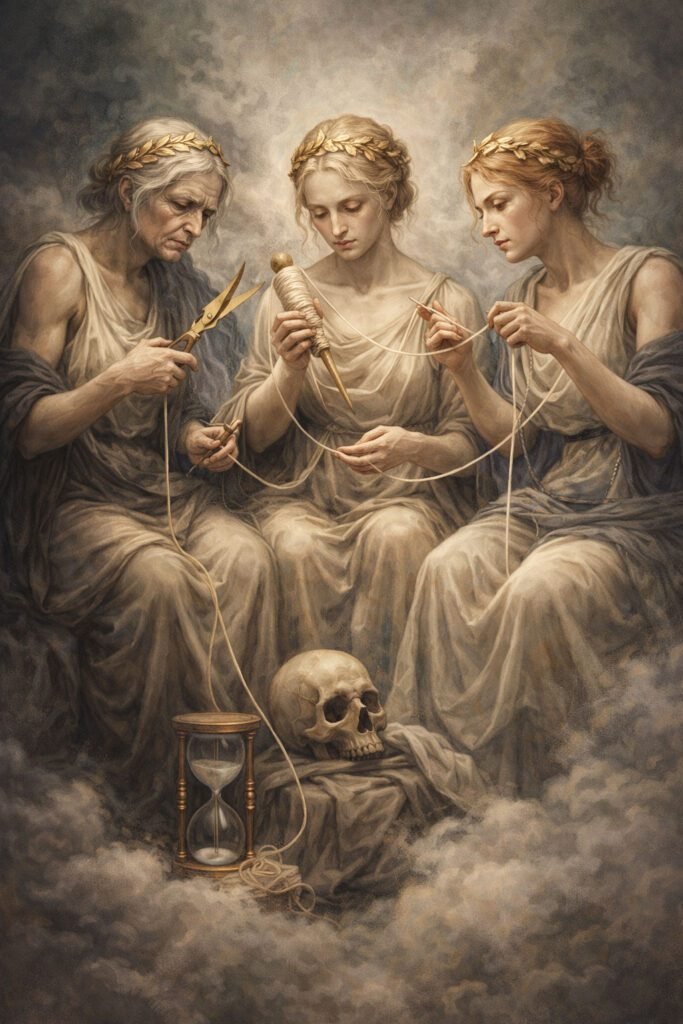
The Fates and Their Relationship with Death
Clotho
The Closure «Closure» The thread of life. It begins the plot of existence, linking each man to the web of the world. It's the beginning of every life route.
Lachesis
The Lahesis «draw» or «Share» the shares. It distributes the length and events of life, defining the framework of opportunities, trials and acne. Her name is linked to her «lottery tickets», the share.
Atropos
Atrous is «a-trept», irreversible. He cuts the thread when destiny comes to an end. Here is the most direct link to death: its move seals the transition.
How they determine the fate of every man
Collectively, the Fates define:
- The birth.
- The march (Lachesis).
- The end (Atropos).
It's not. «deities of death» In a narrow sense, but without them, death would have no time to come. As daughters of the Night or, otherwise ancient tradition, of Zeus and Themidus, they bridge divine law with human fate.
The Erinyes – Punishers of the Dead and the Guilty
Origin
In Hesiod, the Erinyes born of his blood Uranus when the Cronus He castrates him. Another ancient line wants them daughters of the Night. In any case, they are of ethnic origin, linked to unjust acts and violations of natural ties.
Court of Justice
The Furies are punishments for a particular insult: especially related blood crimes (methocide, paticide). They pursue the guilty, torment him with remorse and fury, until divine or human justice is dealt with. Their role is more legal/moral than lethal.
The Myth of Orestes (explained that it relates to justice after death, not death itself)
Orestes, after the matricidality of Kylitemnestra, is pursued by the Erinyes. In «Eumenides» of Aeschylus, his trial in the Areopagos and the mediation of Athena end in the ecucrament of the Furies («Eumenides»). The example shows that their action is not to bring about death, but to restore the moral order that murder is disrupting.
Other Underworld Deities & Demons of Death (brief profiles): Charon, Cerberus, Moros, Hecate, Lethe.
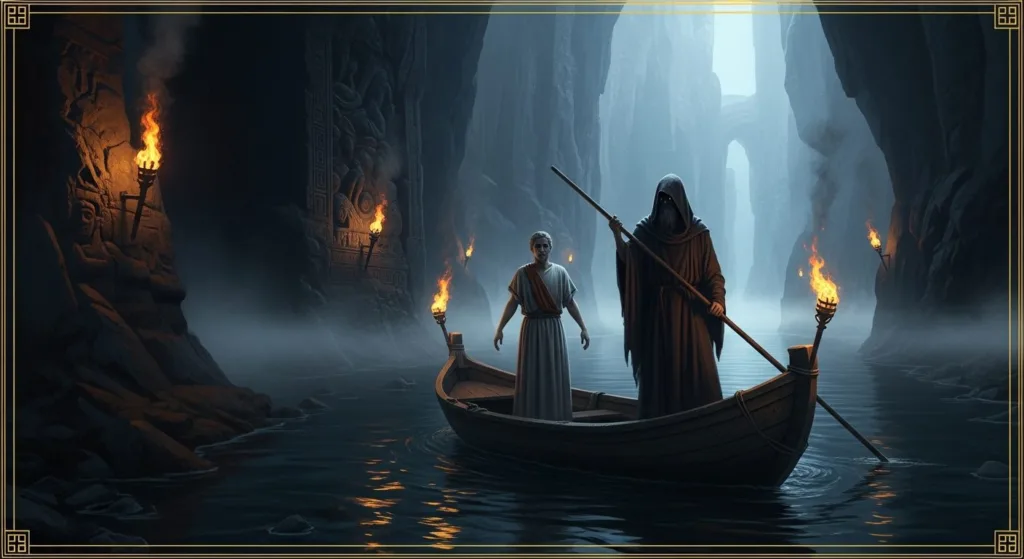
- Haron: The carrier of souls. With a few obols (the coin in the mouth or hand in the dead), it passes souls from Acheron or the Styx At Hades Gate. He doesn't kill.· transport. It belongs to the spirits of death as a function of the transition.
- Cerberus: The three-headed gate guard dog. It prevents souls from escaping and the living from entering. A symbol of rigidity of the boundary line between life and death.
- Moros: The personification of the heavy fate/the inevitable «End»Brother of Death during Hesiod, expresses the dark clergy that result in loss. She is not a god who acts alone, but the invisible itself. «portion» of loss.
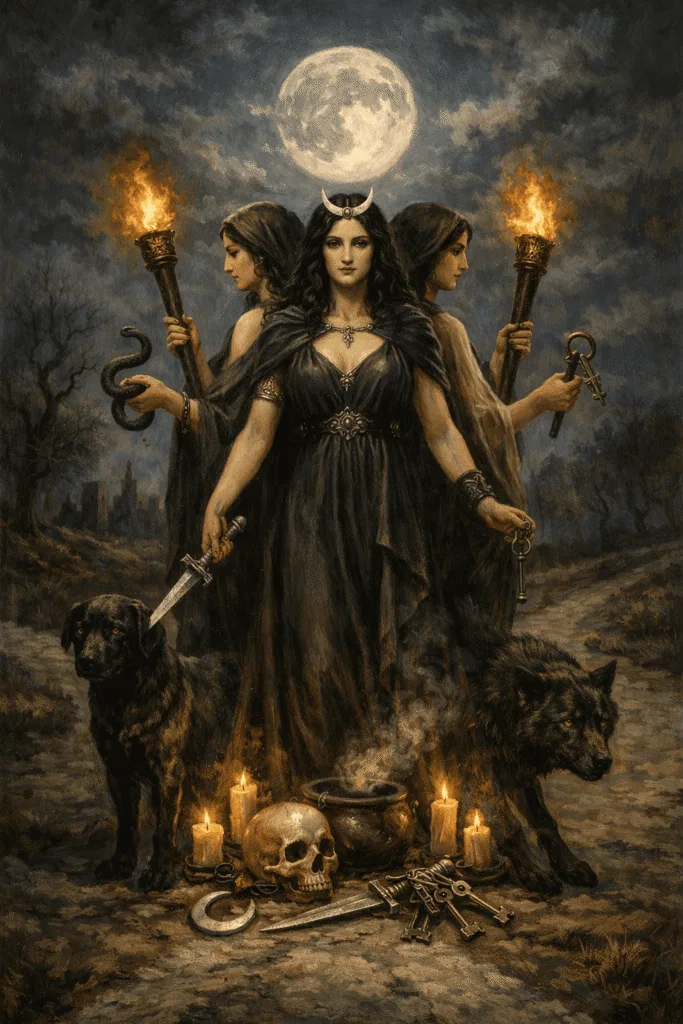
- Hecate: Octonian deity of the tristrats, night and boundaries. It is associated with spectras, purifications and magical incubations. Although it is not a deity of death, it has a close relationship with souls and reads toward the invisible.
- Oblivion: Personalization/river of oblivion. Souls drink water to forget earthly life. Oblivion does not bring death, but completes the detachment from the world of the living.
Table Comparison of Death’s Deities
| Entity | Role | Relationship with Death | Place of Action |
|---|---|---|---|
| Thanatos | Deity of the natural end | Incarnates calm, inevitable death | Everywhere |
| Hades | Lord of the dead | He doesn't kill.· rules the Underworld | Underworld |
| Persephone | Queen of the Underworld | It bridges life/death, co-governments the dead | Underworld |
| Keres | Spirits of violent death | They cause/representate sudden death | Combat fields |
| The Moirai (Fates) | Fate regulators | Set life and end time | Everywhere/Cosmic |
| Erinyes | Blood crimes punishments | Postmortem/moral justice, not death | Underworld/Earth |
| Haron | Portable of souls | Transports souls, does not cause death | Rivers of Hades |
Symbolism of the Deities of Death in Greek Thought (fear, fate, divine justice, inevitable end)
The deities of death as an expression of fear
The ancients recognized the existential terror of the end. The deities of death, from the mild Death to the furious Cherries, crystallised climates of fear: from quiet acceptance to the fright of the battlefield. Through worship and poetry, fear turns into understanding and ritual.
The deities of death and fate
The Fatigues, As supreme regulators, they link death to the secular principle of the portion. Nothing happens outside the «measure». Death is not disorder, it is sealing the path that is cloned, measured and cut.
The deities of death and divine justice
With Erinyes and Hades' royal order, death also acquires a moral dimension: the guilty does not avoid the righteous. The underworld is not only silence, but also a court, where the balance that has been shattered by the hubris is restored.
The inevitable end as part of life
- Persephone It reminds me that death intersects with rebirth. Its seasonal return states that wear has a place within the circle. In Greek thought, the end does not invalidate the value of life· It brings it out.
Influence of Death's Deities on Contemporary Culture (literacy, cinema, video games, modern imagination)
The forms of Hades, Persephone, Death and Keres are constantly instilling modern imagination. The image of the Harona Strait, the Kerber dog-guard, the Fates sisters handling the thread, appear in narratives of all kinds: from epic retellings to visual metaphors.
- In literature, the lower world becomes a scene of initiation, testing and return.
- In cinema and video games, the deities of death are transcribed into characters-guards, level lords or soul guides.
- In modern imagination, the patterns of oblivion, scales of fate and gate with guard are preserved, proving the timeless power of ancient shapes.
The endurance of the themes shows that the primal images of the Greek myth remain language to talk about the end, justice and hope.
Conclusion: Recapitulation, role of the deities of death, because they still charm man
The deities of death in Greek mythology form a complete system: from calm Death to violent Cheres, from lord Hades and Queen Persephone to the righteous Furies and regulatory Fates. Each entity illuminates an aspect of the inevitable end: necessity, fear, fate, justice and the possibility of transformation.
Their charm lasts because they offer meaning: death is not merely loss, it is part of the secular order. Through symbols, ceremonies and myths, the ancients accepted their limit and sought kindness in the way of transition. Today, referring to the deities of death, we still draw language, images, and wisdom to understand the definite, without simplifying it.
Q: Who was the god of death in Greek mythology? A: Death, son of Night and brother of Sleep, was the deity that embodied calm and inevitable death.
Q: What is the difference between Hades and Death? A: Hades is the ruler of the Underworld and rules the dead, while Death is the personification of the very end of life.
Q: Who were the Kings? A: The Cheres were chthonic deities who personified violent death and fatal destruction, especially in the fields of fighting.
Q: Furies were deities of death? A: No· were punishments of blood crimes and instruments of postmortem/moral justice, not carriers of death itself.
Q: Who drove souls into the Underworld? A: Haron, the ferryer, carried souls across the rivers of Hades.
Q: What deity ruled the world of the dead? A: Hades, often with Persephone as queen, ruled the Underworld and the dead.