
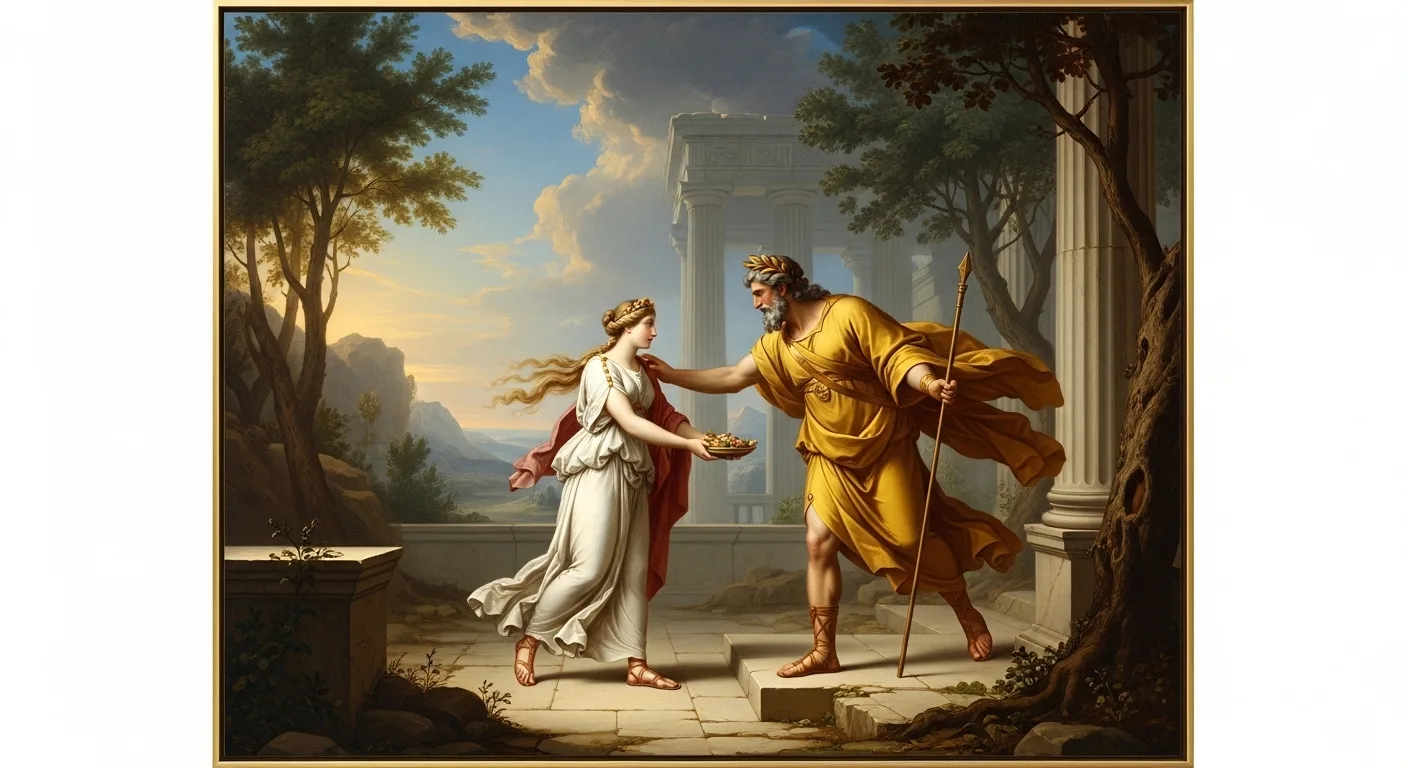
The myth of Zeus and Letos. In its rich tradition Greek mythology, many stories tell his love ZeusThe mighty king of the gods. Among them stands his story with serene and gentle Leto, a story associated with the birth of two of his most important deities OlympusThe Apollo and Artemis.
The legend of Letus is not just a love story· is a story of persecution, perseverance and ultimately divine vindication.
Who was Leto?
Leto belonged to the generation of Titans. She was daughter. of Other and Phoebes, two ancient divine forms associated with knowledge and prophecy.
In ancient tradition Lito is described as:
Calm and kind deity
patron of motherhood
symbol of patience and dignity
Although she did not have the intense presence of other gods, her role proved decisive, as she became the mother of two of the most brilliant gods of Olympus.
Leto's wanderings
Pregnant Leto desperately sought a place where she could bring her children to the world.
Hera even kept her away IlliteracyThe goddess of childbirth, so she can't give birth.
Leto traveled to many parts of Greece, but everywhere she encountered denial. Fear of Hera was greater than compassion toward the unhappy goddess.
Eventually, after a long wandering, he was found in front of a small and barren island.
This island was Delos.
Delos, according to legend, was a floating island that did not really belong on land. Because she was not permanently bound to the earth, she was not bound by Hera’s ban.
Leteau promised Delos that if she helped her, the island would become famous and sacred.
Delos accepted.
So Leteau finally took refuge. Under a phoenix, Leto began to give birth. Artemis, the future goddess of hunting and nature, was first born. According to some traditions, Artemis helped immediately after her mother brought her brother to the world. Soon after Apollo was born. Apollo became: god of light god of music god of the divine protector of harmony and art The birth of these two gods made Delos one of the most important sacred centers of ancient Greece. The mighty Zeus was fascinated by the beauty and peace of Letus. As often happens in myths, his love did not take long to cause problems.
Zeus' wife, jealous Hera, was furious when she learned about their relationship. To avenge Leto, she decided to make her life unbearable.
Hera ordered that no part of the earth accept Leto to give birth. According to legend:
No land dared to host her
Gods and men feared the wrath of Hera
Leto wandered pregnant around the world
Thus began one of the most dramatic wanderings in Greek mythology.
The Meaning of the Myth
The myth of Zeus and Leto has deeper symbols.
History shows:
the power of the jealousy of the gods
the pre-justification test
the birth of light through difficulty
- Apollo, associated with light and knowledge, is born after a long period of suffering. In this way the myth symbolizes that light and wisdom come after trials.
The worship of Leto in ancient times
Although her children became much more famous, Leto was worshipped in several parts of the Greek world.
Her sanctuary existed:
THE Delos
THE Lycia of Asia Minor
in areas of Crete
In Lycia there was even a well - known myth where Lito transformed villagers into frogs for not allowing her to drink water from a lake.
Leto in art and tradition
In ancient art Leto is usually presented:
as a calm mother form
Next to Apollo and Artemis
keeping her children often
Her form symbolized protective mother and the strength of patience.
A myth that survived centuries
His story Zeus and Leto is one of the most touching accounts of Greek mythology.
Through the difficulties of Letus two deities were born associated with:
the light
nature
art
knowledge
And so this myth reminds me that even through the test something glorious can be born.