
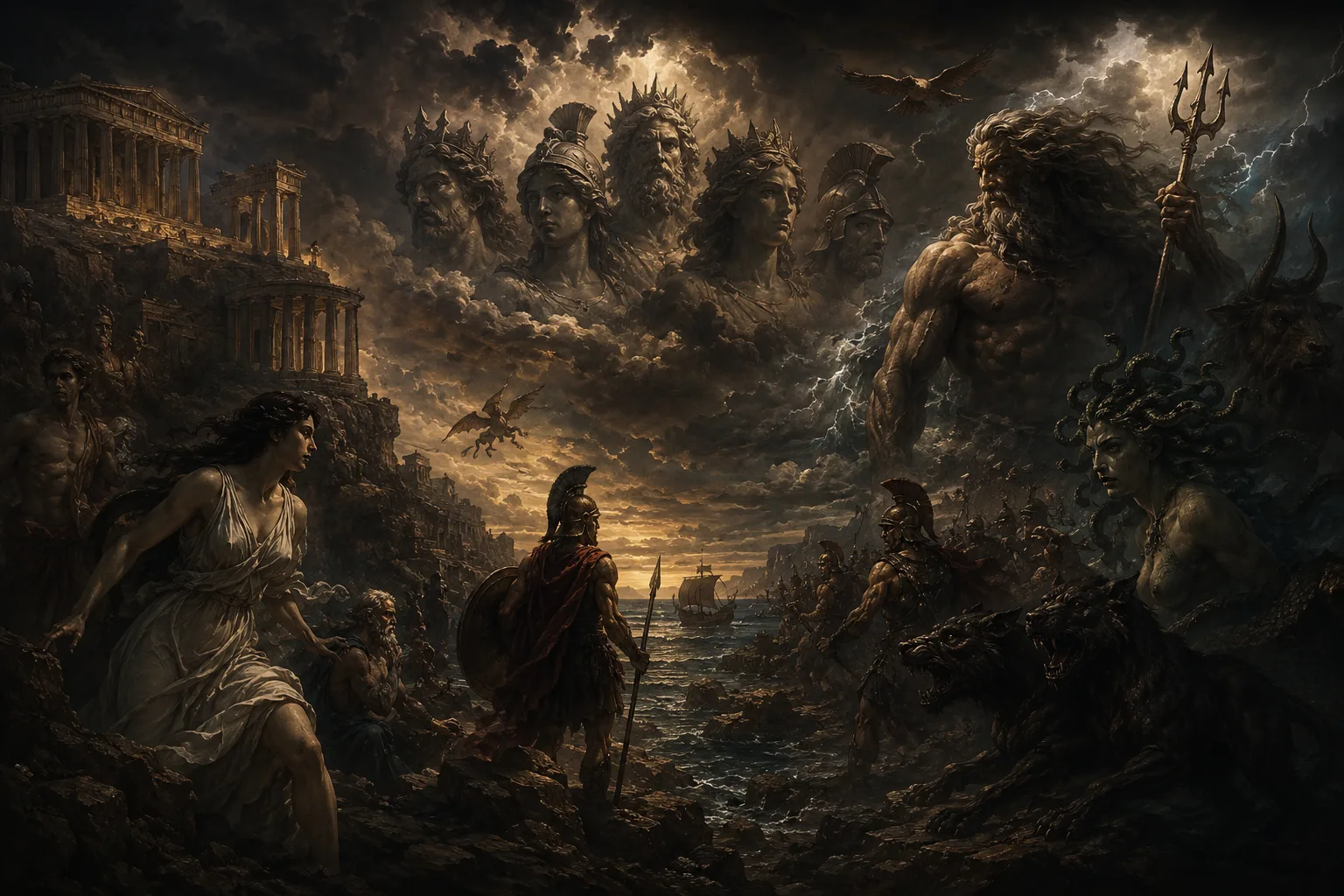
- Greek mythology is one of the most exciting worlds human imagination has ever created. It is full of gods, heroes, monsters, prophecies, wars and cosmogenic conflicts. However, for a beginner it may seem chaotic.
Many people begin reading about the labors of Hercules, Perseus, or the Trojan War without knowing which gods influenced these events or what events preceded them. As a result, the big picture of the mythological world is often lost.
In fact, Greek mythology follows a natural chronological progression. It begins with the creation of the world, moves on to the first deities, the Titans, the famous Titanomachy, the reign of the Olympian gods, and then to the great heroes and epic events that culminate in the Trojan War.
If you're wondering «Where do I start Greek mythology?»This guide will show you the right reading order and the best books of Greek mythology for each stage of the route.
1. The beginning of the world
From Chaos to creation
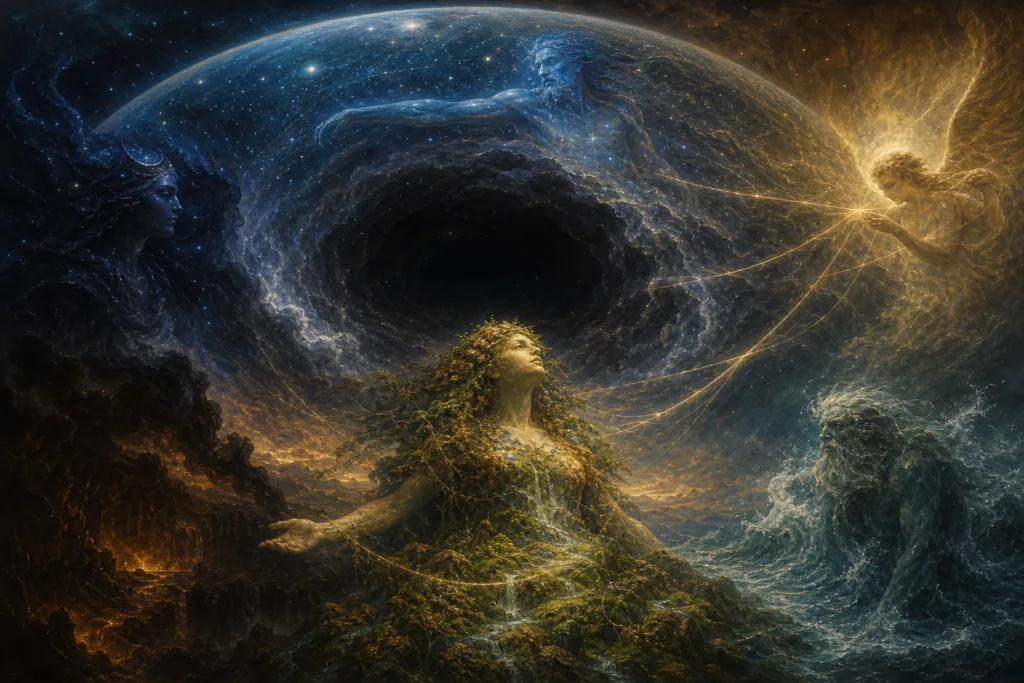
Every story needs a start. In Greek mythology, the beginning is Chaos.
Chaos wasn't just disorder. It was the primary state of the universe before there was anything else.
From this they appeared:
- The GaiaMother Earth,
- The Tartarus, the deepest part of the underworld,
- The Eros, the power of creation,
- The Nyx,
- The Erebus.
These first secular powers were the foundations of the entire mythology.
If you want to understand the Greek myths correctly, it is worth starting with Myth of Creation and TheogonyAs all the later stories are born there.
Featured books
Stephen Fry – Mythos
The Stephen Fry Mythos is perhaps considered the most enjoyable modern introduction to Greek mythology For beginners. Fry tells myths with humor, clarity and respect to ancient sources.
Edith Hamilton – Mythology
A classic work that for decades has introduced new readers into the world of mythology.
Robin Hard – The Routledge Handbook of Greek Mythology
Ideal for those who want a more systematic presentation without losing reading pleasure.
2. The Primary Deities
The first rulers of the universe
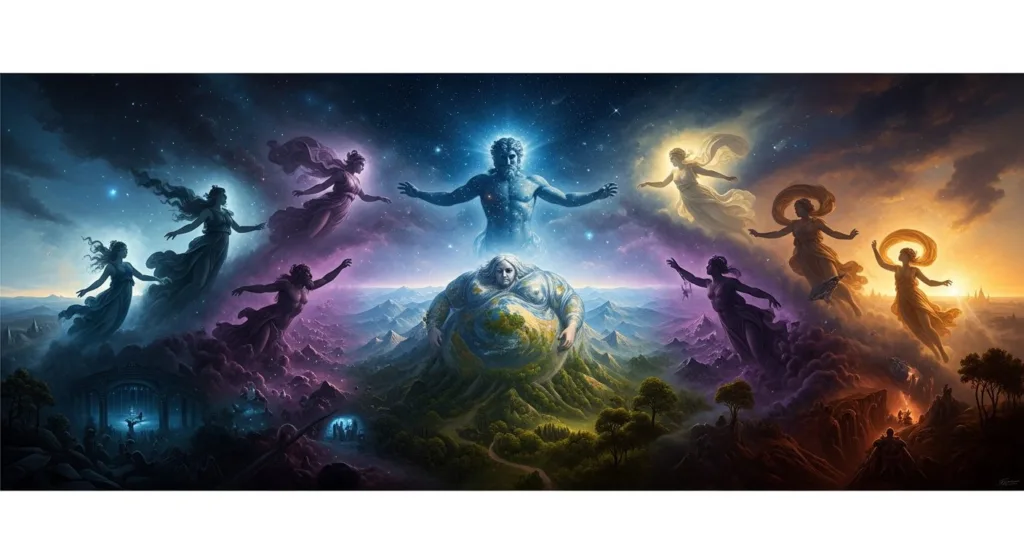
After the creation of the world the first divine entities appear.
- Gaia gives birth to Uranos, the sky covering the earth, and the PontosThe sea.
From them come the first generations of gods.
Primary deities do not resemble the gods of Olympus. They are more personifications of worldly forces than of anthropomorphic gods.
Understanding these forms helps us to understand why Greek mythology attaches such importance to genealogy.
For more details, it is worth reading the related articles of mythoi.org:
Featured books
These books clearly present the family relations of the first gods.
3. The Titans
The first great dynasty
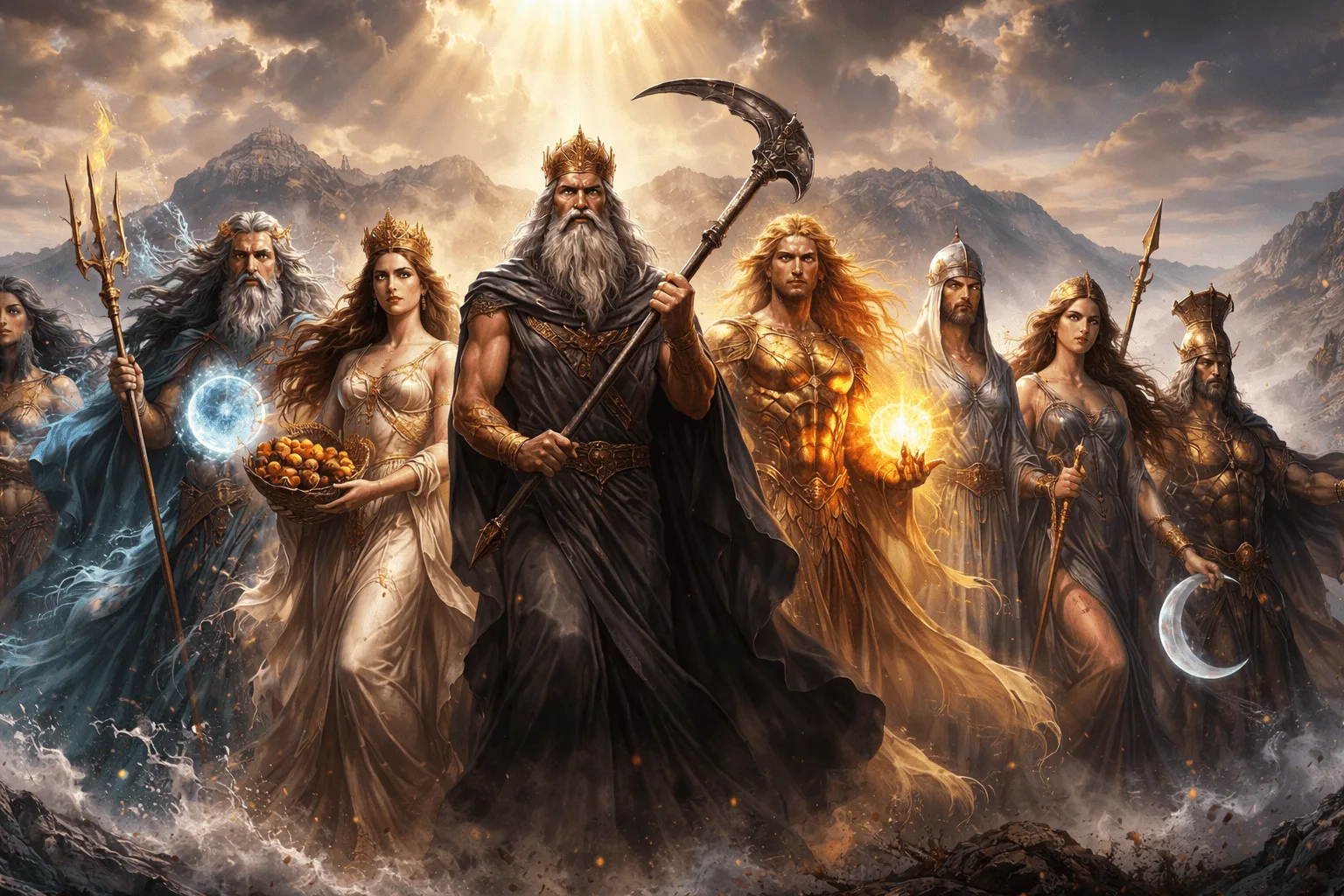
Titans are the second great generation of gods.
Among them stand out:
- The Cronus
- The Rhea
- The Oceanus
- The Iapetus
- The Mnemosyne
- The Themis
- The Hyperion
During their time, Titans dominate the universe.
Saturn overthrows his father, Heaven, and becomes the new ruler of the world.
The Titan era is crucial because it explains how the Olympian gods were born.
If you want deeper understanding, see the article The Titans in mythoi.org.
Featured books
- Mythos – Stephen Fry
- Edith Hamilton – Mythology
- Apollodorus’ Library (modern editions)
4. The Titanic Battle
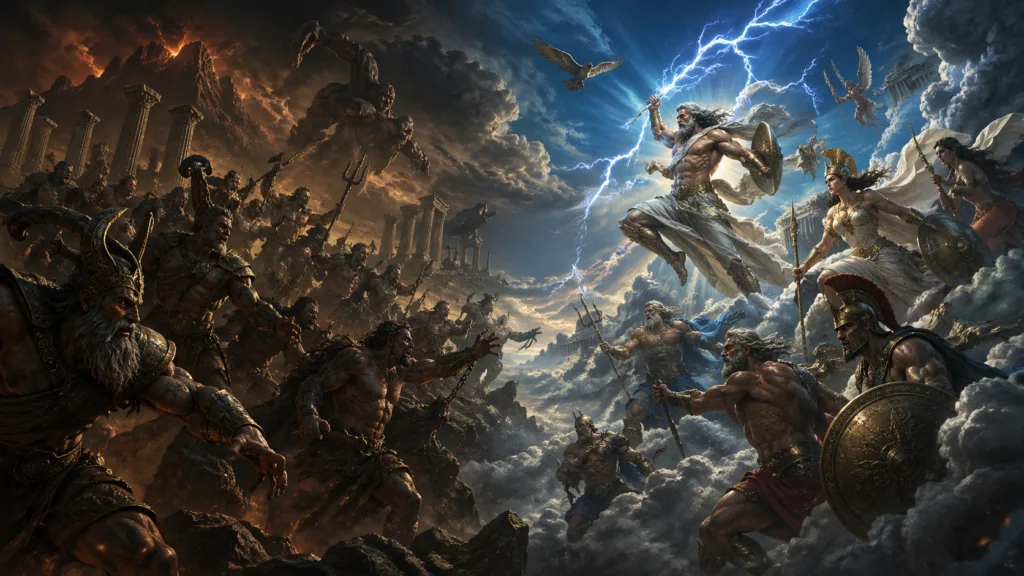
The war that changed everything
- Titanomachy is perhaps the most important event in all Greek mythology.
Zeus and his brothers rise up against Saturn and Titans.
The war lasts ten years.
On the one hand are the Titans.
On the other hand:
- Zeus,
- Poseidon,
- Hades,
- the Cyclops,
- The Hundred Hands.
The victory of the Olympians permanently changes the secular order.
Titan fighting is the turning point that separates the Titan era from the time of the gods of Olympus.
For more, see the article The Titanomachy.
Featured books
5. The Olympian Gods
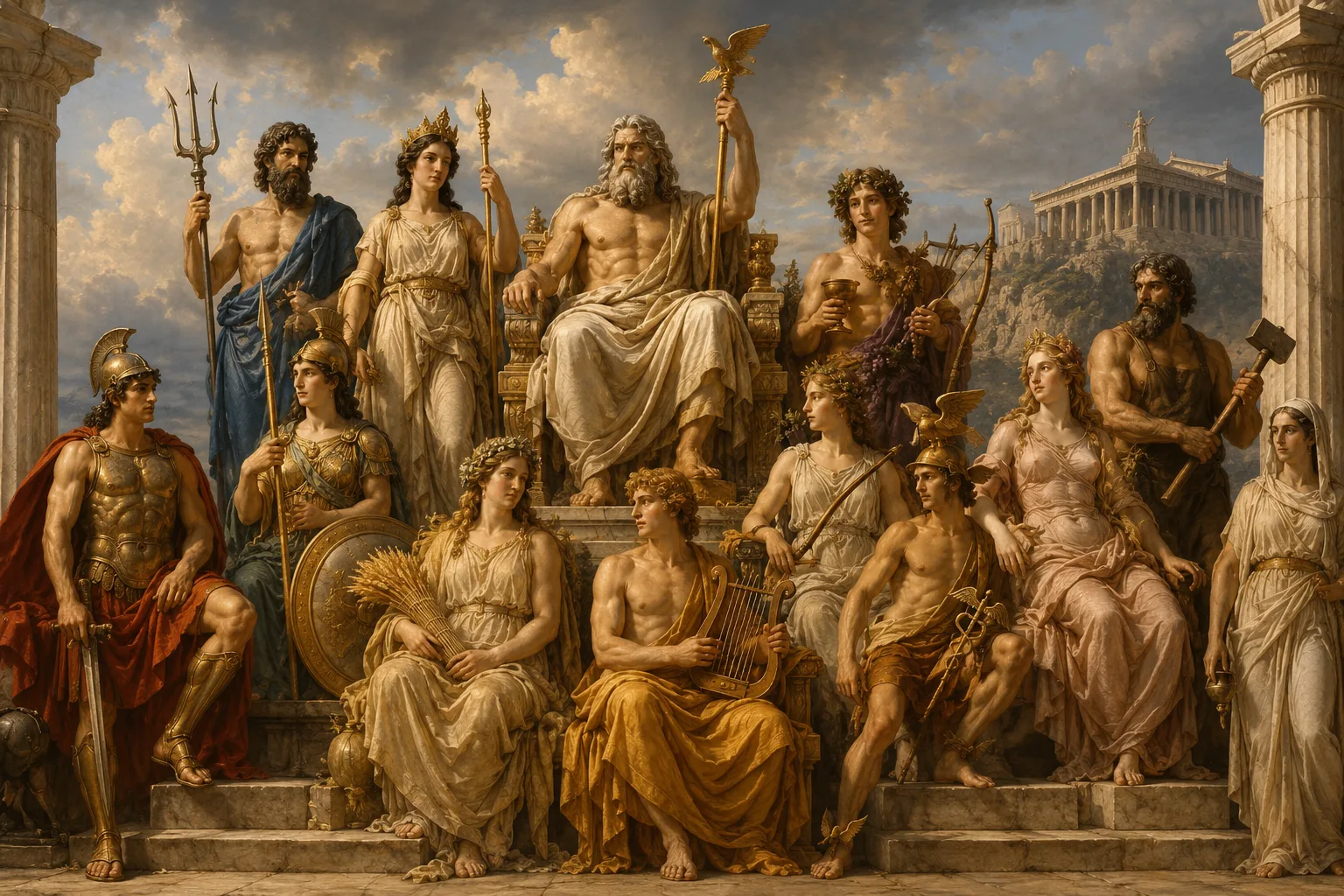
The rulers of the world
After Titan fighting begins the rule of the gods of Olympus.
The most important are:
Zeus
King of gods and men.
Hera
Protector of marriage.
Poseidon
Sovereign of the seas.
Demeter
Goddess of agriculture.
Athena
Goddess of wisdom.
Apollo
God of light and divination.
Artemis
Goddess of the hunt.
Ares
God of war.
Aphrodite
Goddess of beauty.
Hephaestus
God of fire and metallurgy.
Hermes
Messenger of the gods.
Dionysus
God of wine and theatre.
Before passing to the heroes of Greek mythology, it is important to know the gods of Olympus. Most heroes act under their influence or are their children.
Related articles:
Featured books
6. The mythical creatures
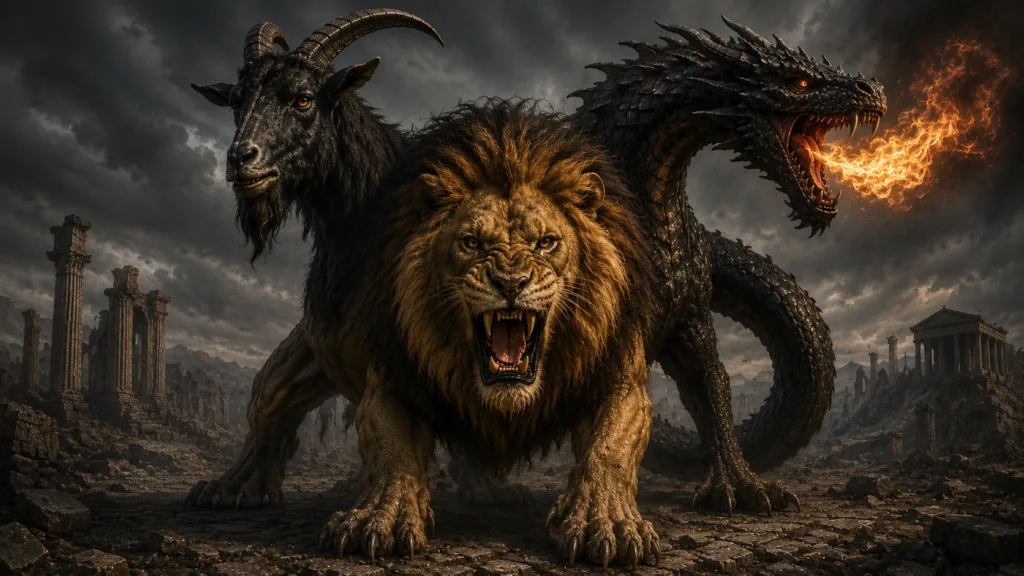
Monsters who tested heroes
Greek mythology is not only gods and humans.
It's full of strange creatures.
Medusa
The Mermaid with the death stare.
Minotaur
The Labyrinth monster.
Cerberus
The guardian of Hades.
Sphinx
The monster of riddles.
Chimera
Hybrid creature with elements of lion, goat and snake.
Hydra
Lerna's multi-headed monster.
Sirens
The magical singers of the sea.
Knowledge of these creatures makes the stories of heroes more understandable.
Featured books
- Mythos
- Heroes
- Monsters of Greek Mythology (various modern versions)
7. The great heroes
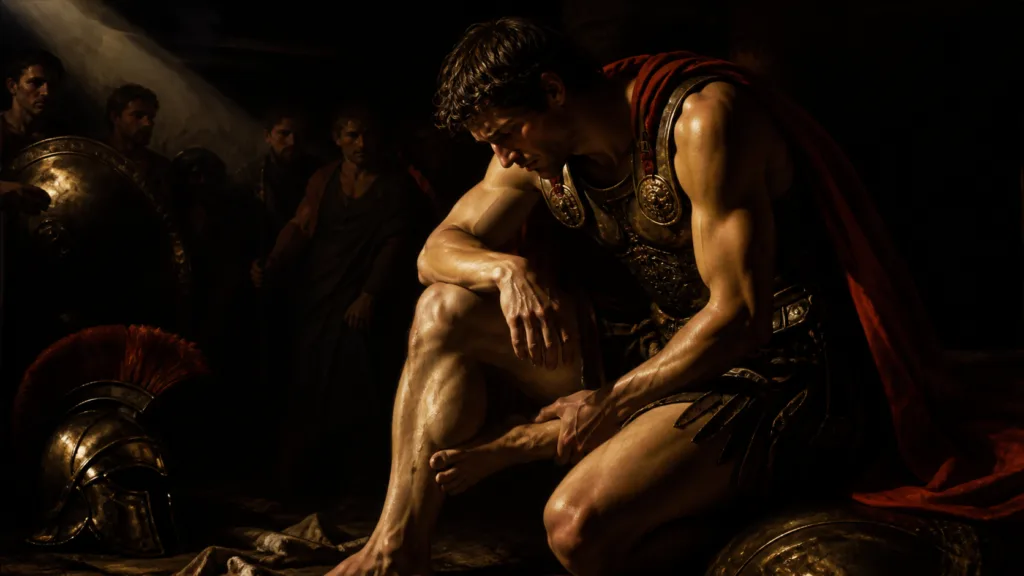
Next step in reading
After we meet the gods, we can pass to the great heroes of Greek mythology.
Perseus
The winner of Medusa.
Theseus
The hero who killed the Minotaur.
Hercules
The most famous hero of ancient times.
Jason
Leader of the Argonaut Campaign.
Bellerophon
The horseman of Pegasus.
Orpheus
The legendary musician.
Atalanti
The great hero of the hunters.
Cadmus
Founder of Thebes.
Their stories constitute the transitional stage between the gods and the great epic events.
See also:
Featured books
Stephen Fry – Heroes
The ideal next step after Mythos.
It presents heroes in a fascinating and understandable way.
8. The epic circles
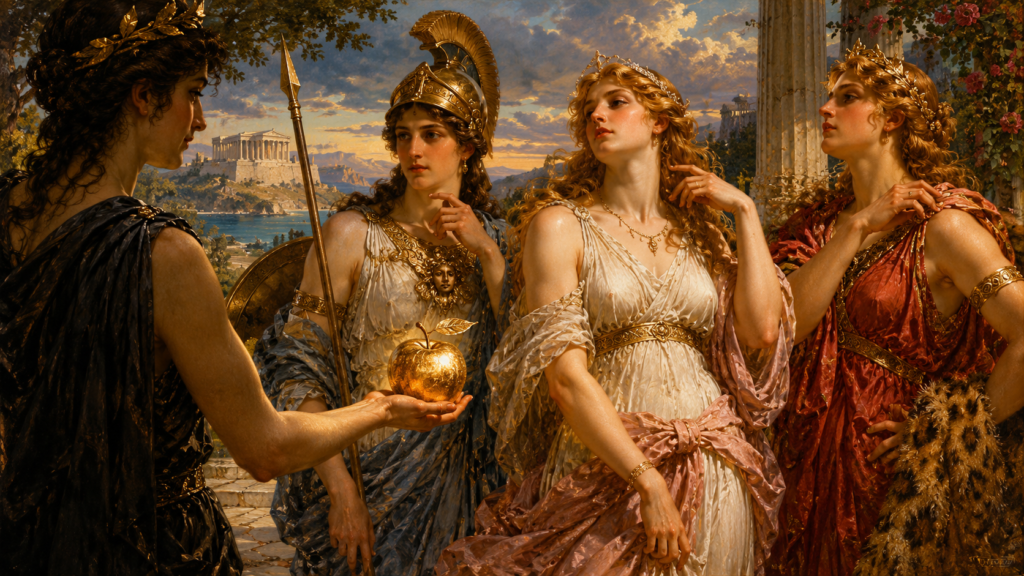
The great narrative of Greek mythology
After we meet the heroes, we can see how the big stories are connected.
The correct order is about:
Argonaut Campaign
Jason seeks the Golden Fleece.
Thebes
The myths of establishing the city.
Oedipus
The tragic story of the royal family.
Seven on Thebes
The civil war of Oedipus' sons.
Trojan War
The climax of the heroic era.
Iliad
A small but decisive part of the war.
Odyssey
The return of Ulysses.
Delicious
The rest of the heroes' returns.
Orestia
The consequences of the war on the Atreides family.
For deeper study:
9. Modern books that make Greek mythology pleasant
Stephen Fry
Mythos
The ideal starting point for every beginner. It presents the creation of the world, the gods and the first generations of deities.
Heroes
It focuses on the great heroes of Greek mythology. Better read right after Mythos.
Troy
It tells the Trojan War in an accessible and exciting way. Ideal after Heroes.
Madeline Miller
The Song of Achilles
A touching retelling of the relationship between Achilles and Patrocle. It is most enjoyed when the reader already knows the basics of the Trojan War.
Circe
It presents the world of Odyssey through the eyes of Circe. Ideal after Troy.
Natalie Haynes
A Thousand Ships
The story of the Trojan War through women's voices.
Stone Blind
A new look at the myth of Medusa.
Divine Might
It presents the goddesses of Greek mythology with a modern approach.
Jennifer Saint
Ariadne
It focuses on the myth of Minotaur and Crete.
Elektra
It follows the consequences of the Trojan War.
Atalanta
Dedicated to the legendary hero of the Argonaut generation.
Pat Barker
The Silence of the Girls
The Trojan War through the eyes of Brissida.
Claire North
Ithaca
The history of Penelope in Ithaca.
House of Odysseus
Continue the narrative after the events of Odyssey.
10. If you want to read the ancient writers
Modern accounts are excellent for getting an overall picture. But the ancient sources remain irreplaceable.
Hesiod
Theogony
The most important work for the birth of the gods.
Works and Days
A work linking myth and human life.
Homer
Iliad
The top epic of the Trojan War.
Odyssey
The saga of the return.
Apollodorus
Library
Perhaps the most useful ancient summary of Greek mythology.
Apollonius Rhodium
Argonauts
The most important source for Jason's campaign.
Pindar
His works save many traditions for heroes and gods.
The tragic poets
- Aeschylus
- Sophocles
- Euripide
Through their tragedies we know Oedipus, Antigone, Orestes, Electra and dozens of other forms.
Table of proposed study series
| Stage | What the reader learns | Recommended book |
|---|---|---|
| Creation of the world | Chaos, Gaia, first deities | Mythos |
| Primary Deities | Genealogies of gods | Mythos |
| Titans | Saturn and Titan era | Mythos |
| Titanomachy | Zeus’ Rise | Mythos / Theogenia |
| Olympian Gods | Structure of the pantheon | Mythology |
| Mythical Creatures | Monsters and Symbolisms | Heroes |
| Heroes | Perseus, Theseus, Hercules | Heroes |
| Trojan Circle | Trojan War | Troy |
| Subsequent accounts | Circe, Penelope, Vrisida | Miller, Haynes, Saint |
| Ancient Sources | Original texts | Homer, Hesiod, Apollodor |
Conclusion
If someone really wants to know Greek mythology, the best approach is not to read random stories, but to follow the natural evolution of the mythological world.
An excellent reading order is:
- Mythos
- Heroes
- Troy
- Circe
- The Song of Achilles
- Ariadne / Elektra / Atalanta
- A Thousand Ships / Stone Blind / Divine Might
- Iliad and Odyssey
- Theogony
- Library of Apollodoros
This route allows the reader to gradually know the creation of the world, the gods of Olympus, the heroes of Greek mythology, Titan fighting, the Argonautic Campaign and finally the Trojan War and its consequences.
Greek mythology is not just a collection of stories. It is a vast narrative universe that connects gods, people and monsters to a single tradition of thousands of years. The more you explore the sources and related articles of mythoi.org — from Primary Deities and Titans up to Hercules, Jason, the Iliad and Odyssey — The more clearly you will see the great puzzle of Greek myths completed before you.
FAQ
1. What is the best book of Greek mythology for beginners?
The Mythos Stephen Fry is considered by many the ideal introduction. It presents the creation of the world, the first deities and the basic myths with modern language and pleasant style, without losing connection to ancient sources.
2. Where do I start Greek mythology?
The best beginning is the myths of creation and the birth of the gods. So you get the necessary background before you pass to the heroes, the Trojan War and the Homeric epics.
3. Do I have to read Homer first?
Not necessarily. For many readers it is easier to first know the basic stories through modern accounts and then move on to Iliad and Odyssey.
4. What is the difference between Titans and Olympian gods?
Titans belong to the oldest generation of gods and ruled before Zeus. The Olympian gods are the younger generation that prevailed after Titanic fighting.
5. Is Theogenia suitable for beginners?
Theogenia is a fundamental work, but it can seem demanding. It usually helps to precede a modern introduction so that genealogies and names are already known.
6. Who are the most important heroes of Greek mythology?
Hercules, Perseus, Theseus, Jason, Orpheus and Atalanti are among the most important heroes, as their myths influenced much of the later tradition.
7. When does the Argonaut Campaign happen in connection with the Trojan War?
In the mythological chronology precedes the Trojan War. Many Argos heroes belong to the generation of warrior fathers who later fought in Troy.
8. What books of Greek mythology are based on female figures?
The works of Madeline Miller, Natalie Haynes and Jennifer Saint emphasize figures such as Circe, Ariadne, Electra, Atalanti and the women of the Trojan War.
9. Why is Titan fighting important?
Titan fighting explains how Zeus and the Olympian gods gained power. It is the central point of transition from the Titan era to the time of Olympus.
10. What are the best books of Greek mythology overall?
For a modern reader, it distinguishes the Mythos, Heroes and Troy by Stephen Fry, Circe and The Song of Achilles Madeline Miller, as well as the works of Natalie Haynes and Jennifer Saint, which offer new visuals on classical Greek myths.