
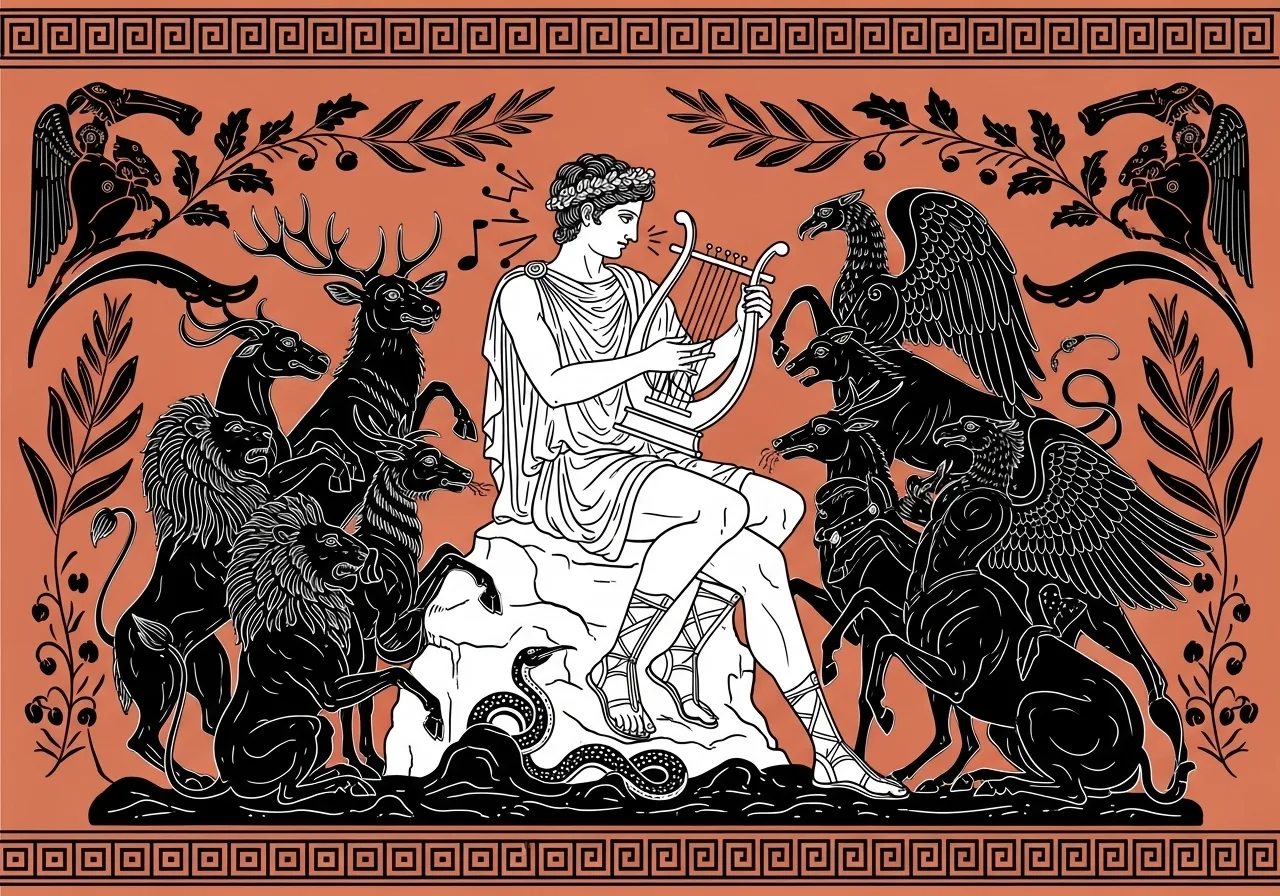
Orpheus is one of the most charming figures of Greek mythology. He is not only a legendary musician but also a symbol of the power of art, love and human desire to defeat the inevitable. THE myth of Orpheus and Eurydice, with the shocking descent into Hades, has inspired poets, artists and thinkers for centuries.
| Name | Orpheus |
|---|---|
| Parents | Oagar and Calliope (Muse of epic poetry) |
| Residence | Thrace |
| Roles and Responsibilities | Legendary musician, poet, nature tamer with his lyre, hero of descent to Hades |
| Other Names | Orpheus |
| Husbands | Eurydice |
| Children | Not reported with certainty in sources |
| Symbols | Lyra, music, forests, charm of nature |
| Roman Name | Orpheus |
His story is not just an ancient legend. It is an account of mourning, hope, loss, and limit between life and death. Through Orpheus, the ancient Greeks spoke of the power of music to soften even the harshest forces in the world.
Who was Orpheus in Greek mythology?
Orpheus is considered one of the greatest heroes-musicians of antiquity. According to tradition, he was the son of God. Apollo and the mousse Calliope, which explains the divine origin of his talent. His lyre had the power to charm people, animals, trees and even stones.
It is no coincidence that Orpheus was associated with music that transcends the limits of entertainment. In myth, his art becomes a power of transformation, comfort and resistance to pain.
Its origin and unique nature
In many versions of the myth, Orpheus appears as a hero with an almost sacred mission. He is not a warrior nor a conqueror. His power lies in harmony, rhythm and speech. This makes him unique among the heroes of ancient Greek mythology.
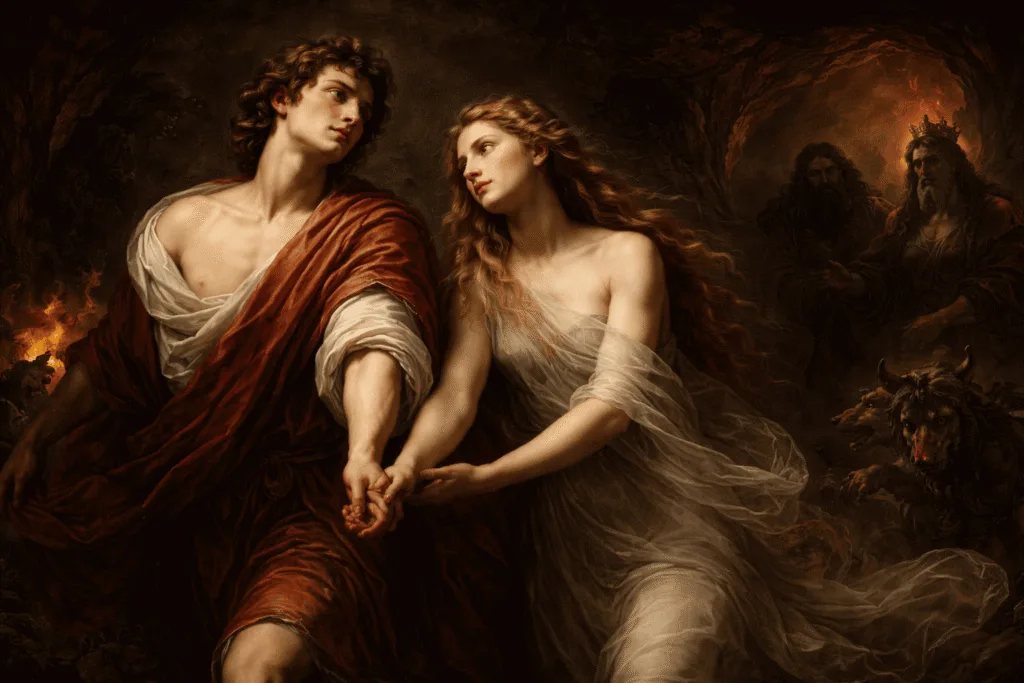
The love of Orpheus and Eurydice
The most famous aspect of the myth is the tragic love story between Orpheus and Eurydice. The two young men married and lived a great love, but their happiness lasted a while. Eurydice died of snake bite, sinking Orpheus into deep sorrow.
Its loss becomes the starting point of the most touching part of the myth. Orpheus does not passively accept the death of his beloved. He takes his lyre and descends himself to Hades, determined to bring it back.
Why does their story remain so strong?
Orpheus and Eurydice's love touches a universal issue: what are we willing to do to avoid losing the one we love? The answer to the myth is harsh, but deeply true. Some casualties are not overturned, no matter how big love is.
The descent to Hades: Orpheus' most famous myth
Orpheus' descent to the Underworld is one of the most impressive scenes in ancient mythology. With his music he accomplishes something inconceivable: he thrills Haron, softens him Cerberus and even makes Hades and her Persephone To bend.
The gods of the Underworld allow him to take Eurydice back to the world of the living, on a strict condition: not to turn to look at it until they come out into the light.
The fatal term
This term is the center of tragedy. Orpheus moves forward, while Eurydice follows him in silence. But doubt, anguish and human weakness pay him just before the end. He turns his head and loses his sweetheart again.
What his failure symbolizes
The loss of Eurydice is not just punishment. It is a profound symbolic comment on the boundaries of human effort toward fate. Orpheus wins the permission of the gods, but loses the battle with his own fear. Thus the myth acquires timeless psychological and philosophical power.
Music as supernatural power
Orpheus is not just a love hero. It is also the archetype of the artist who can change the world with his art. In Greek mythology, his music has almost magical properties.
It's not just healing the soul. It lowers wild instincts, unites the opposite and creates order in chaos. This idea made Orpheus a timeless symbol of civilization against violence.
Orphism and mystery
From the myth of Orpheus was born and orphism, a religious and philosophical current of antiquity with emphasis on cleansing the soul, initiation and hope for posthumous continuity. Orpheus was thus transformed from a mythical person into a spiritual figure with a profound impact on ancient thought.
Orpheus after the loss of Eurydice
After the failed attempt to bring her back, Orpheus does not return to a normal life. Its form is surrounded by grief, isolation and distance from the world. In some versions of the myth, it rejects the company of women and is dedicated only to the memory of Eurydice.
His tragic course culminates in his violent death by the Mainads, which devours him in a state of mania. This end further strengthens the element of tragedy and conflict between harmony and chaos.
The end as a continuation of the myth
Orpheus’ death does not simply function as an epilogue. It is the last chapter of a myth where sensitivity conflicts with the relentless nature of the world. Even after his death, his head and lyre continue to have symbolic power in various traditions.
Orpheus and ancient Greek tragedy
Orpheus' myth has all the elements of a great tragedy: love, loss, hope, failure and inevitable end. That is why he acted as a source of inspiration for plays, poetry and visual representations.
Unlike other heroes who gain through power, Orpheus shows us that true emotion hides in vulnerability. He's a hero who doesn't win, but he's shocking.
Tragic hero with human dimension
Orpheus is human just because he fails. His inability to abide by the term in Hades makes him familiar. His myth reminds him that even the brightest figures remain vulnerable in the face of doubt and fear.
Symbols of the myth of Orpheus
Orpheus' myth works on many levels. It is not only a romantic or tragic story, but also a set of symbols that speak of human experience.
Love against death
The descent to Hades expresses the attempt of love to transcend the end. Orpheus does not accept the distinction between the living and the dead world. This denial is deeply touching, but also doomed.
Art as redemption
Orpheus' music symbolizes the refined power of art. In a world of violence and mortality, art becomes the only means that can touch the impossible.
Faith and doubt
His fatal account is not only about obedience to a divine term. It's about human doubt. Not looking back is an act of absolute faith. And that's where it fails.
Orpheus' influence on literature and art
Orpheus' myth has deeply influenced western literature, opera, painting, sculpture and cinema. Since ancient times, artists have constantly returned to this hero who combines music, love and tragedy.
Orpheus does not belong only to ancient Greece. It belongs to every era that seeks answers for the loss, memory and power of creation.
A myth always timely
Orpheus' timelessness is due to his talking about issues that never get old. Love, grief, hope, and mourning are universal experiences. That’s why his myth is still moving.
For Orpheus' myth still touches us
Orpheus is not just a hero of the past. It is a form that summarizes the human need to signify the irreparable. His story reminds us that love can be stronger than fear, but not always stronger than fate.
At the same time, it shows us that art has the power to turn pain into memory and grief into song. That may be the deepest reason Orpheus remains alive in collective imagination.
Conclusion
Orpheus' myth is one of the most touching and multi-level stories of Greek mythology. The musician who descended to Hades to save Eurydice became a symbol of love, art and human weakness. His failure does not diminish his greatness· Instead, it makes it more real.
Through Orpheus, the ancients left us a story that continues to talk about the desire to defeat death, even for a while, with the power of music and faith. And that is precisely the effort that makes his myth immortal.
Frequently Asked Questions about Orpheus
Who was Orpheus?
Orpheus was a mythical musician of ancient Greece, known for the power of his lyre and for his descent to Hades for Eurydice.
Who was Eurydice?
Eurydice was Orpheus' favorite and wife. Her death by snake bite led Orpheus to his descent into the Underworld.
Why did Orpheus come back to look back?
In myth, Orpheus returned from anguish and doubt just before he came out of Hades, violating the condition that the gods had laid upon him.
What does the myth of Orpheus symbolize?
It symbolizes the power of art, conflict with death, human weakness and limits of love toward fate.
What's orphism?
Orphism is a religious and philosophical current of antiquity associated with Orpheus and emphasizes the cleansing of the soul and secret knowledge.
Read more
Orpheus and Eurydice full story
Orphic Hymns – Primary Sources of Ancient Greek Tradition
Orphic Mysteries | Orphism, Soul and Cosmology in Ancient Greece