
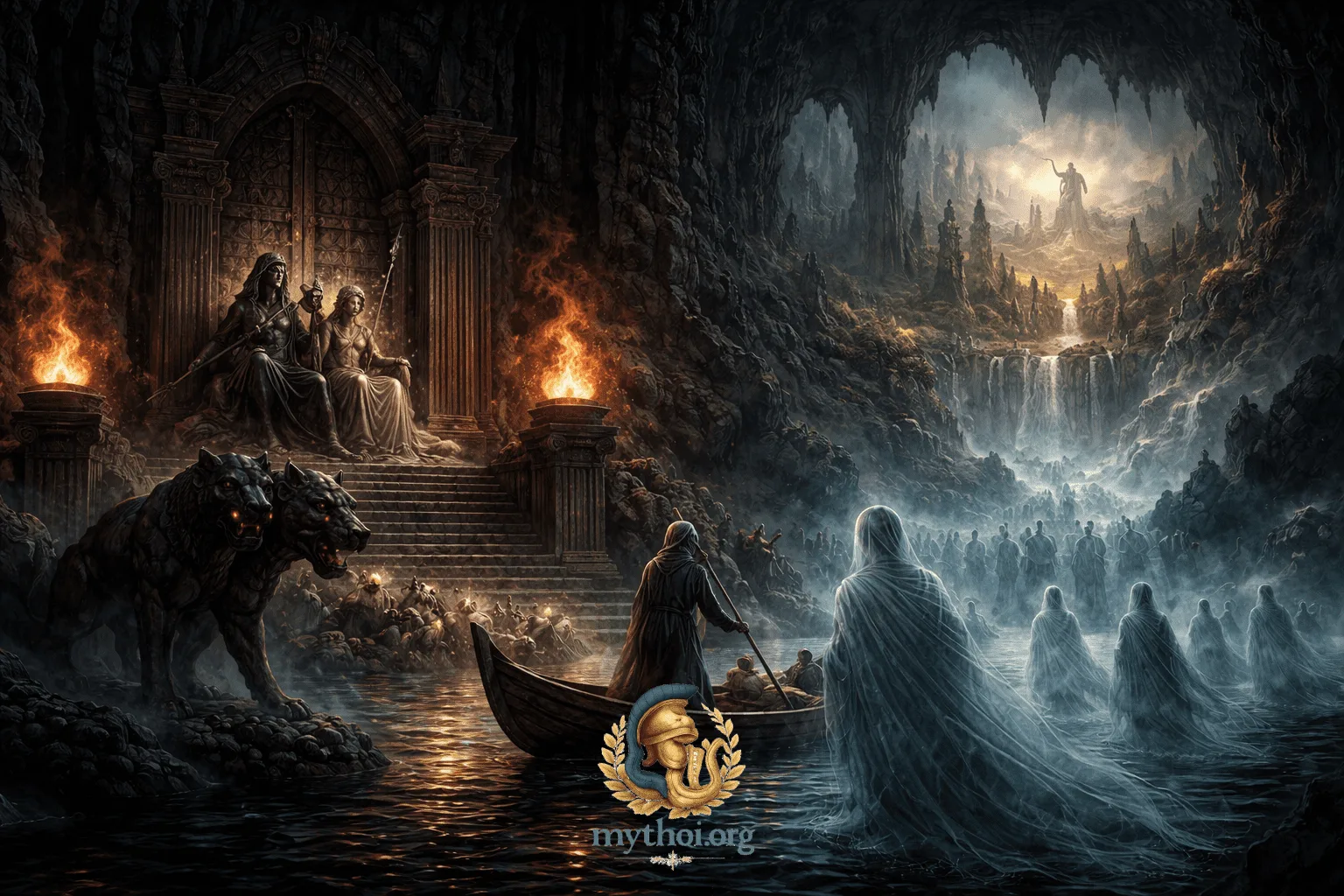
Postmortem Life in Ancient Greece
Myths, Concepts, and the Journey of the Soul to Hades
Afterlife in Ancient Greece was not just a myth· was a fundamental element of the world's perception of ancient Greeks. Among poetic accounts, religious ceremonies, and philosophical theories, death meant not the end, but the end. transition of the soul in another world — The Hades.
Unlike later monotheistic notions, Greek posthumous life was not entirely punitive or rewarding. There was one. multi-level world, where each soul received its fate according to life, actions and — in certain traditions — Her initiation.
The Concept of Soul in Ancient Greek Thought
For ancient Greeks, soul (psyche) was the immaterial substance that abandoned the body at the time of death.
In the Homeric epics, the soul is presented as shade or image, without physical standing, but with memory and consciousness.
With time, especially through Orphics And Plato, the soul acquires moral and divine dimension:
She's immortal.
It can be punished or redeemed
May be reincarnated
Her postmortem fate is not accidental. — is the result of secular justice.
The Journey of Soul after Death
1. The Funerals
Without proper burial, the soul was condemned to wander. The burial ceremonies were sacred:
Washing the body
Position of coin in the mouth or eyes
Offers to the gods of the dead
The obol was intended for CharonThe boatman of Hades.
2. Haron and the River Aheron
Haron carried souls across him Acheron (or Styx, by delivery).
Those who had not paid or were not buried properly were stranded on the banks for a hundred years.
3. The Gate of Hades and Cerberus
At the entrance of the Underworld stood the Cerberus, the three-headed dog, who did not allow the return of the dead to the world of the living.
Hades: The World of the Dead
Hades was not just a place of punishment. There was one. whole world, ruled by God Hades and Persephone.
The Judges of the Dead
Three mythical kings judged souls:
Minos
Radamanthys
Aiakos
Their judgment determined the destination of the soul.
The Three Kingdoms of Afterlife
1. Asphodele Leimones
The most common destination.
This is where the souls of ordinary people ended up.
Neutral existence
No joy or pain
Shadowy, eternal routine
It reflects the ancient notion that life is more valuable than death.
2. Elysee Fields
The place of heroes and devouts.
Eternal bliss
Light, music and peace
Residence of Achilles, Menelaus and chosen souls
In some traditions, the Elysian Islands are associated with reincarnation and final redemption.
3. Tartarus
The darkest kingdom.
Prison of Titans
Place of eternal punishment
Myths such as Sisyphus, Tantalus and Danaides
- Tartarus represents the divine justice And the hubris.
The Rivers of Hades and Their Symbolism
The Underworld was crossed by five sacred rivers:
Styx – oath of the gods
Acheron – grief
Kokytos – grief
Flegethon – fire
Lithi – Forgetfulness
Oblivion was of particular importance: anyone who drank from it forgot his previous life.
Orphic and Philosophical Concepts
The Orphics They believed that the soul was of divine origin but trapped in the body.
Through initiation and purity he could break the birth cycle.
- Plato developed the idea of moral reward, judgment of the soul and of metampsychosis.
Postmortem Life as a Reflection of Life
For ancient Greeks, life and death were interrelated.
The posthumous fate was not merely punishment or reward, but continuation of human course within the cosmic ensemble.
Hades wasn't hell. It was memory, judgment and eternity.
Conclusion
Posthumous life in Ancient Greece is one of the most complex and poetic myths of human history.
Through Hades, the Champs and Tartarus, the ancient Greeks tried to explain the inevitable — And give him meaning.
See the full guide to Greek Mythology Here.