
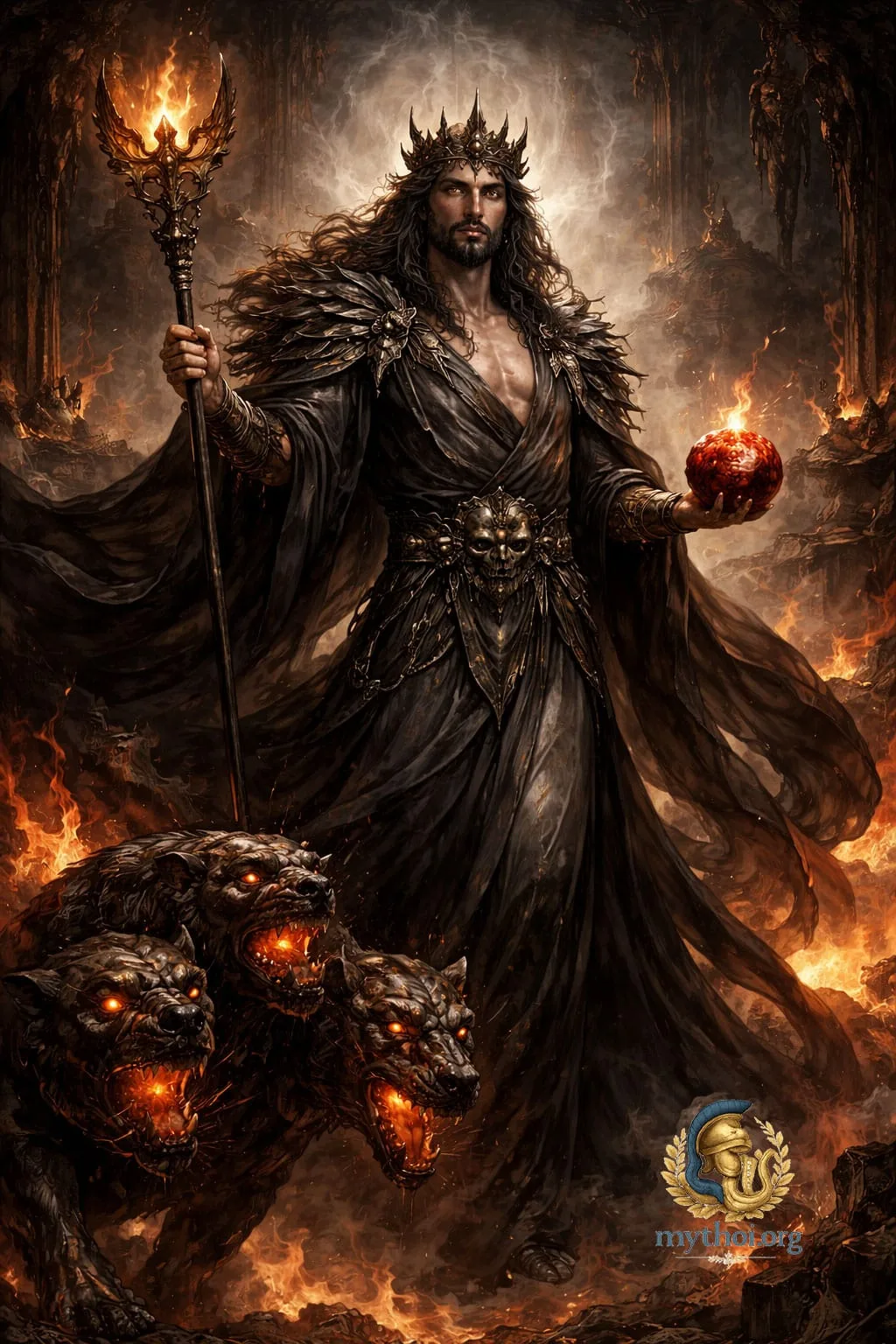
Hades the God of the Underworld: Myth, Power and The Invisible Kingdom of Greek Mythology
Hades is one of the most misunderstood forms of Greek mythology. For many, his name is associated exclusively with fear, death, and punishment. In fact, though, Hades the god of the underworld was not a vicious demon either «Devil» of antiquity. He was the ruler of a necessary and impartial kingdom: the world of the dead, where all souls ended after death.
Hades' form has been fascinated for thousands of years by touching one of the most timeless human questions: what happens after the end of life? mythology gave no scientific answer, but created a powerful symbolic system. Hades, as a god of the underworld, became the personification of the invisible, inexplicable, and irrevocable. And perhaps that is why he remains so timely to this day.
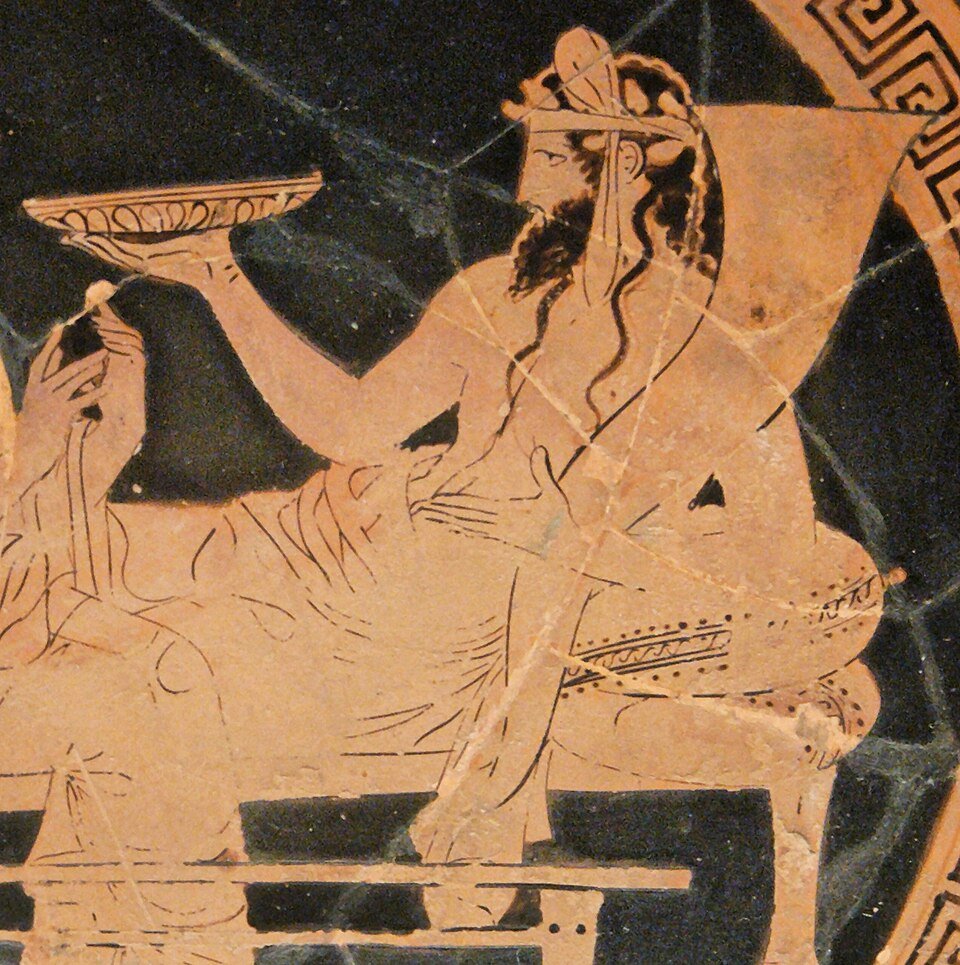
Who was Hades in Greek mythology?
Hades was one of the three great brothers of their first generation Olympian gods, with Zeus and Poseidon. After their victory over the Titans, the three brothers divided the world by lot: Zeus took heaven, Neptune the sea, and Hades the Underworld. This distribution did not imply weakness, but secular order. Hades wasn't «less» God from Zeus· He just had a different field of power.
His name is associated with the concept of invisible. It's probably derived from the deprivation a-and the verb «image» or «Decades», stating the unseen, the one no one can see. This fits perfectly with the nature of the underworld: a place that exists, but is not visible to the living.
Hades was no god of evil
Unlike modern conceptions that identify Hades with the ultimate evil, ancient Greek thought saw him more neutral. Hades was strict, intransigent and unconvinced, but not arbitrary. His mission was to maintain the balance between the world of the living and the dead. Without him, the secular order would be disturbed.
This role is also important for the study of ancient religion: Greeks worshiped not only gods of joy, victory or beauty, but also forces related to the end, memory and transition. The Hades god of the underworld represented just this transition.
The birth and origin of Hades
Hades was the son of Saturn and Rea, therefore brother of Zeus, Poseidon, Hera, Demeter and Estia. Saturn, fearing the prophecy that one of his children would overthrow him, swallowed them as soon as they were born. Hades had the same fate as his brothers, until Zeus, already mature, forced his father to expel them.
Then the Titanic fighting, the great war between the Olympians and the Titans. After victory, the three brothers took over their powers. Hades took the darkest kingdom, but also the most stable: what no one could question.
Name «Hades» and the term «Underworld»
In everyday language, the term «Hades» It is often used to declare both God and the place where he reigned. But this can create confusion. In ancient Greek tradition, Hades was the god, while the underworld was his kingdom. It is also called Erevos or Underworld, depending on the context.
In time, especially in later use, the word «Hades» began to mean the kingdom of the dead itself. At the same time, the name «Pluto» It was used to emphasize a different aspect of deity: the wealth hidden within the earth, such as metals, seeds and soil fertility.
The characteristics and properties of Hades
Hades had many qualities that make him special throughout Greek mythology. He wasn't just a «Keeper of the dead»But the ultimate sovereign of a world with its own laws. His image was shaped by ancient poets, angiographers and later interpretations.
Strictness and justice
Hades was strict, but not tyrannical. He did not appear as a god who enjoyed the pain of souls. Instead, his basic function was order. In the underworld no man could enter without reason, nor escape easily. Hades' constant nature acted as a guarantee that death is definitive.
Invisible but present
One of Hades' most interesting elements is his invisibility. In many performances it does not appear often, unlike other gods actively involved in stories and battles. This almost «lon» presence enhances its mysterious dimension. Hades is always there, but you rarely see him. Like death, it doesn't show, it just exists.
His symbols
Hades is associated with certain characteristic symbols:
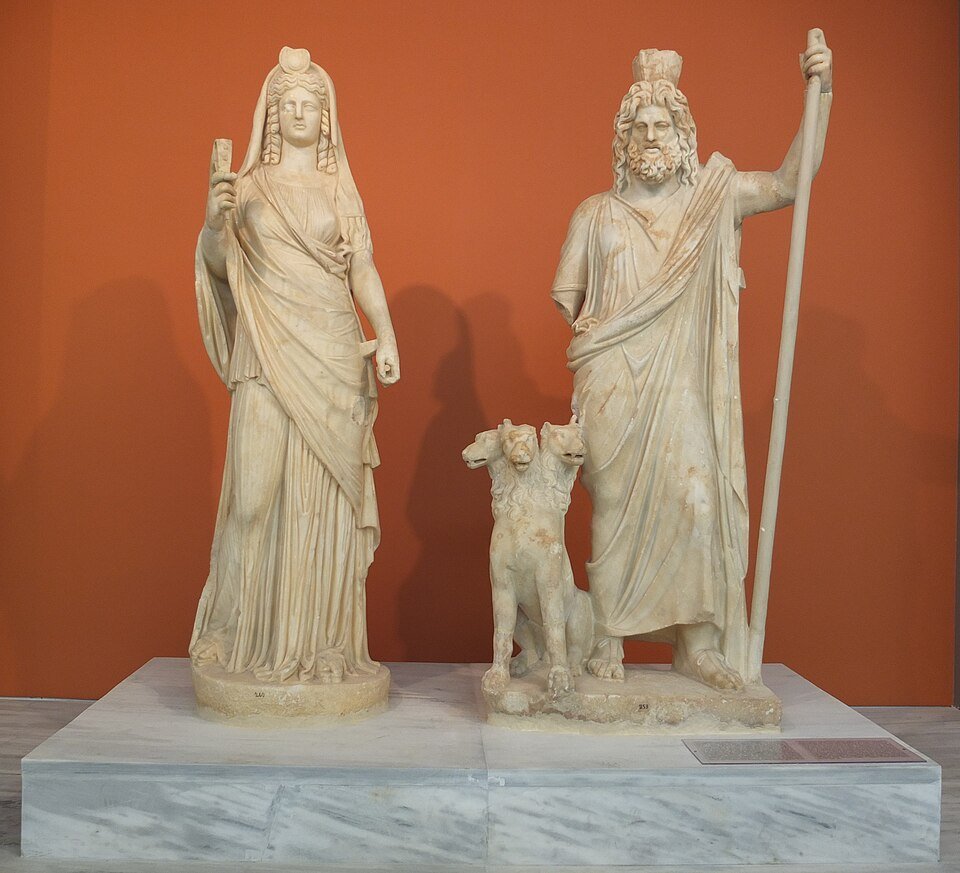
- Cerberus, the three-headed keeper of the entrance of the underworld, prevents the dead from leaving and the living from getting in uninhibited.
- The scepter, a symbol of royal authority, suggests his sovereignty.
- The helmet of invisibility, known by mythological accounts, strengthens the idea of invisible power.
- In some performances Pluto, the keys to the Underworld and Persephone, his wife and queen of the kingdom of the dead also appear.
Hades’ relationship with the other gods
Hades' position in the Greek pantheon was unique. He had power, but he didn't reside in Olympus. He was Zeus' brother, but he didn't share her. «Public» presence. That distance made him mysterious and respectable.
Zeus and Hades: power and balance
Zeus was the king of the gods, Hades the king of the dead. Their roles were different, but complemented. One ensured life, the other the end. Together they maintained the balance of the world. This contrast is not a conflict· is complementarity.
Persephone and Hades’ most human side
The most famous story associated with Hades is its grab Persephone. According to legend, Hades fell in love with Demeter's daughter and took her with him to the underworld. Demeter, goddess of agriculture, sank into grief and the earth ceased to bear fruit. After negotiations, Persephone was decided to spend part of the time in the underworld and the rest with her mother on earth.
This myth explains the rotation of the seasons. At the same time, he presents Hades not only as a dark form but also as a husband and king, with relationships involved in the global system of life and death.
Mercury Psychotransmitter
- Hermes had a special role as a psychotransmitter, i.e. guide of souls to the underworld. This brings him into contact with the kingdom of Hades without belonging to it. Their cooperation shows that death in Greek mythology is not chaos, but a process with stations and rules.
Hades in the major mythological episodes
Although Hades is not at the heart of so many myths as Zeus or Hercules, appears at key points of mythological narrative. Every time involved, the element of irrevocable and limit becomes felt.
The Grab of Persephone
It is the most famous myth of Hades and perhaps the most important for understanding his role. Hades desires company and royal continuity in his kingdom. The Persephone She becomes queen of the underworld, but her story brings both mourning and reconciliation. Her dual nature reflects the world of the dead itself: not only end, but also circle, memory, return.
Hercules and Cerberus
One of Hercules' feats was to descend to the underworld and bring him alive Cerberus. This act has enormous symbolic significance: the hero reaches the limits of death and returns victorious. Hades, though not always hindered by violence, remains the final sovereign of the kingdom. His presence underlines that man can reach the limit, but not undo it.
Orpheus and Eurydice
In his story Orpheus, the hero descends to Hades to bring back Eurydice's beloved. His music even thrills the shadows, but the law of the underworld remains relentless. Orpheus loses Eurydice when he turns to look at it before they come out into the light. Here Hades does not appear as a vigilante, but as the guardian of a rule that cannot be violated.
The kingdom of Hades: the underworld in ancient Greek thought
The underworld was not just a place of punishment. In Greek mythology it was a complex kingdom with individual regions, rivers and judges. His image evolved through the centuries, from homeric shadows to more organized metaphysical perceptions.
The rivers of the underworld
The Underworld is crossed by symbolic rivers such as Stix, Aheron, Cocytus, Pyrifleth, and Oblivion. Every river has its own meaning. Stix is the oath of the gods, Aheron is associated with grief, Oblivion with oblivion and memory loss. This geography is not random: it converts abstract concepts to place.
Haring, Kerber and the keepers of the border
In the world of Hades nothing is uncontrollable. Harron carries souls with his boat, as long as he has received the price, usually the obol placed in the mouth or in the eyes of the dead. Cerberus guards the gate. The Erinyes, judges and other chthonic forms contribute to the functioning of the system. Hades is not a mess.· It's command of the invisible.
Justice, judgment and posthumous fate
In some traditions, souls are judged by Minos, Radamandy and Aiac. The one who lived righteously can be found in the Elysian Fields, while the wicked may be led to punishment. Although Hades does not appear as a punisher of all, his territory also contains the moral dimension of ancient thought for posthumous retribution.
Hades and Pluto: two faces of the same god
One of the most interesting issues in Hades' interpretation is his connection to the name Pluto. This nickname comes from the wealth of the earth, ores, seeds, and all that is hidden in the subsoil. Thus, the god of the underworld is also associated with fertility, harvest, and biological recycling.
This idea is extremely deep. Death is not the opposite of life in an absolute way· It often acts as its condition. The seeds are buried on earth to germinate. The bodies return to the ground. Nature moves in circles. Pluto, then, is not only the dark king of the dead, but also a deity of hidden abundance.
Hades in modern culture and literature
Hades remains extremely alive in modern culture. It appears in books, comic books, films, series, video games and visual representations. He is often presented either as a relentless dark lord or as a complex character with internal contradictions.
From antiquity to modern narrative
Modern literature and pop culture reinterpret Hades through new prisms: power, loss, guilt, alienation, even tragic love. His charm lies right in his polysemble. He is both god, symbol, place and idea.
Hades as a psychological symbol
On a psychological level, Hades can be seen as an image of unconscious, fear of death, but also the sides of self that remain invisible. The underworld thus becomes a metaphor for the depths of the human soul. It is no coincidence that Hades mythology continues to inspire artists and writers: it talks about boundaries that we all recognize, even if we cannot easily name them.
What does Hades teach us today?
Although it is a form of ancient mythology, Hades still offers valuable meanings. It reminds us that every culture needs a way to talk about death, memory and loss. It also shows us that not every dark form is bad· Some are necessary for the order of the world to function.
The Hades god of the underworld is not only the «last stop» of the soul. It is also the symbol of the transition, silence, stability and unbroken continuity of existence. Ancient Greek mythology, through its form, recognized something fundamental: that life has meaning precisely because there is its end.
Ancient sources
Hesiod – Theogenia & Works and Days | Primary Sources
Primary Sources of Greek Mythology | Hesiod, Homer, Orphic Hymns
Primary Sources of Greek Mythology | Ancient Texts
Perseus Digital Library is a reliable academic database with ancient Greek texts and historical sources, particularly useful for the study of Greek mythology and Elefsinian Mysteries.
Conclusion
Hades remains one of the most exciting gods of Greek mythology. As the ruler of the Underworld, he did not embodie evil, but the inevitable order of death. His authority was invisible, strict and non-negotiable, but at the same time deeply connected with the physical and secular balance.
From the myth of Persephone to the rivers of the underworld, from Kerber to his relationship with Pluto, Hades leads us to one of the darkest and most essential paths of Greek thought. It's no coincidence that we're still concerned. Hades is not only a god of the past· is a timeless symbol of the boundary between light and darkness, life and death, visible and invisible.
Perhaps, after all, Hades reminds us that mystery should not always be solved. Sometimes it is enough to understand it as part of human experience. And that is exactly what his power lies in: in the silent, immovable presence of a god who rules not with noise, but with absolute certainty.