
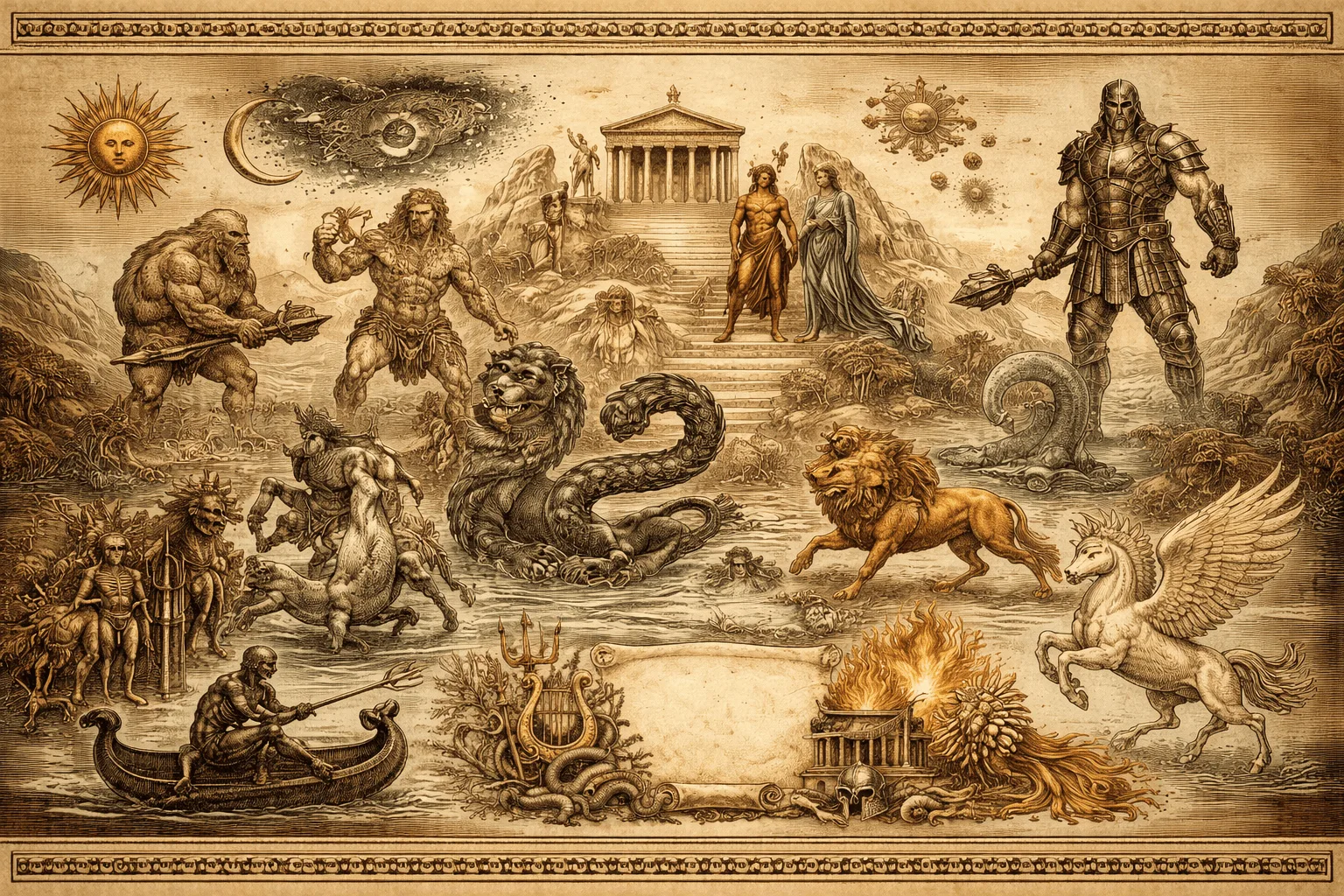
Ancient Greek mythology includes a vast array of mythical creatures that incorporate elements of the natural world, human imagination, and religious worldviews. These creatures often combine human and animal characteristics or exhibit supernatural abilities, serving as symbolic representations of fear, chaos, or natural forces. The aim of this article is to systematically classify them by type and analyze their function within the mythological system.
The Role and Symbolism of Mythical Creatures in Greek Mythology
The mythical creatures of Greek mythology were not just fictional monsters or strange creatures that enriched ancient accounts. For ancient Greeks, these creatures had a deeper symbolic and religious meaning, as they represented physical forces, human fears, moral trials and the unexplained aspects of the world. Through their myths, Greeks tried to understand nature, interpret the mysteries of life and teach values they considered important to their society.
Many mythical creatures were associated with the chaos and uncontrolled forces of nature. The Chimera, - Lernaean Hydra, Typhon and Cerberus They were not just scary monsters, but they symbolized threats beyond human power. The heroes who faced them, like Hercules, Perseus or BellerophonThey represented man's struggle to impose order against chaos. The victory of heroes was not only a personal achievement, but also a triumph of culture, reason and divine order over destructive forces.
At the same time, many mythical creatures functioned as keepers of sacred sites, treasures, or important knowledge. The dragon guarding the Golden Fleece in Colchis, Ladon protecting the golden apples of Esperides and Cerberus guarding the gates of Hades are typical examples. These creatures symbolized the obstacles one must overcome to gain wisdom, power, or spiritual integration. The trials associated with them reflected the belief that precious goods are conquered only through courage, perseverance, and self - sacrifice.
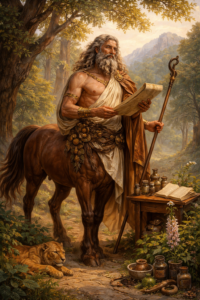
Another important feature of mythical creatures is their hybrid nature. Many of them combined human and animal elements, such as Centaurs, the Sirens, - Sphinx and Gorgons. These forms reflected the internal conflict between instincts and logic, between wildlife and culture. Centaurs, for example, were often presented as violent and uncontrolled, symbolizing the primitive passions of man. An exception was the wise Chiron, who embodied harmonious coexistence of power and wisdom.
The Sirens and the Empouses represented different types of risks. They did not threaten with brute violence but with deception and charm. Through these forms, ancient myths warned of the dangers of excessive desire, vanity and loss of self-control. Ulysses' meeting with Sirens is a typical example of the need to resist temptations in order to achieve his goal.
Mythic creatures also had an important role in the religious and artistic life of ancient Greeks. Their figures adorned temples, vases, sculptures, and public buildings. They were often used as deterrent symbols that protected people and sacred places from evil forces. The Mergonium of Medusa, for example, was placed in shields and temples to remove evil, while the griffins and clamps appeared in monuments as guardians and protectors.
The presence of mythical creatures was not limited to heroic narratives. They were often associated with philosophical and cosmological perceptions. Phoenix, for example, symbolized the rebirth and eternal return of life, while the Nireides and Nymphs expressed nature's life - giving power. Through these forms, ancient Greeks gave human characteristics to natural phenomena and tried to interpret the world around them.
The influence of the mythical creatures of Greek mythology remains strong until today. Their stories continue to inspire literature, cinema, video games and contemporary art. Creatures such as Medusa, Phoenix, Sphinx and Centaur have been transformed into global cultural symbols, even recognized by people who do not know details of Greek mythology.
Eventually, the mythical creatures of Greek mythology are much more than imaginary beings. They are carriers of symbolism, values and ideas that reflect the way ancient Greeks understood the world, nature and human existence. Through their stories emerge timeless themes such as the struggle between chaos and order, the quest for knowledge, the power of self-control and the possibility of rebirth after each test.
Mythical creatures are a fundamental building block of Greek mythology. They function not merely as “monsters,” but as narrative devices that:
define the boundaries between culture and chaos
test the heroes
personify natural phenomena and moral concepts
Their diversity is due to combinations of forms (human-animal) and supernatural forces.
Classification methodology
This classification is based on three criteria:
Morphology (human figures, zoomorphs, hybrids)
Ontological nature (divine, demonic, monstrous)
Function in mythology (guards, threats, escorts of gods)
Hybrid creatures (human-animal)
Characteristics:
Combination of human and animal elements
They often symbolize instinct or duality
Examples:
Centaurs – man + horse (instinct vs logic)
Sphinx – woman + lion + wings (knowledge and death)
Minotaur – man + bull (violence and animal nature)
Satyrs – man + goat (dionysian nature)
Analysis:
Hybrid beings reflect the tension between civilization and nature, often within the context of a moral dilemma.
Monsters
Characteristics:
Disfigured or excessive form
Enemies to gods and men
Examples:
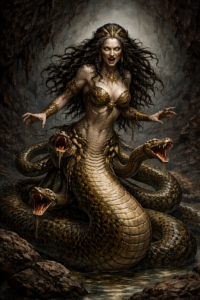
Medusa – woman with snakes for hair
Lernaean Hydra – multi-headed snake
Chimera – lion + goat + snake
Cerberus – Hades' three-headed dog
Analysis:
Monsters serve as "trials" for heroes (Hercules, Perseus), symbolizing the chaos that must be subdued.
Giant and cosmic beings
Characteristics:
Huge Size
Connection with cosmogenic forces
Examples:
Cyclops – single-eyed giants
Giants – opponents of the gods (Gigant fight)
Typhon – cosmic disaster monster
Analysis:
They represent the primal forces of nature and a threat to the divine order.
Water and marine creatures
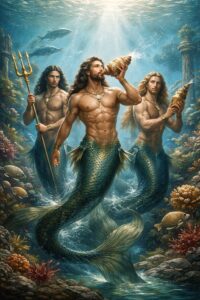
Characteristics:
Connection with sea and water
Often dangerous for sailors
Examples:
Sirens – women/birds who seduce
Scylla and Charybdis – Sea monsters
Tritons – demigods of the sea
Analysis:
They reflect the fear of the sea and the dangers of sailing.
Spiritual and demonic beings
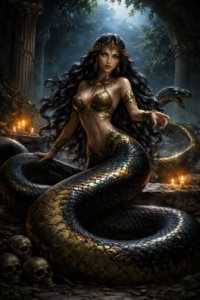
Characteristics:
Intangible or semi-intangible nature
Connection with death or metaphysical
Examples:
Analysis:
They are personifications of psychological fears and moral consequences.
Beneficial or neutral mythical beings
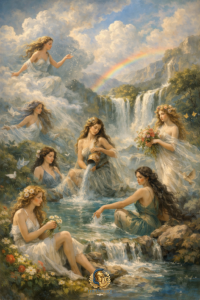
Characteristics:
They are not necessarily hostile
Often they help people or gods
Examples:
Analysis:
They represent harmony of nature and divine order.
Creatures of mythology
| # | Name | Category | Figure | Connection | Properties | Symbolism |
|---|---|---|---|---|---|---|
| 1 | Centaurs | Hybrid | Horseman | Thessaly | Power | Instinction |
| 2 | Chiron | Hybrid | Centauri | Pelion | Medicine | Sofia |
| 3 | Sphinx | Hybrid | Woman-lion | Thebes | Puzzles | Knowledge |
| 4 | Minotaur | Hybrid | Bull man | Crete | Violence | Nature |
| 5 | Satyrs | Hybrid | Tragedy Man | Forest | Delight | Passion |
| 6 | Medusa | Monster | Female snakes | — | Stone | Phobos |
| 7 | Hydra | Monster | Multi-headed snake | Lerne | Renaissance | Bad |
| 8 | Chimera | Monster | Composite | Lycia | Fire | Chaos |
| 9 | Cerberus | Monster | Three-headed dog | Hades | Storage | Thanatos |
| 10 | Skylla | Monster | Multi-headed | Sea | Attack | Risk |
| 11 | Charybdis | Monster | Warp | Sea | Disaster | Nature |
| 12 | Lamia | Demonic | Woman | — | Pediaphagia | Phobos |
| 13 | Empousa | Demonic | Metamorphosis. | — | Apati | Deception |
| 14 | Erinyes | Demonic | Deities | Downworld | Punishment | Justice |
| 15 | Keres | Demonic | Spirits | Battle | Thanatos | Fates |
| 16 | Cyclops | Giants | Single-eyed | Sicily | Power | Primary |
| 17 | Polyphemous | Giant | Cyclops | Sicily | Violence | Barbarity |
| 18 | Giants | Giants | Human figures | — | War | Chaos |
| 19 | Typhon | Cosmic | Monster | — | Disaster | Absolute |
| 20 | Hecatoncheires | Cosmic | 100 Hands | Tartarus | Power | Excess |
| 21 | Sirens | Water | Woman-bird | Sea | Song | Temptation |
| 22 | Tritons | Water | Fish man | Sea | Sound | Control |
| 23 | Nereids | Water | Nymphs | Sea | Protection | Peace |
| 24 | Primary | Water | Metamorphosis. | Sea | Change | Knowledge |
| 25 | Hippocampus | Water | Fish horse | Sea | Transport | Move |
| 26 | Nymphs | Spiritual | Female | Nature | Life | Fertility |
| 27 | Dryads | Spiritual | Trees | Forest | Life | Nature |
| 28 | Naiads | Spiritual | Water | Sources | Treatment | Life |
| 29 | Oreads | Spiritual | Mountains | Mountains | Protection | Stability |
| 30 | Pegasus | Beneficial | Winged horse | — | Flight | Inspiration |
| 31 | Griffin | Beneficial | Eagle lion | — | Storage | Power |
| 32 | Talos | Artificial | Bronze | Crete | Protection | Technology |
| 33 | Automata | Artificial | Machines | Hephaestus | Move | Create |
| 34 | Acheloos | Metamorphosis. | River | Applicant | Change | Liquidity |
| 35 | Thetis | Metamorphosis. | Goddess | Sea | Change | Custom |
| 36 | Harpies | Bird-like | Wings | — | Grab | Punishment |
| 37 | Stymphalides | Bird-like | Birds | Leg | Attack | Threat |
| 38 | Dragons | Monster | Snake | — | Storage | Knowledge |
| 39 | Ladon | Monster | Dragon | Peppers | Guard | Immortality |
| 40 | Echidna | Monster | Female snake | — | Mother | Bad |
| 41 | Pan | Hybrid | Tragedy Man | Arcadia | Music | Nature |
| 42 | Telchines | Demonic | Seas | Rhodes | Magic | Art |
| 43 | Courites | Demonic | Warriors | Crete | Protection | Ceremony |
| 44 | Geryon | Monster | Tricephalus | — | Power | Excess |
| 45 | Ichthyocentaurs | Hybrid | Composite | Sea | Power | Go |
| 46 | Sphinxes | Hybrid | Multiple | — | Test | Mystery |
| 47 | Aloades | Giants | Humans | — | Hybrid | Uprising |
| 48 | Skiapodes | Strange. | One foot | — | Survival | Unknown |
| 49 | Hyperboreans | Mythical | — | North | Immortality | Ideal |
| 50 | Glaucus | Water | Marine | — | Prophecy | Transformation |
| 51 | Orthros | Monster | Double-headed dog | — | Storage | Threat |
| 52 | Stheno | Monster | Hurry | — | Immortality | Terror |
| 53 | Evryali | Monster | Hurry | — | Immortality | Terror |
| 54 | Cadmean dragon | Monster | Snake | Thebes | Battle | Birth |
| 55 | Daphnes | Spiritual | Shepherd | — | Music | Harmonia |
| 56 | Centauri females | Hybrid | — | — | Rareness | Duality |
| 57 | Silenus | Hybrid | Turkey | — | Drunks | Sofia |
| 58 | Gorgons | Monster | Women | — | Terror | Phobos |
| 59 | Enceladus | Giant | — | Etna | Earthquakes | Nature |
| 60 | Hippocentaurs | Hybrid | Variant | — | Power | Go |
Dataset 60 mythical creatures • Net form for academic use
Bibliography
Ancient Sources
- Hesiod, Theogony.
- Homer, Iliad and Odyssey.
- Apollodorus, Library.
- Pausanias, Greece Tour.
- Pindar, Olympians and Pythionic.
- Ovid, Transformations.
Modern Bibliography
- Buxton, Richard. The Complete World of Greek MythologyThames & Hudson, 2004.
- Grimal, Pierre. The Dictionary of Classical MythologyBlackwell Publishing, 1996.
- Hard, Robin. The Routledge Handbook of Greek MythologyRoutledge, 2004.
- Morford, Mark & Lenardon, Robert. Classical Mythology. Oxford University Press, 2018.
- Gantz, Timothy. Early Greek Myth: A Guide to Literature and Artistic SourcesJohns Hopkins University Press, 1993.
- Ogden, Daniel. Dragons, Serpents and Slayers in the Classical and Early Christian Worlds. Oxford University Press, 2013.
- Kerenyi, Karl. The Gods of the GreeksThames & Hudson, 1980.
- Burkert, Walter. Greek ReligionHarvard University Press, 1985.