
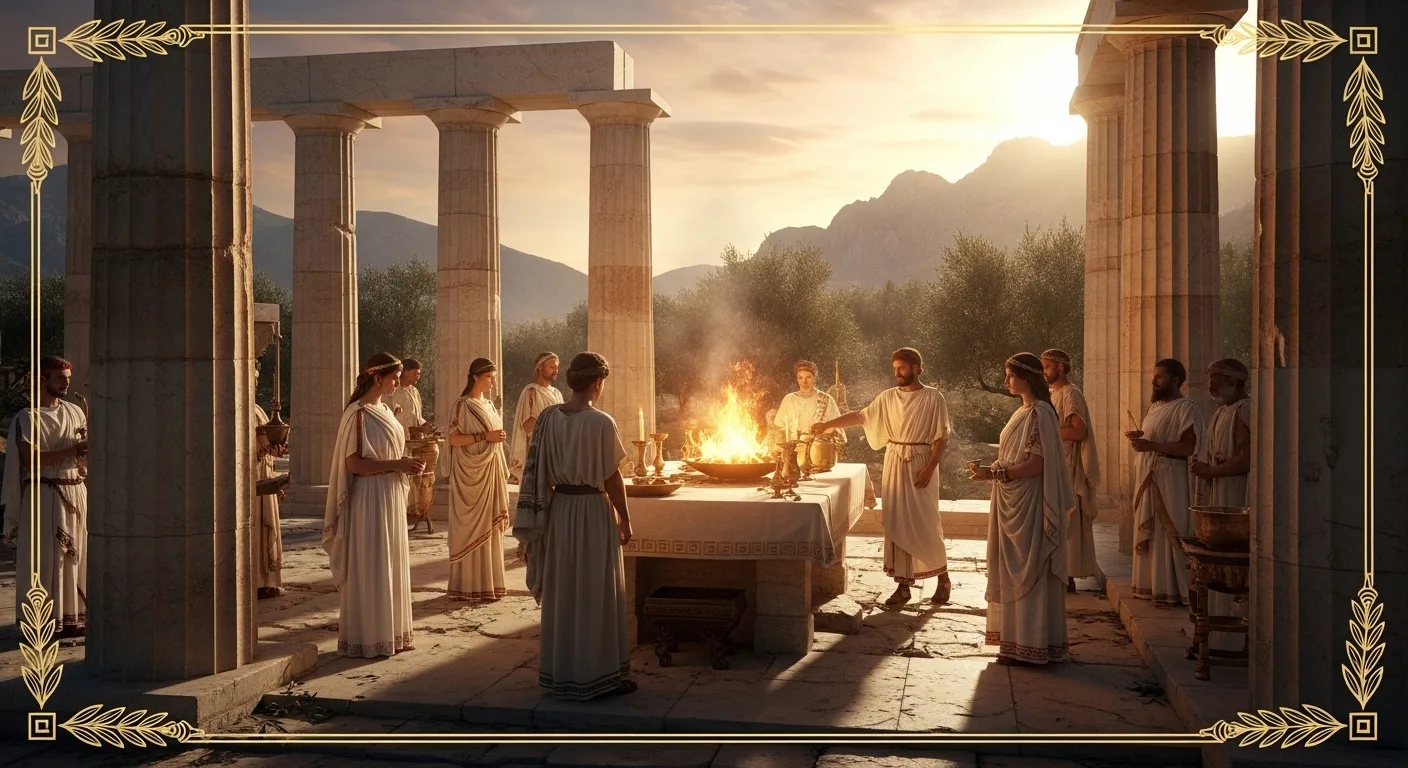
Ancient Greece is not only an important chapter of history, but also the foundation on which modern Western culture was built. From the first cities-states to the edge of philosophy and arts, the ancient Greeks shaped a world full of ideas, values and creation that continue to affect our everyday life.
In this guide we will explore how people lived in ancient Greece, how their cities were organized, what the sacred places were and how mythology was associated with real life.
Ancient Greece was not a single state, but a set of independent city-states, known as «cities». Each city had its own laws, culture and traditions.
Athens and Sparta are the most typical examples of two completely different worlds. In Athens, democracy, philosophy and the arts developed, while in Sparta discipline and military education dominated.
Despite their differences, all city-states shared common language, religion, and culture, elements that created a sense of unity.

Life in ancient Greece varied considerably depending on gender, social order and the city.
Men were involved in politics, war, and commerce, while women mainly had a role in the house, caring for family and household management. Children were trained from an early age, especially in Athens, where education was considered a key element in the creation of active citizens.
The houses were simple, but functional, and everyday life included work, social associations, and participation in religious festivals.
Religion and Sacred Places
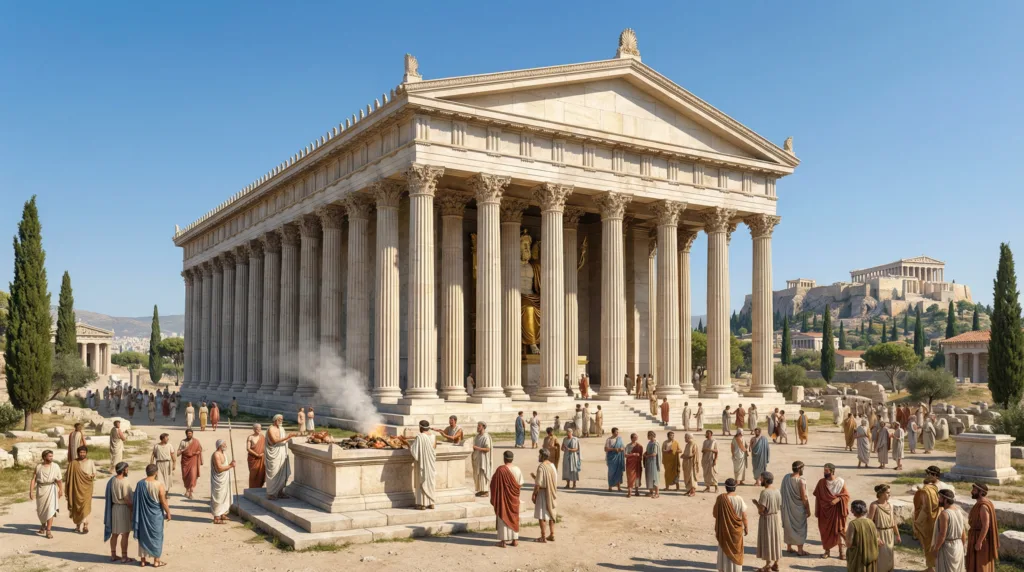
Religion held a central place in the lives of the ancient Greeks. It was polytheistic, with gods that were thought to affect every aspect of life.
People prayed, offered sacrifices, and participated in ceremonies to ensure the favor of the gods. Temples were not just places of worship, but also symbols of power and culture.
Of particular importance were sacred places, such as divination, where people sought guidance for important decisions. At the same time, major celebrations and games, such as the Olympic Games, were an opportunity for a meeting and unity of the Greeks.
Political and Social Organisation
Ancient Greece was the cradle of democracy, especially in Athens, where citizens were able to participate directly in decision making.
However, the concept of «Citizen» It didn't involve everyone. Women, slaves and foreigners had no civil rights. At the same time, other cities followed different cultures, such as oligarchy or monarchy.
This variety of political systems shows the wealth and complexity of ancient Greek society.

Wars and Historical Conflicts
The city-states didn't always live in peace with each other. They often clashed for power, influence, and resources.
The Persian Wars were an important moment of unity, where the Greeks united against a common enemy. Instead, the Peloponnesian War between Athens and Sparta highlighted the internal contradictions that eventually weakened the Greek world.
These conflicts not only affected politics but also the evolution of society and culture.

Culture, Arts and Philosophy
Ancient Greece has experienced a unique bloom in culture. Theatre, poetry, architecture and philosophy were key elements of everyday life.
The philosophers sought answers for the world, knowledge and man, while artists created works that combined beauty and harmony.
These ideas are not left behind· continue to influence science, politics and art to date.

The Relationship between Mythology and Everyday Life
mythology was not just stories about ancient Greeks· It was a way to understand the world around them.
The gods were considered present in everyday life, affecting the nature, decisions and fate of humans. The temples were dedicated to certain deities, while many festivals and ceremonies were based on myths.
Thus, mythology and real life were inextricably linked, creating a culture where divine and human coexisted.
Conclusion
Ancient Greece was not just a time of the past, but a living world of ideas, values and experiences. Cities-states, everyday life, religion and mythology make up a rich and multidimensional image.
By understanding this world, we can see more clearly not only history, but also the roots of modern civilization.