
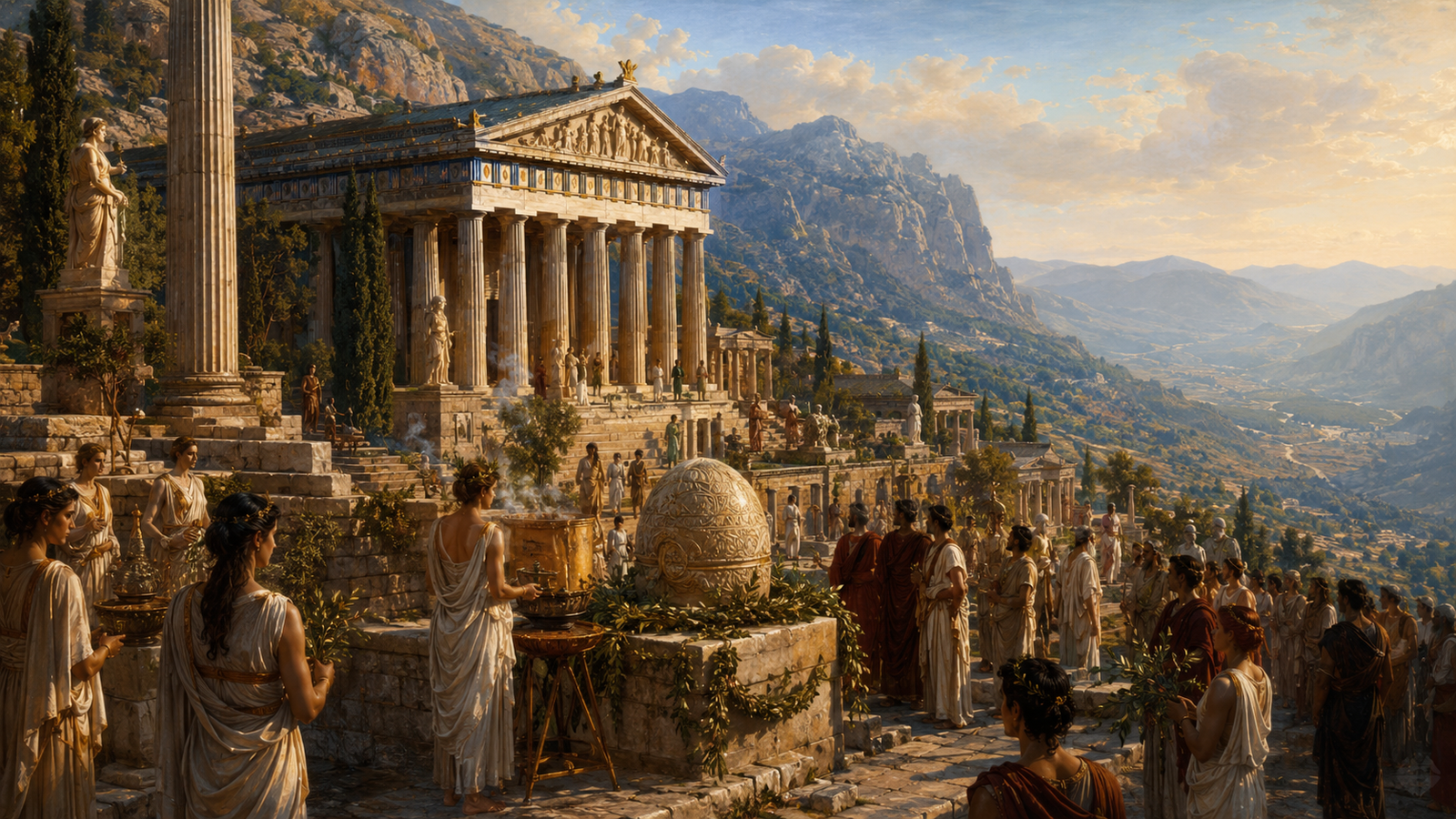
Delphi were one of the most influential places in ancient Greece, not only as a religious centre, but also as a reference point for the politics, art, philosophy and collective imagination of the Greeks. Climbing on the southern slopes of Parnassos, within an imposing landscape that seems to have been formed for ritual experience, Delphi were considered the Earth's Omphal, the symbolic center of the world.
At the heart of the site was the sanctuary of Apollo, where the famous Oracle of Delphi operated. There, Pythia, the priestess of God, gave oracles defining personal decisions, colonial campaigns, war movements, and political balances. Kings, cities, generals, and ordinary people sought answers to questions that exceeded the limits of human certainty.
The charm of Delphi is not limited to their divination function. The site was a field of myth and history coexistence: Apollo defeat Python, Zeus define the center of the earth, the Greek cities dedicate treasures, while the Delphine Ambittonia takes on the role of institutional protection of the sanctuary. Today, the archaeological site and the Delphi museum are a world monument to civilization, included in the UNESCO list.
This article examines Delphi as a place of religious worship, divination power, cultural radiation and historical continuity, illuminating their timeless significance from their mythological birth to modern intake.
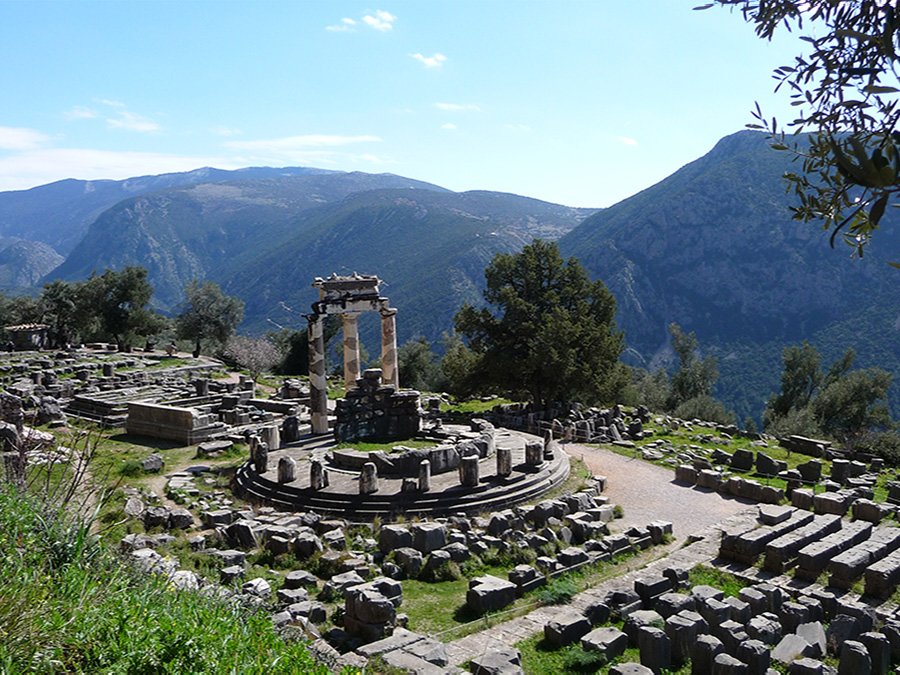
The geographical location explains why the natural environment of Delphi strengthened the sacred character of the place.
The geographical location of Delphi
Delphi are located in Fokida, on the southwestern slopes of Parnassus, at an altitude offering views of the Amfissa olive grove and the Corinthian Gulf. This geographical position was not just beautiful· had a profound symbolic and practical meaning. The rough mountain landscape, the steep rocks of the Phaidriades, the presence of waters and the sense of isolation created the impression of a place borderline, where man approached the divine.
The choice of location is directly related to the ancient conception of sacred sites. In Ancient Greek Religion, the natural environment was not a neutral setting, but an active part of worship. Sources, caves, mountains and groves were considered points of communication between the human and the divine world. Castalia Pigi, located near the sanctuary, was of particular importance, as it was associated with the purification of pilgrims, priests and Pythia before the divination process.
Delphi was also accessible from different regions of the Greek world. Despite their mountainous position, they were associated with roads leading from Boeotia, Thessaly, Peloponnese and Central Greece. The turnout of people from distant cities strengthened the reputation of the sanctuary and turned the site into a centre of nationwide communication. It was no accident that the city-states set up in Delphi anathemas, treasures and monuments, seeking to declare their piety and political presence.
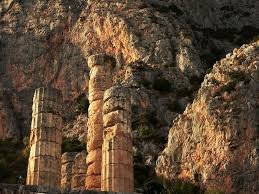
The Phaedriad stones above the sanctuary of Apollo in Delphi
The mythological foundation illuminates the basic myths: Jupiter's eagles, Omphalos, Python and the establishment of Apollo's worship.
The mythological foundation of Delphi
According to the Greek mythological tradition, Delphi were designated as the center of the world by him Zeus. The father of the gods let two eagles fly from the ends of the earth, one from the east and the other from the west. The two sacred birds met over the Delphi, revealing the site where the Earth's Omphal was located. The stone navel, kept in the sanctuary, was not merely an object of worship· It symbolized the secular order and unity of the world around a sacred axis.
But before the Apollo became the dominant of the site, the place was associated with older chthonic forces. The central form was Python, a terrible snake or dragon guarding the oracle. The myth tells that young Apollo arrived at Delphi and killed Python with his arrows, clearing the place and establishing his own worship. This act should not only be read as a heroic victory, but also as a symbolic transition from older earthly cults to an Apollon religiousness associated with light, music, measure and prophecy.
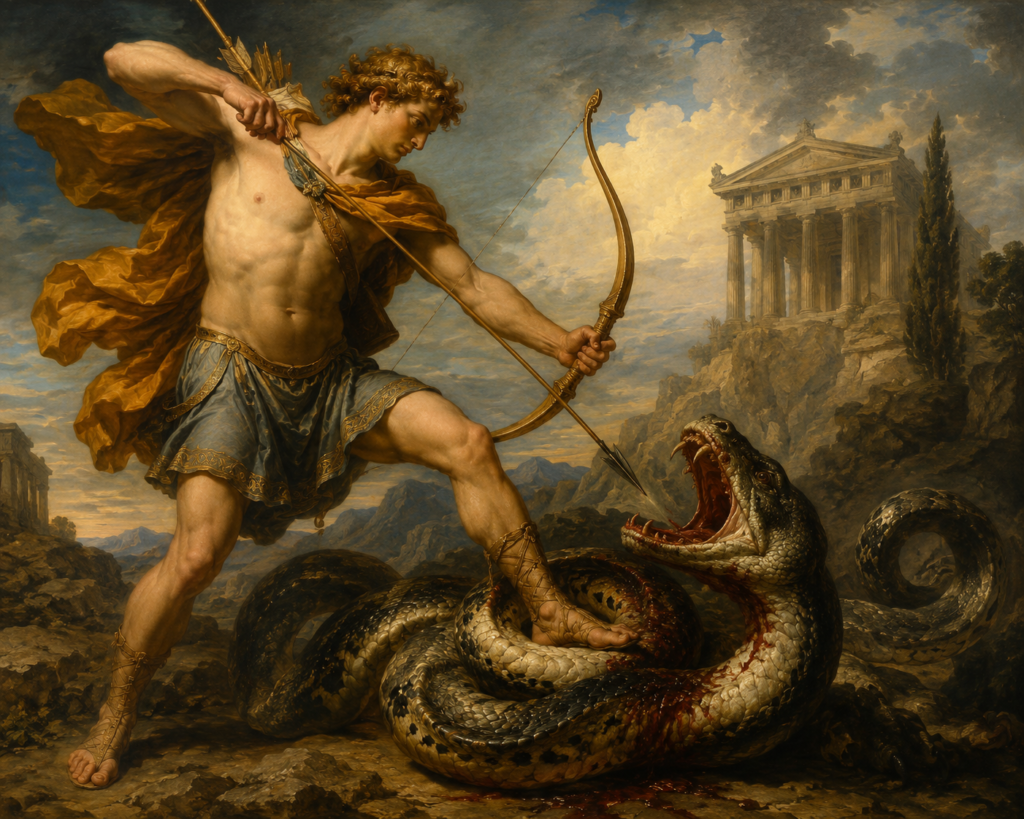
Artistic representation of Apollo killing Python
The name of Pythia and Pythians preserves the memory of Python. Even after Apollo's prevalence, the oldest mythological substrate did not disappear, but was incorporated into worship. This composition is typical of Greek religion: new deities do not always abolish old ones, but transform them, creating a multi-level system of memory and ritual.
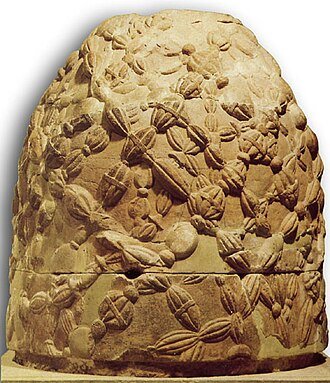
The Stone Navel of Delphi at the museum
The unity examines the worship of Apollo and the way in which his sanctuary shaped the identity of Delphi.
Apollo and his sanctuary
Apollo in Delphi was not only a god of divination. He was a god of light, music, harmony, cleansing and measure. His presence in the sanctuary of Apollo gave Delphi a spiritual authority character. In the Greek world, where the gods did not represent abstract concepts but living powers that intervened in human life, Apollo was considered a god that manifested divine knowledge through enigmatic but essential reason.
The sanctuary was organized around the temple of God, the Sacred Way, the treasures of the cities, the offerings, the theatre and the stadium. The pilgrim who ascended the Sacred Way did not simply pass through an architectural site· She was crossing a memory path. Each offering reminded wars, victories, alliances and promises. Apollo worship was thus associated with the collective history of the Greeks.
The ceremonies included purifications, sacrifices, offerings, and questions to the oracle. The concept of cleansing was decisive: before approaching God, one had to expel the amysm, religious or moral uncleanness. Kastalia Pigi functioned as a place of preparation, while priests mediated between the visitor and the sanctuary of the temple.
Apollonia worship in Delphi was also associated with the famous dolphin orders, such as «know to him» and «zero agan»These phrases reflect a world where religion, morality and philosophical self-awareness meet. For the reader interested in the wider religious context, the theme of the 12 gods of Olympus offers a useful background.
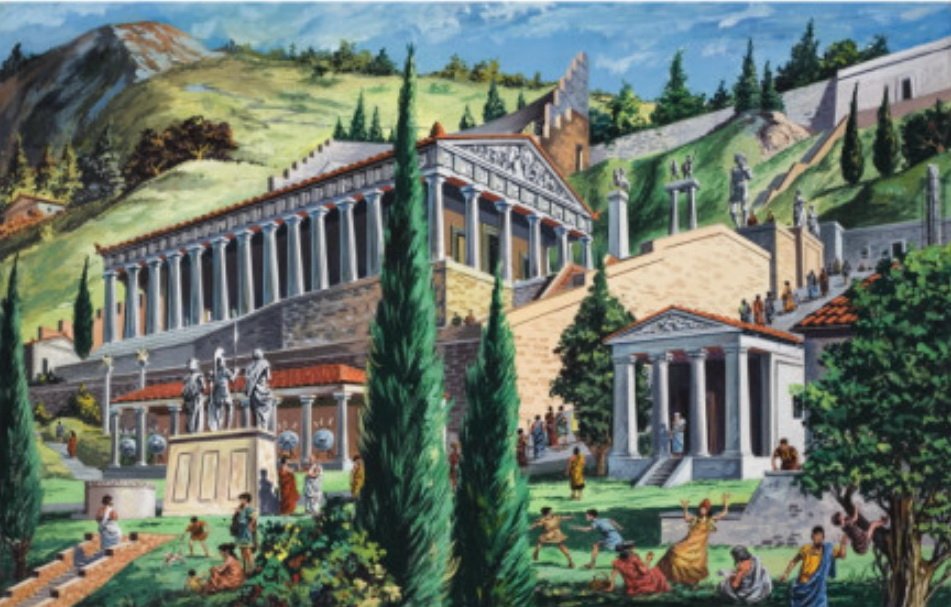
Representation of the Temple of Apollo in Delphi
This presents the operation of the Delphi Oracle, the process of receiving oracles and its reputation throughout the ancient world.
The Oracle of Delphi
The Oracle of Delphi was the most important magic center in the Greek world. His reputation exceeded the geographical boundaries of Greece, attracting rulers and envoys from Asia Minor, Lower Italy, Sicily, Lydia and other Mediterranean regions. His power was not only based on faith in Apollo, but also on the ability of the sanctuary to function as a place of information, diplomacy and symbolic legitimacy.
The oracle process was complex. The pilgrim concerned or the city he represented had to offer sacrifice, pay the required fee and submit his question. Pythia, cleansed and ceremoniously prepared, sat on the tripod in the sanctuary of the temple. Her answers were recorded or interpreted by the priests, often in poetic or enigmatic form.
The Delphi oracles remained proverbial for their polysignal. The answer to Croesus, King of Lydia, that if he campaigned against the Persians he would destroy a great empire, is a typical example. Croesus felt that the empire that would be destroyed was Persian· Turns out it was his. History reveals the essence of the Greek word: the oracle does not abolish human responsibility, but requires interpretation, wisdom, and self-awareness.
Delphi also influenced colonial expansion. Cities planning to establish colonies sought the opinion of the oracle, so that the new facility had divine approval. Thus, the sanctuary participated indirectly in the formation of the Greek world from the Black Sea to the Western Mediterranean.
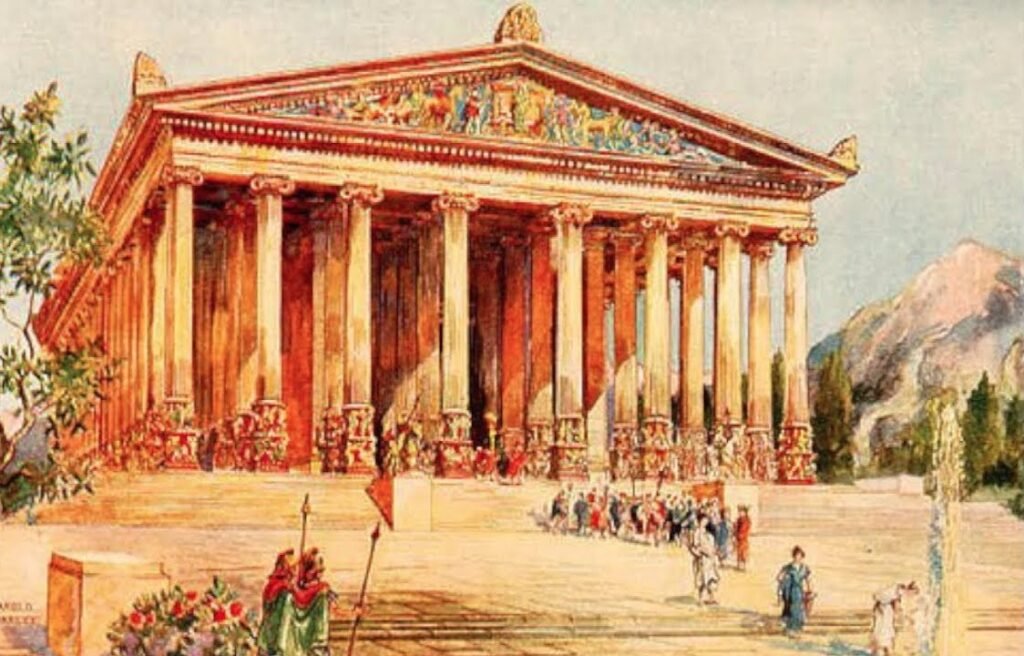
Priests and pilgrims in front of the Oracle of Delphi in representation
Pythia is considered as a religious person, a social institution and a carrier of the Apollon discourse.
Pythia: the voice of God
Pythia was the priestess through which Apollo spoke. Her role was unique in the ancient world, as a woman was at the center of an institution with huge political and religious influence. Her choice was made by the Delphi region, and in earlier periods it seems that young women were preferred, while mature women with modest life and good reputation were later established.
Prior to the divination session, Pythia was deposed in Castalia Source, fasted or kept special ritual rules and entered the sanctuary of the temple. There he sat on the tripod, near the sacred navel and at the point where he was considered connected with the divine presence. Ancient sources describe her condition as ecstasy or divine inspiration, but without fully agreeing on the nature of the experience.
In modern research various theories have been formulated about the ecstasy of Pythia. Some scholars have associated the phenomenon with fumes from geological faults, others with psychological preparation, ceremonial tension or socially recognized form of religious expression. Whatever the explanation, the essential thing is that for the ancients Pythia did not express a personal opinion. It was God's mouth.
Its authority, however, did not function independently of the priesthood. The priests of Delphi had a role in the formulation, recording and presentation of the oracles. Thus, the Delphi Oracle combined ritual inspiration with institutional organization, which explains its longevity.
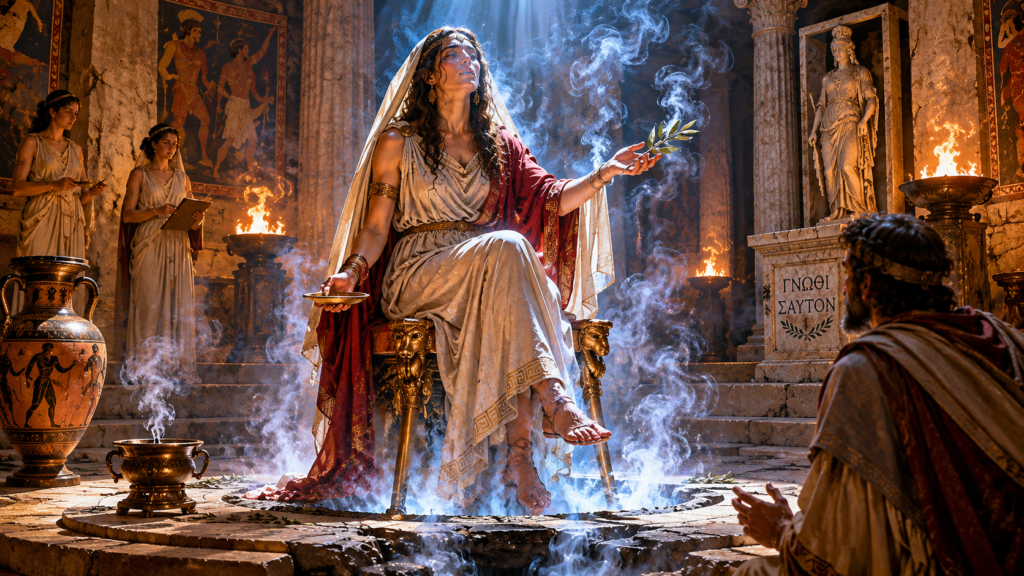
Pythia sat in the tripod in the sanctuary of the temple
The section gathers the basic monuments of the archaeological site and explains their operation within the sacred landscape.
The most important monuments of Delphi
The archaeological site of Delphi is a dense set of monuments depicting centuries of worship, political projection and artistic creation. The Sacred Way gradually led the visitor to the temple, while on either side there were offerings and treasures. Each city sought to leave its imprint on the nationwide shrine, turning Delphi into «file» Greek history.
Monument | Chronology | Operation | Current situation
Apollo Temple | 4th century BC in the surviving form | Center for worship and site of the Oracle | Foundations and columns saved
Theatre | 4th century BC, with subsequent interventions | Music and drama games | Goodly preserved
Stage | 5th century B.C.E., reforms 2nd century C.E. | Pythian sports events | One of the best surviving ancient stages
Treasure of Athens | Early 5th century BC | Accomodation and promotion of Athens | Restored
Castle Source | Archaic to Roman use | Ritual purification | Visible residues
Udder | Archaic/classical tradition | Symbol of the center of the earth | A copy is displayed at the site, ancient find at the museum
Holy Way | Timeless use | Pompian route to the temple | Its course is saved
Among the most important works related to Delphi is the Heniochos, one of the masterpieces of ancient bronzework, exhibited at the Delphi Archaeological Museum. The statue reveals the aesthetic perfection and the deep connection of struggles with aristocratic projection and religious piety.
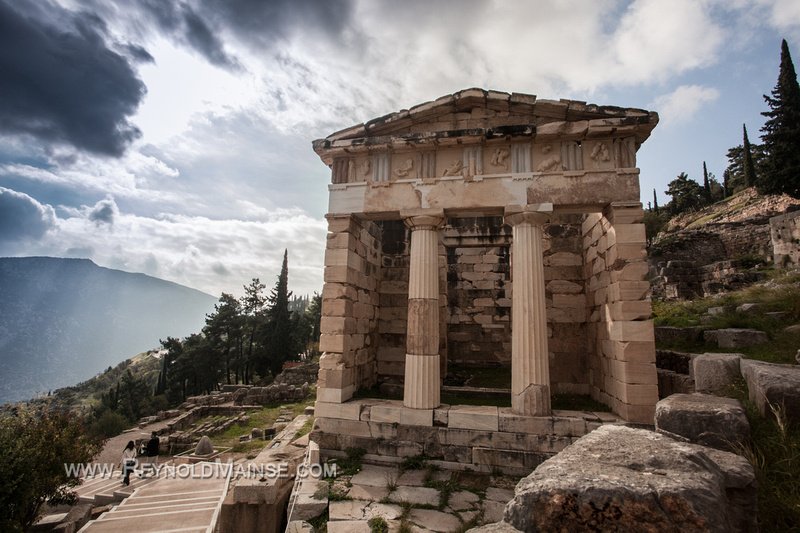
The Treasure of the Athenians along the Sacred Way
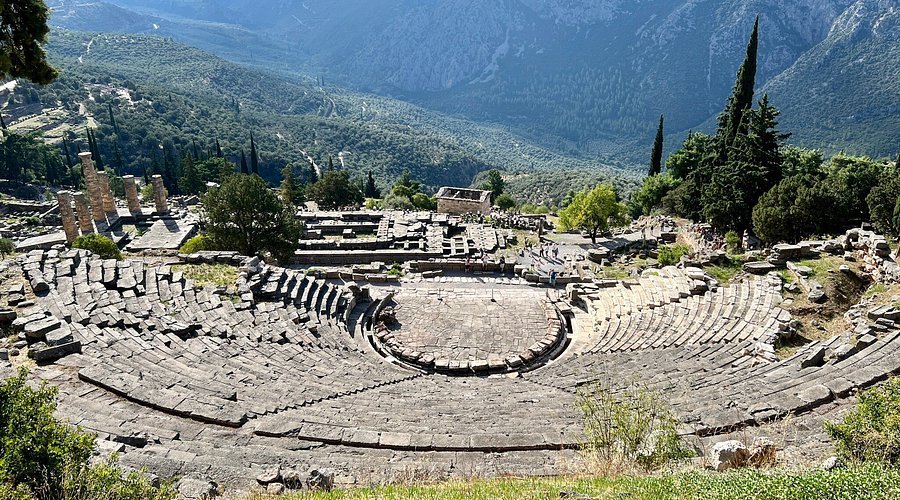
The ancient theatre of Delphi overlooking the valley
Pythias are presented as nationwide games combining sports, music, poetry and worship.
Pythias: the games in honor of Apollo
Pythias were the great national games of Delphi, dedicated to Apollo. Their name is associated with Python, the mythical guardian of the old sanctuary, and reminds that Apollonia worship incorporated older mythological layers. The games were held every four years and were considered second in prestige after the Olympics.
The particularity of the Pythians was that they included not only sports events, but also musicians and poetic competitions. This fits perfectly with the nature of Apollo as a god of guitar, harmony and artistic inspiration. Music games, especially guitarism and courtship, had a central place. Streets, wrestling, boxing, pankrate, and cavalry games were later added.
Winners received no prize, but a wreath of laurel, Apollo's sacred plant. The price, however, was enormous. A victory in Pythians raised the prestige of the athlete, his family, and his city. The winning poems and the offerings set up in the sanctuary turned personal success into a public memory.
Beyond their competitive dimension, Pythias acted as an opportunity to meet the Greeks. In times of political competition, the national struggles reminded the common language, religion, and cultural standards that connected cities. So Delphi was not only a place of oracles, but also a scene of cultural cohesion.
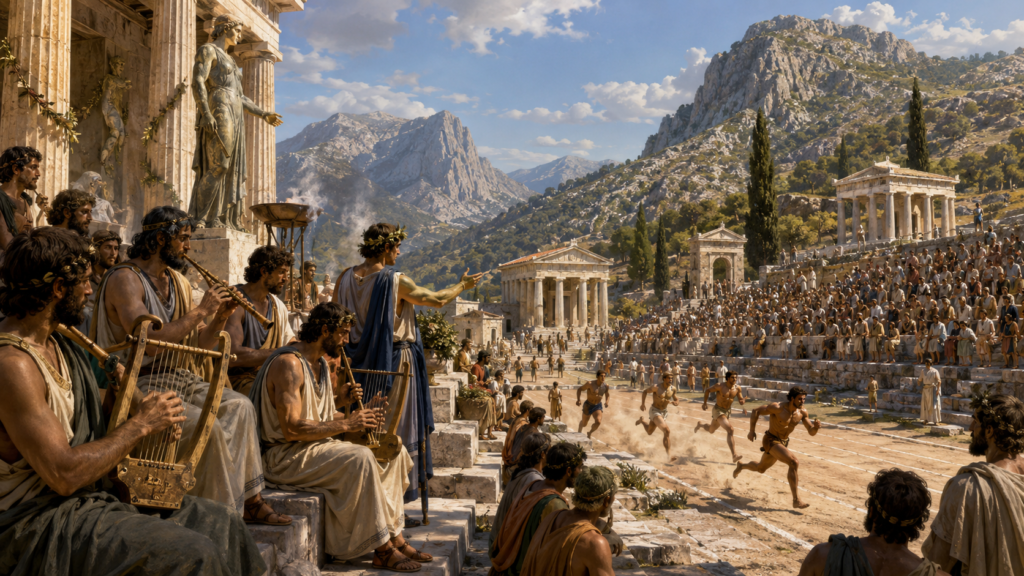
Representation of music and sports games in Pythia
The political function of Delphi is associated with Delphine Ambittonia and the nationwide influence of the sanctuary.
Delphi as a political center
Delphi was not a neutral religious space cut off from politics. Instead, their nationwide radiation made them a place where they collided, balanced, and legalized political pursuits. The Delphine Ambittony, union of peoples and cities who had responsibility for managing and protecting the sanctuary, played a decisive role in the history of the site.
Amphitectonias were religious political associations formed around important sanctuaries. Delphine Ambittony managed matters of worship, economy, security and prestige. He was able to impose sanctions and mobilize forces in cases of sacrilege or violation of the rights of the sanctuary. The so - called Holy Wars prove that the control of Delphi could have wider geopolitical consequences.
The influence of the oracle on political decisions has been great. Cities called for oracles before wars, legislative reforms or colonial movements. The Delphi response could offer religious legitimacy to a decision, strengthen the authority of a leader or prevent a dangerous action. However, the relationship between politics and divination was complicated. Oracles were not always clear, while cities often interpreted them according to their interests.
The power of Delphi was also due to the image of neutrality they cultivated. Although in practice influenced by political pressure, Delphi remained a symbol of nationwide reference, a place where divine will was supposed to exceed individual rivalries.
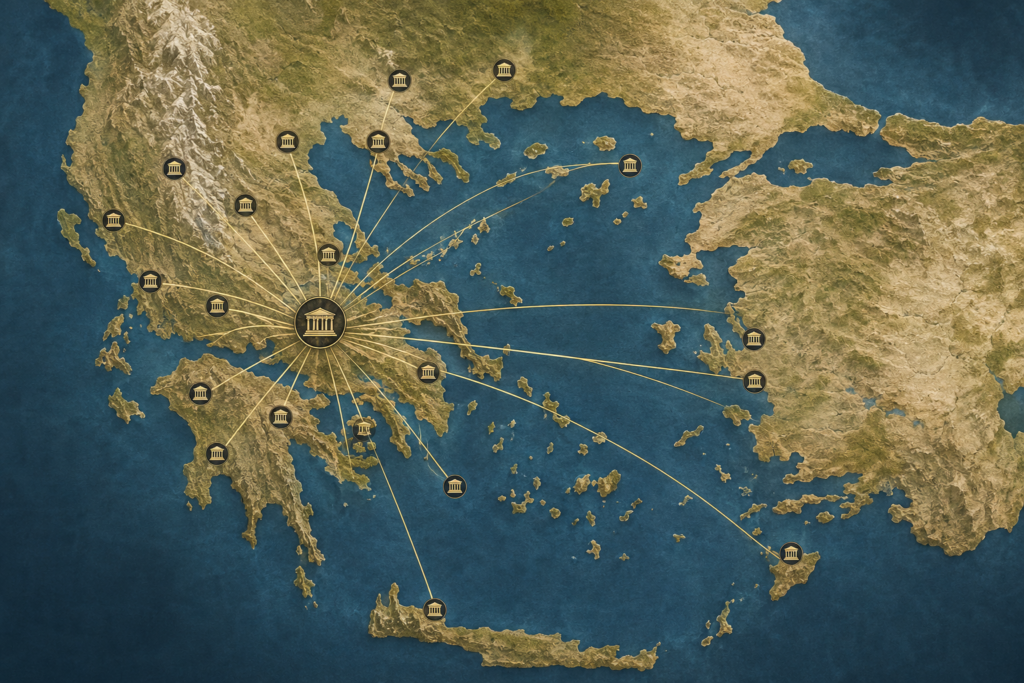
Map of Greek cities associated with Delphi Ambitonia
The Roman period shows the continuity of Delphi' reputation, but also the changes brought about by integration into the Roman world.
Delphi during the Roman period
During the Roman period, Delphi retained much of their symbolic prestige, although political reality had changed radically. Greece had joined the Roman sphere, and the old national centers were now operating within an imperial framework. Roman generals, emperors and scholars visited Delphi, sometimes with respect and sometimes with the disposition of the appropriation of Greek cultural capital.
Some Roman rulers favored the sanctuary with renovations or offerings. Others, such as Nero, connected to works of art by Greek sanctuaries. Despite the losses, the site remained alive. The stadium, for example, experienced significant interventions during Roman times, while the games continued to take place.
Roman love for Greek education contributed to the preservation of Delphi' memory. Browsers such as Pausanias recorded monuments, traditions and tributes, offering valuable information on the image of the sanctuary in late antiquity. Without such descriptions, our modern knowledge of many dolphin monuments would be poorer.
However, the operation of the oracle no longer had the same gravity as the archaic and classical era. Political decisions were now taken in imperial power centres, while the old city-states had lost much of their autonomy. Delphi continued to inspire, but the time of their greatest political power had passed.
The decline of the sanctuary is associated with religious changes, economic deterioration and the rise of Christianity.
The decline and abandonment of the sanctuary
The decline of Delphi was gradual and not the result of a single event. As early as the Hellenistic and Roman period, the political significance of the Oracle had been limited. Changes in power structures, the economic weakening of many cities and the change of religious priorities affected the functioning of the sanctuary.
The prevalence of Christianity in the Roman Empire was defining. Old divinations, sacrifices, and polytheistic cults were gradually treated as remnants of a world to be abandoned. Tradition connects the end of the Oracle of Delphi to late antiquity, when imperial bans against pagan cults sealed the fate of many priests.
The familiar phrase «uketti Phoebus has a hut» literaryly expresses the feeling that Apollo had abandoned his oracle. Regardless of the historical accuracy of wording, it reflects the transition from a world where oracles defined public life to a new religious horizon.
Over the centuries, the ancient site was partially covered by habitation. The youngest village of Kastri developed on the ruins, until the time of the great excavations. Thus, Delphi passed through the sacred mass to the silence of archaeological memory.
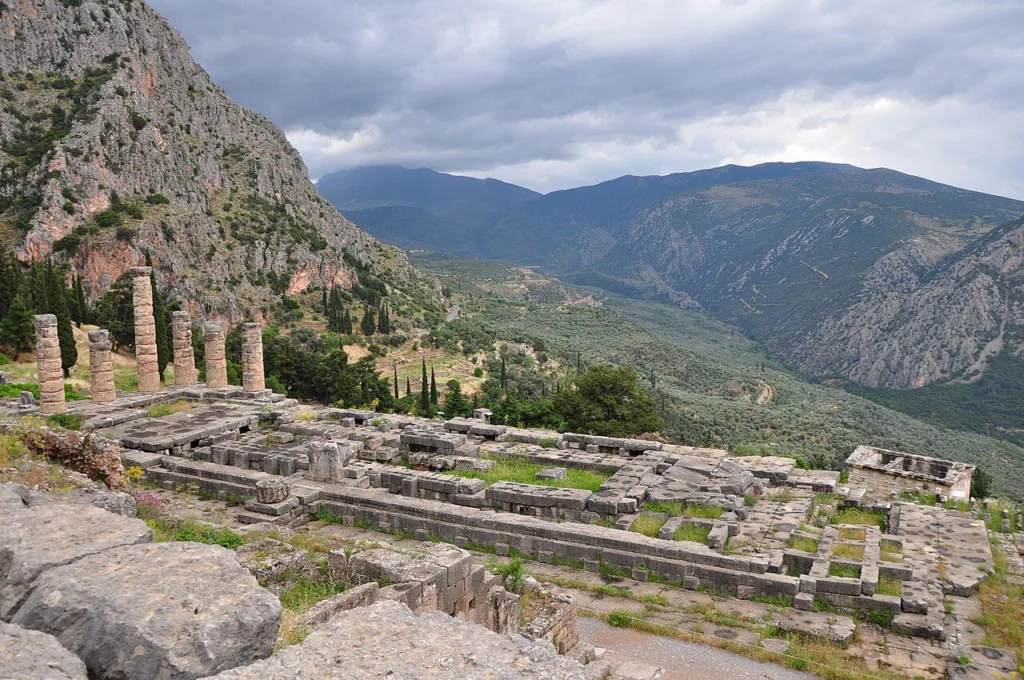
The excavations reveal how the site came back to knowledge of modern history and archaeology.
The excavations and modern discoveries
The systematic revelation of Delphi was one of the most important archaeological works of the 19th century. The so-called «Great Excavation» It started at the French Archaeological School in 1892, after the move of the village of Kastri. The project was difficult, both technically and socially, as it required extensive expropriations and excavation in a space with a long habitation.
The findings were impressive. Apollo's temple, Sacred Street, treasures, theatre, stage, inscriptions, sculptures and statues were revealed. Delphi inscriptions are a valuable source for the political, social and religious history of ancient Greece. Through them we learn about slave liberations, city tributes, decisions of Ambidactonia and international relations.
The Delphi Archaeological Museum currently houses some of the most important findings: the Heniochos, the Sphinx of Naxos, the metopes of the Sicyonian Treasure, sculptures from the Thesaurus of Athens and the Omphalos. Each exhibit is not just a work of art, but evidence of a world where worship, aesthetics, and politics were unsolved.
Archaeological research continues to enrich our image. New studies on geology, topography, architecture and cult practices offer a more complex understanding of the space. Delphi remain a living laboratory for the history of religion, art and institutions.
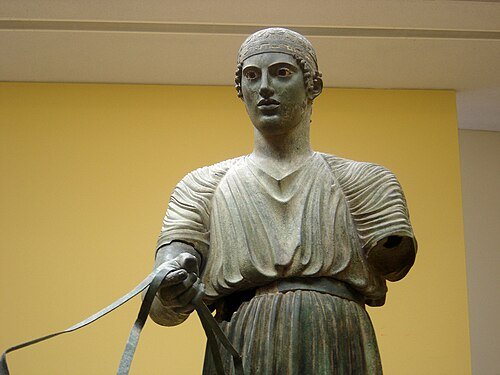
The Man of Delphi at the Archaeological Museum
Section Box: The current importance of Delphi is presented through the archaeological site, the museum, UNESCO and cultural tourism.
Delphi today
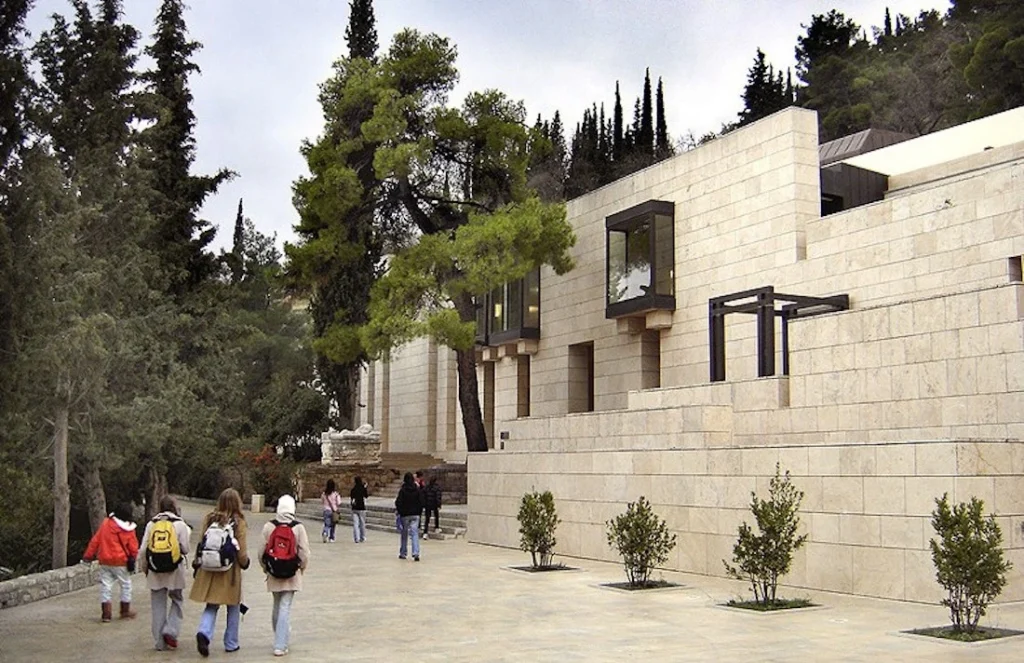
Today Delphi are one of the most important archaeological destinations in Greece. The site, joined in UNESCO World Heritage List, attracts visitors from around the world. The experience of the visit is not limited to observing ruins. The visitor understands the relationship between landscape, architecture and myth, a relationship that explains why the ancients considered Delphi center of the world.
The archaeological site includes the Sacred Road, the Temple of Apollo, the Theatre, the Stadium, the Kastalia Pigi and other monuments. The museum complements the experience, offering historical context and direct contact with masterpieces of ancient art. The visit to Delphi can be combined with the acquaintance of Fokida, Parnassos and the wider cultural route of Central Greece.
At the same time, Delphi retain a strong symbolic presence in modern thought. The concept of «Centre», the «know to him», the search for meaning and the relationship of man and divine still inspire philosophers, artists, historians and travelers. Even currents associated with the spirituality of antiquity, such as Orphism, can be discussed in dialogue with the sibling ideal of cleansing and inner knowledge.
Quick recap
Delphi were at the same time a myth, sacred, oracle, political institution, a racing centre and an artistic field. From the Omphalos of Earth and Apollo's victory over Python to the Delphine Amptytonia, Pythia and the newest excavations, the site condenses basic aspects of Greek antiquity. Today, its value is not only in the monuments, but also in its ability to challenge knowledge, measure, authority, and human pursuit of meaning.
Conclusion
Delphi remains a place where history is not an inactive past, but a living experience. The sanctuary of Apollo, the Oracle of Delphi, Pythia, the Omphal of the Earth, the Pythias and the monuments of Phocis compose a unique cultural universe. Where the ancients sought the voice of God, modern man seeks the understanding of a world that set at its center the self-awareness, measure, and relationship of man with the sanctuary. That’s why Delphi is not just an archaeological site· is a timeless symbol of the Greek spirit.
FAQ for Delphi
1. Why were Delphi considered the center of the world?
According to legend, Zeus left two eagles from the ends of the earth and they met over Delphi. This point was stated with the Earth's navel.
2. What was the Delphi Oracle?
It was the most important magic center of ancient Greece, dedicated to Apollo. There were oracles given to cities, rulers and individuals.
3. Who was Pythia?
Pythia was the priestess of Apollo who carried the oracles of God. He sat on the tripod in the sanctuary of the temple and spoke in a state of divine inspiration.
4. What was Apollo's role in Delphi?
Apollo was the main god of the sanctuary, associated with divination, light, music, cleansing and measure.
5. What was the Omphalos symbolizing?
The Obelus symbolized the center of the earth and the connection of the dolphin sanctuary to the secular order.
6. What were Pythians?
Pythias were nationwide games in honor of Apollo. They included musicians, poets, and sports competitions.
7. What was Delphine Ambition?
It was a religious union of peoples and cities that managed and protected the sanctuary of Delphi.
8. Where are the Delphi?
Delphi are located in Fokida, on the southern slopes of Parnassus, near Kastalia Pigi and overlooking the Corinthian Gulf.
9. What are the most important monuments of Delphi?
The most important monuments are the Temple of Apollo, the Sacred Street, the Treasure of Athens, the Theatre, the Stadium, the Kastalia Pigi and the Omphalos.
10. When did the decline of the Oracle begin?
The decline was gradual, from the Hellenistic and Roman period, and ended with the prevalence of Christianity and the prohibition of old cults.
11. What can a visitor in Delphi see today?
It can visit the archaeological site, the Archaeological Museum of Delphi, the Temple of Apollo, the theatre, the stadium and the important sculptures.
12. Why is Delphi a UNESCO monument?
Because they are a unique evidence of ancient Greek religion, art, political history and monument relationship with the natural landscape.