
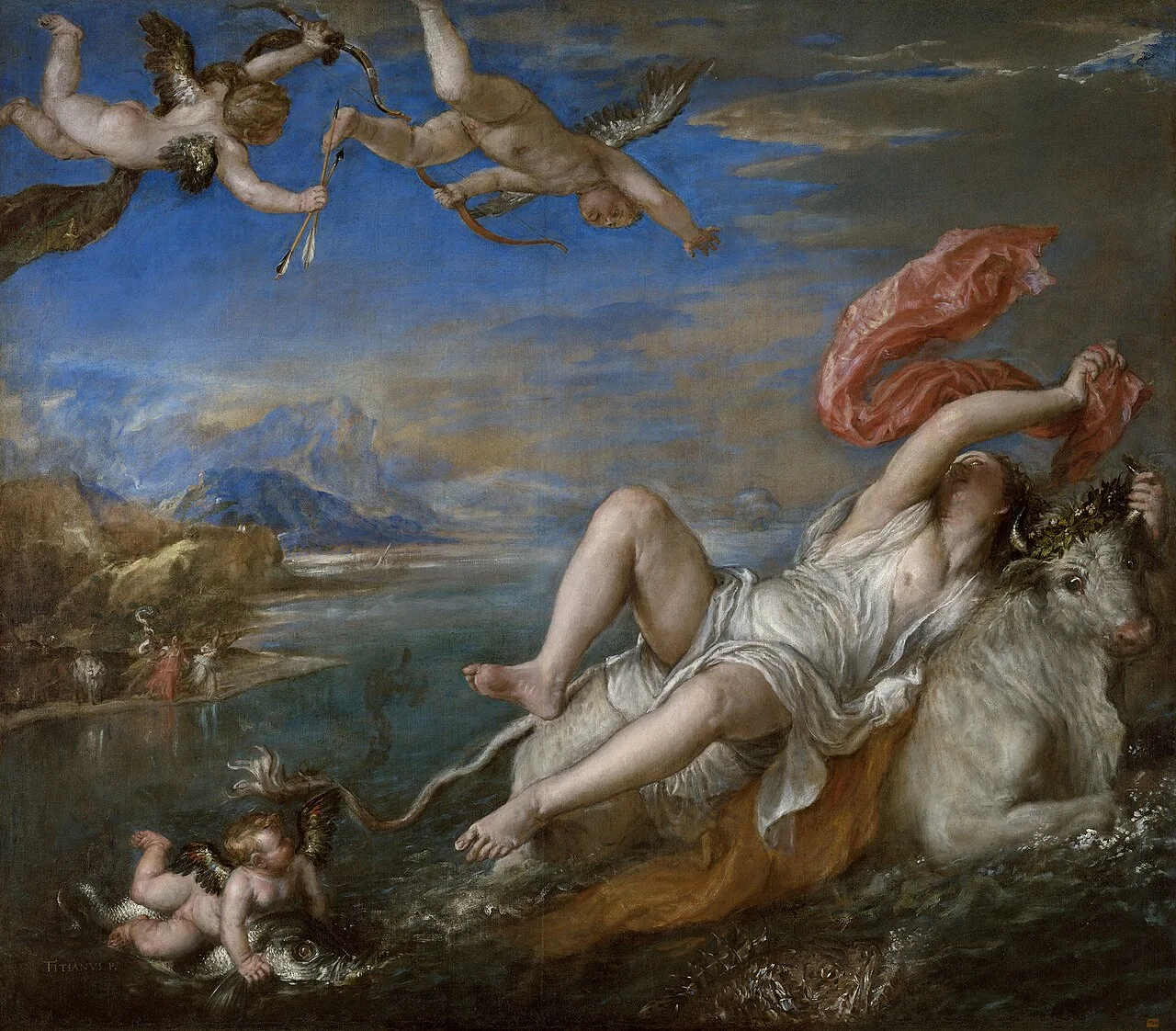
His myth Zeus and Europa It is one of the most iconic and significant myths of ancient Greek mythology, with profound symbolic, cultural, and geographical implications. Its narrative is not limited to a simple love story between a god and a mortal, but is linked to issues of power, identity, colonization, and cultural diffusion in the ancient world.
2. The Narrative of the Myth
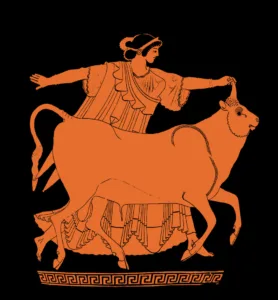
According to the most widely accepted version, Europa was the daughter of the Phoenician king Agenor. She was known for her extraordinary beauty, which caught the attention of Zeus, the supreme god of Olympus. Zeus, following a recurring pattern of transformations that characterizes his mythological actions, transformed himself into a white bull to approach her without causing fear.
Europa, captivated by the animal’s gentleness and beauty, climbed onto its back. Then Zeus, still in the form of a bull, crossed the sea and carried her to Crete. There he revealed his true identity and united with her. From this union three sons were born, among whom Minos, who later became the legendary king of Crete and a central figure in Minoan civilization.
2. Symbolism and interpretative approaches
The myth has been the subject of multiple interpretations:
(a) Cultural diffusion and geographical symbolism
The abduction of Europa from Phoenicia to Crete has often been interpreted as an allegory of cultural transmission from the Near East to the Greek world. Phoenicia, a major hub of trade and innovation, is historically associated with the spread of the alphabet and maritime practices, suggesting that the myth encodes historical processes of intercultural contact.
b) The bull as a symbol
The bull is a powerful symbol in Minoan and wider Mediterranean religiousism. Zeus' choice to be transformed into a bull probably reflects the animal's worship in Crete, as reflected in archaeological findings (e.g. bull-snap).
c) Issue of power and gender relations
The myth is part of a wider context of narratives where Zeus imposes his will through transformations and deception. From modern approaches, the myth has been analyzed in the light of gender relations, violence and divine authority.
3. Europe as a geopolitical concept
Name «Europe» It acquired geographical significance with time, identifying one of the world's main continents. The connection of the name to the myth suggests the importance of Greek mythology in shaping the cultural identity of the continent.
The form of Europa symbolizes:
- the transition from East to West,
- the birth of a new cultural space;
- the union of different cultural elements.
4. The myth in art and secretariat
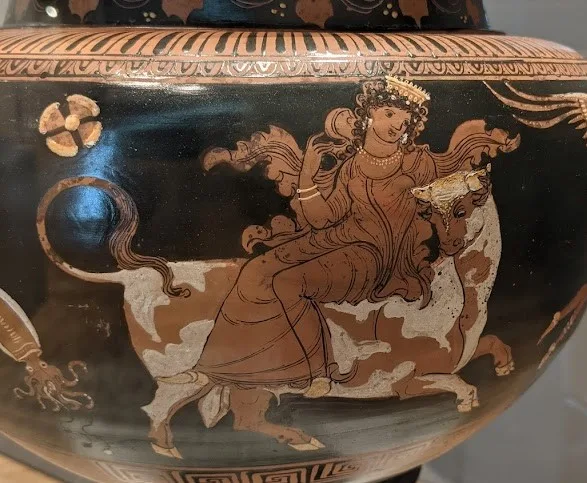
The myth of Zeus and Europa has been a popular subject in both ancient and later artistic traditions. It appears in literary works by authors such as Herodotus and Ovid.
In Renaissance and modern times, artists used the myth to explore such topics as love, power and transformation.
5. Conclusions
The myth of Zeus and Europa is a complex and multilayered narrative that integrates mythological storytelling with historical and symbolic dimensions. Through the story of Europa’s abduction and relocation, the myth reflects key aspects of ancient Greek worldview, including divine authority, mobility, and cultural interaction.
Its lasting significance is evident in its continued presence in art, literature, and the very naming of the European continent, underscoring its foundational role in Western cultural identity.
JTNDADMITRAJECDOSVOQECRAVVODOSVOQECRAVECDOSVOQECRAVOQUVODOSVOQECOMYVODOSVOCECDODOSVOCECDOSVOQVOVOCECDOSVOQUQUUUlQUlQUlQUlQUlQUlQUQUQUQUMQUQUQUQUQUQUUUQUQUQUQUUVUVUVUVUVUVUVUVUVUVUVUVUVUVUVUVUVUVUVUVUVUVUVUVUVUVUVUVUVUVUVUVUVUVUVUVUVUVUVUVUVUVUVUVUVUVUVUVVVUVUVUVVUVUVUVUVUVUVUVVVVVVVVVVVVVVV