
Ναός του Ολυμπίου Διός: Το Μεγαλύτερο Ιερό του Δία στην Αρχαία Αθήνα
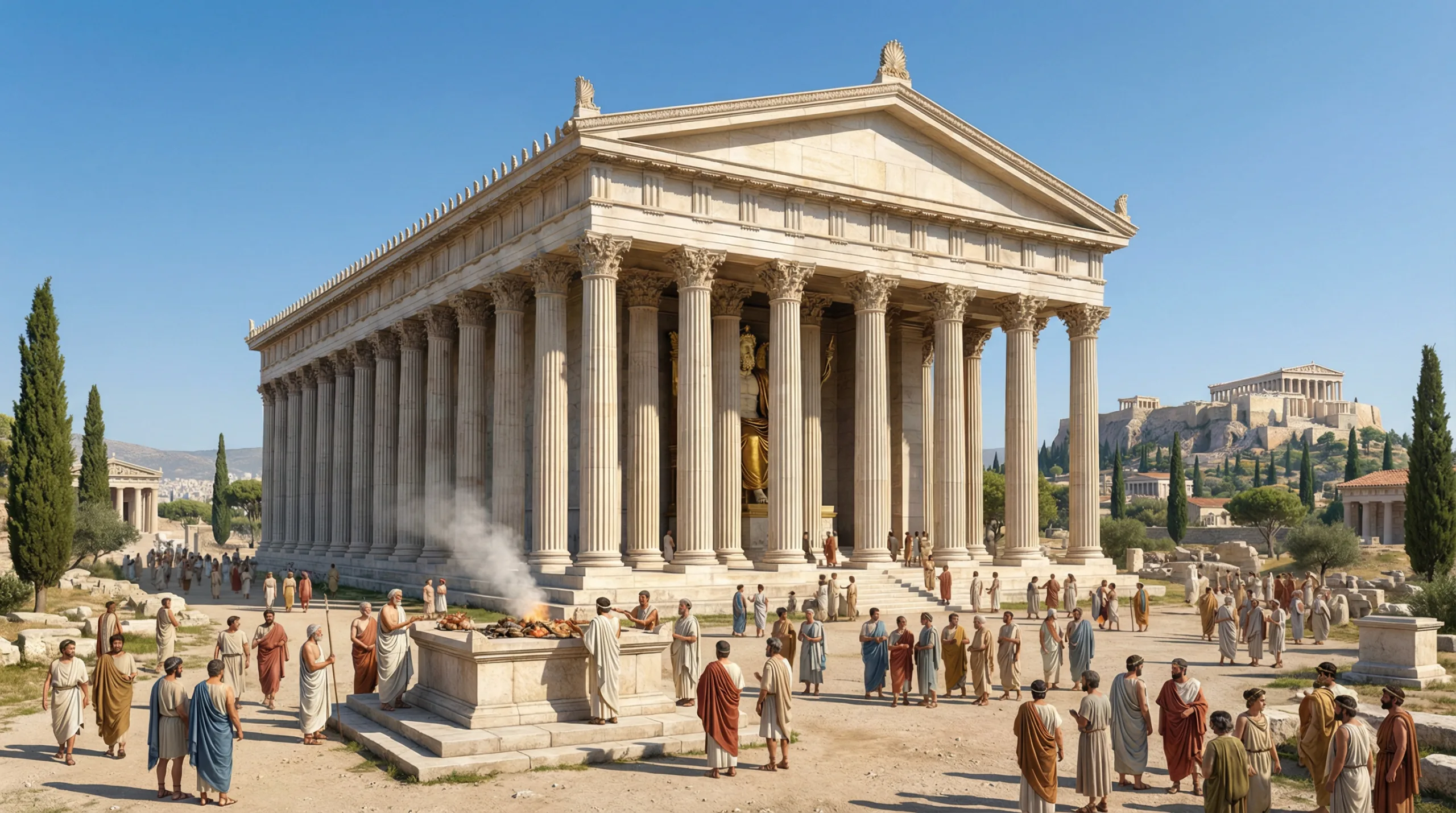
Ο Ναός του Ολυμπίου Διός, γνωστός και ως Ολυμπιείον, υπήρξε ένα από τα πιο φιλόδοξα και εντυπωσιακά οικοδομικά έργα της αρχαιότητας. Αφιερωμένος στον ύπατο θεό Δίας, ο ναός αυτός αποτέλεσε για αιώνες σύμβολο δύναμης, πολιτικής φιλοδοξίας και θρησκευτικής λατρείας. Η κατασκευή του ξεκίνησε στην αρχαϊκή εποχή, αλλά ολοκληρώθηκε έπειτα από σχεδόν επτά αιώνες, στη ρωμαϊκή περίοδο.
Σήμερα τα επιβλητικά του ερείπια, λίγα μόλις βήματα από την Ακρόπολη της Αθήνας, υπενθυμίζουν το μεγαλείο της αρχαίας θρησκευτικής αρχιτεκτονικής και την εξέλιξη της πόλης της Αθήνα μέσα στους αιώνες.
Η ίδρυση του ιερού και τα πρώτα σχέδια
Η ιστορία του ναού αρχίζει τον 6ο αιώνα π.Χ., όταν ο τύραννος της Αθήνας Πεισίστρατος και οι γιοι του αποφάσισαν να δημιουργήσουν τον μεγαλύτερο ναό αφιερωμένο στον Δία στον ελληνικό κόσμο.
Το σχέδιο ήταν φιλόδοξο: ένας κολοσσιαίος ναός που θα ξεπερνούσε σε μέγεθος όλους τους άλλους ελληνικούς ναούς και θα συμβόλιζε τη δύναμη της Αθήνας.
Οι αρχικοί αρχιτέκτονες, πιθανότατα από τη Μίλητος, σχεδίασαν έναν τεράστιο διπλό περίπτερο δωρικό ναό, με εκατοντάδες κίονες. Ωστόσο, το έργο σταμάτησε μετά την πτώση της τυραννίας, καθώς οι Αθηναίοι θεωρούσαν το μνημείο σύμβολο απολυταρχικής εξουσίας.
Για σχεδόν τέσσερις αιώνες, το οικοδόμημα έμεινε ημιτελές.
Η επανεκκίνηση της κατασκευής
Η επόμενη σημαντική προσπάθεια ολοκλήρωσης του ναού έγινε τον 2ο αιώνα π.Χ. από τον βασιλιά Αντίοχος Δ΄ Επιφανής, ηγεμόνα του ελληνιστικού βασιλείου των Σελευκιδών.
Ο Αντίοχος προσέλαβε τον Ρωμαίο αρχιτέκτονα Decimus Cossutius, ο οποίος ανασχεδίασε τον ναό σε κορινθιακό ρυθμό — έναν αρχιτεκτονικό τύπο που θεωρούνταν πιο πολυτελής και μεγαλοπρεπής.
Παρά τις νέες εργασίες, ο θάνατος του Αντίοχου το 164 π.Χ. οδήγησε και πάλι στη διακοπή της κατασκευής.
Η ολοκλήρωση στη ρωμαϊκή εποχή
Ο ναός ολοκληρώθηκε τελικά τον 2ο αιώνα μ.Χ. από τον Ρωμαίο αυτοκράτορα Αδριανός, έναν ηγεμόνα γνωστό για την αγάπη του προς τον ελληνικό πολιτισμό.
Κατά την περίοδο αυτή:
ολοκληρώθηκε η κατασκευή του τεράστιου ναού
τοποθετήθηκε κολοσσιαίο άγαλμα του Δία
δημιουργήθηκε νέο ιερό συγκρότημα γύρω από τον ναό
Ο Αδριανός αφιέρωσε επίσης άγαλμα του εαυτού του δίπλα στον Δία, υποδηλώνοντας τη θεϊκή εύνοια προς τον αυτοκράτορα.
Αρχιτεκτονική και διαστάσεις
Ο Ναός του Ολυμπίου Διός ήταν από τους μεγαλύτερους ναούς της αρχαιότητας.
Βασικά χαρακτηριστικά
Μήκος: περίπου 110 μέτρα
Πλάτος: περίπου 44 μέτρα
Ύψος κιόνων: περίπου 17 μέτρα
Συνολικοί κίονες: 104 κορινθιακοί κίονες
Σήμερα σώζονται 15 κίονες, ενώ ένας ακόμη βρίσκεται πεσμένος στο έδαφος από καταιγίδα που σημειώθηκε το 1852.
Οι κορινθιακοί κίονες αποτελούν ένα από τα καλύτερα διατηρημένα παραδείγματα αυτού του ρυθμού στον αρχαίο κόσμο.
Το άγαλμα του Δία
Το άγαλμα του Δία
Στο εσωτερικό του ναού υπήρχε τεράστιο λατρευτικό άγαλμα του Δία, πιθανότατα από χρυσό και ελεφαντόδοντο (χρυσελεφάντινο).
Δίπλα του είχε τοποθετηθεί άγαλμα του αυτοκράτορα Αδριανού, δημιουργώντας έναν συμβολικό σύνδεσμο μεταξύ θεϊκής και αυτοκρατορικής εξουσίας.
Θρησκευτική λατρεία και τελετουργίες
Ο ναός δεν ήταν μόνο αρχιτεκτονικό θαύμα. Ήταν και κέντρο σημαντικών θρησκευτικών τελετουργιών προς τιμήν του Δία.
Θυσίες
Οι θυσίες προς τον Δία περιλάμβαναν:
θυσίες βοδιών
προσφορές κρασιού
καύση θυμιάματος
τελετουργικές πομπές
Οι τελετές γίνονταν στον βωμό έξω από τον ναό, καθώς οι αρχαίοι ελληνικοί ναοί δεν λειτουργούσαν ως χώροι συγκέντρωσης πιστών, αλλά ως κατοικίες των θεών.
Γιορτές προς τιμήν του Δία
Στο Ολυμπιείον πιθανόν τελούνταν γιορτές αφιερωμένες στον Δία, με:
μουσικούς αγώνες
αθλητικές επιδείξεις
δημόσιες θυσίες
Η λατρεία συνδεόταν με τη βασιλική και αυτοκρατορική εξουσία, ιδιαίτερα στη ρωμαϊκή περίοδο.
Το Ολυμπιείον και η πόλη της Αθήνας
Κατά την εποχή του Αδριανού, ο ναός εντάχθηκε σε ένα ευρύτερο οικοδομικό πρόγραμμα που άλλαξε την εικόνα της Αθήνας.
Ο αυτοκράτορας δημιούργησε επίσης:
τη Βιβλιοθήκη του Αδριανού
την Πύλη του Αδριανού
Η πύλη μάλιστα σηματοδοτούσε συμβολικά το πέρασμα από την «παλιά πόλη του Θησέας» στη «νέα πόλη του Αδριανού».
Παρακμή και καταστροφή
Με την εξάπλωση του Χριστιανισμού τον 4ο αιώνα μ.Χ., οι αρχαίες λατρείες άρχισαν να εγκαταλείπονται.
Το ιερό του Δία σταδιακά:
λεηλατήθηκε
χρησιμοποιήθηκε ως πηγή οικοδομικών υλικών
εγκαταλείφθηκε
Στους επόμενους αιώνες, πολλοί κίονες κατέρρευσαν από σεισμούς ή καταιγίδες.
Ο ναός σήμερα
Σήμερα ο Ναός του Ολυμπίου Διός αποτελεί ένα από τα πιο εντυπωσιακά αρχαιολογικά μνημεία της Αθήνα.
Οι επιβλητικοί κορινθιακοί κίονες του δημιουργούν ένα από τα πιο αναγνωρίσιμα τοπία της αρχαίας πόλης και αποτελούν βασικό σημείο ενδιαφέροντος για επισκέπτες από όλο τον κόσμο.
Το μνημείο αποτελεί μέρος του ευρύτερου αρχαιολογικού χώρου που προστατεύεται από το ελληνικό κράτος και προσελκύει εκατομμύρια επισκέπτες κάθε χρόνο.
Συμπέρασμα
Ο Ναός του Ολυμπίου Διός δεν είναι απλώς ένα αρχαίο μνημείο. Είναι ένα έργο που αποτυπώνει:
την πολιτική ιστορία της Αθήνας
την εξέλιξη της αρχιτεκτονικής
τη θρησκευτική λατρεία προς τον Δίας
και τη μετάβαση από τον ελληνικό στον ρωμαϊκό κόσμο.
Από την εποχή του Πεισίστρατου μέχρι την ολοκλήρωσή του από τον Αδριανό, το Ολυμπιείον παραμένει ένα από τα πιο εντυπωσιακά σύμβολα της αρχαίας Αθήνα και της διαχρονικής δύναμης της ελληνικής κληρονομιάς.
JTNDc2VjdGlvbiUyMGNsYXNzJTNEJTIyaW50ZXJuYWwtbGlua3MlMjIlMjBzdHlsZSUzRCUyMmJhY2tncm91bmQtY29sb3IlM0ElMjNmOWY5ZjklM0IlMjBwYWRkaW5nJTNBMjBweCUzQiUyMGJvcmRlci1yYWRpdXMlM0ExMHB4JTNCJTIwYm94LXNoYWRvdyUzQTAlMjAycHglMjA2cHglMjByZ2JhJTI4MCUyQzAlMkMwJTJDMC4xJTI5JTNCJTIyJTNFJTBBJTIwJTIwJTNDaDMlMjBzdHlsZSUzRCUyMmZvbnQtZmFtaWx5JTNBJTIwJTI3R2VvcmdpYSUyNyUyQyUyMHNlcmlmJTNCJTIwY29sb3IlM0ElMjMyYzNlNTAlM0IlMjBtYXJnaW4tYm90dG9tJTNBMTVweCUzQiUyMiUzRSVDRSVBMyVDRiU4NyVDRSVCNSVDRiU4NCVDRSVCOSVDRSVCQSVDRSVBQyUyMCVDRSU4NiVDRiU4MSVDRSVCOCVDRiU4MSVDRSVCMSUyMCVDRSU5NSVDRSVCQiVDRSVCQiVDRSVCNyVDRSVCRCVDRSVCOSVDRSVCQSVDRSVBRSVDRiU4MiUyMCVDRSU5QyVDRiU4NSVDRSVCOCVDRSVCRiVDRSVCQiVDRSVCRiVDRSVCMyVDRSVBRiVDRSVCMSVDRiU4MiUzQyUyRmgzJTNFJTBBJTIwJTIwJTNDdWwlMjBzdHlsZSUzRCUyMmxpc3Qtc3R5bGUtdHlwZSUzQW5vbmUlM0IlMjBwYWRkaW5nLWxlZnQlM0EwJTNCJTIyJTNFJTBBJTIwJTIwJTIwJTIwJTNDbGklMjBzdHlsZSUzRCUyMm1hcmdpbi1ib3R0b20lM0ExMHB4JTNCJTIyJTNFJTNDYSUyMGhyZWYlM0QlMjIlMkZvbHltcGlvaS10aGVvaSUyRnpldXMlMkYlMjIlMjBzdHlsZSUzRCUyMnRleHQtZGVjb3JhdGlvbiUzQW5vbmUlM0IlMjBjb2xvciUzQSUyMzFhNzNlOCUzQiUyMiUzRSVDRSU5NCVDRSVBRiVDRSVCMSVDRiU4MiUyMCVFMiU4MCU5MyUyMCVDRSU5RiUyMCVDRSVCMiVDRSVCMSVDRiU4MyVDRSVCOSVDRSVCQiVDRSVCOSVDRSVBQyVDRiU4MiUyMCVDRiU4NCVDRiU4OSVDRSVCRCUyMCVDRSVCOCVDRSVCNSVDRiU4RSVDRSVCRCUzQyUyRmElM0UlM0MlMkZsaSUzRSUwQSUyMCUyMCUyMCUyMCUzQ2xpJTIwc3R5bGUlM0QlMjJtYXJnaW4tYm90dG9tJTNBMTBweCUzQiUyMiUzRSUzQ2ElMjBocmVmJTNEJTIyJTJGb2x5bXBpb2ktdGhlb2klMkYlMjIlMjBzdHlsZSUzRCUyMnRleHQtZGVjb3JhdGlvbiUzQW5vbmUlM0IlMjBjb2xvciUzQSUyMzFhNzNlOCUzQiUyMiUzRSVDRSU5RiVDRSVCOSUyMCVDRSU5RiVDRSVCQiVDRiU4RCVDRSVCQyVDRiU4MCVDRSVCOSVDRSVCRiVDRSVCOSUyMCVDRSU5OCVDRSVCNSVDRSVCRiVDRSVBRiUzQyUyRmElM0UlM0MlMkZsaSUzRSUwQSUyMCUyMCUyMCUyMCUzQ2xpJTIwc3R5bGUlM0QlMjJtYXJnaW4tYm90dG9tJTNBMTBweCUzQiUyMiUzRSUzQ2ElMjBocmVmJTNEJTIyJTJGdGl0YW5lcyUyRiUyMiUyMHN0eWxlJTNEJTIydGV4dC1kZWNvcmF0aW9uJTNBbm9uZSUzQiUyMGNvbG9yJTNBJTIzMWE3M2U4JTNCJTIyJTNFJUNFJTlGJUNFJUI5JTIwJUNFJUE0JUNFJUI5JUNGJTg0JUNFJUFDJUNFJUJEJUNFJUI1JUNGJTgyJTIwJUNGJTg0JUNFJUI3JUNGJTgyJTIwJUNFJTk1JUNFJUJCJUNFJUJCJUNFJUI3JUNFJUJEJUNFJUI5JUNFJUJBJUNFJUFFJUNGJTgyJTIwJUNFJTlDJUNGJTg1JUNFJUI4JUNFJUJGJUNFJUJCJUNFJUJGJUNFJUIzJUNFJUFGJUNFJUIxJUNGJTgyJTNDJTJGYSUzRSUzQyUyRmxpJTNFJTBBJTIwJTIwJTIwJTIwJTNDbGklMjBzdHlsZSUzRCUyMm1hcmdpbi1ib3R0b20lM0ExMHB4JTNCJTIyJTNFJTNDYSUyMGhyZWYlM0QlMjIlMkZ0ZWxlbGVzLWxhdHJlaWFzLWFyY2hhaWEtZWxsYWRhJTJGJTIyJTIwc3R5bGUlM0QlMjJ0ZXh0LWRlY29yYXRpb24lM0Fub25lJTNCJTIwY29sb3IlM0ElMjMxYTczZTglM0IlMjIlM0UlQ0UlQTQlQ0UlQjUlQ0UlQkIlQ0UlQjUlQ0YlODQlQ0UlQUQlQ0YlODIlMjAlQ0UlQkIlQ0UlQjElQ0YlODQlQ0YlODElQ0UlQjUlQ0UlQUYlQ0UlQjElQ0YlODIlMjAlQ0YlODQlQ0UlQjclQ0YlODIlMjAlQ0UlOTElQ0YlODElQ0YlODclQ0UlQjElQ0UlQUYlQ0UlQjElQ0YlODIlMjAlQ0UlOTUlQ0UlQkIlQ0UlQkIlQ0UlQUMlQ0UlQjQlQ0UlQjElQ0YlODIlM0MlMkZhJTNFJTNDJTJGbGklM0UlMEElMjAlMjAlM0MlMkZ1bCUzRSUwQSUzQyUyRnNlY3Rpb24lM0U=