
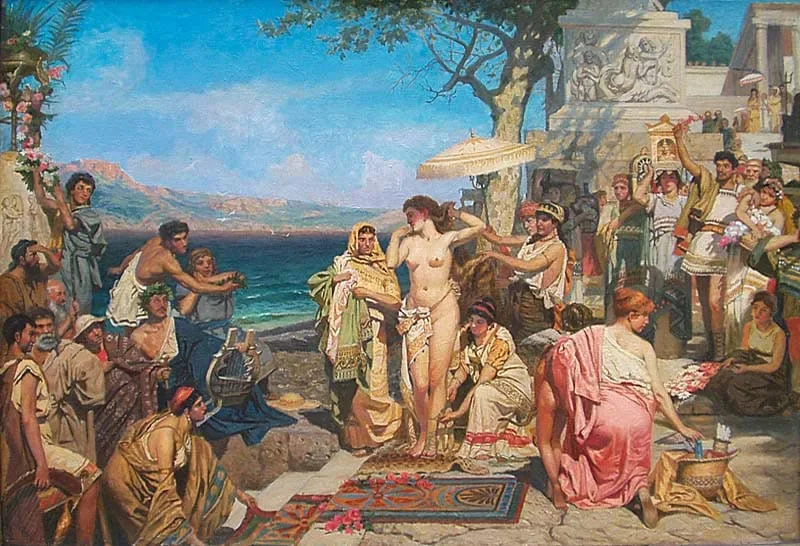
Worship ceremonies in ancient Greece were a key part of religious and social life. They included sacrifices, libations, prayers, mysteries, feasts, and purgatory, in order to favor the gods, to protect and maintain the secular order.
The text also features chthonic ceremonies, hero worship and divination practices, showing how worship was associated with the city-state, annual rhythm and Greek religious identity.
Worship Ceremonies in Ancient Greece
Worship ceremonies in ancient Greece were a fundamental element of religious and social life. Through sacrifices, celebrations, mysteries, and purifications, people sought the favor of the gods, the preservation of the secular order and the connection with the divine.
Main Subcategories of Worship Ceremony
1. Sacrifices (other sacrifices)
The most common cult acts.
Blood sacrifices of animals (sheep, sheep, pigs)
Bloodless offerings (skines, fruits, honey, wine)
Holocausts (especially in chthonic deities)
Purpose: Peace, thanksgiving, protection request.
2. Sponges
Ritual fluids:
wine, water, milk, honey, oil
They were used before meals, conditions, wars, and prayers.
3. Prayers and Songs
Word communication with the gods:
Intrusions and appeals
Homeric hymns
public and private prayers
4. Mysteries (Mysterical Ceremony)
Occult initiation rituals:
Eleusinia Mysteries ( Demeter – Persephone)
- Orphic Mysteries
Purpose: spiritual cleansing and hope of afterlife.
5. Celebrations and Fairs
Religious celebrations associated with the calendar:
Panathina (Athens)
Dionysian (Dionysus)
Olympia (Dia)
They combined worship, struggle, music, and theatre.
6. Cleansings
Ritual purification:
water washes
burn objects
removal of mismas (murder, birth, death)
7. Winter Ceremony
Dedicated to deities of the Underworld:
pigs on the ground
Night ceremonies
funeral offerings
8. Hero worship
Worship of heroes after death:
ceremonies in hero
offers and sacrifices
connection to local identity
9. Magic and Ritual Practices
Associated with oracles:
Dolphin Oracle
necromancers
onoscopy
Role of Ceremonies in Society
The cult ceremonies:
strengthened city–state cohesion
set the pace of the year
connected people and gods
formed the Greek religious identity
Frequently Asked Questions – Worship Ceremonies in Ancient Greece
1. What were worship ceremonies in ancient Greece?
Worship ceremonies were religious practices performed in honor of the gods, such as Zeus, Athena and other deities, in order to protect, prosperity and good luck.
2. Where were the ceremonies held?
The ceremonies took place in sacred places, such as temples, altars and sacred groves, for example in its sanctuary Temple of Apollo in Delphi.
3. What were the basic elements of a cult ceremony?
It usually included prayer, animal sacrifices, food offerings, wine vertebrates and sacred songs in honor of the gods, such as Apollo.
4. Who participated in the worship ceremonies?
Priests, citizens, rulers and a simple people participated, as religion was part of the everyday life of ancient Greek society.
5. Were there secret ceremonies?
Yes, some ceremonies were secret, such as Eleusinia Mysteries related to her worship Demeter And her daughter's.
6. Why were worship ceremonies held?
Ancient Greeks believed that ceremonies secured favor of the gods, good crops, protection in battles and harmony in life.