
Apollodorus and His “Library”: The Great Collector of Greek Myths
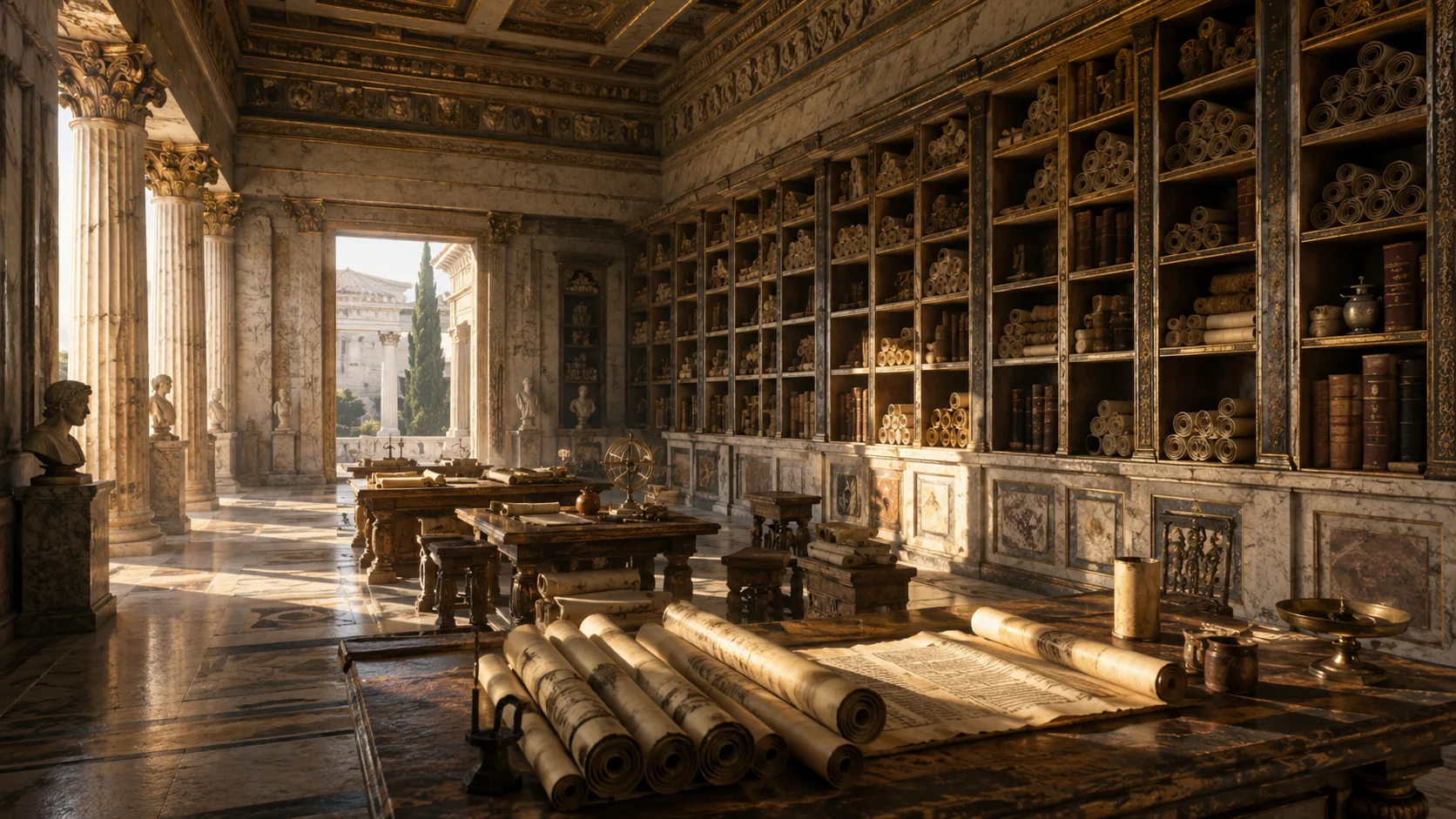
Apollodorus of Athens stands out as one of the most important grammarians and mythographers of the Hellenistic period. He lived from around 180 to 110 B.C., spending much of his life in Alexandria, the intellectual capital of the era. There he came into contact with a vast collection of ancient texts, which paved the way for him to organize Greece’s chaotic mythological tradition in a clear and methodical manner. His most important work, the famous “Library,” remains even today the most comprehensive and accessible source for anyone seeking the myths of the ancient Greeks.
The life of Apollodorus
We know very little about his personal life. He was born in Athens, but his reputation and experience led him to be sent as an expert to the Library of Alexandria. In this vibrant intellectual environment, he spent his life studying, cataloging, and interpreting works of antiquity. This hard work gave rise to works that straddled the fields of linguistics and mythology. Although we do not know exactly when he wrote the “Library,” it most likely dates to the 1st century B.C. or slightly earlier.
"The Library": What It Contains and How to Read It
"The Library" spans three volumes and begins at the dawn of the world—with the cosmogony, the creation of the Earth, and the first gods. It systematically traces the genealogies of gods and heroes, moving step by step into the heart of Greek mythology.
The first book is dominated by the gods, starting with the primordial ones Uranos and Gaia all the way up to Zeus and the rest of the Olympians. The second book focuses on the great heroes—the Hercules, for example, takes up most of the book with his exploits and adventures. The third book turns its attention to other heroes, such as Theseus and Perseus, monitors the adventures of royal houses such as Argos and Thebes, and reaches the birth of the events of the Trojan War.
Apollodorus’s style is clear and focused: he does not confuse the reader with his own personal thoughts or explanations. He gathers the traditions and unfolds them in a way that allows one to understand how everything is connected—from generation to generation.
The value and influence of the project
"The Library" is not merely a collection of beautiful stories. It is a tool for anyone who wants to gain a comprehensive and clear understanding of how Greek myths functioned. In this work, we encounter many details that would otherwise have been lost, since the ancient texts that Apollodorus compiled have now been lost. This is why his work remained essential for later writers, scholars, and artists—today, it is a fundamental resource in schools and universities.
It is true that some scholars have questioned whether the surviving text actually belongs to Apollodorus of Athens. Nevertheless, the value of the *Bibliotheca* remains unchanged. Even if someone else wrote it under his name, we have before us the most comprehensive and reliable reference work on Greek mythology.
A project that lives on
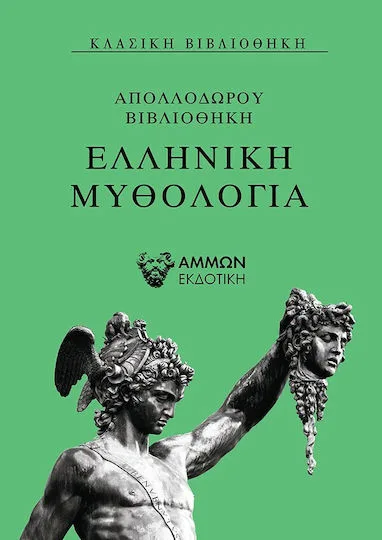
Today, the «Library» of Apollodoros is released in many publications and translations — accessible to students, but also to anyone who simply loves Greek tradition. Its simple language and clear way of organizing make it ideal for those who want to know the Greek myths without being lost in academic paths. It keeps interest alive even two thousand years later, lighting up the complex and colorful world of Greek mythology in a direct, human and friendly way.
Practical Summary
The «Library» Apollodorus is a fundamental work for anyone interested in Greek mythology, offering an integrated and easily accessible source.
Through its three books, the reader can follow the chronological evolution of myths, from the beginnings of the world to the heroic times.
This project works as «Manual» for myths, necessary for students, researchers, but also for the general public.
Many modern publications and translations «Library» are available, making the project accessible to everyone.