
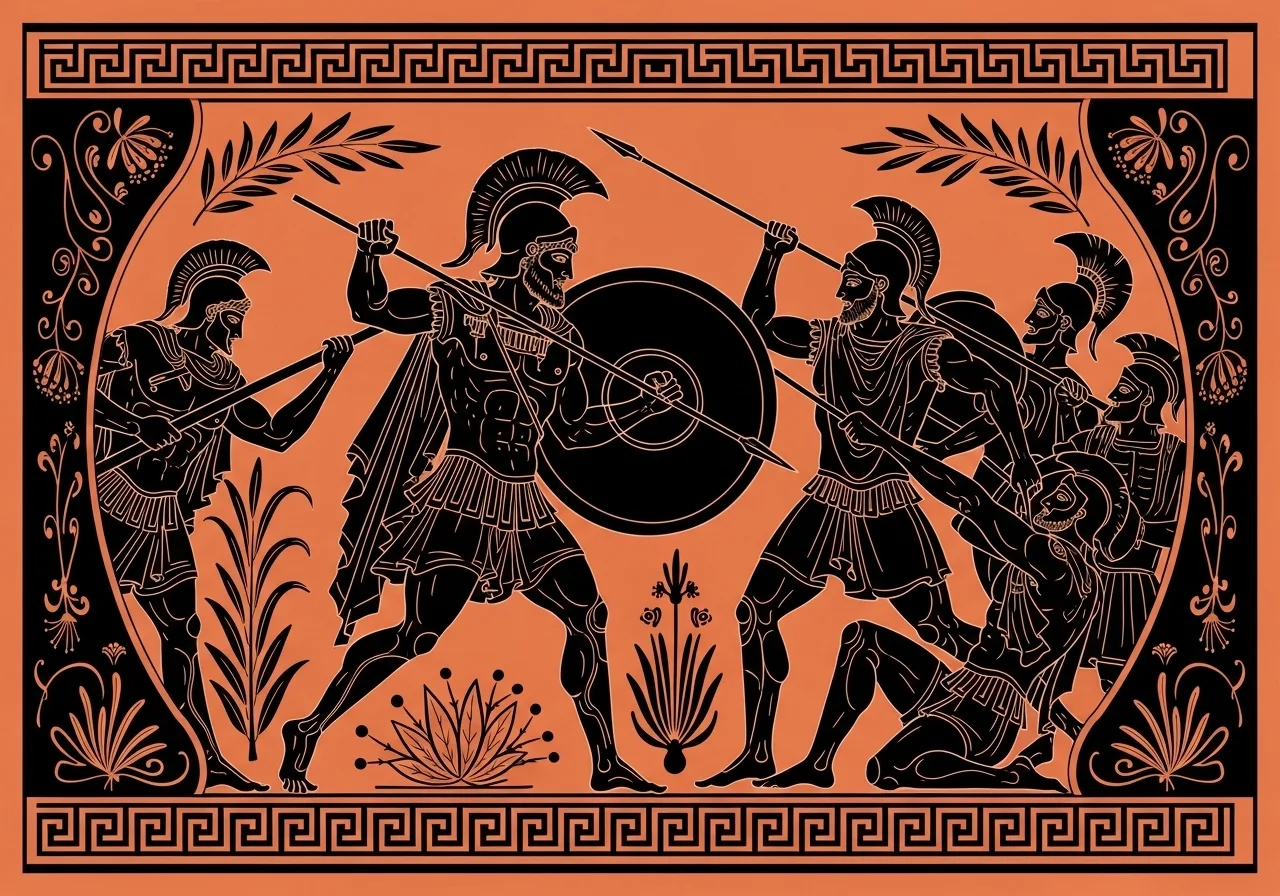
Aea the Telamony: The Greatest Hero After Achilles
Aias Telamony is one of the most imposing figures of Greek mythology and one of his greatest heroes Trojan WarKnown for his incomparable physical strength, courage and unshakable sense of honor, Aias was considered by the Achaeans the strongest warrior after him AchillesHis form symbolizes the ideal of the heroic warrior who fights with bravery, devotion and dignity, even when fate turns against him.
Son of King Telamona of Salamina and Perivoia, Aias descended from a glorious generation. His father had participated in the Argonaut Campaign and had distinguished himself for his war skills. From a young age, Aias was trained in the art of war and gained fame for his physical form and combative skill.
In his Iliad Homer is presented as a giant warrior with a shield of huge dimensions, made from seven layers of beef skin and coated with copper. This shield became a symbol of his unbearable power and often operated as a protective wall for his fellow warriors. Homer describes him as a man who inspired respect and fear for his opponents.
During the Trojan War, Aias starred in many of the most important conflicts. He stood out especially when he faced Hector in a duel. The two heroes fought hard without being able to prevail completely. The showdown ended with mutual respect and gift exchange, which reveals the code of honor that characterized the heroic warriors of the time.
One of Aia's greatest achievements was the defence of Greek ships when the Trojans attacked the Achaean camp. While many heroes had been injured or withdrawn from battle, Aias remained on the frontline and repeatedly repelled enemies' attacks. His bravery contributed decisively to the rescue of the Greek fleet, which further strengthened his reputation.
Equally important was his role in saving Achilles' body after the death of the leading hero from the arrow of Paris. According to tradition, Aias lifted on his shoulders the body of the dead Achilles and safely carried it away from the battlefield, while Ulysses protected him from the Trojan attacks. This act was considered one of the most heroic moments of the war.
However, the most tragic aspect of his history is related to Achilles' weapons. After the hero died, the Achaeans decided to award his armor to the warrior who had offered the most important services in the war. Aias felt that rightfully he owned this honor because of his valor and accomplishments. Nevertheless, the Achaean leaders decided to award the weapons to Odysseus, recognizing not only his war value but also his wisdom and intelligence.
This decision caused deep anger and humiliation to Aias. According to legend, he decided to avenge the Achaean leaders who wronged him. But goddess Athena, who favored Ulysses, struck him with insanity. In his madness, Aias thought he was attacking his enemies, while he was actually killing herds of camp animals.
When he recovered and realized what had happened, he felt unbearable shame. For a hero who had dedicated his life to honor and glory, public humiliation was worse than death. Unable to accept disgrace, he decided to end his life by falling upon his sword. This sword was a gift from Hector from their duel, which gives special symbolism to his death.
After his death, according to later myths, from his blood he grew a flower, usually identified with the hyacinth. This represents the transition from death to immortality of memory and glory.
Aia's tragic fate inspired many ancient writers and poets. The tragedy is particularly important. «AIA» Sophocles, where the conflict between personal honor, social recognition and human weakness is presented in a shocking way. The project is considered one of the deepest psychological studies of the ancient Greek secretariat.
Today, Aias remains a symbol of heroism, devotion and tragic dignity. His story reminds him that even the strongest heroes can bend when their honor is struck, while at the same time highlighting the timeless human values of bravery, justice, and self-awareness.
Aias the Telamony, also known as the Great Aias, is presented as one of his most powerful Achaean heroes Trojan War. Son of Telamonas and Perivoia, from Salamina, stands out for his physical strength, bravery and commitment to honor.
The text summarizes his action in combat, duel with Hector and his involvement in claiming his weapons Achilles. He also examines his fall, divine fury, suicide, and his position as a tragic hero in literature and theatre.
| Name | AIA |
|---|---|
| Parents | Customs and Perivoia (or Eriboia) |
| Residence | Salamina |
| Roles and Responsibilities | Hero of the Trojan War, one of the strongest Achaean warriors |
| Other Names | Aias Telamonium |
| Husbands | Eriboia (in some traditions) |
| Children | Eurysakis |
| Symbols | Shield, spear, armor, bravery |
| Roman Name | Aias (Ajax) |
Who was Aiah the Telamonian?
- Ajax the Telamonium, also known as Great Aias, has been one of Achaia's strongest and most glorious heroes in Trojan WarIt was distinguished for the body strength, character stability and its absolute commitment to price and duty.
In Iliad of Homer is presented as the second best warrior after Achilles.
Origin and family
Father: Telamonas, king of Salamis
Mother: Perivoria (or Eriboea)
Brother: Tekros, famous archer
His royal lineage and the war tradition of the family showed him early on to a model warrior.
External appearance and armament
Aias is described as:
Big and imposing
slow but unstoppable in battle
Characteristic armament
Huge shield seven leather with copper lining
spear and sword
heavy armor, symbol of defence and stability
Ajada's shield symbolizes the protection of the army.
Aias in the Trojan War
Aias was:
Achaean rampart
Ship defender
the last line of defense
Important games
Face him Hector in a tied duel
He saved his body. Paltroclus
Protect the Achaeans in the absence of Achilles
Achilles' gun competition
After Achilles died, Aias claimed his weapons along with him Odysseus. Although he considered himself worthy of valor, the weapons were awarded to Ulysses for his wisdom and rhetoric.
This decision has been decisive for the tragic fate of Aiada.
Ajada's madness and death
Humiliated and wounded in his honor, Aias was led to Divine mania from Athena. In delirium he killed animals, thinking they were the heads of the Achaeans.
When he recovered and realized his act, he could not stand the disgrace. He fell upon his own sword, ending his life.
His death is one of the most tragic moments of Greek mythology.
Characterism and moral symbolism
Aias embodies:
The traditional heroic virtue
absolute commitment to the value
conflict between violence and reason
Unlike Ulysses, he could not adapt to a world where intelligence prevails over raw force.
Aias in literature and theatre
Iliad – Homer
AIA – Sophocles (singing)
Sophocle's tragedy deepens the psychology, shame, and moral judgment of the hero.
Educational value
Aias is taught as:
example of a tragic hero
symbol of the judgment of the male value
study of mental collapse and hybridity
Ideal topic for literature, philosophy and cultural studies.
Frequently Asked Questions About Aias the Telamonian
Who was Aias the Telamonian?
Aias Telamony was one of the strongest heroes of Greek mythology and king of Salamis. He was known for his enormous size, strength and courage in the Trojan War.
What was his role in the Trojan War?
Aias was considered one of the leading Achaean warriors after Achilles. He stood out in many battles, defending Greek ships and saving his comrades from difficult situations.
What was his duel with Hector?
Aias competed in a duel with Hector, the leading Trojan warrior. Their battle ended tied, which highlighted the strength of both heroes.
What happened after Achilles died?
After Achilles died, Aias claimed his weapons. But the weapons were given to Ulysses, which led Aiada to a mental breakdown.
How did Aias die?
According to legend, Aias, disappointed with injustice, committed suicide by falling upon his sword.
What does Aiah the Telamony symbolize?
It symbolizes power, honor and war valor, but also the tragedy of excessive pride and injustice.
Bibliography
Ancient Sources
- IliadHomer.
- OdysseyHomer.
- Aias, Sophocles.
- Library, Apollodorus.
- Transformations, Ovid.
Modern Studies
- Grimal, Pierre. The Dictionary of Classical MythologyBlackwell Publishing.
- Hamilton, Edith. Mythology: Timeless Tales of Gods and HeroesLittle, Brown and Company.
- March, Jennifer. Cassell Dictionary of Classical MythologyCassell.
- Woodford, Susan. Images of Myths in Classical AntiquityCambridge University Press.
- Garland, Robert. The Greek Way of LifeDuckworth Publishing.
History of Greek Ethnogenesis 3000–700 BC