
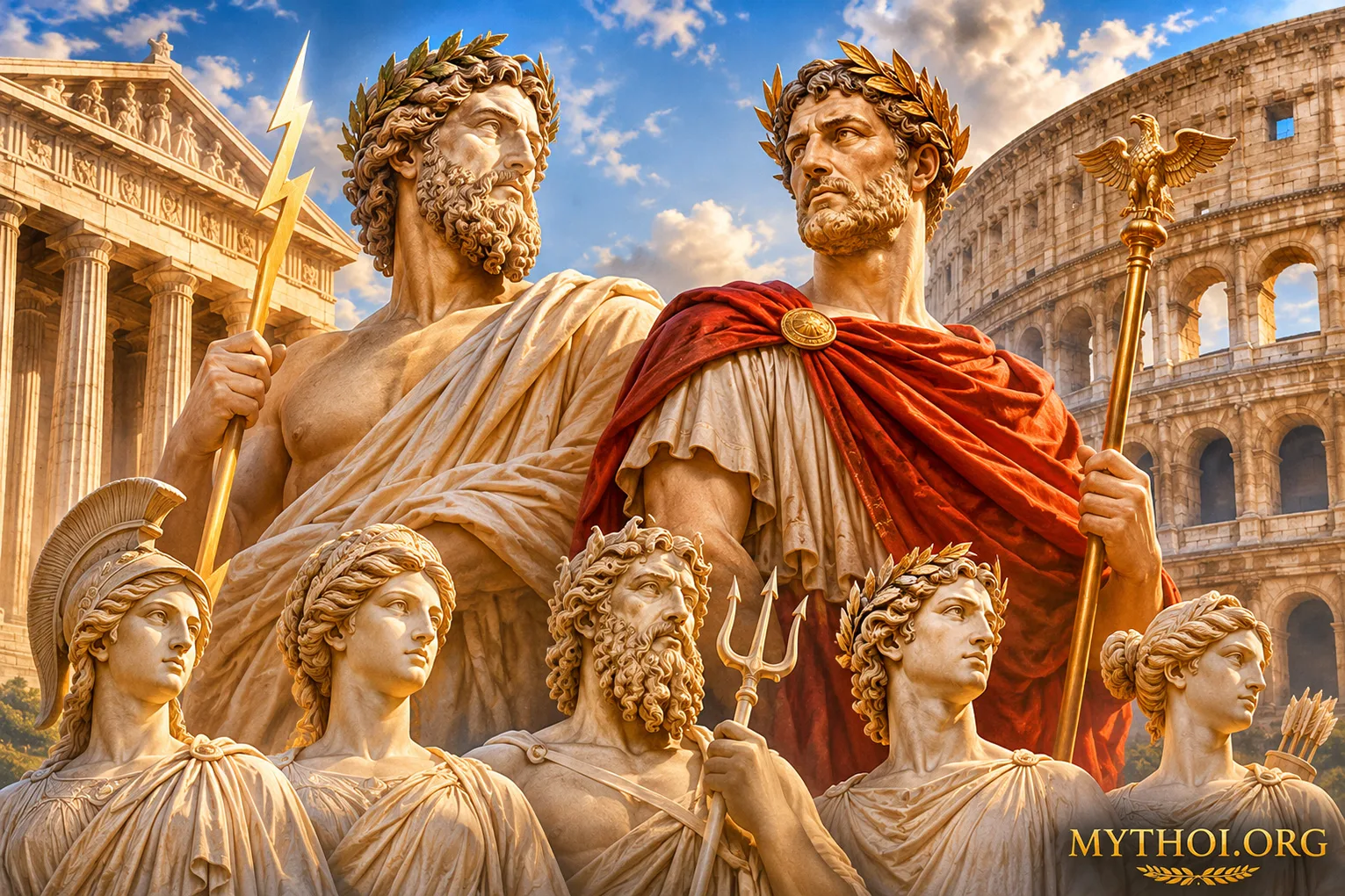
Greek and Roman gods. The Romans did not just copy them gods of the GreeksThey gradually adopted them, over centuries, and joined them in a religion of its own logic, its own rituals and goals. That is why Roman mythology is so much like Greek mythology and at the same time differs substantially from it. The similarities are impressive. THE Zeus and Jupiter rule the gods, Aphrodite And Venus is love goddesses, Poseidon and Neptune reside in the sea. But the match wasn't automatic.
The Romans already had their own deities, Italian and Etruscan origins, and when they met the Greek world they sought matches: they recognized in a foreign god a familiar form under another name. Once again they accepted a Greek god as he was, without renamed him. This happened with Apollo, who had no Roman equivalent. In the following sections we will see how this process happened, why it happened and what changed along the way. We will also distinguish historical evidence from mythological traditions. Many dates of the earliest age are known to us by later writers, such as Livius, and should be read as tradition rather than a certain fact.
| Greek god | Roman god | Domains | Basic symbols | Remarks |
|---|---|---|---|---|
| Zeus | Jupiter (Jove) | Uranus, lightning, domination, vows | Thunder, eagle, oak | Common Indo-European name root. Jupiter Optimus Maximus was a Roman god-protector Kratos, with a particularly institutional nature. |
| Hera | Juno | Marriage, women, queen of the gods | Ice, diadem | Juno had many functions (Lucina in childbirth, Moneta, Regina) and was a member of the Capitoline Trinity. The jealous wife of Greek myths is less intense. |
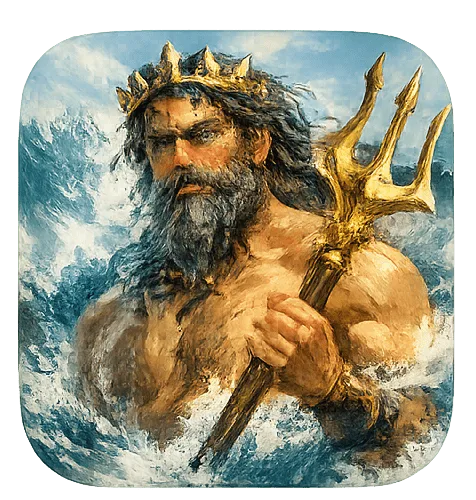
| Poseidon | Neptune | Sea, earthquakes, horses | Trident, dolphin | Neptune originally had a more limited role, with a celebration in the summer (Neptunalia). Its marine identity was enhanced by identification with Poseidon. |
| Demeter | Ceres | Cereals, agriculture, fruit | Ash, torch | Ceres was central to the worship of the walk. He received from Dimitra the myth of the lost daughter, but did not adopt Eleusinian Mysteries as a Roman ceremony. |
| Athena | Minerva | Wisdom, arts, crafts, war | Glaucus, shield, olive | Minerva was of Etruscan origin (Menrva) and especially protector of the craftsmen. Athena was a city patron, which Minerva was not in the same way. |
| Ares | Mars | War, agriculture, youth | Door, shield, wolf | Mars had much greater public significance, as he was considered the father of Romulus and Remus. |
| Aphrodite | Venus | Love, beauty, fertility | Dove, Myrrh Tree, rose | Venus was originally a goddess of fertility and gardens. He became an ancestral goddess of Rome through Aeneas. |
| Apollo | Apollo | Music, divination, treatment, light | Lyra, bow, laurel | He has no different Roman name. He came as a god of healing and pestilence and became iconic in the August era. |
| Artemis | Diana | Hunting, wildlife, moon, childbirth | Bow, deer, moon | Diana had worship in Lake Nemi and temple in Aventino, with a role of patron of lower classes and Latines. |
| Hermes | Mercury | Trade, preacher, travelers | Caryceus, winged sandals | The name Mercurius is associated with the merx (good). In Rome his role in commerce was primary. The characteristics of the messenger and the psychotransmitter came from Mercury. |
| Hephaestus | Vulcan | Fire, metallurgy | Hammer, anvil | Volcanus was a god of destructive fire, which had to be appeased (Volcanalia). The mythical portrait of the lame artisan is Greek. |
| Hestia | Vesta | Hestia, public flame | Fire, Hestia | In Rome Vesta was of great cult importance (Estiadis), while Hestia He had limited mythology. |
| Dionysus | Bacchus (Liber) | Wine, ecstasy, mysteries | Kiss, thyrsus, vine | Liber Pater was an Italian god of fertility. Bacchus was associated with the Greek Dionysus and Bacchian Mysteries. |
| Eros | Cupid (Amor) | Love, desire | Bow, wings | Cupid became popular in literature and art. He had limited official worship. |
| Persephone | Proserpina | Queen of the Underworld, times | Pomegranate, wheat | The name is a loan from Greek. It is often also associated with Libera. |
| Pluto (Hades) | Pluto (Dis Pater) | Underworld, wealth of the earth | Invisibility helmet, plenty horn | Dis Pater («The rich man») was an Italian deity. He connected to the Ludi Saeculares. |
| Cronus | Saturn | Agriculture, time, golden age | Drill | THE Cronus He devours his children in Greek myths. Saturnus is associated with the golden age and the Latin, as well as with the Saturnalia. |
| Rhea | Ops | Plenty, mother of gods | Ash, horn plenty | Ops was the Roman goddess of abundance and the wife of Saturn. Rhea was also identified with Cybele. |
| Nike | Victoria | Nike | Wings, laurel wreath | Victoria gained great political weight and altar in the Senate. |
| Herene | Pax | Herene | Olive branch, plenty horn | Pax concerned the peace imposed by victory (Pax Romana, Ara Pacis). Irene had a milder character. |
| Iris | Iris | Messenger, rainbow | Rainbow, wings | In Rome there was mainly as a literary form. |
| Asclepius (Aesculapius) | Aesculapius | Medicine, treatment | Snake rod | He arrived from Epidaurus in 293 BC His worship was an official Greek introduction. |
| Pan | Faunus | Forests, flocks, divination | Syringe, horns | Faunus was an Italian god. The match with Pan (and Lupercus) emerged later. |
| Hecate | Trivia | Three ways, magic, night | Dandes, dog | Trivia was an adjective («triodes») attributed to Diana and Hecate. She wasn't a special goddess. |
| Tyche | Fortuna | Luck, Prosperity | Helm, horn plenty | Fortuna was an Italian goddess (e.g. Fortuna Primigenia in Primigenia). Fortune became an abstract force of the city. |
| Hercules | Hercules | Power, protection of travellers and traders | Raspberry, lion skin | A Greek hero who gained great worship in Rome and was deified. |
| Criterion | Greek religion | Roman religion |
|---|---|---|
| Personality of the gods | Intense anthropomorphs, with passions, contentions and erotic adventures, as presented in the Homeric epics. | More functional and serious in worship. The human stories of the gods pass mainly through literature and art. |
| Mythological identity | A rich circle of myths, as in the works of Hesiod, Homer and ancient tragics. | Less indigenous myths. The gods are associated with places, institutions and the history of the city. |
| Relationship with people | Gods who love, avenge and intervene personally in the lives of heroes and mortals. | Relationship between reciprocity and religious obligation: God protects the community when rituals are performed properly. |
| Rituals and sacrifices | A variety of cult practices per city, with emphasis on celebrations, sacrifices, and mysteries. | Strict ritualism. The mistake in the ceremony could cancel it. Important was the role of divination (omens, examination of innards). |
| Temples and sanctuaries | Sacredly dedicated to the politic gods of each city, as well as large nationwide centers, such as Delphi, Olympia and Elefsina. | Temples connected to the center of political power (Capitol, Forum) and, later, to the worship of the emperor. |
| Meaning for the state | Religion was an integral part of the city's life, without a single nationwide priesthood. | The Senate and priestly colleges (pontivians, auguries, quindecimviri) managed religion as a public matter. |
| Daily life | Sacrifices, wishes, celebrations, divination and participation in public and private worship events. | Intense domestic worship (Lares, Penates, Genius) and organized calendar of religious festivals regulating the city's life. |
9. The Greek gods in Roman art and architecture
Roman art borrowed forms, techniques and themes from Greek, but used them for its own purposes.
- Statues and sculptures: The Romans gathered Greek originals, spoils of conquests, and produced copies and free covers for private and public spaces. Many Greek works we know today are preserved only through Roman copies. At the same time Roman sculpture developed its own forms, such as realistic portrait and historical relief.
- Temples and sanctuaries: the Roman temple combined the Greek colonnade with the high pedestal and the emphasis on facade, elements belonging to the Italian-Etruscan tradition. The use of concrete allowed new forms, such as the Pantheus dome.
- Murals and mosaics: The houses of Pompeii and Herculaneum, destroyed by Vesuvius in 79 AD, bear a multitude of mythological scenes, often with Greek standards. These scenes decorated reception venues and showed the owner's education.
- Coins and imperial iconography: coins brought gods and personalities (Victoria, Pax, Fortuna), carrying the emperor's political messages throughout the empire. Augustus connected his image to Apollo, and his temple to Palatino (dedicated in 28 BC) was next to his home.
- The influence of Greek sculpture: From the Hellenistic era the Romans admired and copied Greek standards. After the time of August, the "classical" Greek form became the common style for the public art of the empire.
10. The spread of Greek cults in the Roman Empire
Greek cults did not enter Rome alone. They coexisted with cults of the East and with the old Italians, and many acquired new form on the route.
- Cybel (Magna Mater): In 204 B.C., during the Second Carthaginian War, the Senate carried to Rome the worship of the Great Mother from Pessinuda, Frigia, after the oracle of Sibyllin books. Her temple to Palatine was dedicated in 191 BC. Although Kyveli is a Phrygian goddess, she was approached through the Greek world and identified herself with her Rhea. Roman citizens were limited to participating in its exotic priesthood.
- Eleusinia Mysteries: the worship of Demeter and Persephone in Elefsina attracted Romans initiated. Cicero and Atticus were initiated, and later Augustus, Hadrian, and Mark Aurelius. The sanctuary was destroyed by the Goths of Alarich in 396 AD. The mysteries remained a Greek ceremony on Greek soil and did not become Roman worship.
- Asclepius: In 293 B.C.E., during a pestilence, the Romans brought God from Epidaurus, with the sacred serpent. Tradition says the snake went to the island of Tiber, where a temple was built. The cult of healing became very popular and spread to the empire.
- Dionysal and Bacchian ceremonies: Bacchus ceremonies became popular in Italy in the 3rd and 2nd centuries BC. In 186 B.C. the Senate severely restricted them with senatus Consultum de Bacchanalibus, which is preserved on an inscription found in southern Italy, and by the prosecution of thousands of people (Live 39). Worship itself was not abolished, but controlled. The episode shows that the state accepted foreign cults only conditionally.
- Sarapis: Sarapis is a Greek-Egyptian deity established in Alexandria on Ptolemy I. His worship, along with Isis, reached Italy during the 2nd century B.C.E. The Senate repeatedly pursued her in the 1st century BC, but in the Flavian years and then she was very popular. The case shows how a Hellenistic cult could be transferred to Rome through the Greek world.
11. Timeline of Greek influence in Roman religion
The dates prior to the 3rd century BC mainly come from the late Roman tradition and are approaching.
| Chronology | Event | Meaning |
|---|---|---|
| C. 8th century BC | Establishment of Monkey and Kymi in Italy | Greeks settle near Latio |
| 509 BC (delivery) | Dedication of the Temple of Jupiter Optimus Maximus | The capitol triad, with Etruscan and Greek influence |
| 493 BC (delivery) | Temple Ceres, Liber and Libera | Greek deities with Roman names |
| 484 BC | Dedication of the Dioscuri temple | Early adoption of Greek heroes - gods |
| 431 BC | Apollo Temple | Introduction of God by his Greek name |
| 399 BC | First lecisternium | Greek ritual for pairs of gods |
| 293–291 BC | Introduction of Asclepius | Greek healing cult |
| 272 B.C.E. | Fall of Tarada | Rome dominates Great Greece |
| C. 240 B.C. | Livius Andronikos presents the first Latin drama | The Greek literature source of Latin |
| 212 BC | Selling of Syracuse | Transfer of Greek art to Rome |
| 204–191 BC | Arrival of Kyveli and its temple | Greek-Eastern worship with official approval |
| 186 B.C.E. | Suppression of Bacchians | Limits to accepting foreign cults |
| 146 BC | Disaster of Corinth | Greece in the Roman sphere |
| 46 BC | Temple of Venus Genetrix | The myth of Aeneas as a political ideology |
| C. 45 B.C. | Cicero writes De Natura Deorum | Philosophy thought about the nature of the gods |
| 31–19 BC | Aktio, Temple of Apollo in Palatino, Aeneida | August and the new religious policy |
| C.E. 8 | Complete Ovid Transformations | Greek myths with Latin names |
| 124/125 AD | Hadrian is initiated in Eleusinia | Imperial support for Greek cults |
| 391–392 AD | Decrees of Theodosius against pagan cults | End of official public worship |
| 396 C.E. | Destruction of the sanctuary of Elefsina by Goths | End of Mysteries |
12. Conclusion: copying or creative adoption?
The Romans did not just copy the Greek gods, nor did they create a religion completely independent of Greek. What happened was a very long process of selective adoption and transformation.
On the one hand, the Greek influence was deep. The Romans borrowed myths, iconography, literary figures, names (Apollo, Proserpina, Bacchus) and whole cults (A ( () and the Roman Catholic Church (A () and the Roman Orthodox Church (A) and the Roman Catholic Church.Asclepius, Kyvelis). Greek mythology gave Rome the language with which she spoke about her gods in art and literature.
On the other hand, Roman religion had its own structure and goals. Her gods were first of all institutions of the city: Jupiter and Mars were not just "Zeus"and Ares", Vesta had more significance than Hestia And Janos had no Greek counterpart. The state strictly controlled the new cults, as the Bacchan repression showed. And Greek elements were used for Roman purposes, with a more typical example of Aeneas and the genealogy of the Julii.
The most accurate description is perhaps that Rome incorporated Greek mythology into an already existing religious tradition, and that this tradition changed through the meeting. The religion of Rome in the years of the empire is both Roman and deep Greek, both sides cannot be clearly separated. Historians still discuss how "hellen" the archaic Roman religion and how it was preserved autonomously, and our sources are largely later and Roman, so always influenced by this meeting.
13. FAQ
Why did the Romans have the same gods as the Greeks?
They didn't exactly have them. The Romans identified their own gods with Greeks who had similar functions and also adopted Greek myths and cults. The process lasted centuries and was influenced by the Greek presence in Italy, the etruscan mediation and conquests.
Who was the Roman equivalent of the Greek god Zeus?
Jupiter (in general Iovis, from where the Jove format is also). He was the god of heaven and thunder and his greatest protector Kratos As Jupiter Optimus Maximus in the Capitol.
Who was Athena's counterpart in Rome?
Minerva. She was of Etruscan origin and patron of arts and crafts. She didn't have the role of Athena as a patron.
What gods existed in Rome before the Greek influence?
The earliest were Janus, Jupiter, Mars, Quirinos, Saturnos, Vesta, Ops, Faunus and the home Lares and Penates. Some had Italian origins, others Etruscan.
The Romans changed Greek myths?
Yeah, they adapted them. They connected Greek heroes and gods to the Roman earth (Hercules and Cacus), with the establishment of the city (Aenea) and with politics (Venus and July). Poets like Ovid also told them with new tones.
What was the difference between Ares and Mars?
THE Ares in Greece he was a god of war with limited worship and dubious reputation. Mars was a central god, the father of Romulus and a god associated with agriculture.
Who was the most important god of the Romans?
Jupiter Optimus Maximus, who was worshipped on the Capitol along with Juno and Minerva. In the August years Apollo and Mars Ultor also became very important.
When did the Romans adopt Greek mythology?
There isn't a date. The influence begins in the archaic period, strengthened from the 5th century BC (Apollon temple, 431 BC), and culminates from the 3rd century BC onwards, through the conquest of southern Italy and literature.
What Greek deities did not have a Roman name?
- Apollo is the most famous case: the Romans loved him as Apollo. There were others, such as Hercules and Asclepius, which essentially retained their Greek name with a Latin ending.
What was Venus' relationship with Julius Caesar?
Caesar argued that his family originates from Venus through Julius, son of Aeneas. In 46 BC he dedicated a Venus Genetrix temple to his forum.
The Romans believed in myths?
There is no single answer. Worship was mainly practical, and the educated discussed myths in a philosophical and literary way (Cicero, Varron). But many participated in the ceremonies honestly.
What Greek cults came to Rome by official decision?
THE Asclepius (293 B.C.) and Kyveli (204 B.C.E.) were introduced by decision of the Senate, after a plague or war. Bacchus and Sarapi's cults did not have the same acceptance and were suppressed in various periods.
Bibliography and ancient sources
The article is based on ancient sources and modern scientific literature. No excerpts are listed, and references to the text are references to works and books. Before publication, a check of these passages is proposed.
Ancient sources
- Hesiod, Theogony (M. L. West, Oxford, 1966 edition).
- Homer, Iliad and Odyssey (Oxford Classical Texts).
- Virgil, Aeneid (ed. R. A. B. Mynors, Oxford Classical Texts, 1969).
- Ovid, Transformations and Fasti (Oxford Classical Texts and Loeb Classical Library).
- Livius, Ab Urbe Condita (Loeb Classical Library).
- Dionysius Halicarnasseus, Roman Archaeology (Loeb Classical Library, Mt. E. Cary).
- Ciceros, De Natura Deorum (Loeb Classical Library, Mt. H. Rackham).
- Horatio, Odes, Carmen Saeculare and Letters (Loeb Classical Library).
- Tacitus, Germany (Loeb Classical Library).
- Suetonius, Lives of the Twelve Caesars (Loeb Classical Library).
- Augustine, De Civitate Dei (about Varron's theology).
Modern bibliography
- Mary Beard, John North and Simon Price, Religions of Rome2 volumes, Cambridge University Press, 1998.
- Mary Beard, SPQR: A History of Ancient Rome, Profile Books, 2015.
- Robert Turcan, The Gods of Ancient Rome, Fr. Antonia Nevill, Edinburgh University Press, 2000.
- John Scheid, An Introduction to Roman Religion, Fr. Janet Lloyd, Edinburgh University Press, 2003.
- Walter Burkert, Greek Religion, Harvard University Press, 1985.