
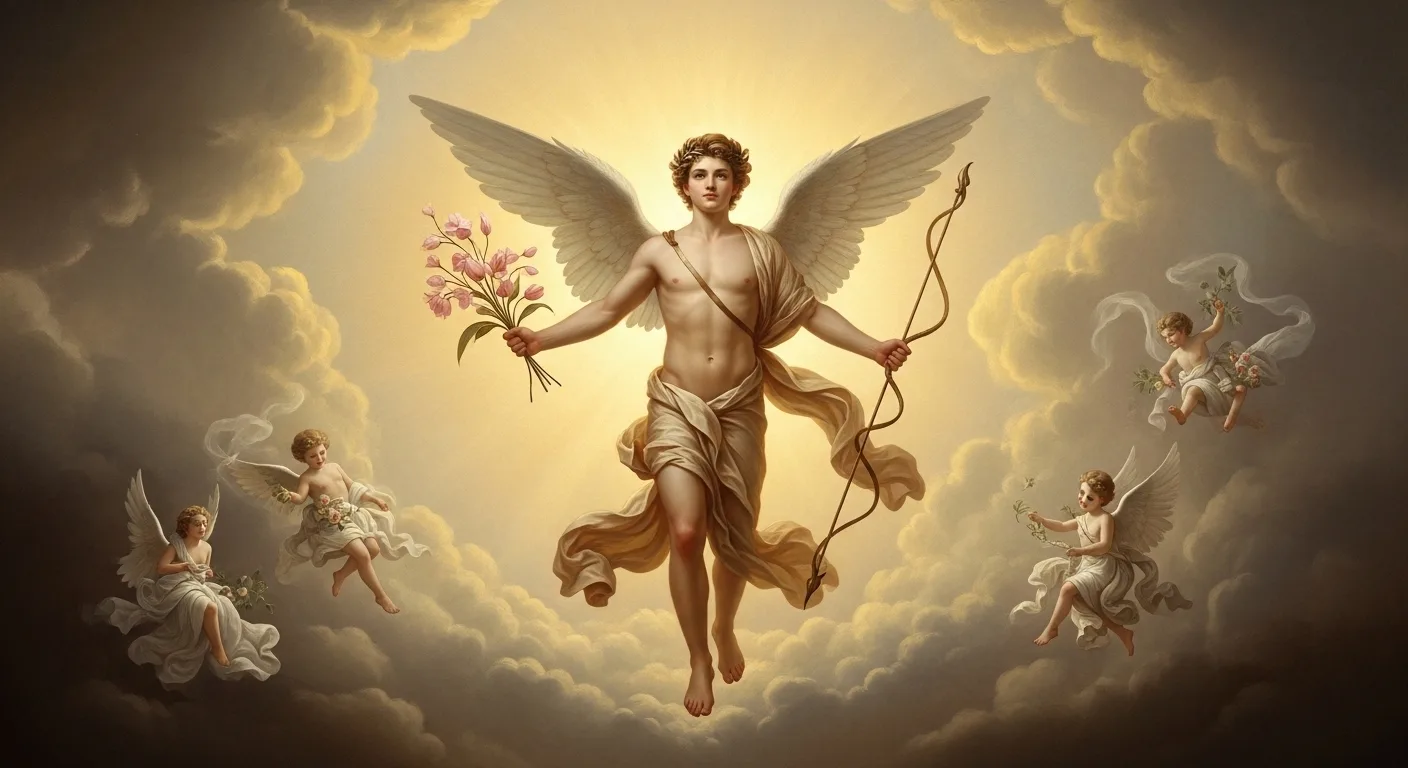
Ο Έρως αποτελεί μία από τις πιο πολυσήμαντες και εξελισσόμενες μορφές της ελληνικής μυθολογίας. Δεν είναι απλώς ο θεός της αγάπης, αλλά μια αρχέγονη δύναμη που συνδέεται με τη δημιουργία του κόσμου, τη γονιμότητα, την επιθυμία και την ίδια τη συνοχή του σύμπαντος. Από την πρωταρχική κοσμογονική οντότητα έως τον παιχνιδιάρη φτερωτό θεό των κλασικών και ελληνιστικών χρόνων, η μορφή του Έρωτα μεταμορφώνεται, αντικατοπτρίζοντας τις αντιλήψεις των αρχαίων Ελλήνων για την αγάπη και τη φύση της ύπαρξης.
Ποιος ήταν ο Πρωταρχικός Έρως
Ο Έρως είναι μία από τις πρωταρχικές θεότητες της ελληνικής μυθολογίας και εμφανίζεται ήδη από τα πρώτα στάδια της δημιουργίας του κόσμου.
Στη Θεογονία του Ησιόδου, ο Έρως γεννιέται μετά το Χάος και πριν από τη συγκρότηση του κόσμου, αποτελώντας τη θεμελιώδη δύναμη που ενώνει τα στοιχεία και επιτρέπει τη γένεση της ζωής.
Δεν πρόκειται για θεό του ρομαντικού έρωτα, αλλά για κοσμική αρχή.
Ο κοσμογονικός ρόλος του Έρωτα

Ο Πρωταρχικός Έρως:
ενεργοποιεί τη δημιουργία
φέρνει την ένωση αντίθετων στοιχείων
επιτρέπει τη γέννηση θεών, φύσης και ανθρώπων
Χωρίς τον Έρωτα, ο κόσμος θα παρέμενε στο στάδιο του Χάους και της ακινησίας.
Ο Ησίοδος τον περιγράφει ως:
«τον πιο όμορφο ανάμεσα στους αθανάτους, που λύνει τα μέλη και κυριαρχεί στη σκέψη θεών και ανθρώπων».
Καταγωγή και θέση στην κοσμογονία
Προέλευση: Γεννήθηκε απευθείας από το Χάος
Φύση: Αφηρημένη κοσμική δύναμη
Ο Έρως δεν έχει γονείς ούτε απογόνους με την ανθρώπινη έννοια· λειτουργεί ως καταλύτης ύπαρξης.
Πρωταρχικός Έρως και Ολύμπιος Έρως – Διαφορές
| Πρωταρχικός Έρως | Ολύμπιος Έρως |
|---|---|
| Κοσμική δύναμη | Θεός της αγάπης |
| Δημιουργεί τον κόσμο | Επηρεάζει σχέσεις |
| Άμορφος, αφηρημένος | Παιδί της Αφροδίτης |
| Κοσμογονικός ρόλος | Μυθολογικές ιστορίες |
Η σύγχυση μεταξύ των δύο είναι συχνή, αλλά πρόκειται για διαφορετικές θεϊκές εκφάνσεις.
Η Κοσμογονική Φύση του Έρωτα
Στην αρχαιότερη παράδοση, όπως καταγράφεται από τον Ησίοδος στη Θεογονία, ο Έρως εμφανίζεται ως μία από τις πρώτες κοσμικές αρχές, μαζί με το Χάος και τη Γαία. Σε αυτή την εκδοχή, δεν είναι παιδί κάποιων θεών, αλλά μια αυθύπαρκτη δύναμη που επιτρέπει τη γέννηση και τη δημιουργία.
Ο Έρως εδώ συμβολίζει:
- την έλξη μεταξύ των όντων
- την ένωση που γεννά ζωή
- την κινητήρια δύναμη της δημιουργίας
Δεν πρόκειται για ρομαντικό έρωτα, αλλά για μια βαθιά, φυσική και αναγκαία ενέργεια που συγκρατεί το σύμπαν.
Ο Έρως ως Παιδί της Αφροδίτης
Στη μεταγενέστερη μυθολογία, ο Έρως αποκτά πιο ανθρωπομορφικά χαρακτηριστικά. Παρουσιάζεται ως γιος της Αφροδίτη και, ανάλογα με την παράδοση, του Άρη ή άλλων θεοτήτων.
Σε αυτή τη μορφή:
- είναι νεαρός, φτερωτός θεός
- κρατά τόξο και βέλη
- προκαλεί έρωτα ή αποστροφή με τα χτυπήματά του
Τα χρυσά του βέλη γεννούν πάθος, ενώ τα μολύβδινα προκαλούν αδιαφορία. Ο Έρως γίνεται έτσι μια δύναμη απρόβλεπτη και συχνά επικίνδυνη, που επηρεάζει θεούς και ανθρώπους.
Η πιο διάσημη ιστορία αγάπης
Στον μύθο του Έρωτα και της Ψυχή, ο θεός ερωτεύεται μια θνητή, προκαλώντας την οργή της μητέρας του, Αφροδίτης. Η Ψυχή, γνωστή για την απαράμιλλη ομορφιά της, καλείται να περάσει δοκιμασίες για να αποδείξει την αξία της.
Η αφήγηση περιλαμβάνει:
την απαγορευμένη αγάπη
την προδοσία και την εμπιστοσύνη
την κάθαρση μέσω δοκιμασιών
την τελική αποθέωση
Στο τέλος, η Ψυχή γίνεται αθάνατη και ενώνεται με τον Έρωτα, συμβολίζοντας την ένωση της ψυχής με την αγάπη.
Ο Έρως και οι Άλλες Θεότητες
Ο Έρως δεν δρα μόνος. Συχνά συνδέεται με άλλες θεότητες και δυνάμεις:
Οι Ερωτες (Erotes)
Ομάδα φτερωτών θεών που προσωποποιούν διαφορετικές πτυχές της αγάπης:
- Ίμερος – επιθυμία
- Πόθος – νοσταλγία για το απόν
- Άντερος – ανταποδοτική αγάπη
Σχέση με την Αφροδίτη
Η Αφροδίτη χρησιμοποιεί τον Έρωτα ως εργαλείο, αλλά και φοβάται τη δύναμή του. Η σχέση τους είναι σύνθετη: μητρική, αλλά και ανταγωνιστική.
I am text block. Click edit button to change this text. Lorem ipsum dolor sit amet, consectetur adipiscing elit. Ut elit tellus, luctus nec ullamcorper mattis, pulvinar dapibus leo.
Σε έναν από τους πιο χαρακτηριστικούς μύθους, ο Έρως τιμωρεί τον Απόλλων για την αλαζονεία του. Με δύο βέλη:
κάνει τον Απόλλωνα να ερωτευτεί την Δάφνη
προκαλεί στη Δάφνη αποστροφή
Το αποτέλεσμα είναι τραγικό: η Δάφνη μεταμορφώνεται σε δέντρο για να ξεφύγει. Ο μύθος αναδεικνύει τη δύναμη και την αδιαφορία του Έρωτα για τις συνέπειες.
Ο Έρως στη Φιλοσοφία
Ο Έρως αποκτά βαθύτερη σημασία στη φιλοσοφία, ιδιαίτερα στο έργο του Πλάτων. Στο Συμπόσιο, ο Έρως δεν είναι θεός, αλλά δαίμων – ενδιάμεση οντότητα μεταξύ θνητών και αθανάτων.
Σύμφωνα με τη Διοτίμα:
- ο Έρως είναι επιθυμία για το ωραίο και το αγαθό
- οδηγεί τον άνθρωπο από το σώμα στην ψυχή
- αποτελεί μονοπάτι προς τη γνώση και την αθανασία
Έτσι, ο έρωτας μετατρέπεται σε πνευματική αναζήτηση.
Ο Έρως στη Ρωμαϊκή Παράδοση
Στη ρωμαϊκή μυθολογία, ο Έρως ταυτίζεται με τον Cupid (Κούπιντ). Η μορφή του γίνεται ακόμη πιο παιχνιδιάρικη και ρομαντική, επηρεάζοντας βαθιά τη δυτική τέχνη.
Ο Έρως στην Τέχνη και τον Πολιτισμό
Η μορφή του Έρωτα απεικονίζεται:
- σε αγγεία της αρχαϊκής και κλασικής εποχής
- σε γλυπτά της ελληνιστικής περιόδου
- σε αναγεννησιακούς πίνακες
Καλλιτέχνες όπως ο Σάντρο Μποττιτσέλι τον ενσωματώνουν σε έργα που εξυμνούν την αγάπη και την ομορφιά.
Συμπέρασμα
Ο Έρως δεν είναι απλώς ένας θεός της αγάπης. Είναι μια δύναμη που διαπερνά όλη την ελληνική μυθολογία, από τη δημιουργία του κόσμου έως τις πιο προσωπικές ανθρώπινες εμπειρίες. Η πολυπλοκότητά του αντικατοπτρίζει την ίδια τη φύση της αγάπης: δημιουργική, καταστροφική, πνευματική και βαθιά ανθρώπινη.
Η παρουσία του σε τόσους διαφορετικούς μύθους δείχνει ότι ο έρωτας, σε όλες του τις μορφές, αποτελεί θεμελιώδες στοιχείο της ύπαρξης — μια δύναμη που ενώνει, αλλά και δοκιμάζει, θεούς και ανθρώπους εξίσου.
Συχνές Ερωτήσεις για τον Έρωτα στην Ελληνική Μυθολογία (Q&A)
Ποιος είναι ο Έρως στην ελληνική μυθολογία;
Ο Έρως είναι ο θεός της αγάπης, της έλξης και του πάθους στην ελληνική μυθολογία. Συμβολίζει τη δύναμη που ενώνει τα όντα και προκαλεί τον έρωτα μεταξύ θεών και ανθρώπων.
Ποιοι ήταν οι γονείς του Έρωτα;
Στις περισσότερες μυθολογικές παραδόσεις ο Έρως θεωρείται γιος της Αφροδίτης και του Άρη. Ωστόσο, σε παλαιότερες κοσμογονικές αφηγήσεις παρουσιάζεται ως αρχέγονη θεότητα που γεννήθηκε από το Χάος.
Τι συμβολίζει ο Έρως;
Ο Έρως συμβολίζει την ερωτική επιθυμία, την έλξη και τη δημιουργική δύναμη που οδηγεί στη γέννηση και στη ζωή.
Πώς απεικονίζεται συνήθως ο Έρως;
Ο Έρως απεικονίζεται συνήθως ως φτερωτό παιδί ή νεαρός θεός που κρατά τόξο και βέλη, με τα οποία προκαλεί τον έρωτα σε θεούς και ανθρώπους.
Τι κάνουν τα βέλη του Έρωτα;
Τα βέλη του Έρωτα έχουν τη δύναμη να προκαλούν έντονη ερωτική έλξη σε όποιον τα δεχτεί, κάνοντάς τον να ερωτευτεί το πρώτο πρόσωπο που θα δει.
Ποια είναι η σχέση του Έρωτα με την Αφροδίτη;
Η Αφροδίτη θεωρείται μητέρα του Έρωτα και θεά της ομορφιάς και του έρωτα. Συχνά ο Έρως παρουσιάζεται ως βοηθός ή σύντροφός της.
Ποιος είναι ο ρόλος του Έρωτα στους μύθους;
Ο Έρως επηρεάζει τα συναισθήματα των θεών και των ανθρώπων, προκαλώντας έρωτα, πάθος ή επιθυμία και συχνά οδηγώντας σε σημαντικά γεγονότα στους μύθους.
Ποια είναι η ιστορία του Έρωτα και της Ψυχής;
Η ιστορία του Έρωτα και της Ψυχής είναι ένας από τους πιο γνωστούς μύθους. Ο Έρως ερωτεύεται τη θνητή Ψυχή και, μετά από πολλές δοκιμασίες, οι δύο ενώνονται και η Ψυχή γίνεται αθάνατη.
Γιατί ο Έρως κρύβει την ταυτότητά του από την Ψυχή;
Στον μύθο, ο Έρως ζητά από την Ψυχή να μην δει το πρόσωπό του, επειδή φοβάται ότι η αλήθεια θα διαταράξει τη σχέση τους.
Ποια είναι τα σύμβολα του Έρωτα;
Τα κύρια σύμβολα του Έρωτα είναι το τόξο, τα βέλη, τα φτερά και συχνά η δάδα ή τα λουλούδια.
Είναι ο Έρως αρχέγονη θεότητα;
Σε ορισμένες αρχαίες κοσμογονίες ο Έρως θεωρείται μία από τις πρώτες θεότητες που εμφανίστηκαν στο σύμπαν, αντιπροσωπεύοντας τη δύναμη της δημιουργίας.
Ποια είναι η διαφορά του Έρωτα από τον ρωμαϊκό Κούπιντ;
Ο Κούπιντ είναι η ρωμαϊκή εκδοχή του Έρωτα. Παρότι έχουν παρόμοια χαρακτηριστικά, προέρχονται από διαφορετικές μυθολογικές παραδόσεις.
Ποια δύναμη έχει ο Έρως πάνω στους θεούς;
Ο Έρως μπορεί να επηρεάσει ακόμη και τους θεούς του Ολύμπου, προκαλώντας τους να ερωτευτούν παρά τη θέλησή τους.
Πώς επηρεάζει ο Έρως τους ανθρώπους;
Στους μύθους ο Έρως προκαλεί έρωτα, πάθος ή ακόμη και εμμονή, επηρεάζοντας τις αποφάσεις και τις πράξεις των ανθρώπων.
Υπάρχουν διαφορετικές μορφές του Έρωτα στη μυθολογία;
Σε ορισμένες παραδόσεις ο Έρως εμφανίζεται ως ισχυρός αρχέγονος θεός, ενώ σε άλλες ως παιχνιδιάρικο φτερωτό παιδί που υπηρετεί την Αφροδίτη.
Ποια είναι η σημασία του Έρωτα στην ελληνική κοσμογονία;
Ο Έρως θεωρείται η δύναμη που επιτρέπει τη δημιουργία και την ένωση των όντων, παίζοντας σημαντικό ρόλο στη γέννηση της ζωής και της τάξης στο σύμπαν.
Πού λατρευόταν ο Έρως στην αρχαία Ελλάδα;
Ο Έρως λατρευόταν σε διάφορες περιοχές της Ελλάδας, συχνά σε ιερά που συνδέονταν με την Αφροδίτη και με λατρείες που σχετίζονταν με την αγάπη και τη γονιμότητα.
Γιατί ο Έρως θεωρείται ισχυρή θεότητα;
Παρότι συχνά απεικονίζεται ως παιδί, η δύναμή του να ελέγχει τα συναισθήματα και την έλξη θεωρείται μία από τις πιο ισχυρές δυνάμεις στη μυθολογία.