
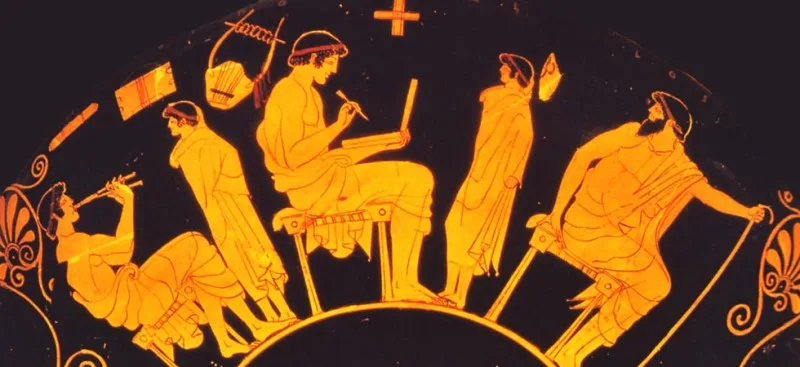
Introduction
Daily Life in Ancient Greece:Ancient Greece was not only Gods of Olympus, the heroes And the epic battles. Behind myths and historical events, there was a living society of people with everyday habits, obligations and joys. Daily life in ancient Greece differed from city to city, but there were common elements that shaped people's thinking and life. From home and family to work, education and entertainment, everyday life was deeply connected with the values of society and the relationship with the divine.
Daily life in ancient Greece cannot be fully understood without considering the wider context of society and culture. For an overall picture, you can read our full guide to Ancient Greece: Life, Cities and Culture, where the structures and values of the ancient Greek world are analyzed in depth.
Family and Home
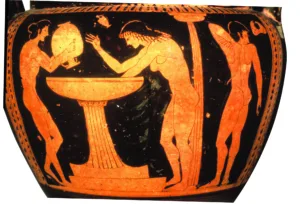
The family was the core of society. The house, known as «the»It was not just a place of residence but an entire unit of life and production. It included family, slaves, and often relatives.
The men were the head of the house and were responsible for the important decisions. Women were primarily involved in home management, child rearing, and weaving. Although their role was limited in the public space, it was decisive for the family to function.
The houses were usually simple, built around an inner courtyard, which was the center of everyday life.
Most houses were relatively small and simple. Of these some were single-story, while some were two-story. In these houses the rooms were organized around the courtyard that existed in the center. In the courtyard was placed an altar, dedicated to Erkeios Zeus, who at the family worship ceremonies held in the courtyard, was worshiped as patron of the house. In the houses there was the andronite, the room where the householder accepted his friends. There, at night, he made, with his company, the banquets.
Next to the andronite was the woman, the place for women, children and slaves. The woman in the two-story houses was upstairs. There were, of course, auxiliary spaces, located around the courtyard: The kitchens, the warehouses, the baths.
Nutrition and Daily Commons
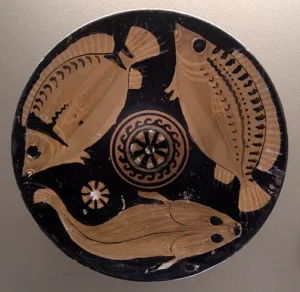
The diet of ancient Greeks was simple but nutritious. Key elements were bread, oil, wine, and legumes. Meat was consumed more rarely, mostly in celebrations or sacrifices.
Breakfast was light, while the main meal took place at night. Food consumption was often combined with social associations, especially in banquets, where men discussed, listened to music and philosophies.
The diet of the ancient Greeks was mainly based on cereals, such as barley and wheat, from which bread was made. They were accompanied by vegetables and legumes, such as cabbages, onions, lentils and chickpeas. Consumption of meat and seafood depended on the economic situation and place of residence. Dairy products, especially cheese, were important, and instead of butter they used mainly olive oil. The food was accompanied by wine diluted with water.
Daily life began early, with most activities taking place during the day, before sundown.
Work and Professions
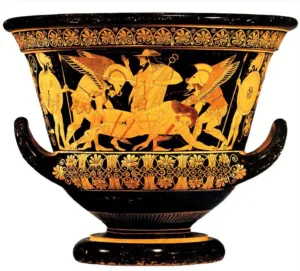
Work in ancient Greece depended on social order and gender. Farmers formed the basis of the economy, cultivating the land and caring for the animals. At the same time, there were craftsmen, merchants and sailors, especially in cities with intense commercial activity.
Slaves played an important role in the economy, performing many of the heavy work, both in homes and in workshops or mines.
Despite differences, work was considered a necessary part of life, while engaging in the common was an honor and obligation for free citizens.
Religion and Daily Life
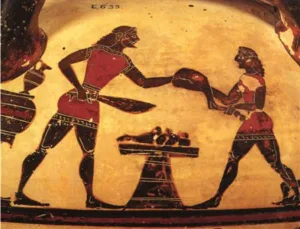
Religion was an integral part of everyday life. Ancient Greeks believed that the gods affected every aspect of their lives. Prayers, sacrifices and celebrations were common and accompanied both large and small moments of life.
Each city had its own patron gods, and there were nationwide celebrations, such as the Olympic Games, that combined religion with sport and social cohesion.
Military training
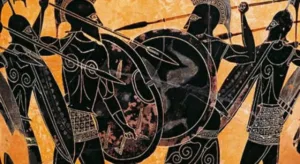
Military training in Athens:
At 18 years old young people served for two years in the army, where they learned martial art and defended the country. Their armament included spear, shield, and helmet. The richest became gunmen or horsemen, while civilians were considered those who completed their term.
Spartan treatment:
In Sparta education began from 7 years with strict discipline and team life. Young people worked hard and learned to endure difficulties. Their military course began at 20, emphasising strength, endurance and austerity.
Entertainment and Free Time
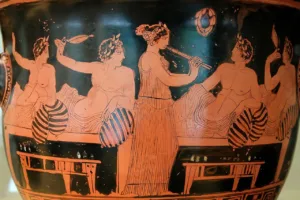
Despite obligations, ancient Greeks devoted time to entertainment. The theatre was one of the most important forms of entertainment and education, with tragedies and comedies that often drew themes from mythology.
Sports games, banquets, and public debates were also important activities. The concept of free time was associated with the cultivation of body and spirit.
Conclusion
Daily life in ancient Greece was a balance between obligations, social participation and spiritual search. Although living conditions differ considerably from today, many of the values of that time —Like the importance of education, community and harmony— remain timely. Through the understanding of the everyday life of ancient Greeks, we can approach more effectively the world that gave birth to mythology and culture that still affects modern society today.
Frequently Asked Questions about Everyday Life in Ancient Greece
How was everyday life in ancient Greece?
Daily life in ancient Greece revolved around family, work and participation in society. People lived in city-states and followed specific practices related to religion, education, and social activities.
What did ancient Greeks eat?
Their diet was based on bread, olive oil, wine and legumes. Meat was consumed mainly in celebrations and religious ceremonies.
What was the role of woman in ancient Greece?
Women mainly had a domestic role and were responsible for the home and child rearing. Their participation in public life was limited, especially in Athens.
How were children trained in ancient Greece?
Boys received training in writing, reading, music, and gymnastics, while girls were mainly trained at home.
What were the main occupations of ancient Greeks?
Most were engaged in agriculture, while there were also craftsmen, traders, and sailors. Slaves performed many of the manual work.
Bibliography
Ancient Greek Temples, Tony Spawforth, Ed.
The ancient Greek city, Oswyn Murray- Simon Price, PATAKIS Ed.
Timaeus, Plato, ed.
Socratus Memories, Xenophons, Ed.ZAHAROPOULOSIf you want to deepen further into the society and culture of the ancient Greeks, see our detailed guide:
???? Ancient Greece: Life, Cities and Culture