
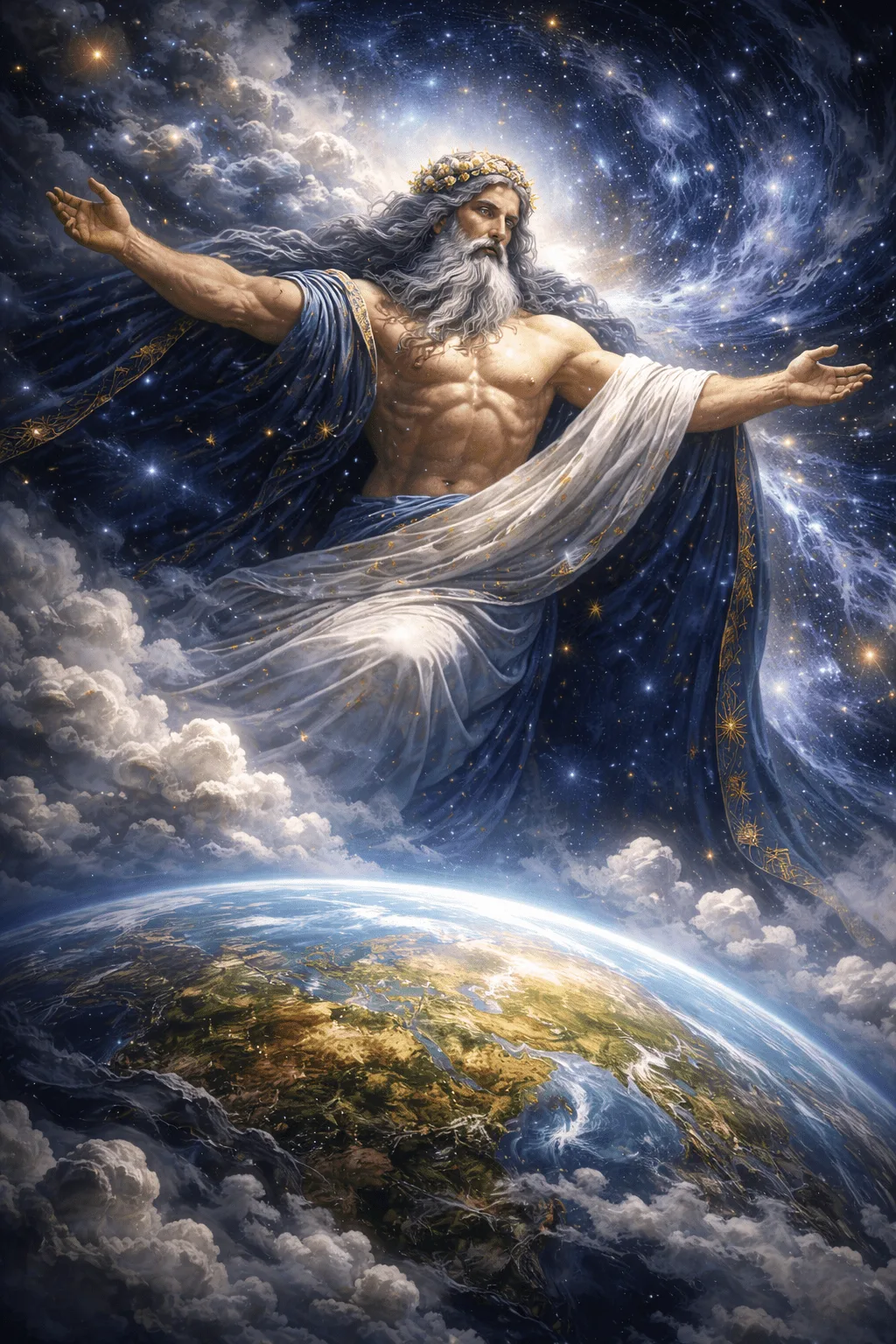
Ουρανός (Uranus) – Ο Αρχέγονος Θεός του Ουρανού
Ο Ουρανός, η προσωποποίηση του ουρανού, είναι μία από τις πιο αρχαίες και θεμελιώδεις θεότητες της ελληνικής μυθολογίας. Ανήκει στους Πρωτογόνους θεούς, τις πρώτες κοσμικές δυνάμεις που γεννήθηκαν στην αρχή της δημιουργίας. Δεν ήταν απλώς θεός του ουρανού· ήταν ο ίδιος ο ουράνιος θόλος, που αγκάλιαζε και σκέπαζε τη Γη.
Ως σύζυγος της Γαίας, ο Ουρανός αποτέλεσε τον γεννήτορα των πρώτων θεϊκών γενεών και έπαιξε καθοριστικό ρόλο στη διαμόρφωση της κοσμικής τάξης, αλλά και στις πρώτες μεγάλες συγκρούσεις της μυθολογίας.
Η Γέννηση του Ουρανού και η Κοσμογονία
Σύμφωνα με τον Ησίοδο, ο Ουρανός γεννήθηκε απευθείας από τη Γαία, χωρίς πατέρα. Η Γη τον δημιούργησε για να την καλύπτει από πάνω, ως ίσο και συμπληρωματικό της στοιχείο. Μαζί σχημάτισαν το πρώτο κοσμικό ζεύγος: η Γη και ο Ουρανός, το στερεό θεμέλιο και ο προστατευτικός θόλος του σύμπαντος.
Στην αρχαία ελληνική κοσμολογία, ο Ουρανός παρουσιαζόταν ως στερεός θόλος, καρφωμένος στα άκρα της Γης, που συγκρατούσε τα άστρα και τα ουράνια φαινόμενα. Κάτω του απλωνόταν ο κόσμος των θνητών και των θεών, ενώ βαθιά κάτω βρισκόταν ο Τάρταρος.
Ο Ουρανός και η Γαία – Η Πρώτη Θεϊκή Ένωση
Η ένωση του Ουρανού με τη Γαία υπήρξε εξαιρετικά γόνιμη αλλά και καταστροφική. Από αυτή τη σχέση γεννήθηκαν:
οι Κύκλωπες, μονομάτικοι γίγαντες με τεράστια δύναμη
οι Εκατόγχειρες, τρομακτικές υπάρξεις με εκατό χέρια και πενήντα κεφάλια
Παρότι ήταν πατέρας τους, ο Ουρανός φοβόταν τη δύναμη και την αγριότητά τους. Έτσι, τους φυλάκισε στα βάθη της Γαίας, προκαλώντας αφόρητο πόνο στη μητέρα τους.
Η Πτώση του Ουρανού
Η Γαία, εξοργισμένη από την τυραννία του Ουρανού, αποφάσισε να εκδικηθεί. Κατασκεύασε ένα δρεπάνι από αδάμαντα και ζήτησε από τους γιους της να επαναστατήσουν. Μόνο ο νεότερος Τιτάνας, ο Κρόνος, τόλμησε.
Όταν ο Ουρανός κατέβηκε να ενωθεί ξανά με τη Γαία, ο Κρόνος τον ευνούχισε, ανατρέποντάς τον από την εξουσία. Από το αίμα του Ουρανού που έπεσε στη Γη γεννήθηκαν:
Από τα γεννητικά του όργανα που έπεσαν στη θάλασσα γεννήθηκε η Αφροδίτη, η θεά του έρωτα.
Μετά την πτώση του, ο Ουρανός αποσύρθηκε από την ενεργό κοσμική εξουσία, αλλά παρέμεινε αιώνιο σύμβολο του ουρανού και της πρώτης θεϊκής κυριαρχίας.
Ο Ρόλος του Ουρανού στη Μυθολογική Παράδοση
Ο Ουρανός δεν λατρεύτηκε ευρέως με ναούς και ιερά, όπως οι Ολύμπιοι θεοί. Η παρουσία του είναι κοσμική και συμβολική, όχι ανθρωπόμορφη. Εκπροσωπεί:
την πρωταρχική εξουσία
την ουράνια τάξη
την απόσταση ανάμεσα στο θείο και το γήινο
Η ανατροπή του από τον Κρόνο και αργότερα η ανατροπή του Κρόνου από τον Δία καθιέρωσαν ένα επαναλαμβανόμενο μοτίβο στη μυθολογία: η εξουσία των παλαιών θεών αντικαθίσταται από νεότερες γενιές.
Η Εικονογραφία του Ουρανού
Στην αρχαία τέχνη, ο Ουρανός απεικονίζεται σπάνια ως πλήρης ανθρώπινη μορφή. Συνήθως παρουσιάζεται:
ως ουράνιος θόλος γεμάτος άστρα
ως ανδρική μορφή που απλώνεται πάνω από τη Γαία
σε κοσμογονικά ψηφιδωτά και αγγειογραφίες
Σε μεταγενέστερα έργα, εμφανίζεται ως ώριμος γενειοφόρος θεός, σύμβολο της αιώνιας ουράνιας δύναμης.
Ο Ουρανός ως Σύμβολο
Ο Ουρανός συμβολίζει την αρχή της δημιουργίας, αλλά και την ακαμψία της απόλυτης εξουσίας. Είναι ο θεός που γέννησε τα πάντα, αλλά δεν μπόρεσε να τα ελέγξει. Η πτώση του σηματοδοτεί την αρχή της μυθολογικής ιστορίας των συγκρούσεων, των γενεών και της εξέλιξης του κόσμου.
Συχνές Ερωτήσεις για τον Ουρανό
Ποιος ήταν ο Ουρανός στην Ελληνική Μυθολογία;
Ο Ουρανός ήταν η προσωποποίηση του ουρανού και ένας από τους πρωταρχικούς θεούς της ελληνικής μυθολογίας. Ήταν γιος και σύζυγος της Γαία και μαζί της γέννησε τους πρώτους θεούς και μυθικά όντα.
Ποια ήταν τα παιδιά του Ουρανού;
Ο Ουρανός και η Γαία απέκτησαν πολλούς απογόνους, μεταξύ των οποίων οι Τιτάνες, οι Κύκλωπες και οι Εκατόγχειρες.
Γιατί ο Ουρανός φυλάκισε τα παιδιά του;
Σύμφωνα με τον μύθο, ο Ουρανός φοβόταν τη δύναμη των παιδιών του και τα φυλάκιζε στα βάθη της γης, προκαλώντας τον θυμό της Γαίας.
Ποιος ανέτρεψε τον Ουρανό;
Ο Τιτάνας Κρόνος ανέτρεψε τον Ουρανό με τη βοήθεια της μητέρας του Γαίας, κόβοντας τα γεννητικά του όργανα με ένα δρεπάνι.
Τι συνέβη μετά τον ευνουχισμό του Ουρανού;
Από το αίμα του Ουρανού που έπεσε στη γη γεννήθηκαν οι Ερινύες, οι Γίγαντες και οι Μελίες. Από τον αφρό της θάλασσας που δημιουργήθηκε από τα γεννητικά του όργανα γεννήθηκε η Αφροδίτη.
Τι συμβολίζει ο Ουρανός στην ελληνική μυθολογία;
Ο Ουρανός συμβολίζει τον ουρανό και την αρχέγονη δύναμη του σύμπαντος, καθώς και την πρώτη γενιά θεϊκών όντων που προηγήθηκαν των Τιτάνων και των Ολύμπιων θεών.
Ποια είναι η σχέση του Ουρανού με τη Γαία;
Η Γαία ήταν η μητέρα και σύντροφός του. Μαζί σχημάτιζαν το πρωταρχικό ζεύγος ουρανού και γης που γέννησε τις επόμενες γενιές θεών.
Σε ποια αρχαία κείμενα αναφέρεται ο Ουρανός;
Ο Ουρανός αναφέρεται κυρίως στη Θεογονία του Ησίοδος, όπου περιγράφεται η γέννηση των θεών και η ανατροπή του από τον Κρόνο.
JTNDaDIlM0UlQ0UlQTAlQ0UlQjElQ0YlODElQ0UlQjElQ0YlODAlQ0UlQkYlQ0UlQkMlQ0YlODAlQ0UlQUQlQ0YlODIlM0MlMkZoMiUzRSUwQSUwQSUzQ3VsJTNFJTBBJTBBJTNDbGklM0UlMEElQ0UlOTclQ0YlODMlQ0UlQUYlQ0UlQkYlQ0UlQjQlQ0UlQkYlQ0YlODIlMkMlMjAlM0NlbSUzRSVDRSU5OCVDRSVCNSVDRSVCRiVDRSVCMyVDRSVCRiVDRSVCRCVDRSVBRiVDRSVCMSUzQyUyRmVtJTNFLiUyMCVDRSU5NCVDRSVCOSVDRSVCMSVDRSVCOCVDRSVBRCVDRiU4MyVDRSVCOSVDRSVCQyVDRSVCRiUyMCVDRiU4MyVDRiU4NCVDRSVCRiUyMCUwQSUzQ2ElMjBocmVmJTNEJTIyaHR0cHMlM0ElMkYlMkZ3d3cucGVyc2V1cy50dWZ0cy5lZHUlMkZob3BwZXIlMkZ0ZXh0JTNGZG9jJTNESGVzLiUyNTIwVGguJTIyJTIwdGFyZ2V0JTNEJTIyX2JsYW5rJTIyJTIwcmVsJTNEJTIybm9mb2xsb3clMjBub29wZW5lciUyMiUzRSUwQVBlcnNldXMlMjBEaWdpdGFsJTIwTGlicmFyeSUwQSUzQyUyRmElM0UuJTBBJTNDJTJGbGklM0UlMEElMEElM0NsaSUzRSUwQSVDRSU5MSVDRiU4MCVDRSVCRiVDRSVCQiVDRSVCQiVDRiU4QyVDRSVCNCVDRiU4OSVDRiU4MSVDRSVCRiVDRiU4MiUyQyUyMCUzQ2VtJTNFJUNFJTkyJUNFJUI5JUNFJUIyJUNFJUJCJUNFJUI5JUNFJUJGJUNFJUI4JUNFJUFFJUNFJUJBJUNFJUI3JTIwJTI4QmlibGlvdGhlY2ElMjklM0MlMkZlbSUzRS4lMjAlQ0UlOTQlQ0UlQjklQ0UlQjElQ0UlQjglQ0UlQUQlQ0YlODMlQ0UlQjklQ0UlQkMlQ0UlQkYlMjAlQ0YlODMlQ0YlODQlQ0UlQkYlMjAlMEElM0NhJTIwaHJlZiUzRCUyMmh0dHBzJTNBJTJGJTJGdG9wb3N0ZXh0Lm9yZyUyRndvcmslMkYyMCUyMiUyMHRhcmdldCUzRCUyMl9ibGFuayUyMiUyMHJlbCUzRCUyMm5vZm9sbG93JTIwbm9vcGVuZXIlMjIlM0UlMEFUb3Bvc1RleHQlMEElM0MlMkZhJTNFLiUwQSUzQyUyRmxpJTNFJTBBJTBBJTNDbGklM0UlMEElQ0UlOUYlQ0UlQjIlQ0UlQUYlQ0UlQjQlQ0UlQjklQ0UlQkYlQ0YlODIlMkMlMjAlM0NlbSUzRSVDRSU5QyVDRSVCNSVDRiU4NCVDRSVCMSVDRSVCQyVDRSVCRiVDRiU4MSVDRiU4NiVDRiU4RSVDRiU4MyVDRSVCNSVDRSVCOSVDRiU4MiUzQyUyRmVtJTNFLiUyMCVDRSU5NCVDRSVCOSVDRSVCMSVDRSVCOCVDRSVBRCVDRiU4MyVDRSVCOSVDRSVCQyVDRSVCRiUyMCVDRiU4MyVDRiU4NCVDRSVCRiUyMCUwQSUzQ2ElMjBocmVmJTNEJTIyaHR0cHMlM0ElMkYlMkZ3d3cucGVyc2V1cy50dWZ0cy5lZHUlMkZob3BwZXIlMkZ0ZXh0JTNGZG9jJTNET3YuJTI1MjBNZXQuJTIyJTIwdGFyZ2V0JTNEJTIyX2JsYW5rJTIyJTIwcmVsJTNEJTIybm9mb2xsb3clMjBub29wZW5lciUyMiUzRSUwQVBlcnNldXMlMjBEaWdpdGFsJTIwTGlicmFyeSUwQSUzQyUyRmElM0UuJTBBJTNDJTJGbGklM0UlMEElMEElM0NsaSUzRSUwQSVDRSU5MyVDRSVCOSVDRSVCMSUyMCVDRiU4MCVDRSVCNSVDRiU4MSVDRSVCOSVDRiU4MyVDRiU4MyVDRiU4QyVDRiU4NCVDRSVCNSVDRiU4MSVDRSVCMSUyMCVDRSVCMSVDRiU4MSVDRiU4NyVDRSVCMSVDRSVBRiVDRSVCMSUyMCVDRSVCQSVDRSVCNSVDRSVBRiVDRSVCQyVDRSVCNSVDRSVCRCVDRSVCMSUyMCVDRSVCQSVDRSVCMSVDRSVCOSUyMCVDRiU4MCVDRiU4MSVDRiU4OSVDRiU4NCVDRSVCRiVDRSVCMyVDRSVCNSVDRSVCRCVDRSVCNSVDRSVBRiVDRiU4MiUyMCVDRiU4MCVDRSVCNyVDRSVCMyVDRSVBRCVDRiU4MiUyMCVDRiU4NCVDRSVCNyVDRiU4MiUyMCVDRSVCNSVDRSVCQiVDRSVCQiVDRSVCNyVDRSVCRCVDRSVCOSVDRSVCQSVDRSVBRSVDRiU4MiUyMCVDRSVCQyVDRiU4NSVDRSVCOCVDRSVCRiVDRSVCQiVDRSVCRiVDRSVCMyVDRSVBRiVDRSVCMSVDRiU4MiUyMCVDRSVCNCVDRSVCNSVDRSVBRiVDRiU4NCVDRSVCNSUyMCVDRSVCNSVDRiU4MCVDRSVBRiVDRiU4MyVDRSVCNyVDRiU4MiUzQSUyMCUwQSUzQ2ElMjBocmVmJTNEJTIyaHR0cHMlM0ElMkYlMkZteXRob2kub3JnJTJGcHJpbWFyeS1zb3VyY2VzLW9mLWdyZWVrLW15dGhvbG9neSUyRiUyMiUzRSUwQSVDRSVBMCVDRiU4MSVDRiU4OSVDRiU4NCVDRSVCRiVDRSVCMyVDRSVCNSVDRSVCRCVDRSVCNSVDRSVBRiVDRiU4MiUyMCVDRSVBMCVDRSVCNyVDRSVCMyVDRSVBRCVDRiU4MiUyMCVDRSU5NSVDRSVCQiVDRSVCQiVDRSVCNyVDRSVCRCVDRSVCOSVDRSVCQSVDRSVBRSVDRiU4MiUyMCVDRSU5QyVDRiU4NSVDRSVCOCVDRSVCRiVDRSVCQiVDRSVCRiVDRSVCMyVDRSVBRiVDRSVCMSVDRiU4MiUwQSUzQyUyRmElM0UuJTBBJTNDJTJGbGklM0UlMEElMEElM0MlMkZ1bCUzRQ==