
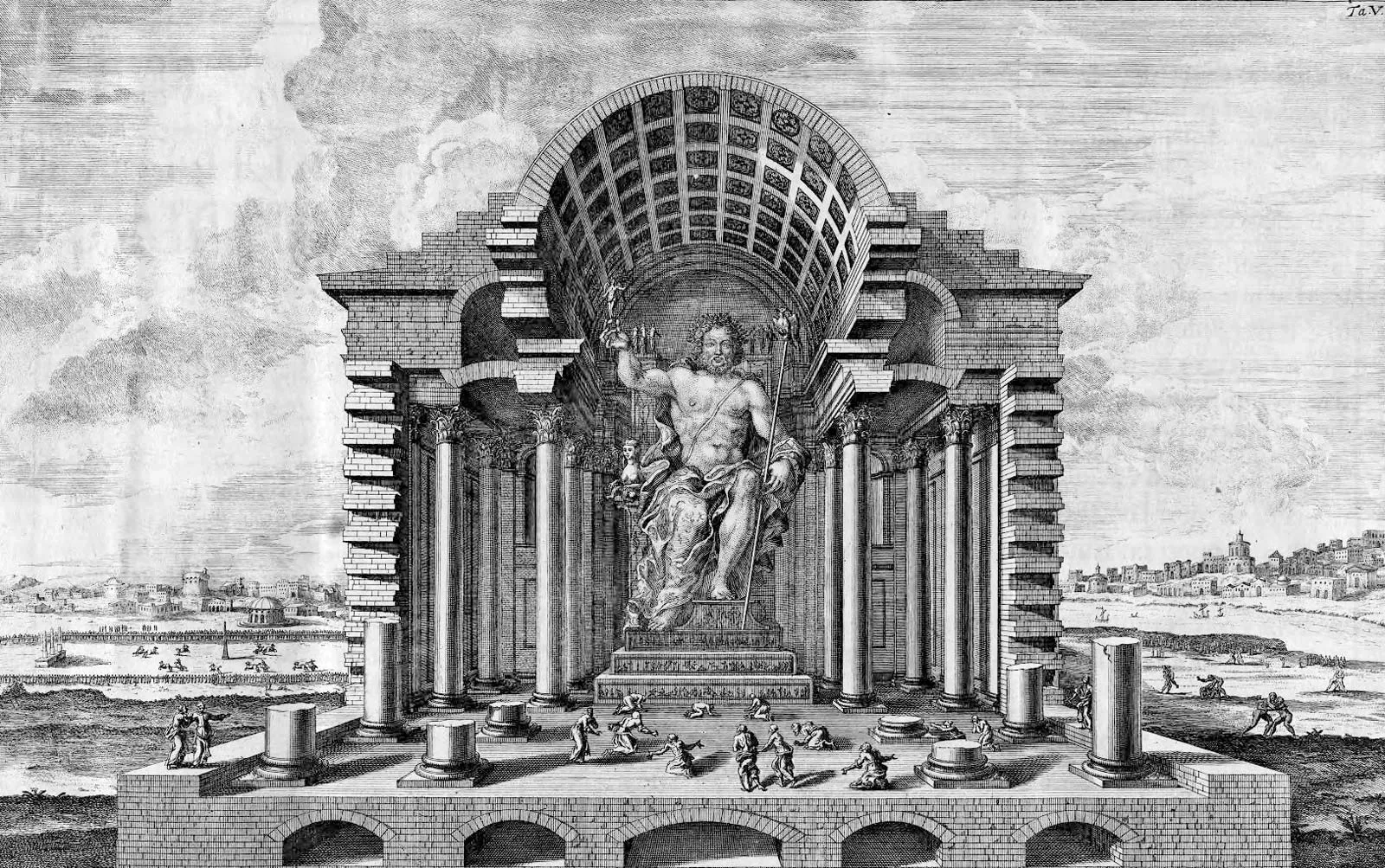
Στην καρδιά της αρχαίας Ελλάδας, στο ιερό της Αρχαία Ολυμπία, υψωνόταν κάποτε ένα έργο τέχνης που θεωρούνταν από τα πιο εντυπωσιακά δημιουργήματα της ανθρώπινης ιστορίας: το Άγαλμα του Δία στην Ολυμπία. Το κολοσσιαίο αυτό άγαλμα, αφιερωμένο στον θεό Δίας, ήταν τόσο επιβλητικό ώστε οι επισκέπτες του ναού ένιωθαν πραγματικά δέος μπροστά του.
Δεν ήταν απλώς ένα άγαλμα· ήταν σύμβολο πίστης, καλλιτεχνικής τελειότητας και δύναμης. Γι’ αυτό και συμπεριλήφθηκε στα περίφημα Επτά Θαύματα του Αρχαίου Κόσμου. Ακόμη και σήμερα, αιώνες μετά την καταστροφή του, το άγαλμα συνεχίζει να συναρπάζει ιστορικούς, αρχαιολόγους και λάτρεις της ελληνικής μυθολογίας.
Η Αρχαία Ολυμπία και η Λατρεία του Δία
Η Αρχαία Ολυμπία ήταν ένα από τα σημαντικότερα θρησκευτικά κέντρα της αρχαίας Ελλάδας. Εκεί τελούνταν οι περίφημοι Ολυμπιακοί Αγώνες της Αρχαιότητας, αφιερωμένοι στον θεό Δία.
Κάθε τέσσερα χρόνια, αθλητές και θεατές από όλο τον ελληνικό κόσμο συγκεντρώνονταν στο ιερό της Ολυμπίας για να τιμήσουν τον πατέρα των θεών. Ο μεγαλοπρεπής ναός που χτίστηκε προς τιμήν του φιλοξενούσε το εντυπωσιακό άγαλμα, το οποίο αποτελούσε το κεντρικό σημείο λατρείας.
Για τους αρχαίους Έλληνες, ο Δίας δεν ήταν μόνο ο βασιλιάς των θεών αλλά και προστάτης της δικαιοσύνης, της τάξης και της φιλοξενίας. Ένα τόσο ισχυρό σύμβολο χρειαζόταν ένα εξίσου μεγαλοπρεπές έργο τέχνης για να το εκπροσωπεί.
Ο Φειδίας και η Δημιουργία του Αγάλματος
Το άγαλμα δημιουργήθηκε από τον θρυλικό γλύπτη Φειδίας γύρω στο 435 π.Χ. Ο Φειδίας θεωρείται ένας από τους σημαντικότερους καλλιτέχνες της κλασικής αρχαιότητας και ήταν ήδη διάσημος για τα έργα του στην Ακρόπολη των Αθηνών.
Η φήμη του βασίστηκε σε δημιουργίες όπως το άγαλμα της Αθηνάς Παρθένου μέσα στον Παρθενώνα. Ωστόσο, το έργο στην Ολυμπία θεωρήθηκε από πολλούς το αριστούργημά του.
Ο Φειδίας εγκαταστάθηκε στην Ολυμπία και δημιούργησε ειδικό εργαστήριο δίπλα στον ναό για να κατασκευάσει το άγαλμα. Οι αρχαιολόγοι μάλιστα έχουν ανακαλύψει τα ερείπια αυτού του εργαστηρίου, επιβεβαιώνοντας πολλές λεπτομέρειες που αναφέρουν οι αρχαίοι συγγραφείς.
Η Κατασκευή του Αγάλματος
Το άγαλμα του Δία ήταν χρυσελεφάντινο, δηλαδή κατασκευασμένο από χρυσό και ελεφαντόδοντο. Αυτή η τεχνική ήταν εξαιρετικά πολυτελής και απαιτούσε τεράστια δεξιοτεχνία.
Το εσωτερικό του αγάλματος αποτελούνταν από ξύλινο σκελετό, πάνω στον οποίο τοποθετούνταν:
πλάκες ελεφαντόδοντου για το δέρμα
φύλλα χρυσού για τα ρούχα και τα διακοσμητικά στοιχεία
Το άγαλμα είχε ύψος περίπου 12 έως 13 μέτρα, δηλαδή όσο ένα τετραώροφο κτίριο. Ο θεός απεικονιζόταν καθισμένος σε περίτεχνο θρόνο διακοσμημένο με πολύτιμα υλικά και μυθολογικές παραστάσεις.
Στο δεξί του χέρι κρατούσε μια μικρή μορφή της θεάς Νίκη, συμβολίζοντας τη νίκη και τη δόξα. Στο αριστερό του κρατούσε σκήπτρο με αετό, το ιερό πουλί του Δία.
Γιατί το Άγαλμα Προκαλούσε Δέος
Οι αρχαίοι ταξιδιώτες που επισκέπτονταν την Ολυμπία συχνά περιέγραφαν την εμπειρία τους ως συγκλονιστική. Το άγαλμα δεν εντυπωσίαζε μόνο λόγω του μεγέθους του αλλά και λόγω της καλλιτεχνικής του τελειότητας.
Σύμφωνα με τον αρχαίο συγγραφέα Παυσανίας, το άγαλμα ήταν τόσο μεγάλο ώστε αν ο Δίας σηκωνόταν από τον θρόνο του, θα έσπαγε την οροφή του ναού.
Η εντύπωση που δημιουργούσε οφειλόταν σε πολλούς παράγοντες:
Το τεράστιο μέγεθος
Η κλίμακα του αγάλματος έκανε τον επισκέπτη να νιώθει μικρός μπροστά στη θεϊκή παρουσία.
Η λάμψη του χρυσού
Το φως που έμπαινε από τον ναό αντανακλούσε πάνω στον χρυσό, δημιουργώντας μια σχεδόν υπερφυσική λάμψη.
Η έκφραση του θεού
Ο Δίας απεικονιζόταν ήρεμος και παντοδύναμος, αποπνέοντας σοφία και εξουσία.
Η ατμόσφαιρα του ναού
Το άγαλμα βρισκόταν μέσα στον μεγαλοπρεπή Ναό του Δία στην Ολυμπία, γεγονός που ενίσχυε τη θρησκευτική εμπειρία των επισκεπτών.
Το Άγαλμα ως Θρησκευτικό Σύμβολο
Για τους αρχαίους Έλληνες, το άγαλμα δεν ήταν απλώς ένα έργο τέχνης. Ήταν το ζωντανό σύμβολο της παρουσίας του Δία στον ιερό χώρο της Ολυμπίας.
Οι επισκέπτες προσέφεραν θυσίες και προσευχές μπροστά στο άγαλμα, ζητώντας προστασία, δικαιοσύνη ή επιτυχία. Κατά τη διάρκεια των αρχαίων Ολυμπιακών Αγώνων, πλήθη ανθρώπων συγκεντρώνονταν στον ναό για να αποδώσουν τιμές στον θεό.
Το άγαλμα, λοιπόν, λειτουργούσε ως σημείο σύνδεσης ανάμεσα στον ανθρώπινο κόσμο και το θείο.
Η Φήμη του στον Αρχαίο Κόσμο
Η φήμη του αγάλματος ξεπέρασε γρήγορα τα σύνορα της Ελλάδας. Ταξιδιώτες από όλη τη Μεσόγειο επισκέπτονταν την Ολυμπία για να το δουν από κοντά.
Συγγραφείς της αρχαιότητας το κατέταξαν στα Επτά Θαύματα του Αρχαίου Κόσμου, μαζί με μνημεία όπως:
ο Φάρος της Αλεξάνδρειας
οι Κρεμαστοί Κήποι της Βαβυλώνας
το Μαυσωλείο της Αλικαρνασσού
Το άγαλμα του Δία θεωρούνταν από πολλούς το πιο εντυπωσιακό από όλα.
Η Καταστροφή του Αγάλματος
Δυστυχώς, το άγαλμα δεν επέζησε μέχρι σήμερα. Οι ιστορικές πηγές δεν συμφωνούν απόλυτα για το πώς καταστράφηκε.
Μία θεωρία υποστηρίζει ότι το άγαλμα μεταφέρθηκε στην Κωνσταντινούπολη κατά τη ρωμαϊκή περίοδο και καταστράφηκε σε πυρκαγιά τον 5ο αιώνα μ.Χ.
Άλλες πηγές αναφέρουν ότι καταστράφηκε νωρίτερα στην Ολυμπία λόγω σεισμών ή πυρκαγιάς.
Παρόλο που το ίδιο το άγαλμα χάθηκε, η φήμη και η ιστορία του διατηρήθηκαν μέσα από γραπτές πηγές και αρχαιολογικές ανακαλύψεις.
Η Κληρονομιά του Αγάλματος
Σήμερα, το άγαλμα του Δία θεωρείται ένα από τα σημαντικότερα χαμένα αριστουργήματα της αρχαιότητας.
Τα ερείπια του Ναού του Δία στην Ολυμπία εξακολουθούν να προσελκύουν επισκέπτες από όλο τον κόσμο. Στο αρχαιολογικό μουσείο της περιοχής εκτίθενται αντικείμενα και ευρήματα που συνδέονται με το εργαστήριο του Φειδίας.
Αν και το ίδιο το άγαλμα δεν σώζεται, η επίδρασή του στην ιστορία της τέχνης και της αρχιτεκτονικής παραμένει τεράστια.
Πολλοί σύγχρονοι καλλιτέχνες και ερευνητές προσπαθούν να αναπαραστήσουν την πιθανή μορφή του, βασιζόμενοι σε αρχαίες περιγραφές και αρχαιολογικά στοιχεία.
Ένα Θαύμα που Ζει Μέσα στην Ιστορία
Το Άγαλμα του Δία στην Ολυμπία ήταν κάτι περισσότερο από ένα γλυπτό. Ήταν ένα σύμβολο της δημιουργικότητας, της πίστης και της δύναμης του αρχαίου ελληνικού πολιτισμού.
Μέσα από την τέχνη του Φειδίας, ο θεός Δίας παρουσιάστηκε με τρόπο που ενέπνευσε θαυμασμό και σεβασμό σε γενιές ανθρώπων.
Αν και το άγαλμα χάθηκε στον χρόνο, η ιστορία του συνεχίζει να θυμίζει πόσο εντυπωσιακά έργα μπορεί να δημιουργήσει ο άνθρωπος όταν συνδυάζει τέχνη, πίστη και φαντασία.
Και ίσως αυτός είναι ο λόγος που, ακόμη και σήμερα, το Άγαλμα του Δία στην Ολυμπία εξακολουθεί να θεωρείται ένα από τα μεγαλύτερα θαύματα της ανθρώπινης ιστορίας.