
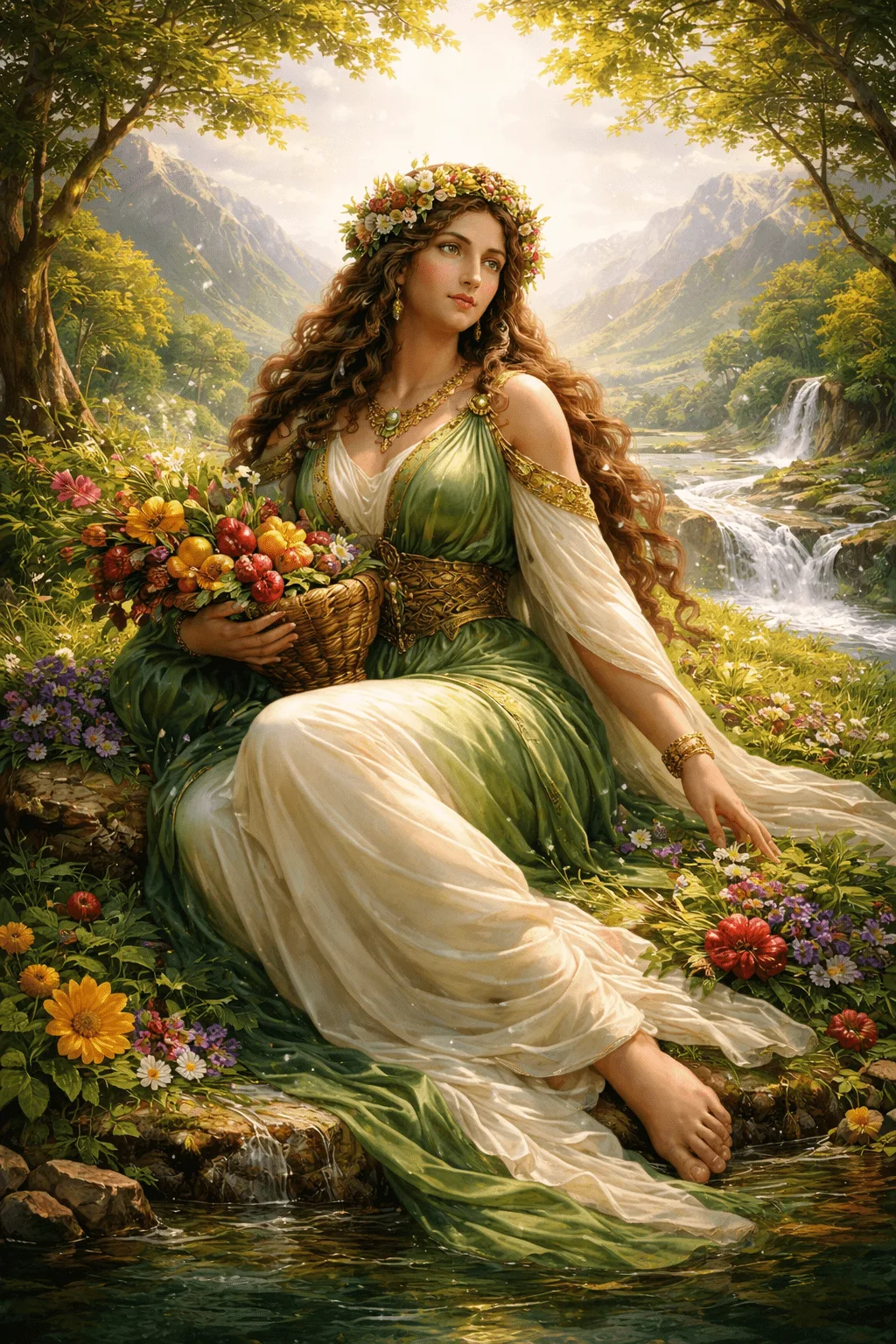
Γαία – Η Πρωταρχική Μητέρα της Δημιουργίας
Η Γαία, η θεά της Γης, αποτελεί μία από τις πιο αρχέγονες και θεμελιώδεις μορφές της ελληνικής μυθολογίας. Ανήκει στους Πρωτογόνους θεούς (Πρωτογένη), τις πρώτες θεϊκές δυνάμεις που εμφανίστηκαν την αυγή της δημιουργίας, πριν ακόμη υπάρξει ο κόσμος όπως τον γνωρίζουμε. Δεν ήταν απλώς μια θεότητα· ήταν η ίδια η Γη, η ύλη από την οποία γεννήθηκαν θεοί, τέρατα και θνητά πλάσματα.
Η Γαία λατρεύτηκε ως η Μεγάλη Μητέρα των πάντων, η πηγή κάθε ζωής και η βάση της κοσμικής τάξης. Πάνω στο σώμα της υψώθηκαν βουνά και απλώθηκαν θάλασσες, ενώ από τα σπλάχνα της αναδύθηκαν θεότητες και δυνάμεις που καθόρισαν την εξέλιξη του σύμπαντος.
Η Γέννηση της Γαίας και η Κοσμογονία
Σύμφωνα με τη Θεογονία του Ησιόδου, η Γαία αναδύθηκε σχεδόν αμέσως μετά το Χάος, χωρίς γονείς, ως η δεύτερη οντότητα της δημιουργίας. Σε άλλες παραδόσεις, όπως οι Ορφικοί ύμνοι, η Γαία προήλθε από τον Ύδρο, ενώ ο Υγίνος αναφέρει ως γονείς της τον Αιθέρα και την Ημέρα.
Στην αρχαία ελληνική κοσμολογία, η Γη νοούνταν ως επίπεδος δίσκος, περιβαλλόμενος από τον ποταμό Ωκεανό, με τον στερεό θόλο του Ουρανού από πάνω και το τρομερό βάραθρο του Ταρτάρου από κάτω. Η Γαία στήριζε στους κόλπους της τις θάλασσες και τα βουνά, αποτελώντας το σταθερό θεμέλιο του κόσμου.
Οι Ενώσεις της Γαίας και τα Παιδιά της
Η δημιουργική δύναμη της Γαίας εκφράστηκε μέσα από τις ενώσεις της με κοσμικές θεότητες:
Με τον Ουρανό (Ουρανός – Ουρανός/Ουρανός) γέννησε τους Τιτάνες, τους Κύκλωπες και τους Εκατόγχειρες, τους πρώτους ουράνιους θεούς.
Με τον Πόντο, τη θεϊκή προσωποποίηση της θάλασσας, γέννησε τους θαλάσσιους θεούς.
Με τον Τάρταρο, το κοσμικό βάραθρο, έφερε στον κόσμο τους Γίγαντες, φοβερές χθόνιες υπάρξεις.
Από την ίδια της τη σάρκα γεννήθηκαν και θνητά πλάσματα, δείχνοντας ότι κάθε μορφή ζωής έχει τις ρίζες της στη Γη.
Η Γαία ως Αντίπαλος των Ολύμπιων Θεών
Παρότι ήταν μητέρα των θεών, η Γαία συχνά βρέθηκε σε σύγκρουση με τους ουράνιους απογόνους της. Αρχικά επαναστάτησε εναντίον του συζύγου της, του Ουρανού, επειδή είχε φυλακίσει τα παιδιά τους μέσα στα σπλάχνα της. Υποστήριξε τον γιο της Κρόνο στην ανατροπή του πατέρα του, δίνοντάς του το δρεπάνι με το οποίο ευνούχισε τον Ουρανό.
Όταν όμως ο Κρόνος επανέλαβε τα ίδια λάθη, φυλακίζοντας τα αδέλφια του, η Γαία στάθηκε στο πλευρό του Δία, βοηθώντας τον να ηγηθεί της Τιτανομαχίας. Ωστόσο, η σχέση της με τον Δία δεν έμεινε αρμονική. Όταν εκείνος φυλάκισε τους Τιτάνες στον Τάρταρο, η Γαία οργίστηκε.
Από την οργή της γεννήθηκαν:
οι Γίγαντες, στην Γιγαντομαχία, και
το τρομερό τέρας Τυφώνας, η ύστατη απειλή κατά της κυριαρχίας του Δία.
Παρά τις προσπάθειές της, και οι δύο εξεγέρσεις απέτυχαν.
Η Εικονογραφία της Γαίας
Στην αρχαία τέχνη, η Γαία απεικονίζεται άρρηκτα δεμένη με το στοιχείο της Γης:
Στην αγγειογραφία, εμφανίζεται ως εύσωμη, μητρική γυναίκα που αναδύεται από το έδαφος.
Στα ψηφιδωτά, παρουσιάζεται ξαπλωμένη πάνω στη γη, ντυμένη συχνά με πράσινα ενδύματα, σύμβολο της βλάστησης.
Συχνά συνοδεύεται από τις Ώρες (Εποχές) και τους Καρπούς (Καρποί), προσωποποιήσεις της γονιμότητας και του φυσικού κύκλου.
Η Σημασία της Γαίας στη Μυθολογία
Η Γαία δεν είναι απλώς μια θεά· είναι η αρχή και το τέλος, η δύναμη που γεννά αλλά και καταπίνει. Εκπροσωπεί τη γονιμότητα, τη σταθερότητα, αλλά και την άγρια, αδάμαστη φύση. Στην ελληνική μυθολογία, η Γαία θυμίζει διαρκώς ότι ακόμη και οι θεοί εξαρτώνται από τη Γη που τους γέννησε.
Γαία — Συχνές Ερωτήσεις & Σύντομες Απαντήσεις (Q&A)
1. Ποια είναι η Γαία;
Η Γαία είναι η αρχέγονη θεά της Γης και η μητέρα όλων των πραγμάτων στη μυθολογία.
2. Από πού προέρχεται η Γαία στη μυθολογία;
Αναδύεται πρώτη από το Χάος ως η θεότητα που αντιπροσωπεύει την ίδια τη Γη.
3. Ποιοι είναι οι βασικοί απόγονοι της Γαίας;
Γέννησε τον Ουρανό (ουρανό), τον Πόντο (θάλασσα) και τα Όρη (βουνά).
4. Πώς γέννησε τους Τιτάνες;
Συνδέθηκε με τον Ουρανό και μαζί γέννησαν τους δώδεκα Τιτάνες.
5. Τι ρόλο έπαιξε στη θεϊκή ιστορία;
Μέσα από πατέντες και συμβουλές συμμετείχε στις κοσμογονικές αλλαγές, όπως στην εξέγερση εναντίον του Ουρανού και στην υποστήριξη του Δία ενάντια στον Κρόνο.
6. Τι σημαίνει το όνομα “Γαία”;
Σημαίνει «γη» ή «έδαφος», αντιπροσωπεύοντας την ίδια τη Γη.
7. Είναι η Γαία θεότητα ή απλή προσωποποίηση;
Στη μυθολογία είναι ταυτόχρονα θεά και η ίδια η προσωποποίηση της Γης.
8. Ποιος ήταν ο σύζυγος της Γαίας;
Ο Ουρανός (ο ουρανός) θεωρείται σύζυγός της στη δημιουργική ενώση.
9. Η Γαία είχε ανθρώπινα παιδιά;
Οι Τιτάνες και άλλα πλάσματα της μυθολογίας θεωρούνταν παιδιά ή απόγονοι της Γαίας.
10. Τι έγινε όταν ο Ουρανός φυλάκισε τα παιδιά τους;
Η Γαία οργάνωσε το σχέδιο με τον Κρόνο να αποδυναμώσει τον Ουρανό.
11. Συνδέεται η Γαία με τους θεούς του Ολύμπου;
Ναι — ήταν η γιαγιά του Δία και είχε σημαντικό ρόλο στην υποστήριξή του.
12. Τι είναι η Τιτανομαχία;
Η μεγάλη μάχη ανάμεσα στους Τιτάνες και τους Ολύμπιους θεούς, με την υποστήριξη της Γαίας στον Δία.
13. Έχει η Γαία σύμβολα ή λατρεία;
Αν και λιγότερο προσωπικά αφιερωμένη, η Γη λατρευόταν ως πηγή ζωής και γονιμότητας.
14. Τι αντιπροσωπεύει στον ελληνικό μύθο;
Τη γονιμότητα, τη ζωή, τη δημιουργία και τη δυναμική της φύσης.
15. Υπάρχουν τέρατα που σχετίζονται με τη Γαία;
Ναι — όπως ο Τυφώνας που λέγεται ότι γεννήθηκε από τη Γαία για να αμφισβητήσει τη δύναμη του Δία.
16. Πώς δημιουργήθηκαν οι Κύκλωπες και οι Εκατόγχειρες;
Από τον Ουρανό και τη Γαία στη μυθολογία.
17. Η Γαία είναι ακόμα σημαντική σήμερα;
Ως αρχέγονο σύμβολο της Γης και μητρότητας, παραμένει σημαντική στη μελέτη της μυθολογίας.
18. Είναι ίδια με τη Δήμητρα;
Όχι· η Δήμητρα είναι κατώτερη θεότητα με άλλο ρόλο στη μυθολογία.
19. Είναι η Γαία η πρώτη θεότητα;
Προϋπήρξε αμέσως μετά το Χάος και πριν τους περισσότερους θεούς.
20. Τι διδάσκει η Γαία στους αρχαίους μύθους;
Τον σεβασμό στη φύση, τη ζωή και τη ρίζα της δημιουργίας.
Αρχέγονοι Θεοί
Χάος | Γαία | Τάρταρος | Έρως | Νύξ | Έρεβος | Αιθήρ | Ημέρα
Αρχαίες πηγές
Ησίοδος – Θεογονία & Έργα και Ημέραι | Πρωτογενείς Πηγές
Πρωτογενείς Πηγές Ελληνικής Μυθολογίας | Ησίοδος, Όμηρος, Ορφικοί Ύμνοι
Πρωτογενείς Πηγές της Ελληνικής Μυθολογίας | Αρχαία Κείμενα
Perseus Digital Library είναι μια αξιόπιστη ακαδημαϊκή βάση δεδομένων με αρχαία ελληνικά κείμενα και ιστορικές πηγές, ιδιαίτερα χρήσιμη για τη μελέτη της ελληνικής μυθολογίας και των Ελευσίνιων Μυστηρίων.