
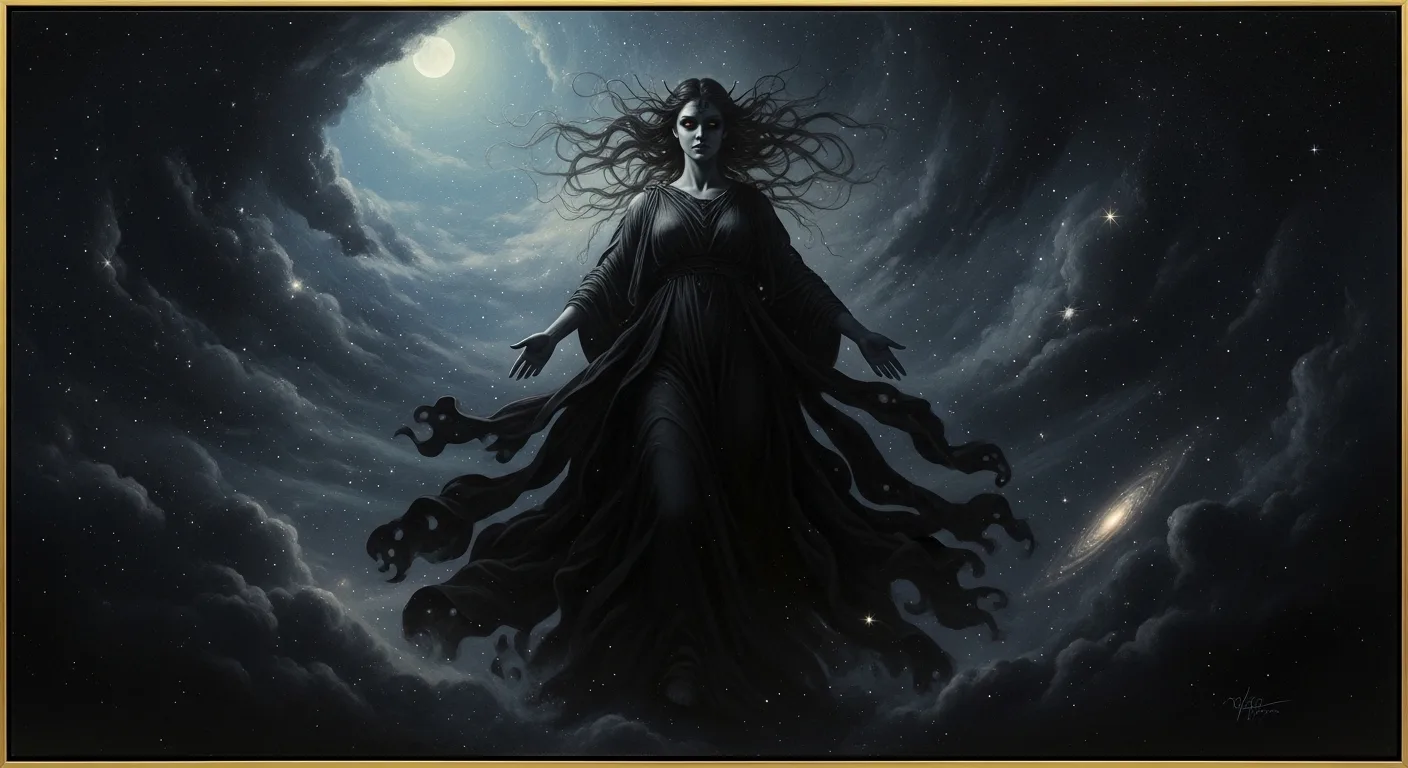
Η Νύξ είναι μία από τις αρχαιότερες και ισχυρότερες πρωταρχικές θεότητες της ελληνικής μυθολογίας. Εμφανίζεται αμέσως μετά το Χάος και προσωποποιεί τη Νύχτα, το σκοτάδι και τη σιωπή που προϋπήρξαν της κοσμικής τάξης.
Ποια ήταν η Νύξ στην Ελληνική μυθολογία
Η Νύξ ήταν μία από τις αρχαιότερες και πιο μυστηριώδεις θεότητες της ελληνικής μυθολογίας· μια δύναμη τόσο παλιά όσο και το ίδιο το σύμπαν. Δεν ήταν απλώς η προσωποποίηση της νύχτας, αλλά μια κοσμική ύπαρξη που γεννήθηκε μέσα από το πρωταρχικό Χάος, πριν ακόμη εμφανιστούν οι Ολύμπιοι θεοί, πριν ο ουρανός αποκτήσει αστέρια και πριν η γη αποκτήσει μορφή. Η παρουσία της δεν συνδεόταν μόνο με το σκοτάδι, αλλά με το άγνωστο, το αιώνιο και το βαθύ μυστήριο που συνοδεύει κάθε ανθρώπινη ψυχή όταν πέφτει η σιωπή της νύχτας.
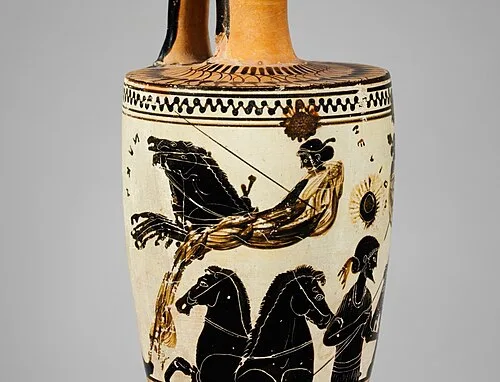
Οι αρχαίοι Έλληνες την φαντάζονταν ως μια επιβλητική θεά ντυμένη με μαύρους πέπλους, να διασχίζει τον ουρανό επάνω σε άρμα σκορπίζοντας τη σκιά πάνω από τη γη. Με την άφιξή της, τα χρώματα του κόσμου έσβηναν, οι θόρυβοι ηρεμούσαν και τα όρια ανάμεσα στο όνειρο και την πραγματικότητα γίνονταν ασαφή. Δεν ήταν μια κακή θεότητα· αντίθετα, ενέπνεε δέος και σεβασμό. Ακόμη και ο ίδιος ο Δίας, ο πανίσχυρος βασιλιάς των θεών, δίσταζε να την προκαλέσει, κάτι που φανερώνει τη δύναμη και την αρχαιότητά της.
Η Νύξ κατοικούσε μαζί με τον σύζυγό της, τον Έρεβο, στα σκοτεινά βάθη του κόσμου. Από την ένωσή τους γεννήθηκαν πολλές θεότητες που συνδέονταν με τις ανθρώπινες εμπειρίες και τα μυστήρια της ζωής. Ανάμεσα στα παιδιά της ήταν ο Ύπνος, που έφερνε την ξεκούραση στους θνητούς, ο Θάνατος, οι Όνειροι, αλλά και μορφές που αντιπροσώπευαν τη μοίρα, τη λύπη και την εκδίκηση. Μέσα από αυτά τα παιδιά, η Νύξ έγινε η μητέρα όχι μόνο του σκότους, αλλά και των αόρατων δυνάμεων που κυβερνούν τη ζωή των ανθρώπων.
Στη λογοτεχνία και την ποίηση, η Νύξ συχνά παρουσιάζεται σαν μια ήρεμη αλλά πανίσχυρη παρουσία. Η νύχτα της δεν ήταν μόνο φόβος· ήταν επίσης καταφύγιο. Μέσα στο σκοτάδι της γεννιούνται τα όνειρα, οι σκέψεις, οι προσευχές και οι μυστικές επιθυμίες των ανθρώπων. Η ησυχία που απλώνει η θεά πάνω από τον κόσμο μοιάζει σχεδόν ιερή, σαν να καλεί τον άνθρωπο να κοιτάξει βαθιά μέσα στον εαυτό του.
Η μορφή της Νύξ διατήρησε τη γοητεία της ακόμη και στους μεταγενέστερους αιώνες. Ζωγράφοι, ποιητές και συγγραφείς εμπνεύστηκαν από αυτήν τη σκοτεινή θεότητα, βλέποντας στη φιγούρα της όχι απλώς τη νύχτα, αλλά την ίδια τη δύναμη του αγνώστου. Είναι η στιγμή πριν ξημερώσει, η σιωπή πριν ακουστεί μια αλήθεια, το πέπλο που κρύβει όσα ο άνθρωπος δεν μπορεί να εξηγήσει.
Γι’ αυτό η Νύξ παραμένει μέχρι σήμερα μία από τις πιο αινιγματικές μορφές της ελληνικής μυθολογίας — μια θεά που δεν χρειάζεται φως για να επιβληθεί, γιατί η δύναμή της γεννιέται ακριβώς μέσα από το σκοτάδι.
Στη Θεογονία του Ησιόδου, η Νύξ δεν είναι απλώς φυσικό φαινόμενο, αλλά κοσμική δύναμη που γεννά έννοιες, θεότητες και καταστάσεις της ανθρώπινης ύπαρξης.
Καταγωγή και κοσμογονικός ρόλος
Προέλευση: Γεννήθηκε απευθείας από το Χάος
Σύζυγος / σύντροφος: Έρεβος (το Σκότος), με τον οποίο γέννησε τον Αιθέρα και την Ημέρα
Η Νύξ συμβολίζει το μεταβατικό στάδιο ανάμεσα στο αρχέγονο κενό και τη δημιουργία του κόσμου.
Τα παιδιά της Νύκτας (Θεότητες & Έννοιες)
Η Νύξ θεωρείται μητέρα πολλών θεοτήτων που εκφράζουν σκοτεινές, αλλά θεμελιώδεις πτυχές της ζωής:
Μόρος – Μοίρα του θανάτου
Κήρες – Πνεύματα βίαιου θανάτου
Θάνατος – Ο ίδιος ο θάνατος
Ύπνος (Ύπνος) – Η ξεκούραση και η λήθη
Όνειροι – Τα όνειρα
Νέμεσις – Θεία τιμωρία
Έρις – Διχόνοια
Απάτη – Εξαπάτηση
Γήρας – Γηρατειά
Η Νύξ, περισσότερο από κάθε άλλη θεότητα, συνδέεται με τις αόρατες δυνάμεις που επηρεάζουν τη μοίρα των ανθρώπων.
Η δύναμη και ο σεβασμός των θεών
Η Νύξ ήταν τόσο ισχυρή, ώστε ακόμη και ο Δίας την σεβόταν και την απέφευγε.
Σύμφωνα με τον Όμηρο, ο Δίας δίστασε να τιμωρήσει τον Ύπνο επειδή αυτός κατέφυγε στη μητέρα του, τη Νύξ.
Αυτό δείχνει ότι η Νύξ:
προηγείται της ολυμπιακής εξουσίας
εκπροσωπεί κοσμικούς νόμους ανώτερους από τους θεούς
Συμβολισμός της Νύκτας
Η Νύξ συμβολίζει:
το σκοτάδι πριν τη δημιουργία
τη σιωπή και τη μυστικότητα
τη γέννηση μέσα από το άγνωστο
τη μετάβαση από την ημέρα στον ύπνο και στον θάνατο
Στην ελληνική σκέψη, η νύχτα δεν είναι μόνο φόβος, αλλά και μήτρα δημιουργίας.
Η Νύξ στην τέχνη και τη φιλοσοφία
Αναφέρεται εκτενώς στη Θεογονία του Ησιόδου
Εμπνέει φιλοσοφικές έννοιες για το άγνωστο και το ασυνείδητο
Απεικονίζεται ως σκοτεινή, μεγαλοπρεπής μορφή με πέπλο ή φτερά
Αναφορές στην Νυξ
Όμηρος, Ιλιάδα 8. 485 κ.ε. (ελληνικό έπος 8ος αι. π.Χ.):
«Και τώρα το λαμπερό φως του ήλιου (Ηλίου) βυθιζόταν στον Ωκεανό (Ωκεανό), αφήνοντας τη μαύρη νύχτα (Νύξη) να απλώνεται πάνω στη γη που δίνει σιτάρι.»
Ησίοδος, Θεογονία 744 κ.ε. (ελληνικό έπος 8ος ή 7ος αιώνας π.Χ.):
«Και εκεί [στα άκρα της γης, όπου ο ουρανός συναντά τη γη], όλα στη σειρά τους, βρίσκονται οι πηγές και τα άκρα της σκοτεινής γης και του ομιχλώδους Τάρταρου (Τάρταρος) και της άγονης θάλασσας και του έναστρου ουρανού, απεχθούς και υγρού, που ακόμη και οι θεοί αποστρέφονται… Εκεί στέκεται η φοβερή κατοικία της σκοτεινής Νύξ (Νύχτα) τυλιγμένη σε σκοτεινά σύννεφα. Μπροστά του στέκεται ακίνητος ο γιος του Ιαπετού [Άτλας], στηρίζοντας τον ευρύ ουρανό πάνω στο κεφάλι του και στα ακούραστα χέρια του, όπου η Νύκτα και η Ημέρα πλησιάζουν και χαιρετούν η μία την άλλη καθώς περνούν το μεγάλο κατώφλι από χαλκό: και ενώ η μία ετοιμάζεται να κατέβει στο σπίτι, η άλλη βγαίνει από την πόρτα. Και το σπίτι δεν τις φιλοξενεί ποτέ και τις δύο μαζί· αλλά πάντα η μία βρίσκεται έξω από το σπίτι, περνώντας πάνω από τη γη, ενώ η άλλη μένει στο σπίτι και περιμένει μέχρι να έρθει η ώρα για το ταξίδι της· και η μία κρατά το παντοβλέπον φως για αυτούς πάνω στη γη, αλλά η άλλη κρατά στην αγκαλιά της τον Ύπνο, τον αδελφό του Θανάτου, ακόμη και την κακή Νύκτα, τυλιγμένη σε ένα ατμώδες σύννεφο. Και εκεί έχουν τις κατοικίες τους τα παιδιά της σκοτεινής Νύξ (Νύχτα), ο Ύπνος (Ύπνος) και ο Θάνατος (Θάνατος), φοβεροί θεοί. Ο λαμπερός Ήλιος (ο Ήλιος) δεν τους κοιτάζει ποτέ με τις ακτίνες του, ούτε όταν ανεβαίνει στον ουρανό ούτε όταν κατεβαίνει από τον ουρανό.”
Συχνές Ερωτήσεις για τη Νύξ στην Ελληνική Μυθολογία
Ποια είναι η Νύξ στην ελληνική μυθολογία;
Η Νύξ είναι μία από τις αρχέγονες θεότητες της ελληνικής μυθολογίας και προσωποποιεί τη νύχτα. Θεωρείται πανάρχαιη και ισχυρή θεά που γεννήθηκε από το Χάος.
Από πού προέρχεται η Νύξ;
Σύμφωνα με τη Θεογονία του Ησιόδου, η Νύξ προήλθε απευθείας από το Χάος, μία από τις πρώτες κοσμικές δυνάμεις του σύμπαντος.
Ποια είναι τα παιδιά της Νύξ;
Η Νύξ γέννησε πολλές θεότητες όπως τον Ύπνο, τον Θάνατο, τα Όνειρα, τη Μοίρα, τον Μόρο, τη Νέμεση και άλλες σκοτεινές ή κοσμικές δυνάμεις.
Ποιος είναι ο αδελφός της Νύξ;
Αδελφός της θεωρείται ο Έρεβος, η θεότητα που συμβολίζει το βαθύ σκοτάδι.
Ποιος είναι ο σύντροφος της Νύξ;
Σε ορισμένους μύθους η Νύξ ενώνεται με τον Έρεβο, με τον οποίο αποκτά θεότητες όπως τον Αιθέρα και την Ημέρα.
Πού κατοικούσε η Νύξ;
Η Νύξ λέγεται ότι κατοικούσε στον Κάτω Κόσμο, σε ένα σκοτεινό παλάτι κοντά στον Τάρταρο.
Τι συμβολίζει η Νύξ;
Η Νύξ συμβολίζει τη νύχτα, το σκοτάδι, το μυστήριο και τις αόρατες δυνάμεις της φύσης.
Πόσο ισχυρή θεότητα ήταν η Νύξ;
Η Νύξ θεωρούνταν τόσο ισχυρή ώστε ακόμη και ο Δίας, ο βασιλιάς των θεών, σεβόταν και φοβόταν τη δύναμή της.
Πώς περιγράφεται η Νύξ στην αρχαία γραμματεία;
Συχνά περιγράφεται ως σκοτεινή θεά που καλύπτει τον ουρανό με πέπλο σκοταδιού και φέρνει τη νύχτα στον κόσμο.
Ποια είναι η σχέση της Νύξ με τον Ύπνο και τον Θάνατο;
Η Νύξ θεωρείται μητέρα του Ύπνου και του Θανάτου, δύο θεοτήτων που αντιπροσωπεύουν την ανάπαυση και το τέλος της ζωής.
Ποια είναι η σχέση της Νύξ με την Ημέρα;
Η Νύξ είναι μητέρα της Ημέρας (Ημέρα). Σύμφωνα με τον μύθο, οι δύο θεότητες δεν συναντιούνται ποτέ, καθώς όταν φεύγει η μία εμφανίζεται η άλλη.
Υπήρχε λατρεία της Νύξ στην αρχαία Ελλάδα;
Η Νύξ δεν είχε εκτεταμένη λατρεία όπως οι Ολύμπιοι θεοί, αλλά αναφέρεται σε μυστικιστικά και κοσμογονικά κείμενα.
Ποια είναι η θέση της Νύξ στην κοσμογονία;
Η Νύξ ανήκει στην πρώτη γενιά θεοτήτων και αποτελεί βασικό στοιχείο της δημιουργίας του κόσμου στην ελληνική μυθολογία.
Πώς απεικονίζεται η Νύξ στην τέχνη;
Στην αρχαία τέχνη απεικονίζεται συχνά ως σκοτεινή φτερωτή θεά που καλύπτει τον ουρανό ή ταξιδεύει με άρμα μέσα στη νύχτα.
Ποια είναι η σημασία της Νύξ στους μύθους;
Η Νύξ αντιπροσωπεύει τις αρχέγονες δυνάμεις του σύμπαντος και το μυστήριο της νύχτας που περιβάλλει τον κόσμο.
Αρχέγονοι Θεοί
Χάος | Γαία | Τάρταρος | Έρως | Νύξ | Έρεβος | Αιθήρ | Ημέρα
Διαβάστε επίσης
Οι Λησμονημένες Προσωποποιήσεις της Ελληνικής Μυθολογίας
Θεότητες του Θανάτου στην Ελληνική Μυθολογία